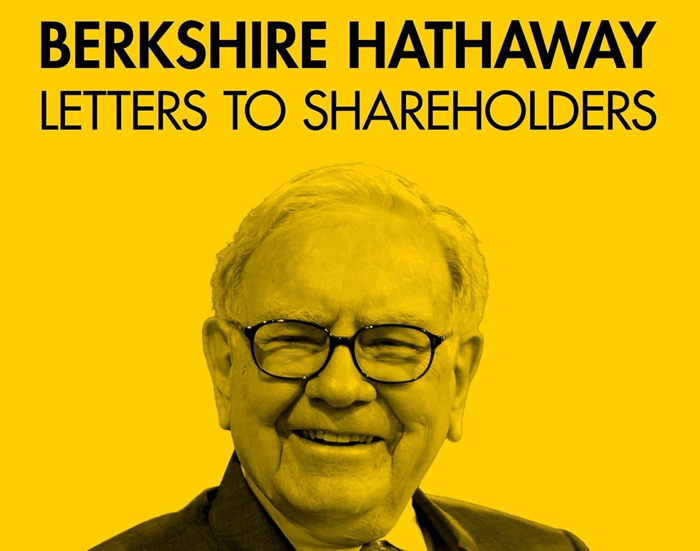
Berkshire Hathaway (BRK) released its (also see full , which Warren Buffett traditionally also uses as an educational instrument. As always, I recommend reading it yourself (only 13 pages total this year). I enjoy reading the letter first (with no spoilers), then peruse the various newspaper and media commentary, and finally re-read the letter again. Here are my personal highlights and commentary.
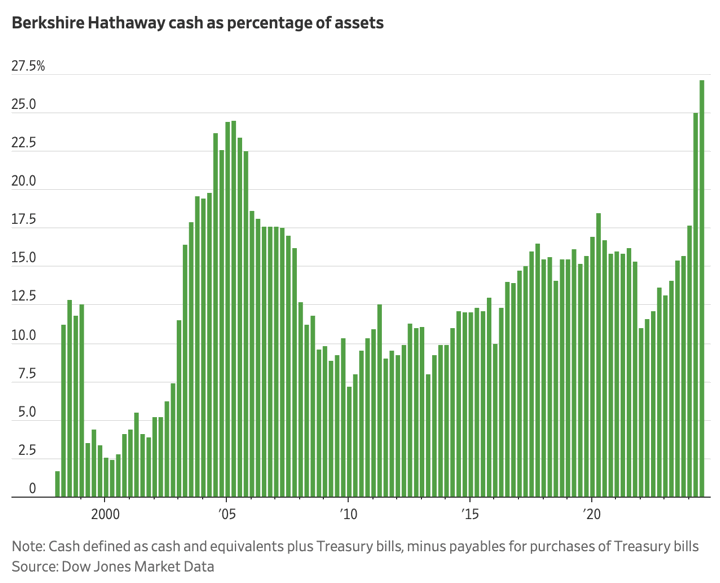
The total market cap of Berkshire is now over $1 trillion dollars. The total value of their public equity holdings was $272 billion. The total of their cash holdings was $334 billion. The total value of their controlled businesses was about $400 billion.
Berkshire’s businesses are doing fine overall, especially their insurance business. Their controlled businesses just continue to churn out cash, which obviously adds to the cash pile if there are no new investments. BRK parks nearly all of its cash in Treasury Bills, which made a lot of interest in 2024 as compared to the past several years.
No significant new purchases, in either public or private businesses. Berkshire wants to own great businesses, but only when paying the right price. However, he didn’t give any indication that he thinks folks are completely nuts. On a relative basis, you can judge for yourself with this chart of BRK’s cash as a percentage of assets. Source: (gift article).
American businesses are still special, although it takes vigilance to stay that way. Berkshire owns some international companies based in Europe and Japan, but it has always been and remains predominantly US-based businesses.
Berkshire shareholders can rest assured that we will forever deploy a substantial majority of their money in equities – mostly American equities although many of these will have international operations of significance. Berkshire will never prefer ownership of cash-equivalent assets over the ownership of good businesses, whether controlled or only partially owned.
Paper money can see its value evaporate if fiscal folly prevails. In some countries, this reckless practice has become habitual, and, in our country’s short history, the U.S. has come close to the edge. Fixed-coupon bonds provide no protection against runaway currency.
Berkshire is not buying Berkshire anymore. BRK has ceased with the buybacks, which means that they are either at or above his estimation of fair value.
Patience and discipline may be the lesson here. Altogether, the letter was a nice, familiar reminder that the things that made Berkshire Hathaway great are still the same. No surprises, no big drama. Right now, valuations are plump so they are holding onto what they already have and other accumulating cash. Berkshire is disciplined enough to do nothing when there is nothing smart to do. I can still hear Charlie Munger saying something to the tune of “It’s not the worst place to be, drowning in cash!”
Perhaps that is the lesson. Everything is at least fairly-valued if not higher. Hold what you have. Let it compound. Be patient. There will be new opportunities eventually.
Past shareholder letter notes.
- (PDF). 1965-2023 (should be updated to 2024 soon) are $3.99 at Amazon (Kindle). Four bucks seems very reasonable for a permanent digital copy with the ability to search text and maintain highlights.
- discussed why BRK will continue to do fine without Warren Buffett around.
- discussed using debt very sparingly and the importance of holding productive assets over a long time.
- discussed patience, risk, and why they have so much cash.
- touched on the rarity of skilled-stock pickers and some insight on his own stock-picking practices.
- discussed his optimism in America and his “Big 4” stock holdings.
- discussed the power of owning shares of productive businesses (and not just bonds).
- included Buffett’s Simple Investment Advice to Wife After His Death.
Related Posts