Go on. Admit it. The thought of probably makes you shudder. Unless you fall into the 5%* category of new generation designers who have already embraced the potential of this highly misunderstood and marginalised building material. (*btw, this statistic is entirely subjective and quite probably completely inaccurate – just sayin’!)
This versatile construction staple was introduced to commercial architecture nearly 100 years ago, and since then it became widely used by renowned architects around the world in the creation of iconic buildings. Alas, throughout the late 70s and early 80s, glass block was mocked and ridiculed, having fallen prey to ill use by average architects, and various dicky applications on shoddy ‘feature walls’. Excuse me ‘average architects’ and/ or propagators of said ‘feature walls’ (excuse me while I go vom under my desk for a second) – why did you have to mess it up for everyone, and do a disservice to the poor old glass block? This delicate material is capable of producing the sweetest of results in the hands of masters, but the minute it is used incorrectly, it becomes instantly cringe-worthy – much like make-up, hairspray, shoulder pads and flavours like salt and vinegar, I suppose.
Anyway!
Glass blocks, or glass as they are also widely referred to, date back to the late 1880s when they were produced in squares and hexagonal shapes by Swiss Architect & Engineer Gustave Falconnier. In the 1930’s, further development of machine production created more advanced types of glass bricks which became easier to work with. Designed to be laid in the traditional style of masonry, glass blocks quickly became known for their ground-breaking qualities. This adaptable, modular and thermally stable material allowed for the flow of light without sacrificing privacy. Jackpot.
Glass blocks quickly caught the attention of various modernist architects. , conceived as an illuminated box that until this day symbolizes architecture before its time.
In the late 90s, French luxury brand enlisted the of-the-moment prolific architect to create their iconic 10-story Tokyo’s Ginza headquarters, constructed of 13,000 bespoke square glass blocks.
Fast forward to 2016, and another French fashion brand , which saw the architects replace the original brick facade of a former townhouse with glass blocks, utilising cutting-edge glass technology.
There have, of course, been many other less dramatic but equally interesting projects in both commercial and residential sectors of late, which have heralded the comeback of this oft-misunderstood material.
Today we explore the finest examples of glass bricks in contemporary and , as well as paying homage to the handful of design classics. While ranging in application, scale and type of glass blocks utilised, each project presented here has been selected on its merit for delivering soaring visual statements that celebrate the goodness of good ol’ glass blocks. Hallelujah!


Poesia Glass Bricks from Brickworks.
And whilst we’re at it, our friends at have just launched a lust-worthy collection of Glass Bricks called Poesia, Australia’s first crystal-clear glass brick collection. Drawing on the fine quality, craft traditions and refined beauty of Italian glass-making, transforms Italy’s famous Murano glass-making techniques into high-quality clear glass bricks available in a standard format (230 mm x 110 mm x 76 mm). The collection offers three elegant finishes (natural, polished and frosted) and five delicious colourways (Arctic Crystal, Aqua Marine, Blue Sapphire, Golden Amber and Smokey Quartz). Yummo!
Related:
GLASS BLOCK ARCHITECTURE.


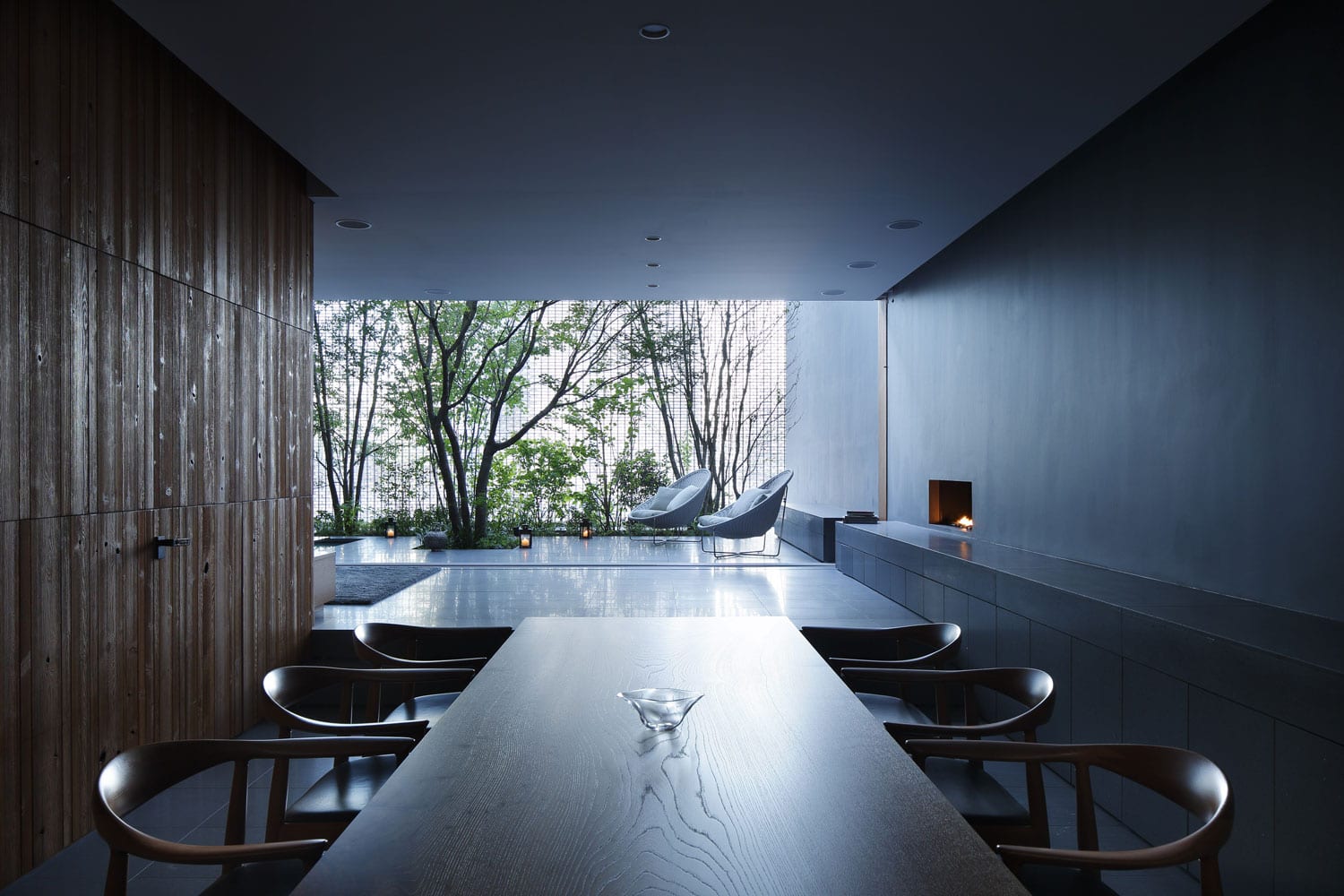
Optical Glass House in Hiroshima, Japan by Hiroshi Nakamura & NAP. Photography by Nacasa & Partners.

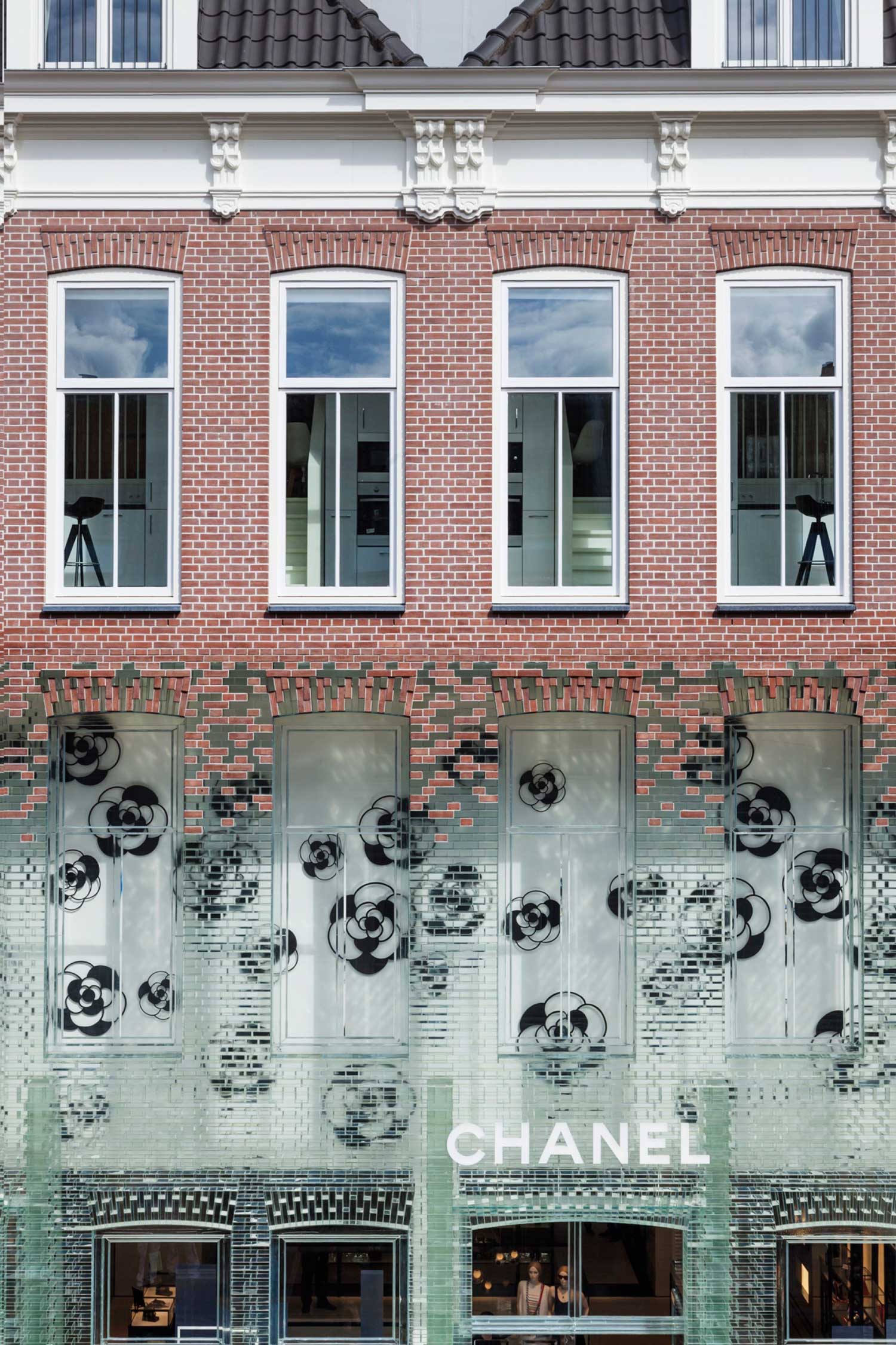


Crystal Facade of CHANEL Amsterdam Flagship Store by MVRDV. Photography by Daria Scagliola & Stijn Brakkee.


PORTS 1961’s Shanghai Store by UUFIE. Photography © Shengliang Su.


Leitao 653 in Brazil by Triptyque. Photography by Leonardo Finotti.


Façade Renovation for No.8 Building in China by Atelier Archmixing. Photography by Tang Yu.


Seashore Library in China by Vector Architects. Photography by He Bin, Su Shengliang, Xia Zh & Sun Dongping.


Courtyard Hybrid in Beijing, China by Vector Architects. Photography by XIA ZHI.
GLASS BLOCK INTERIORS.


BEI Function Space in Beijing, China by Neri&Hu Design & Research Office.


Byredo’s New York Store by Christian Hallerod.


LIFEwithBIRD Store in Sydney’s Bondi Junction by Studio Wonder. Photography by Tatjana Plitt.


Riviera Bar in São Paulo, Brazil by Studio MK27. Photography by Rômulo Fialdini.

Collective Design 2018 VIP Lounge Designed by Objects of Common Interest & LOT Office for Architecture.


Studio11 Design Their Own Office Space in Minsk, Belarus. Photography by Dmitry Tsyrencshikov.


Airbnb Flagship Office in San Francisco. Photography by Mariko Reed.


Jingyuan No. 22 Coworking Office in Beijing, China by C+ architects. Photography by Xia Zhi.


Zhongshu Bookstore in Suzhou, China by Wutopia Lab.


Nursery School in Pamplona, Spain by Pereda Pérez Arquitectos.


Pinkie Cafe in Ivanhoe, Melbourne by Biasol. Photography by James Morgan.
The post appeared first on .
Related Posts