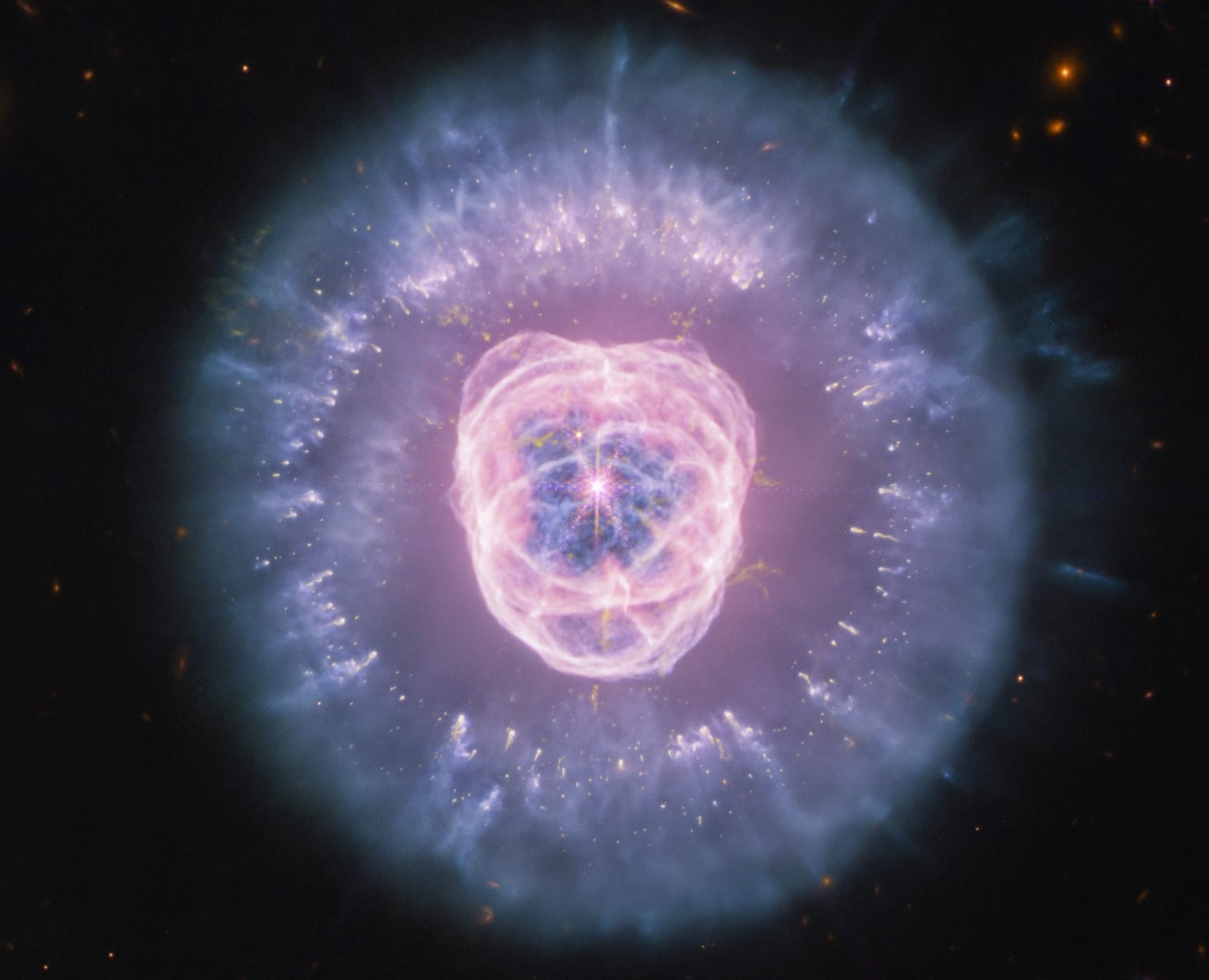
NASA’s James Webb Space Telescope has captured some remarkable phenomena in space, from the to the unbelievable “.” Things just got a little bit wilder with brilliant images of the (NGC 2392) captured by the telescope’s NIRCam (Near Infrared Camera) and MIRI (Mid Infrared Instrument). The shape is formed by the remains of a dying star now at a phase known as a white dwarf, when a very dense stellar core remains as it sheds its outer layers. On NGC 2392, the bright center looks like a little nose.
“The central dying star is so hot that its radiation is ‘cooking’ everything from the inside and producing a bubble of ionized hydrogen gas as it does,” NASA says. “The gas bubble, which is the lion’s ‘face,’ features cavernous shells and rings with tendrils that are expanding and destroying dust upon encounter.” The lion’s “mane” is actually the inside of one of these shells, illuminated by the star’s core.
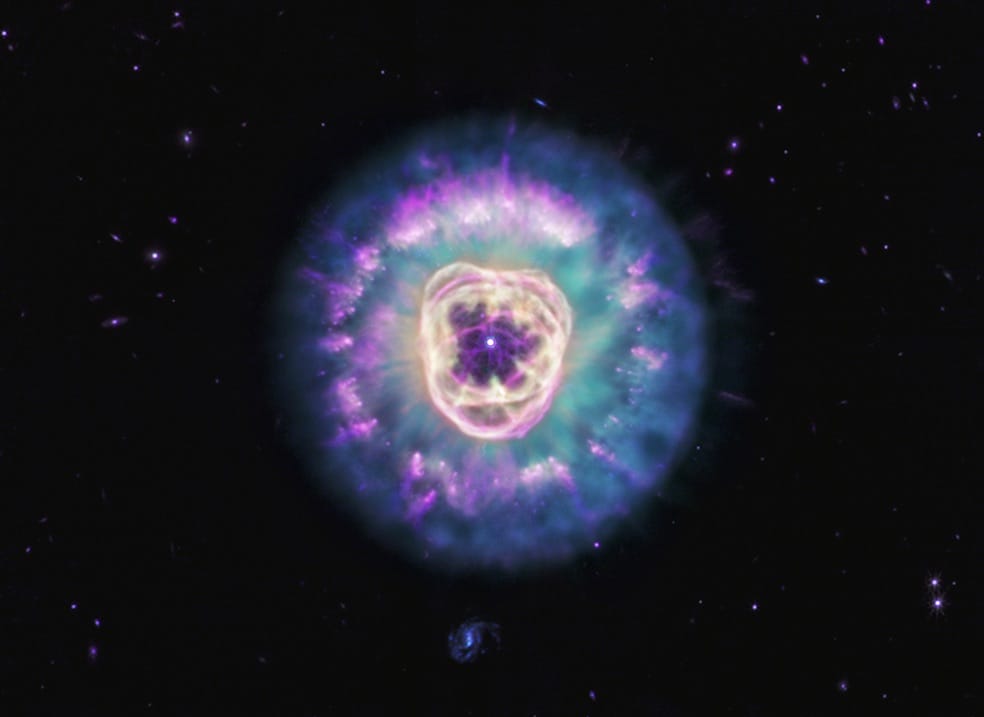
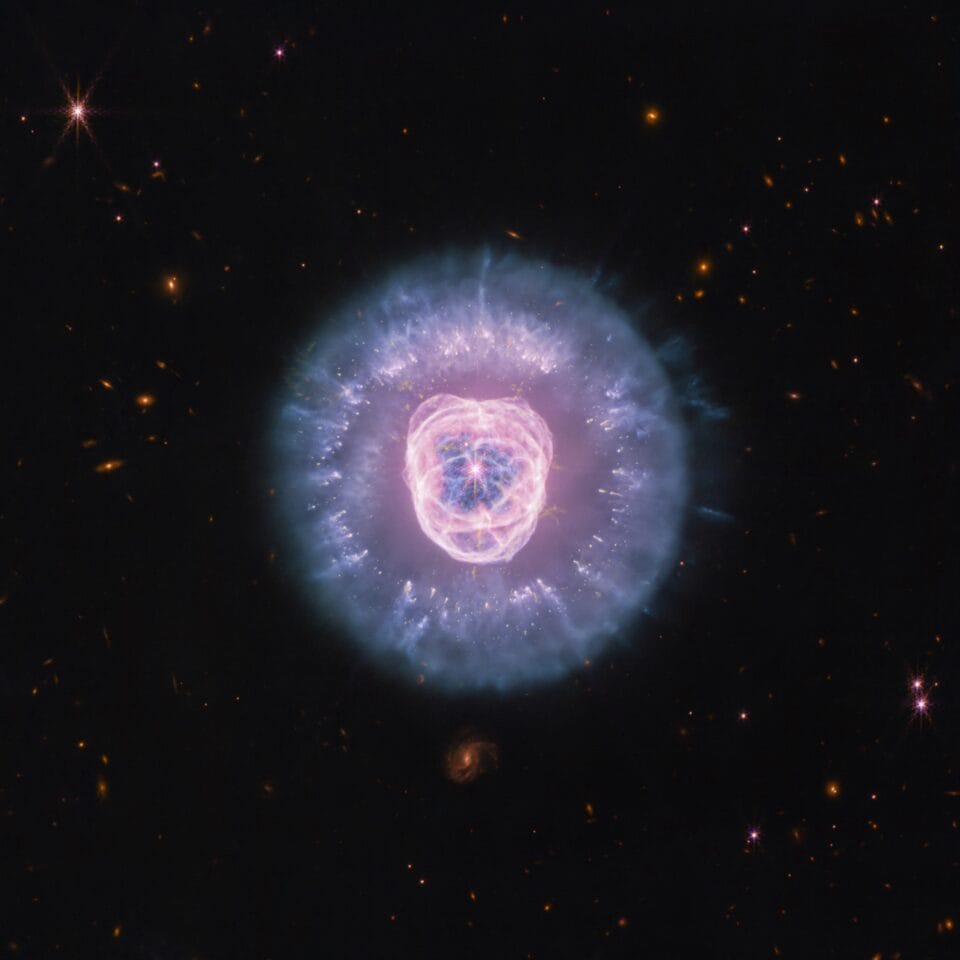
From the human perspective of time, nebulae such as this one don’t seem to change very quickly. “It’s taken several thousand years for the gas and dust to be shaped in this way, and it continues to change as the star drives away the material,” NASA says. The Lion Nebula is changing rather quickly in astronomical terms, however, and astronomers estimate that it will fully disperse in about 10,000 years. (via )
Do stories and artists like this matter to you? Become a today and support independent arts publishing for as little as $7 per month. The article appeared first on .
Related Posts