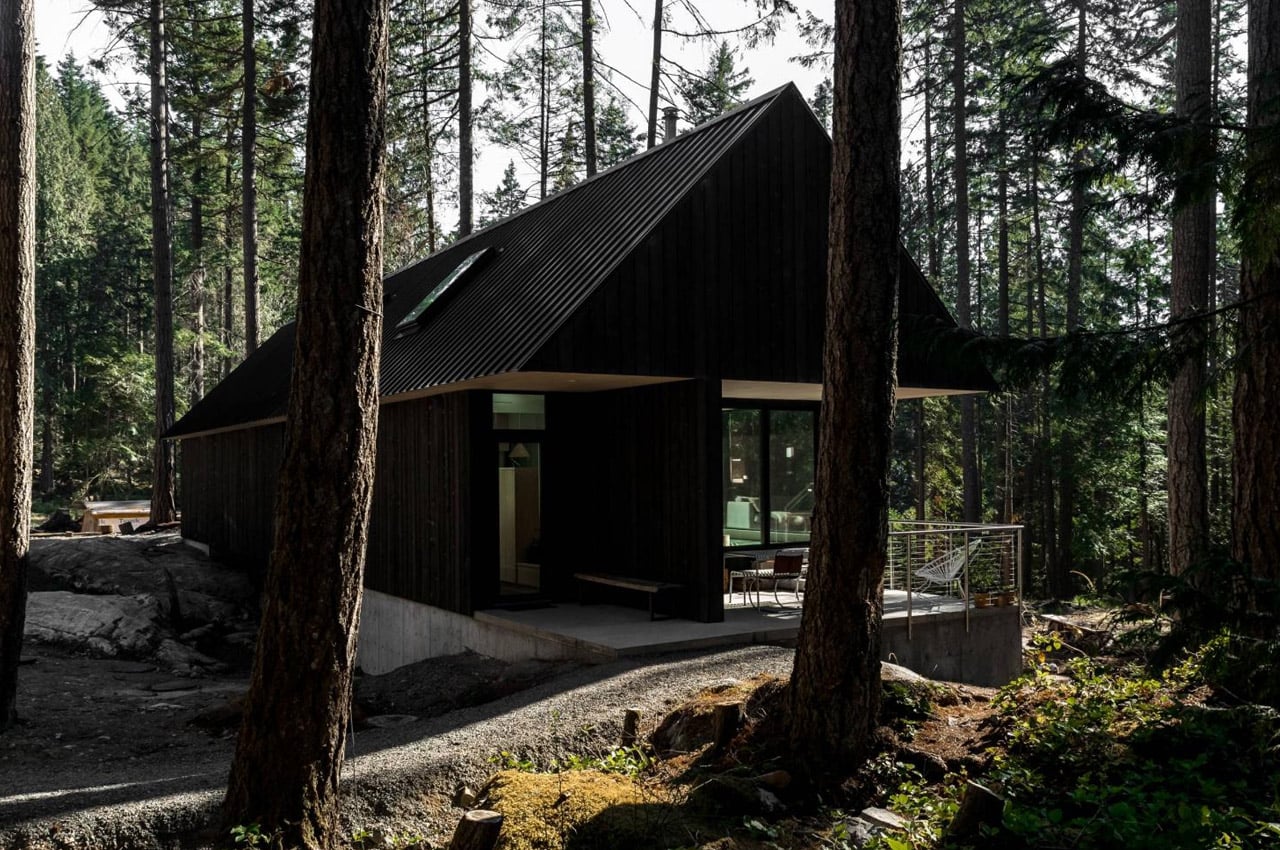
Envisioned for a growing family, the House in Xalapa, proposes a form of dwelling organised around a continuous dialogue with the landscape in which it is located. Designed by , the dark exterior grants it a solid stature, while simultaneously evoking the possibility of a home carved in the interior of a rock formation.
Inside, a game of changing lights and shadows follow, with paths that open and close, tighten and widen, and flow into open spaces that secure both fresh air and privacy.
Related:


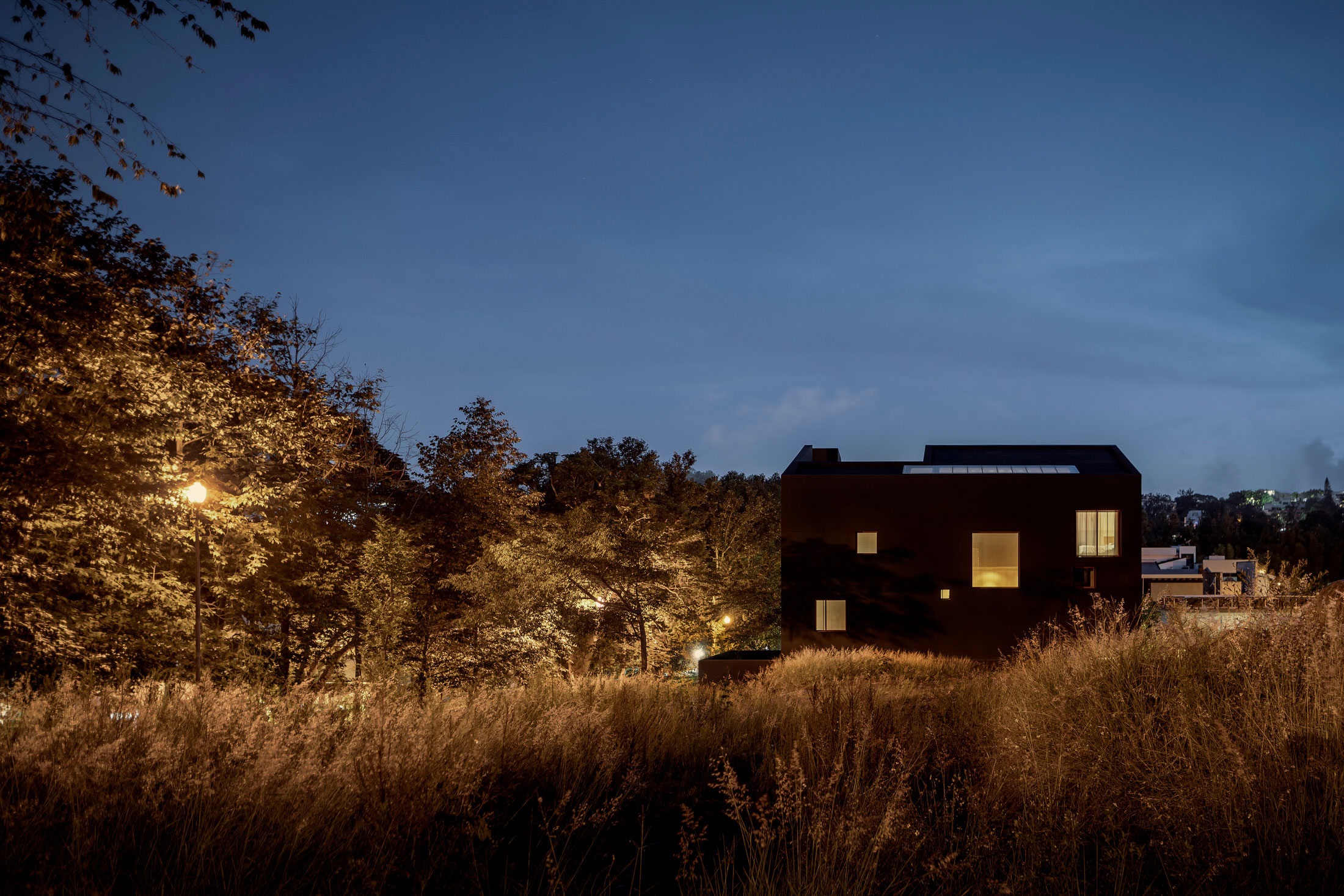
Terraces and windows allow for an evolving conversation with the ample vegetation that surrounds the grounds. In the house’s ecosystem, plants become protagonists, establishing a symbiotic relationship. Inside, the differently sized and shaped windows become openings that frame natural elements. At the same time, these windows confuse the threshold that separates interior and exterior, generating an expanding sensation. At night, the black house disappears into the darkness. What remains are small gaps of light revealing a series of quotidian pictures.
If seen from the outside, the walls’ rocky tone and the foliage’s green stand out. Inside it is which acquires an important character. It shows up in beams, in bookshelves, in closets, or in the furniture where the home’s day to day will develop: the chair, the table, the bed, the door. Besides warming up the place, the use of wood establishes yet another conversation with the landscape.
Related:


Pine tree suggests once more that it is the land that should offer the key to a durable dwelling anchored in the territory. Its lighter tone joins the exterior’s black, the vegetation’s green, and the frames’ as the most visible colours. The discrete presence of red offers a striking contrast not unlike that of a flower, in an attempt to find a balanced colour palette capable of melting with its surroundings.
This home proposes an idea of a dwelling founded upon the characteristics, conditions, and resources of the local territory. Similarly, architecture is thought of here in such a way that it can allow for time to do its work over the constructed area—plants will grow, walls will become humid and mossy, the volume will identify more and more with its landscape. It lays down a philosophy of construction in which the work does not conclude—it only begins at the point in which the house starts to live.
Related:
| The article appeared first on . |
Related Posts