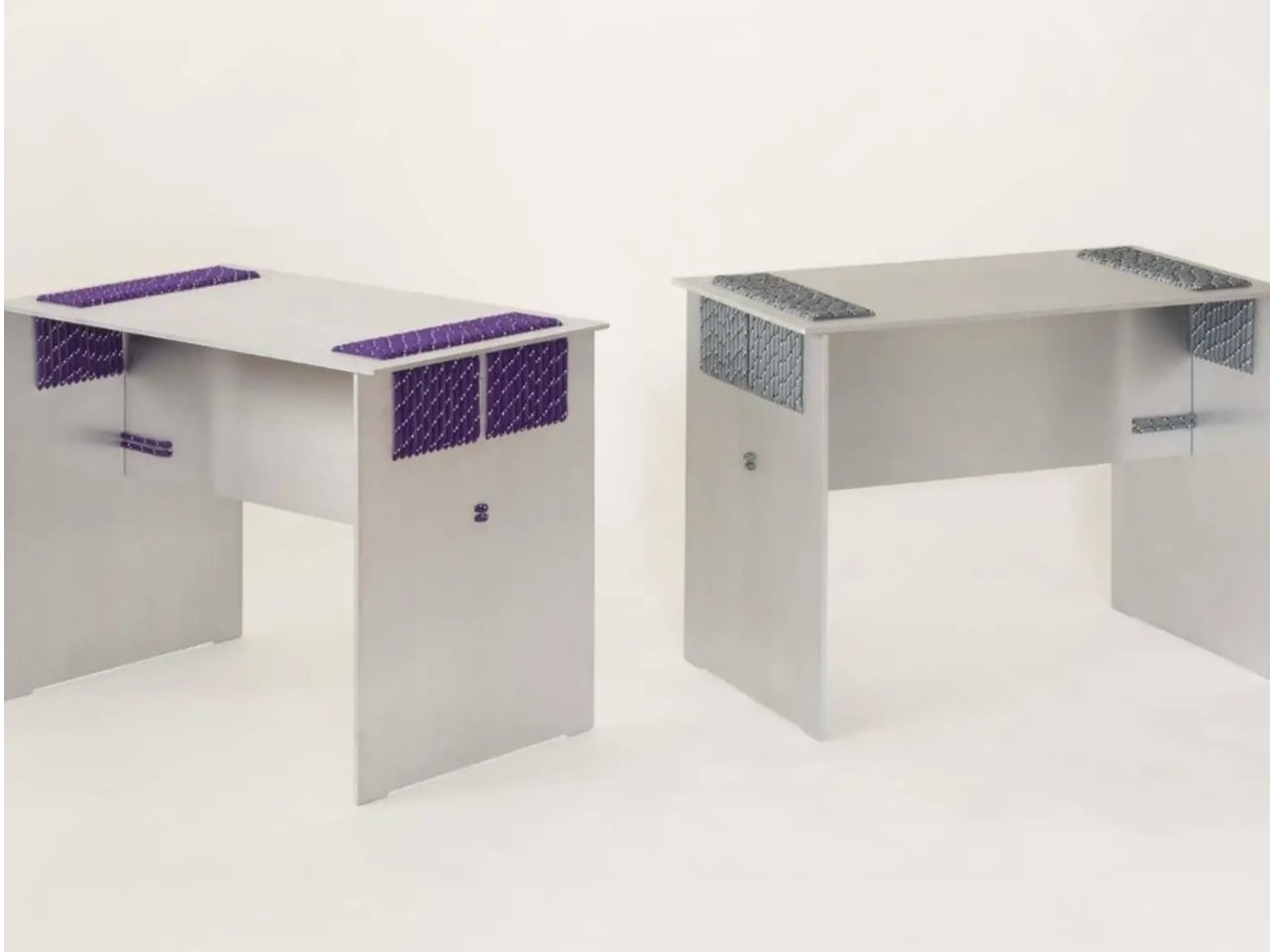
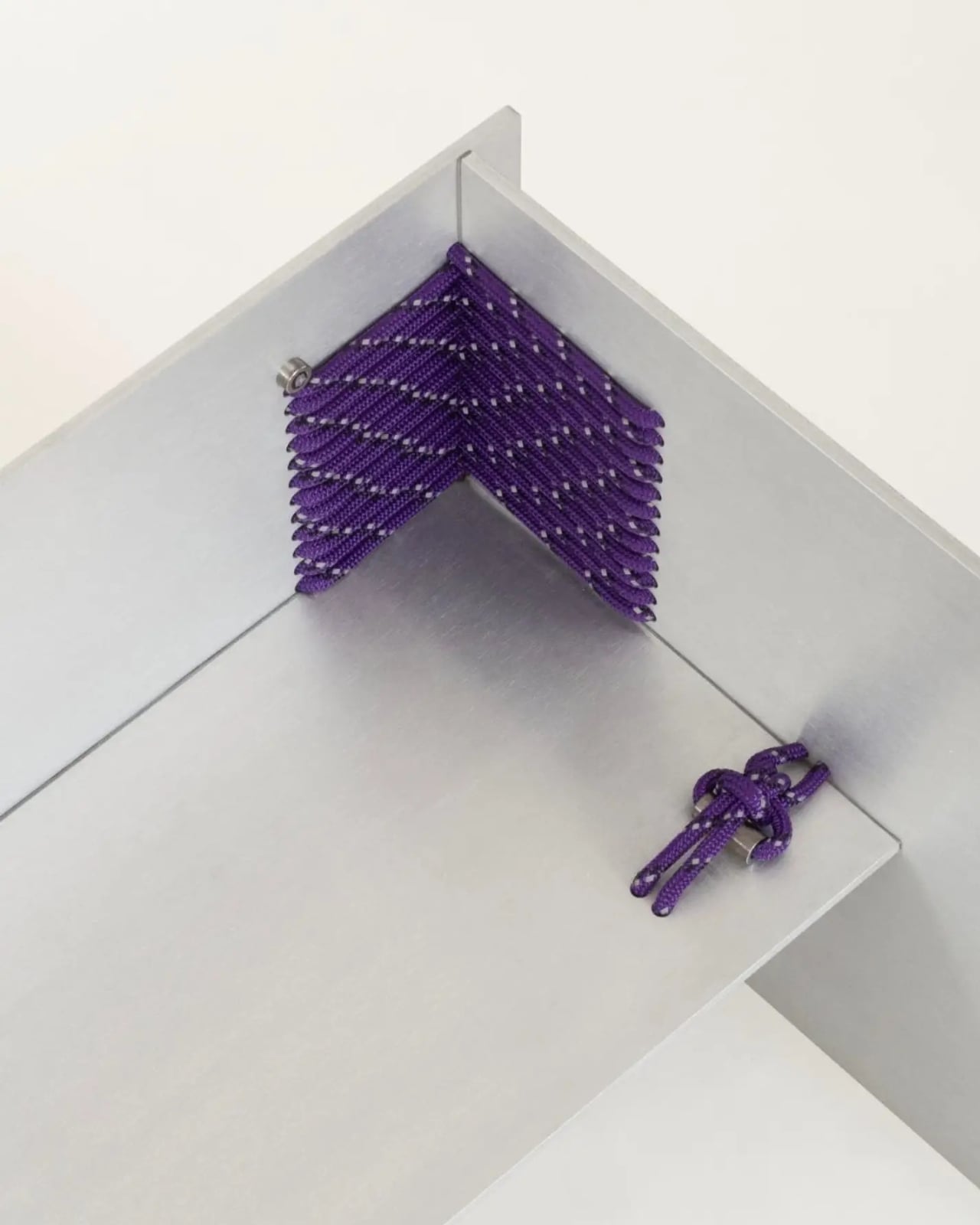
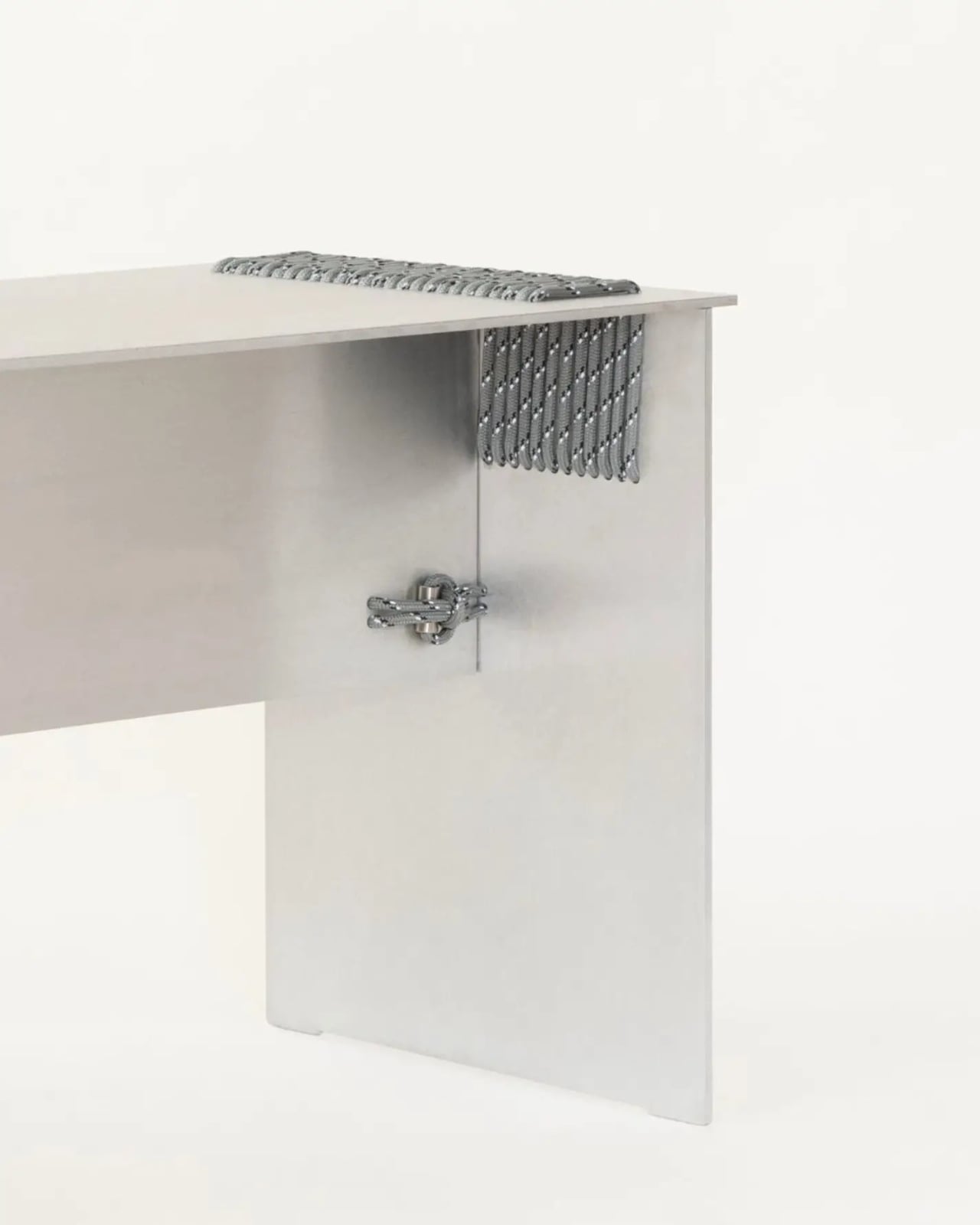
A small knot sticks out from the side of the Knot Stool, and I like that it hasn’t been tucked underneath or disguised with a plastic cap. It introduces the construction challenge behind the design: how to hold a rigid seat together without the usual collection of screws and glued joints. Here, the connection becomes something you’re meant to notice, rather than something the designer hopes you’ll overlook.
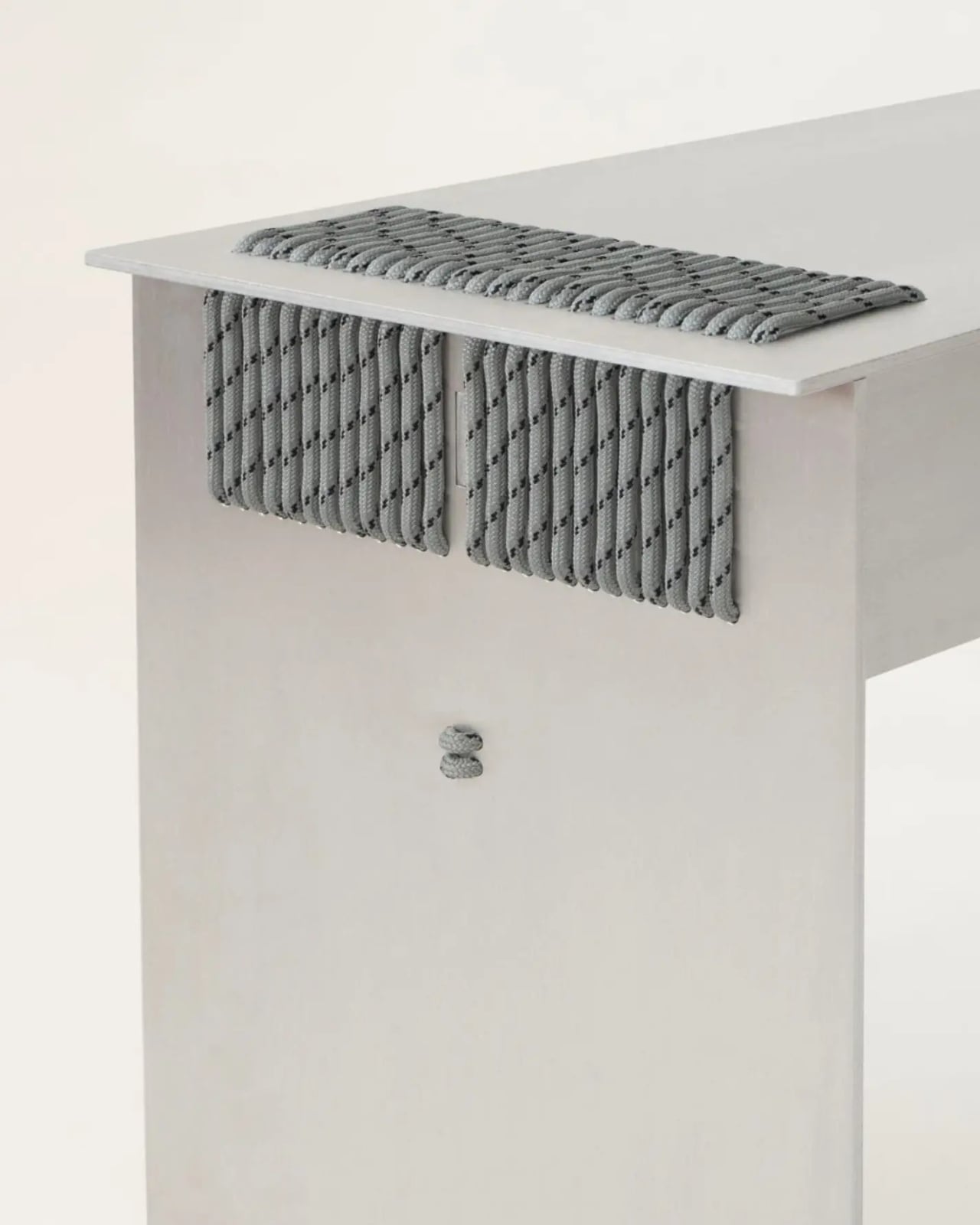
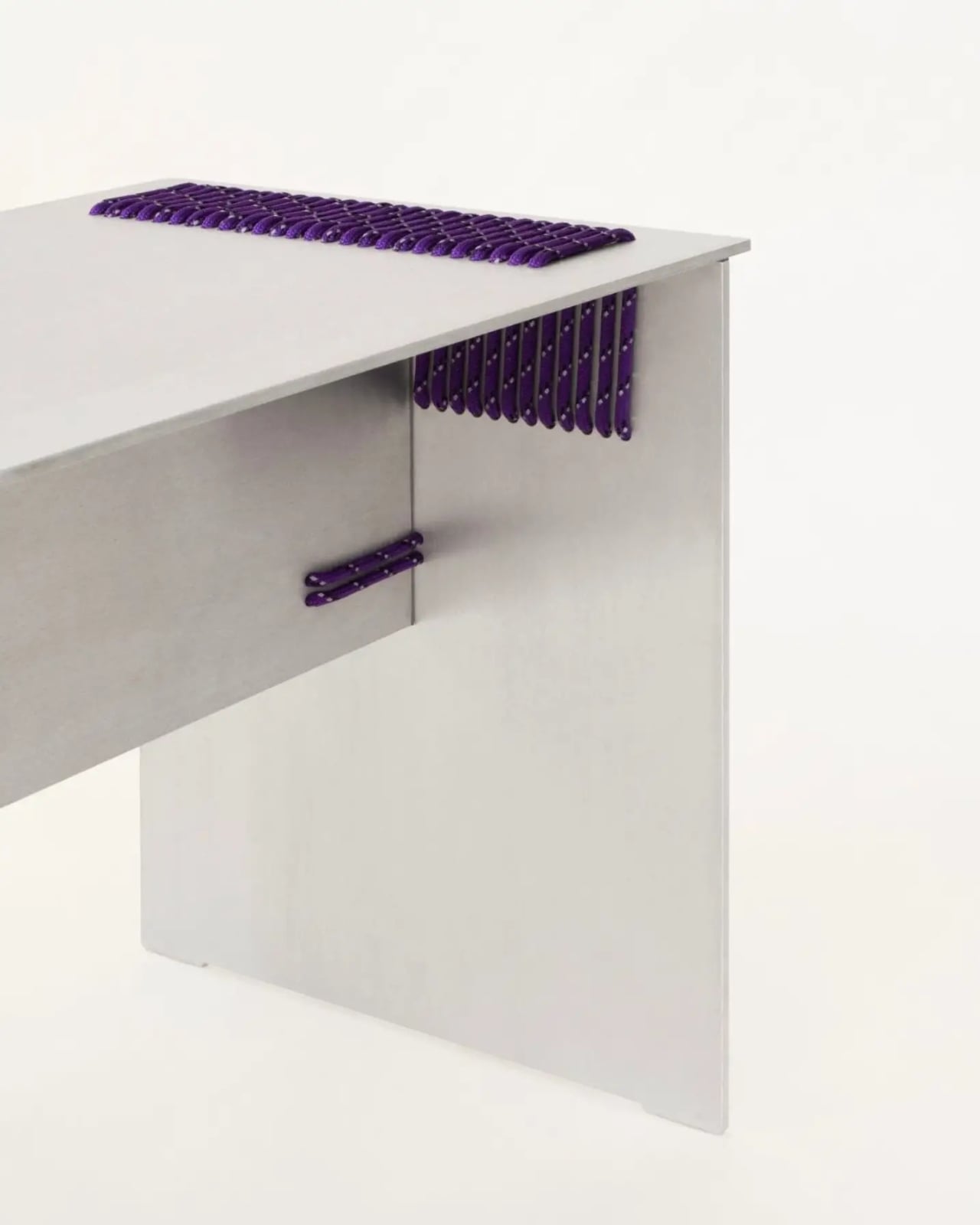
Designed by Studio Yann Gandon in collaboration with Maxime Sauce, the stool uses rope and knots to join laser-cut aluminum components. The metal provides the rigid seat and supports, while the lashing binds the pieces together. That distinction matters. The rope has a structural job, rather than simply adding a crafty detail to an otherwise conventional stool. The studio lists the project for sale, taking the idea beyond a purely speculative concept.
Designer:
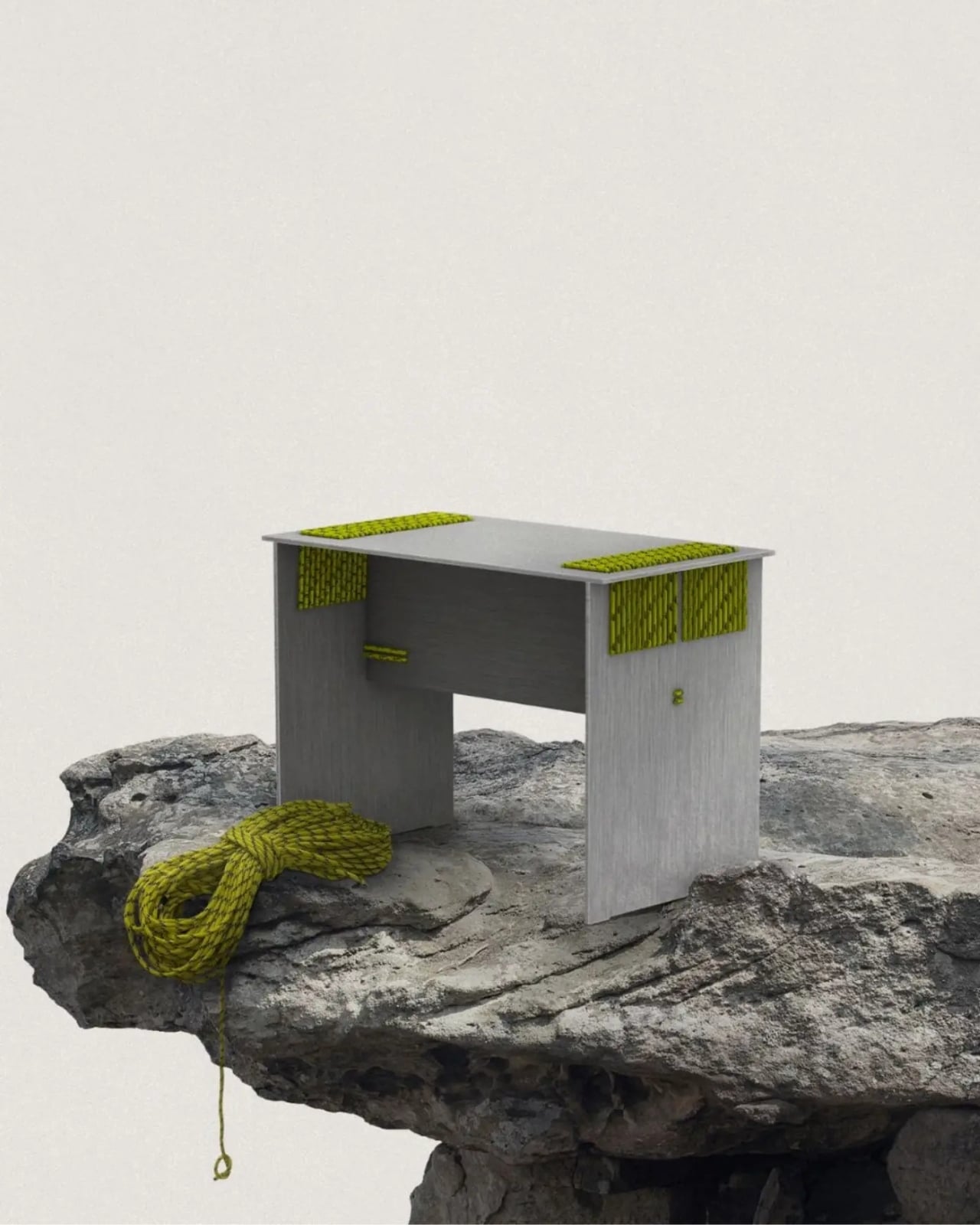
Its overall shape is almost stubbornly straightforward. A rectangular top rests above two broad side panels, with another panel running between them. There are no sweeping curves to distract from the connections. Instead, rows of cord travel across the top near either end and continue down the sides in dense, orderly bands. From a distance, those bands read as blocks of texture. Up close, you can follow the individual strands.
The studio specifies brushed 5754 aluminum for the finished version, a restrained backdrop for all that knotting. Visually, the pairing makes me think of climbing equipment translated into furniture: flat industrial surfaces meeting flecked cord that looks ready for a different kind of work. The appeal comes from that mismatch. Giving the metal a more elaborate silhouette would probably compete with the very detail that makes the stool worth looking at.
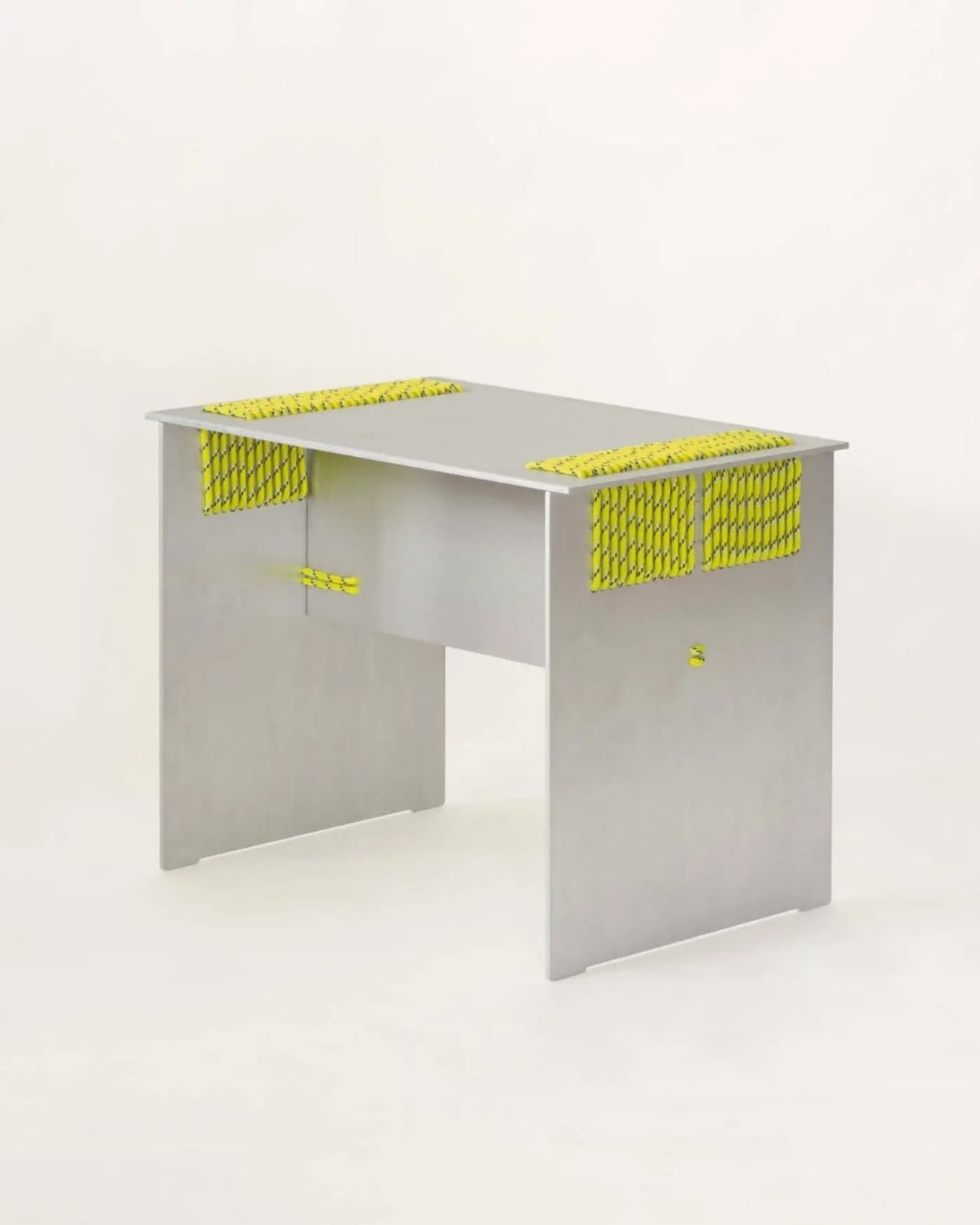
The documented rope options include purple, yellow, and gray, and the supplied images make a good case for how much color changes the object. Gray keeps the whole thing close to a single palette, letting the loops register through their shadows. Purple makes the stitching graphic. Yellow is the version I’d pick for an otherwise restrained room, because it gives the stool a little of the visual language of safety gear without covering the aluminum.
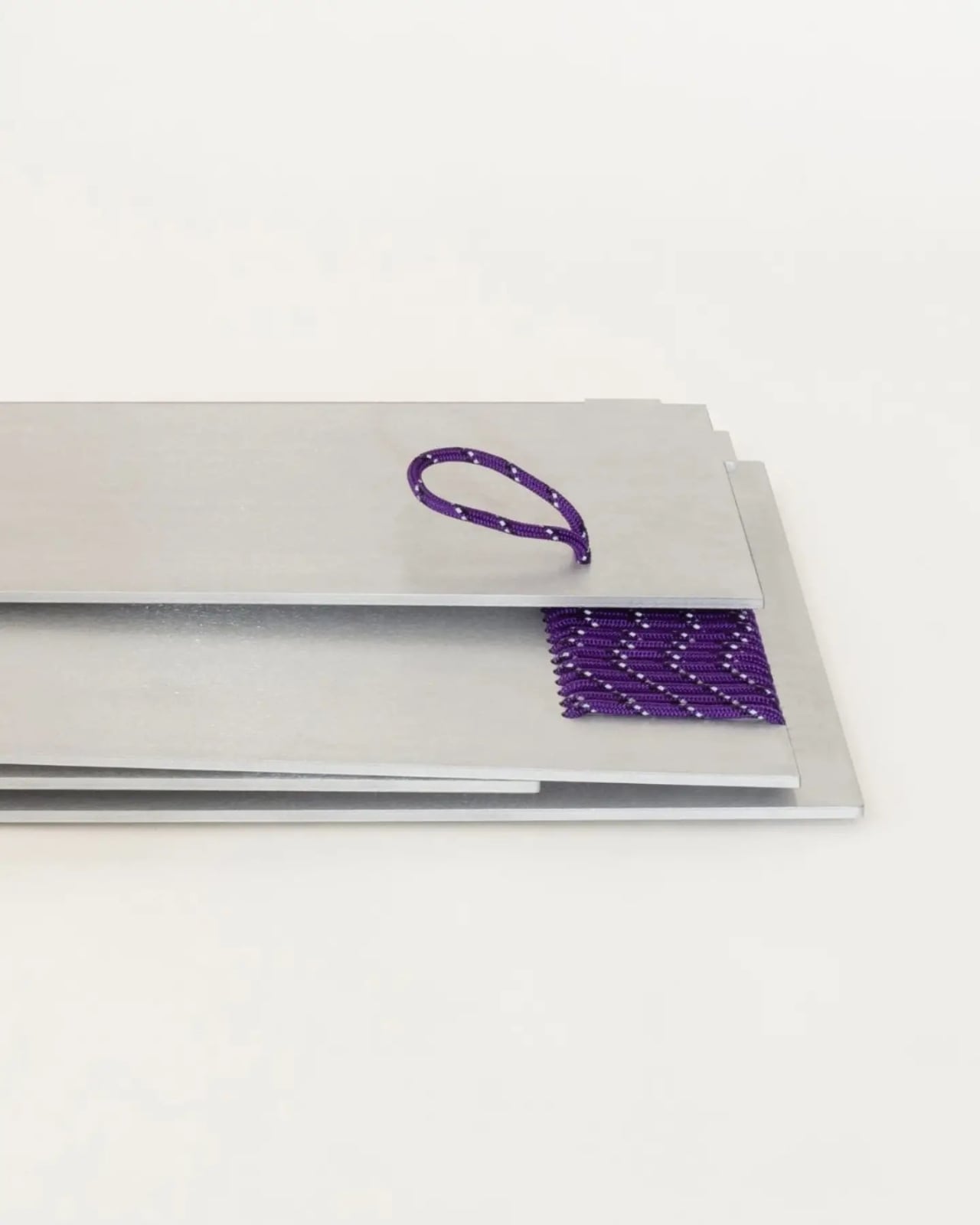
A view of the components stacked flat is equally interesting. The panels sit in a shallow pile, with sections of rope already threaded into place. It suggests a compact packing arrangement, although a photograph can’t tell us how intuitive assembly would be. I appreciate seeing this view alongside the finished object. It lets the design make sense as a collection of parts, not merely as a polished silhouette photographed from its most flattering angle.
Belgian retailer RUIMTE describes the stool as made to order and offers custom sizes and rope colors. Its listing displays a sold-out label, so ordering would need confirmation. That context helps place the design: this is a considered furniture purchase, rather than a substitute for the inexpensive extra seat you grab before guests arrive. Its attraction depends on wanting the construction to have a visible presence in your home.
I’d still want practical answers before choosing one for daily use. The studio’s project description doesn’t provide a load rating or detailed care guidance for the rope connections. Those details would help establish how the lashing should be checked or maintained over time. And while the rows of cord add texture near the edges, the seat remains largely a flat metal surface. I’d approach it as occasional seating rather than assume it promises armchair-level comfort.
Even with those questions, the Knot Stool earns attention through a specific, readable decision. You can look at the rope, follow its route, and begin to understand why it’s there. That makes the little exposed knot more compelling to me than an ornamental flourish. It gives an ordinary seat a reason to be examined from the side, underneath, and up close. The construction rewards curiosity before anyone even sits down.
The post first appeared on .
Related Posts