These unusual leaf-shaped wall tiles aren’t just beautiful — they also actively clean pollutants out of rainwater using channels of living algae. Created by students at the Bio-Integrated Design Lab at University College London (UCL), make use of living organisms to purify water in a sustainable way through a process called bioremediation. The designers created the tiles with India in mind, envisioning large-scale wall installations on factories and other buildings in the country’s rural areas, where no industrial wastewater treatment facilities currently exist. But they have potential to be used in other contexts, too.
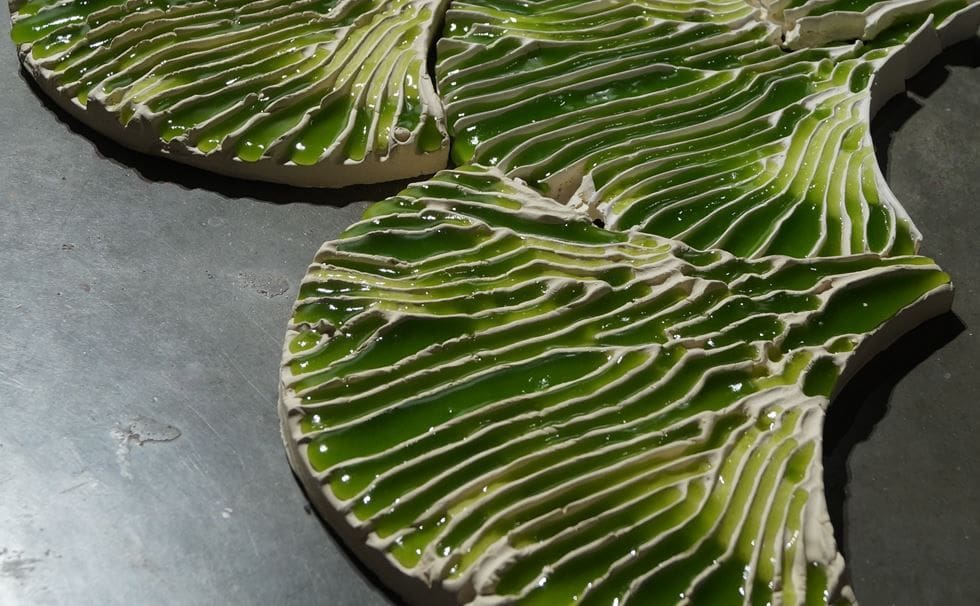
Wastewater management in rural India. In villages like Kundli, located on the outskirts of Dehli, hundreds of factories have popped up in a matter of decades, often releasing water contaminated with chemicals directly into the ground. The problem is that these factories, which manufacture items like plastics, rubber, jewelry, and polyester, typically don’t have enough space for high-tech water treatment solutions, even if they could afford them. The pollutants in turn make their way into groundwater and nearby waterways, contaminating the local bathing and drinking water.
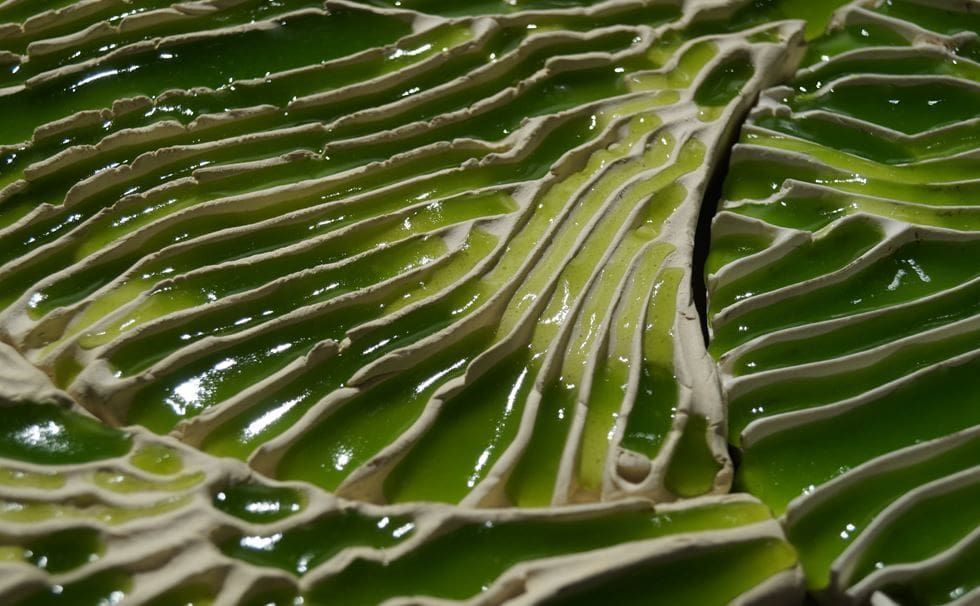
The Indus tile system’s algae-based bioremediation process involves placing a wastewater tank on top of the building and then allowing gravity to funnel the water though “veins” in the “leaves.” The designers traveled to India and observed the production processes of textile dyers in Panipat and bangle makers in Kolkata, where various processes release different types of heavy metals into the wastewater. The team found that one particular type of algae was able to reduce cadmium levels in the water by 10 times within 45 minutes.
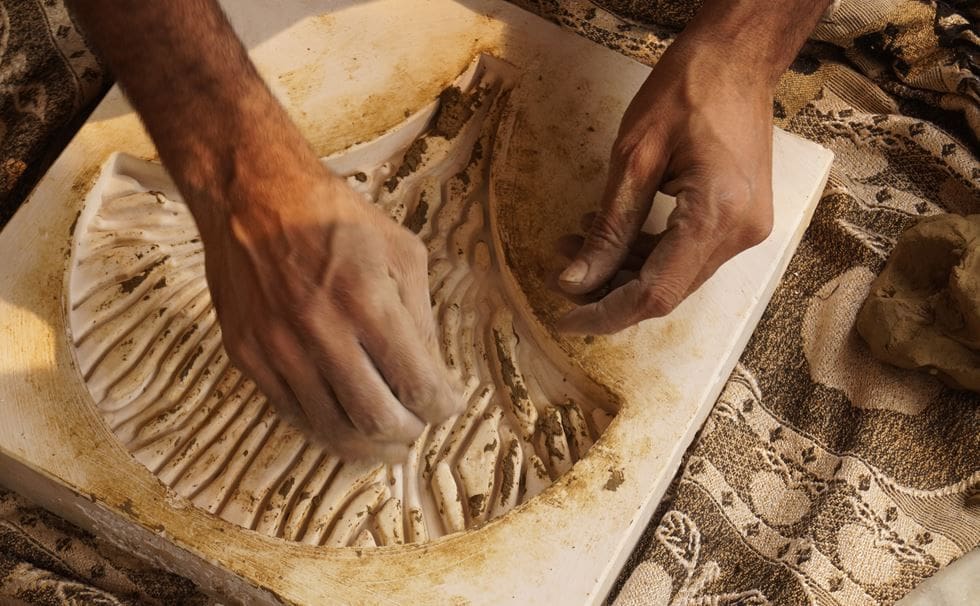
Fabricated in Khurja, India, which is known for its , the Indus tiles are made of clay and deeply textured to hold onto a viscous hydrogel containing the most promising pollution-busting species of algae. The vein-like channels are shaped by an algorithm to optimize their ability to absorb pollutants. As the water flows over a tile, the microscopic algae cells absorb and store the substances for energy. The hydrogel acts as a “biological scaffold” that keeps the algae alive, and it’s biodegradable. The materials required to prepare the hydrogel and algae cells can be supplied in a powdered form and reapplied to the tiles as needed.
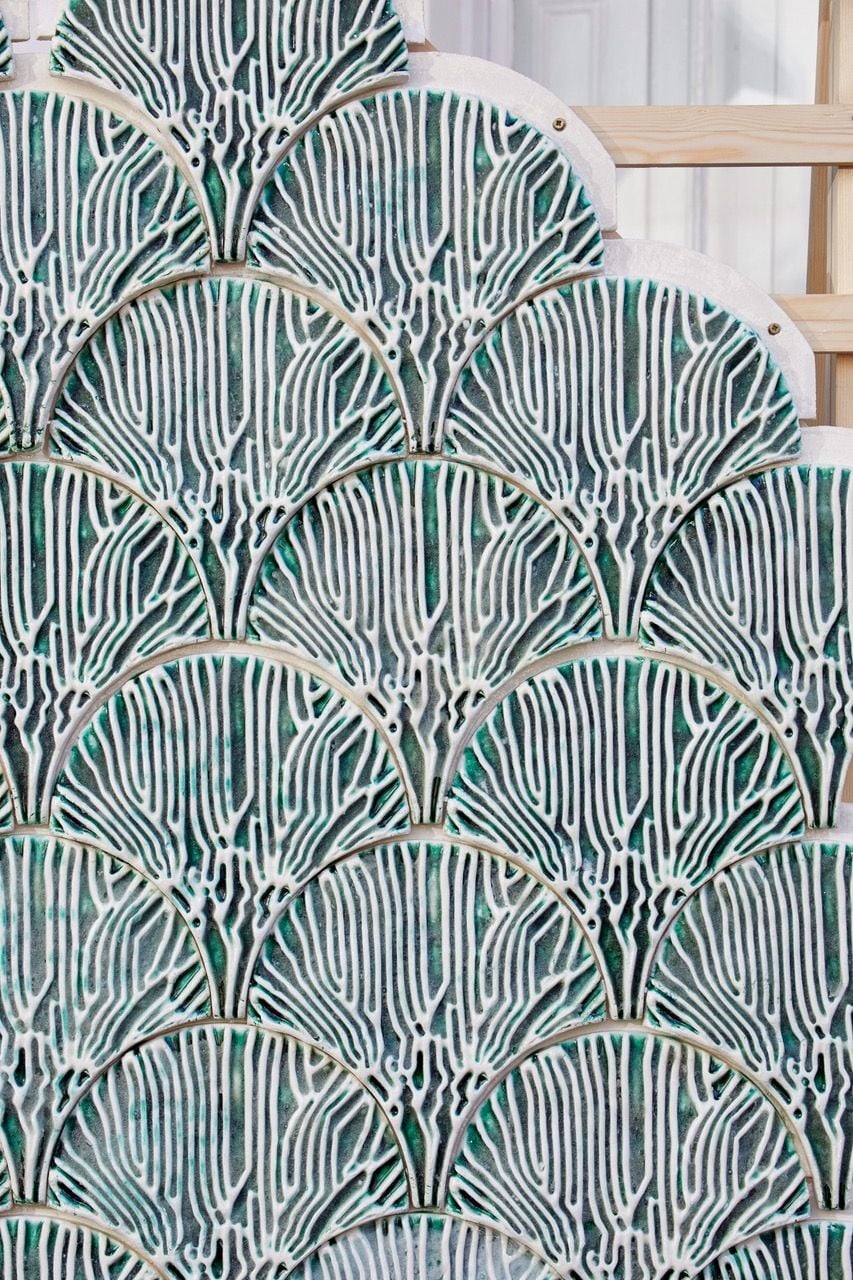
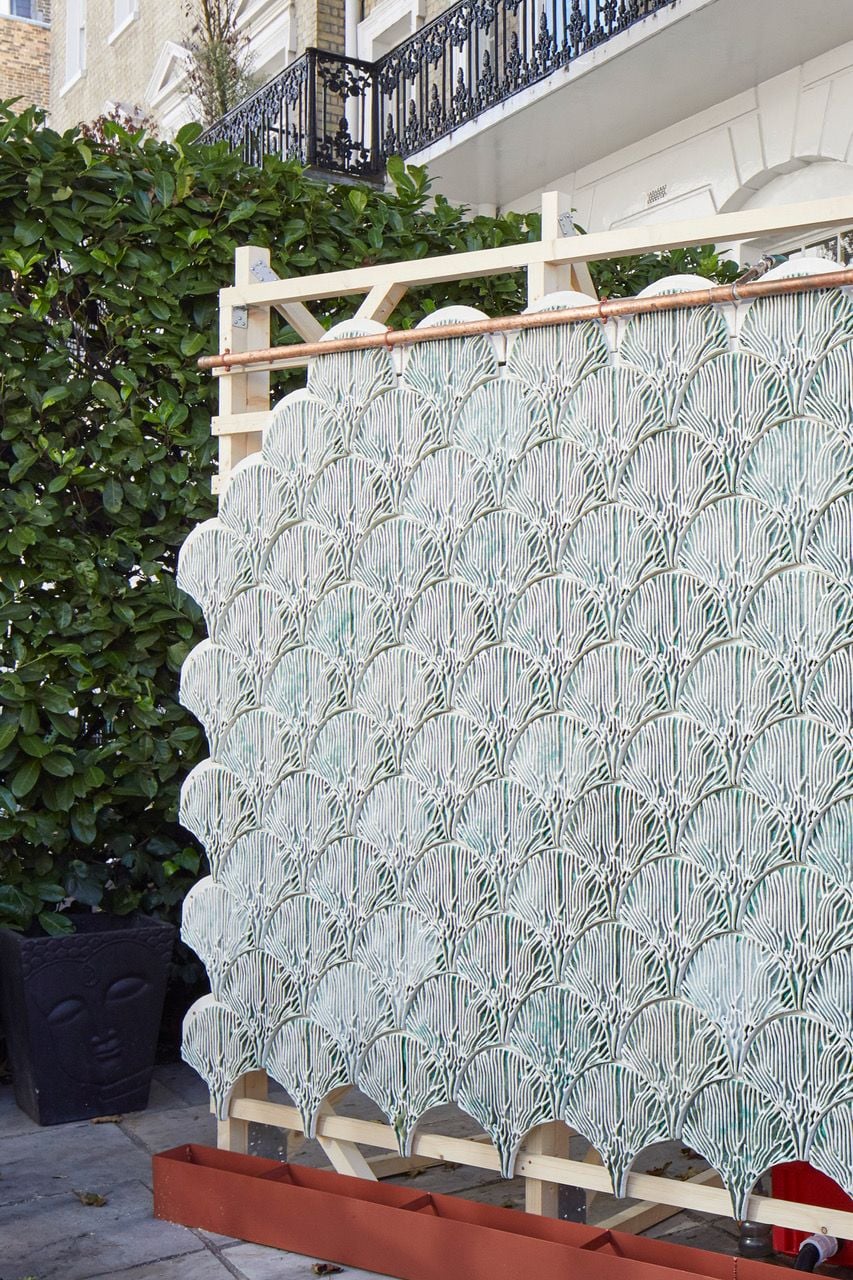
The modular tiles fit together into a beautiful pattern using half-lap joints, so individual tiles can be replaced as necessary without disassembling the entire wall. This also makes it easy to scale the wall size up or down, tailoring it to each site. In the future, the designers hope to integrate a second phase in which the saturated hydrogel packed with heavy metals is removed and sold to high-tech companies, which can use the metals in their own manufacturing processes. The Indus tiles are set to undergo performance tests in the UK and then a pilot project in India itself.
The creators imagine adapting Indus wall tiles to different regions and needs, making them from local materials like stone or even waste materials. Different tiles could be tailored to different pollutants, infused with the particular type of algae that works best in that context. Given that the end result is so beautiful, it’s not hard to imagine the concept extending to residential applications, too. Just imagine installing a wall of these at the edge of your own roof instead of a gutter, cleaning rainwater for personal use later on.
The post first appeared on .
Related Posts