Morningstar has released the 2021 update to their annual , which measures the gap between reported investment returns (buy and hold throughout the entire period) and investor returns (actual returns experienced due the real-world timing of buy and sell transactions). How well does the average investor time their purchase and sell transactions?
For the 10-year period from 12/31/2010 to 12/31/2020, the average return gap was negative 1.7% annually, with negative gaps across the board:
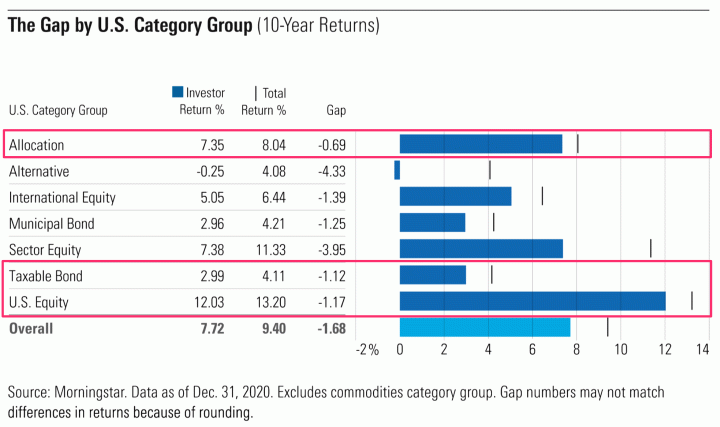
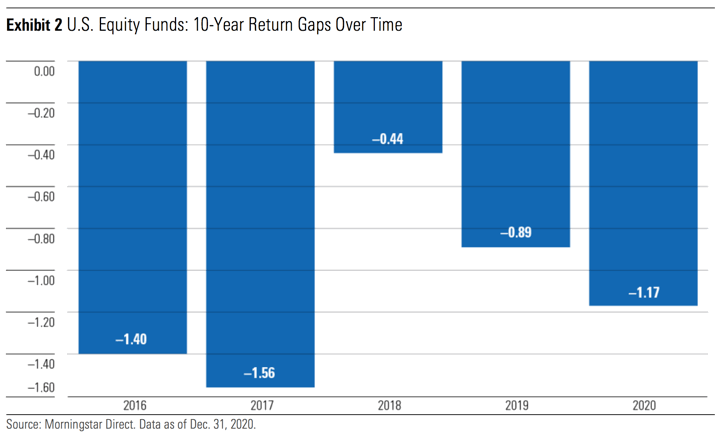
Investors in US stock funds had a 10-year return gap of negative 1.2% annually. This gap has varied over past rolling 10-year periods, but has been consistently slightly negative:
Now, this is not completely due to performance chasing. Here’s a quick example of how steady dollar-cost averaging may also result in a return gap:
To use a simple example, let’s say an investor puts $1,000 into a fund at the beginning of each year. That fund earns a 10% return the first year, a 10% return the second year, and then suffers a 10% loss in the third year, for a 2.9% annual return over the full three-year period. But the investor’s dollar-weighted return is negative 0.4%, because there was less money in the fund during the first two years of positive returns and more money exposed to the loss during the third year. In this case, there was a 3.3-percentage-point per year gap between the investor’s return (negative 0.4%) and the fund’s (2.9%).
Morningstar ran some extra simulations and DCA does possibly account for some of the gap, but a perfectly-steady DCA investor still outperformed the real-world investor in 6 out of 7 fund categories. DCA can’t be helped if you are simply investing what you can, when you can, but there is still extra trading in and out that appears to only make things worse.
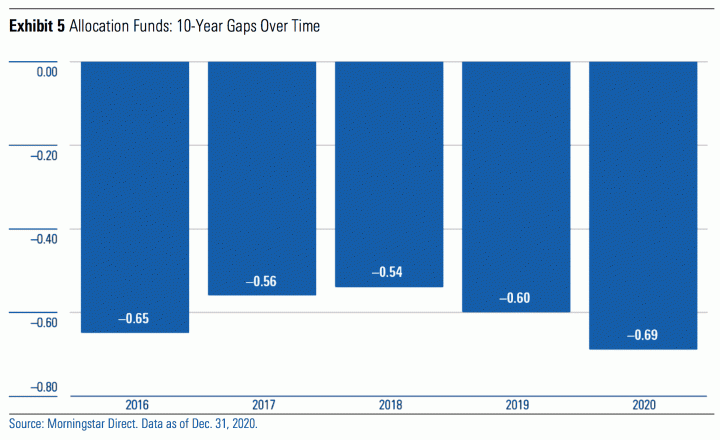
The most boring fund category that includes Target-Date funds has the smallest return gap. Target-date funds are included in the “Allocation” fund category as they include a managed mix of stocks, bonds, and other classes. These funds have the calmest trading activity, and we see that the return gap has been consistently smaller over time:
The fund categories with the most volatile cashflows in and out have the greatest return gaps. Alternative funds and sector equity funds did the worst.
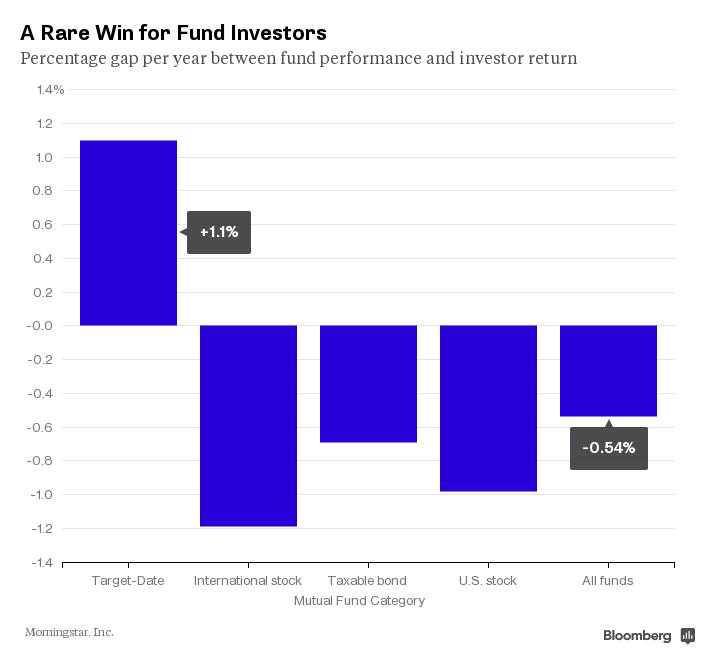
Investing in a low-cost target-date fund (TDF) is easy to dismiss as “too simple” or for the “inexperienced newbies only”, but often the inaction of TDF investors work in their favor. Maybe we should give credit to the humble investors that knows they could do a lot worse by thinking they have skills that they don’t actually have. (Meanwhile, I’m also guilty of thinking that I can do better than a TDF.) From a using Mind the Gap data from 2015:
But target-date funds have one big advantage over other kinds of mutual funds, the data show. The average mutual fund has a flaw, which is that the average investor hardly ever does as well as his or her funds. Investors tend to jump in and out of funds at the wrong time. They buy high, choosing funds only after they’ve done well. And they sell low, dumping underperforming funds just as they’re about to take off.
“The editorial content here is not provided by any of the companies mentioned, and has not been reviewed, approved or otherwise endorsed by any of these entities. Opinions expressed here are the author’s alone. This email may contain links through which we are compensated when you click on or are approved for offers.”
from .
Copyright © 2004-2021 MyMoneyBlog.com. All Rights Reserved. Do not re-syndicate without permission.
Related Posts