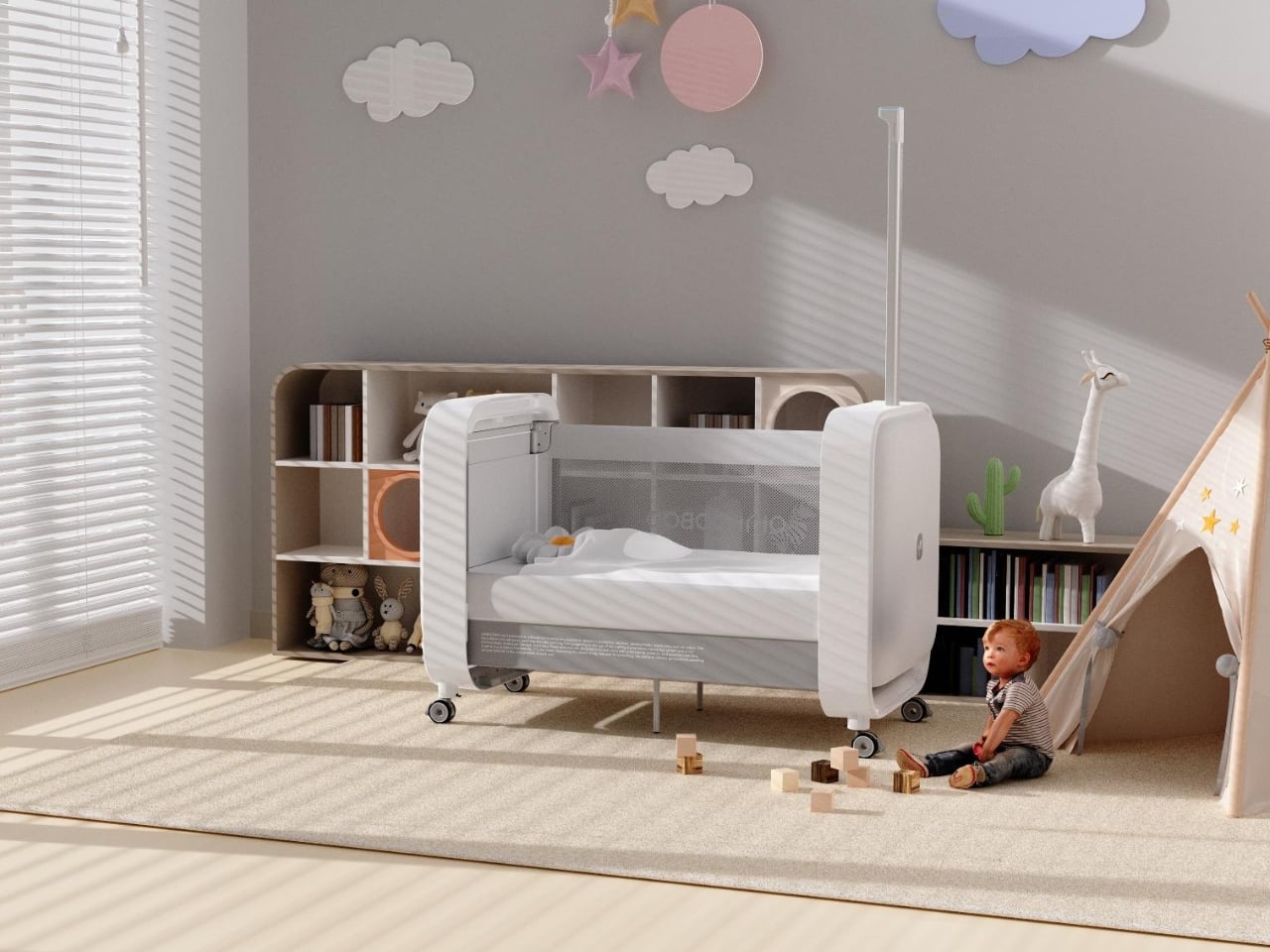
Baby gear has always been functional. Safe. Practical. But design, real design, has rarely been part of the conversation when it comes to infant furniture. The Monai Sleepod Baby Crib is trying to change that, and it’s doing it with enough technology packed inside to make your phone feel a little insecure.
Designed by Wen Rui, Shi Zongjing, and Shen Jiahao for Kaiwang, a Shenzhen-based design team, the Sleepod made its debut at CES 2026 and later turned up at Milan Design Week 2026. Two events that rarely share the same audience, and showing up at both is a clear statement of intent: this is a product that wants to be taken seriously as both technology and design.
Designers: Wen Rui, Shi Zongjing, Shen Jiahao for Kaiwang
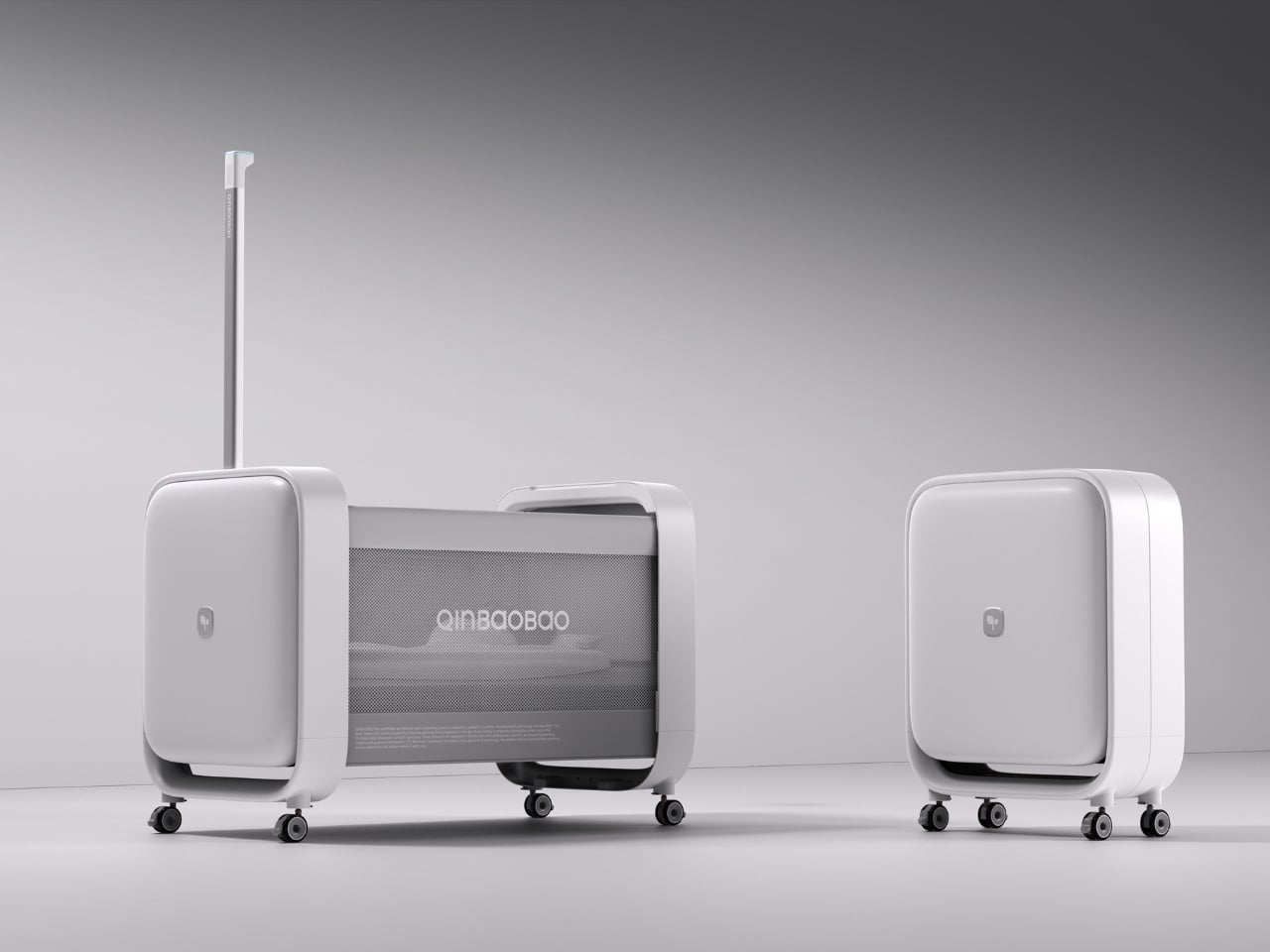
At a glance, the Sleepod looks clean and considered, more like something you’d see at a Scandinavian design fair than in the baby aisle of a big box store. Its collapsible, luggage-style frame packs down quickly with a one-button folding mechanism, making setup fast and storage genuinely easy. The adjustable bed and railing heights let the crib adapt as a baby grows, rather than becoming obsolete after a few months. For parents used to baby gear that seems designed more for showroom appeal than real daily life, those are practical wins that add up quickly.
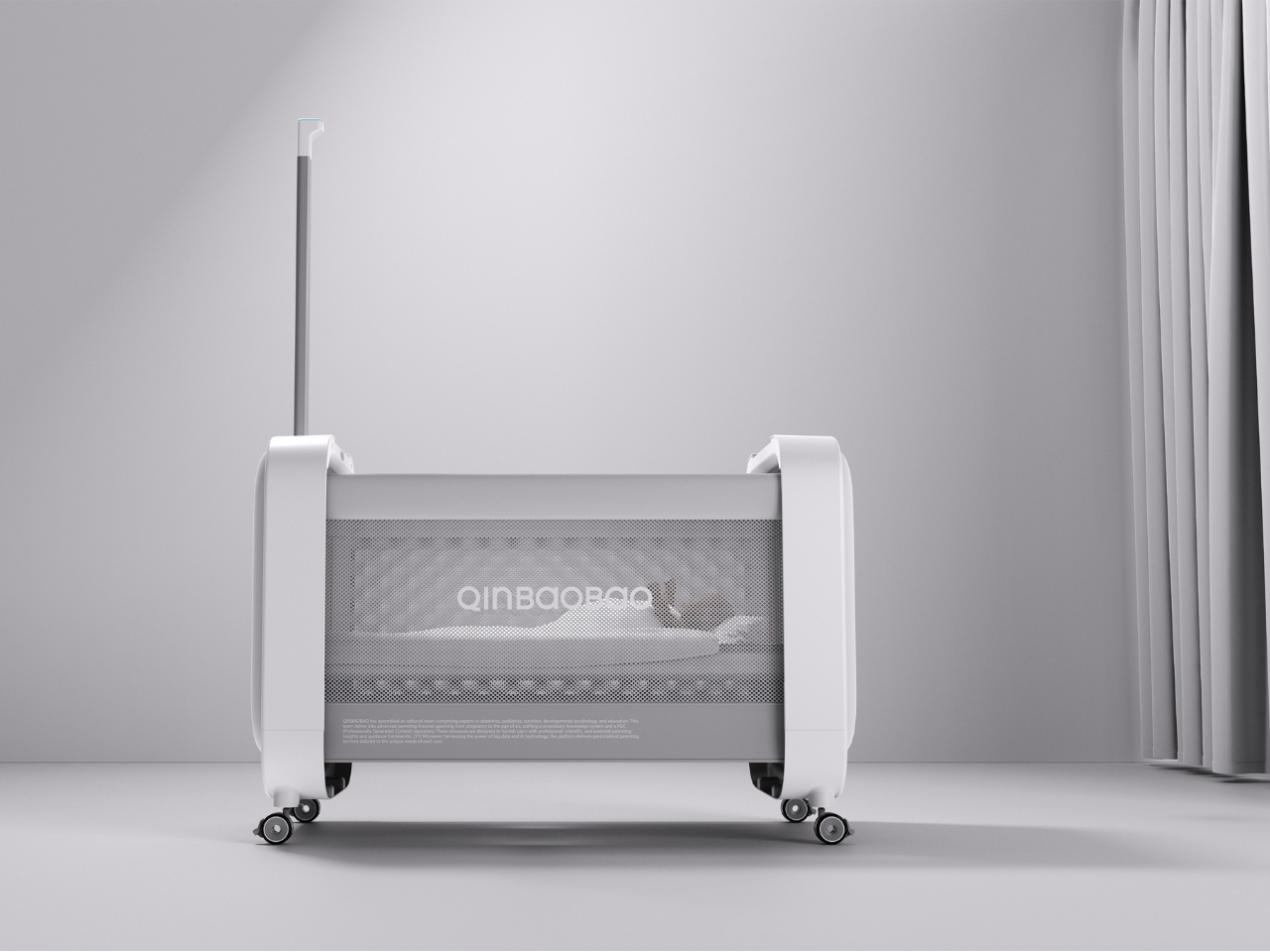
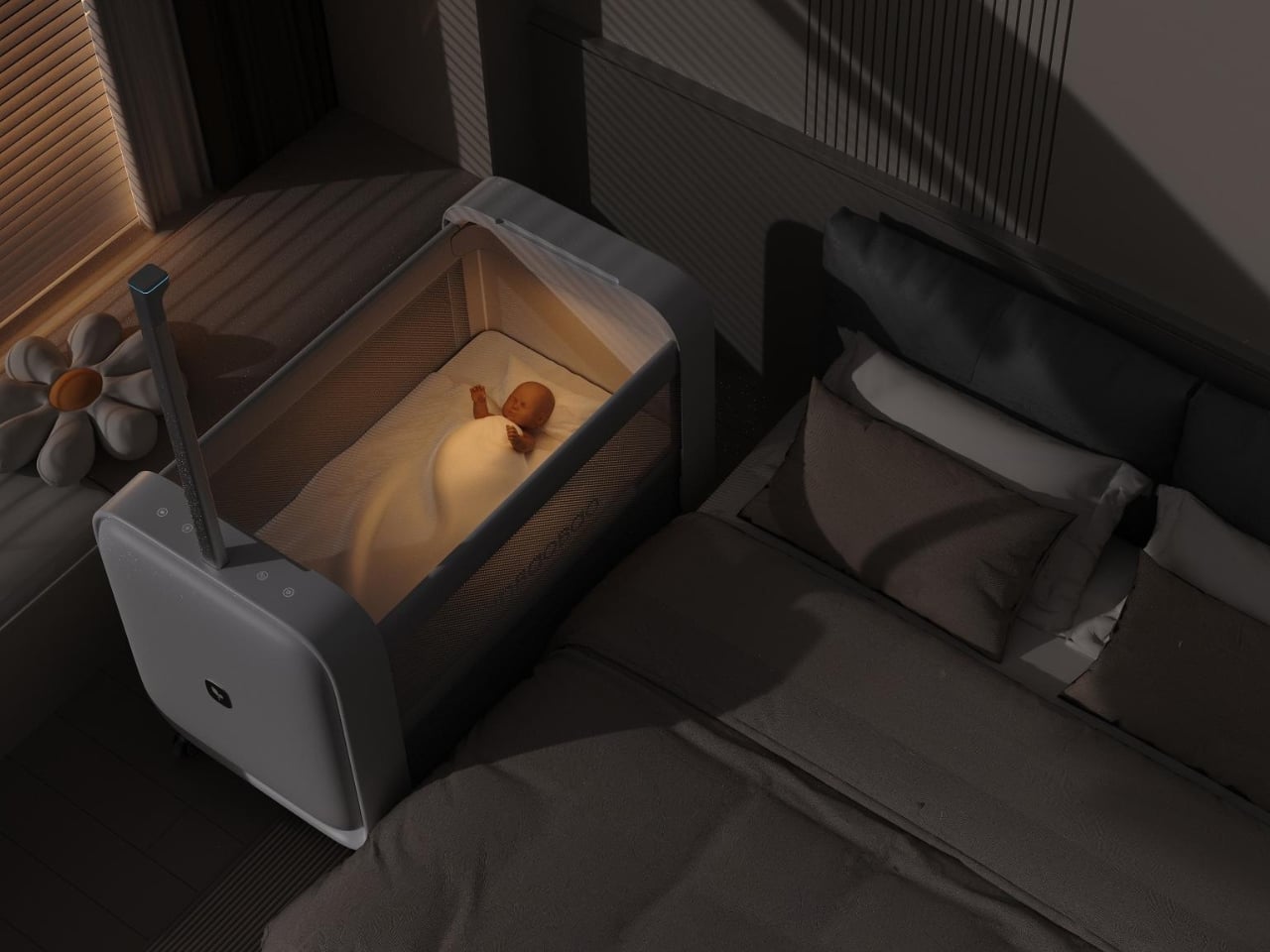
The technology is where the Sleepod really separates itself from everything else on the nursery floor. Inside the compact frame is a stack of sensors that would feel at home in a medical monitoring setting: a 4K full-color camera with low-light imaging, millimeter-wave radar, and thermal infrared sensors. Together, they track a baby’s activity, sleep quality, breathing, heart rate, and body temperature around the clock. The camera detects covered faces and proximity to the railings, triggering alerts before a situation has a chance to become dangerous. It also reads cry patterns and monitors sleep cycles, giving parents actual data rather than anxious guesswork at 3 a.m.
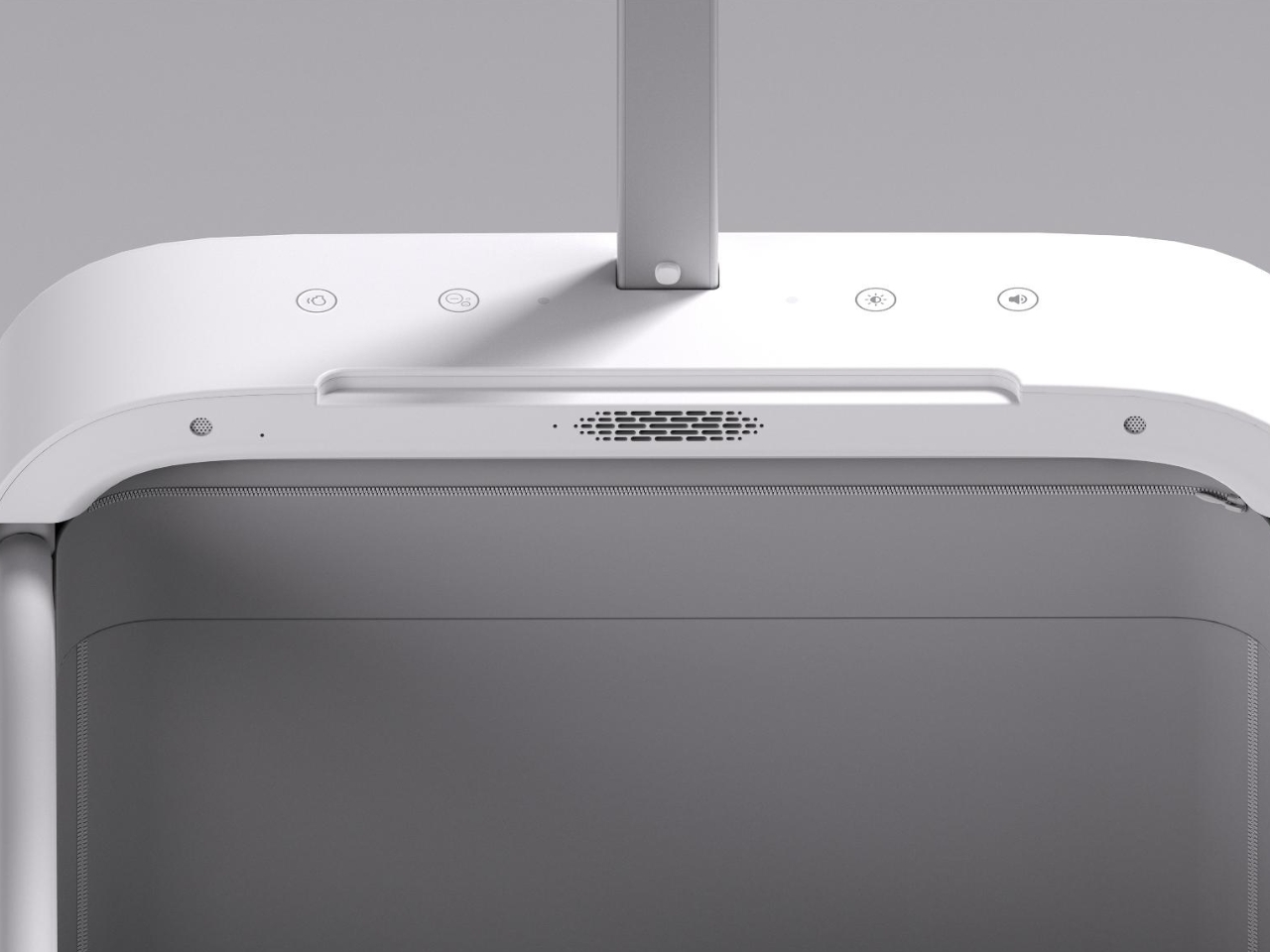
There’s also a negative-ion air purification system built into the design, along with gentle audio features intended to help soothe babies to sleep. The whole system runs on full-stack, in-house AI technology, and Monai describes it as the first application of embodied intelligence in baby care, which essentially means the crib is built to understand and respond to its occupant rather than simply containing one.
As a piece of design, the Sleepod makes me think the baby furniture industry has been dramatically underestimating what a crib could be. Most cribs ask parents to do the sensing, the watching, and the worrying. The Sleepod redistributes some of that cognitive load. For anyone who has spent a night lying awake, listening for sounds that may or may not mean something, that shift in responsibility feels genuinely meaningful.
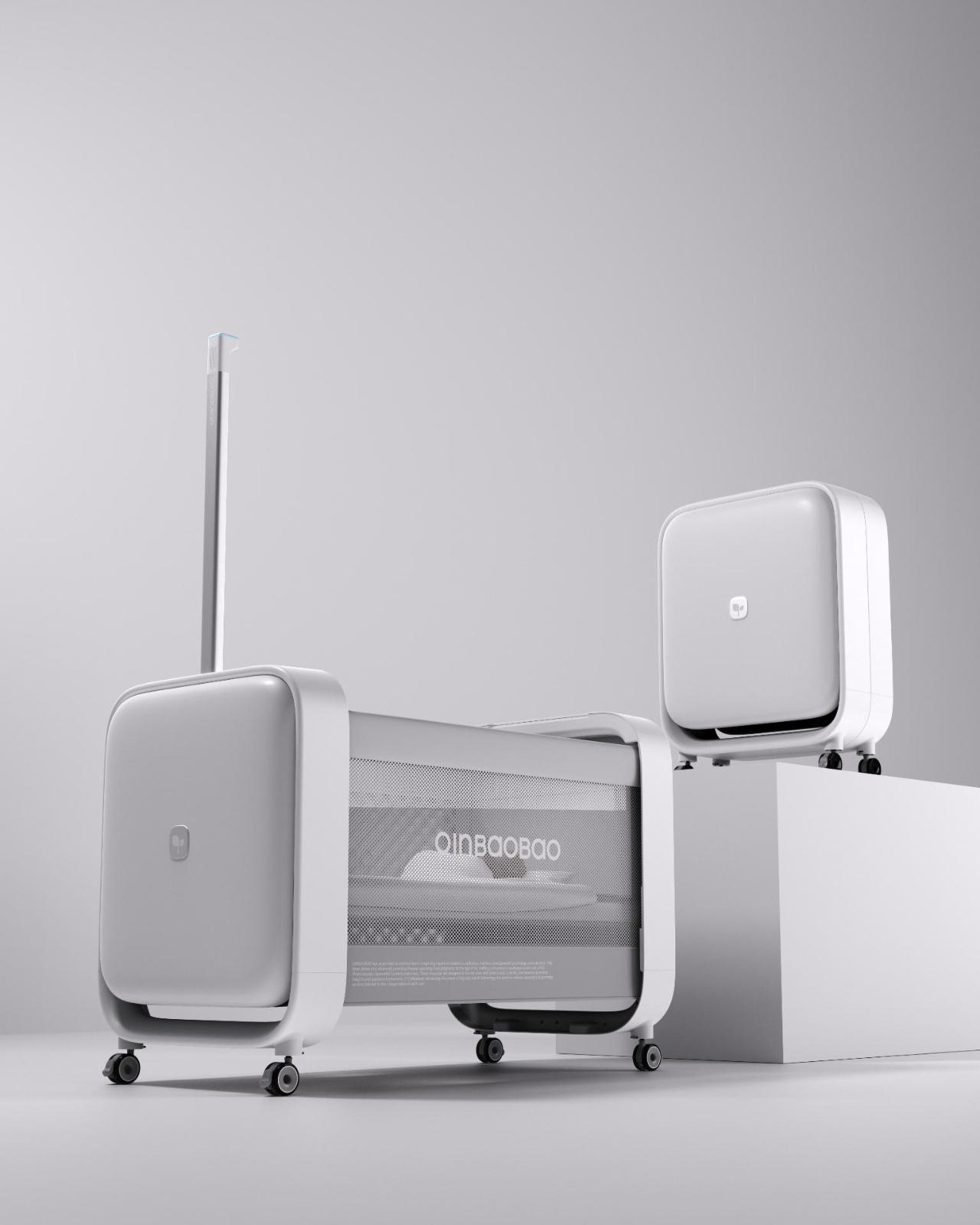
The design language is notably restrained, and that reads as a deliberate choice. Nothing here is trying to be cute or playful in the way baby products so often default to. It feels like something built for the parent as much as for the baby: calm, precise, and considered. The foldable frame and portable form suggest a team thinking about modern parenting realistically, including families who travel, move frequently, or simply don’t have space for furniture that works only one way.
The questions around always-on AI monitoring in a nursery are worth naming. Multi-sensor fusion with 4K imaging running continuously is a significant data footprint, and parents will reasonably want to know what’s being processed on the device versus what’s sent to the cloud. These are conversations the industry needs to get better at having openly as smart baby tech shifts from novelty to expectation.
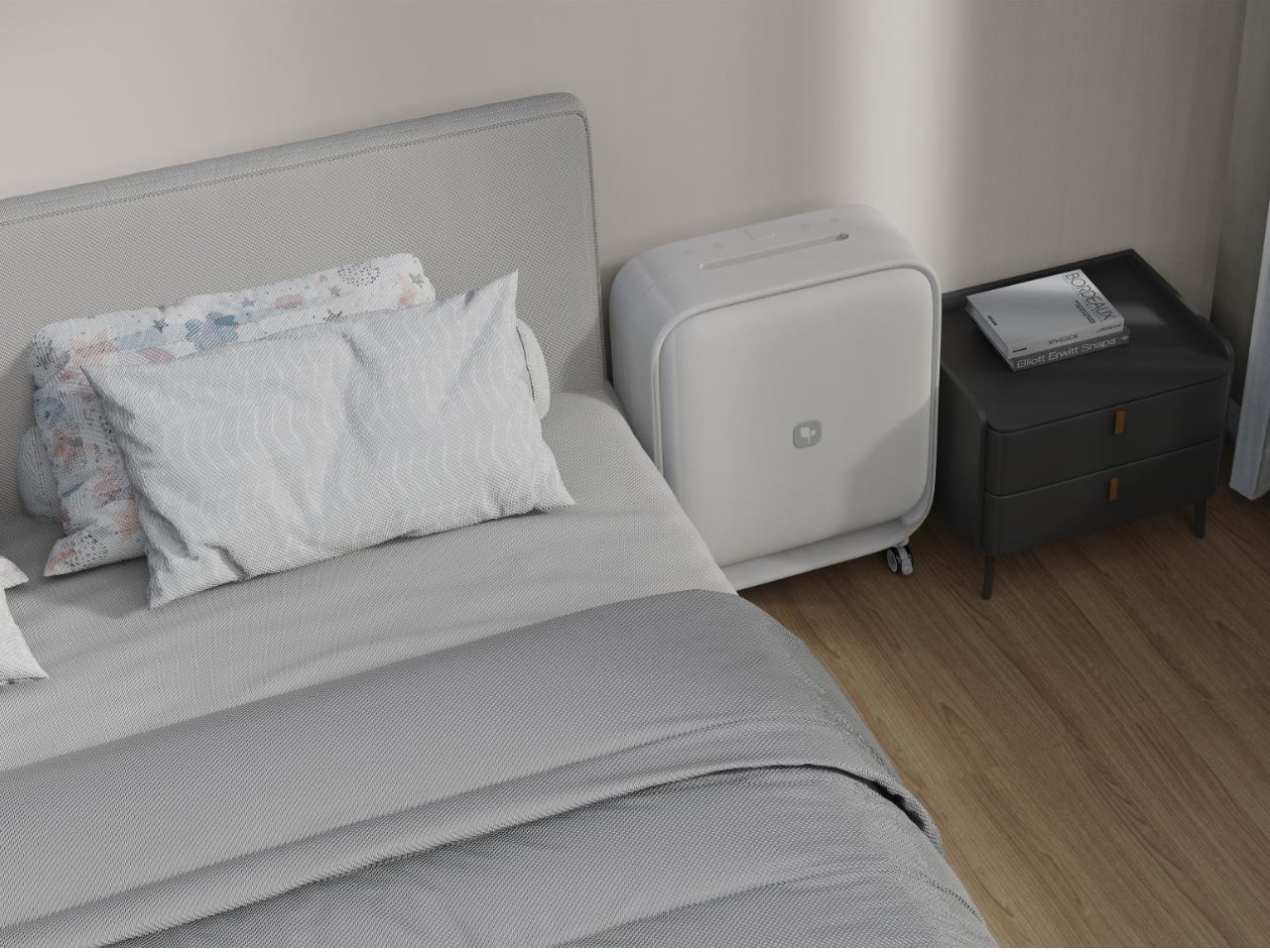
Still, as an object and as an idea, the Monai Sleepod Baby Crib is a genuinely compelling piece of work. It doesn’t treat technology and furniture as two separate concerns parents have to manage on their own. It makes them one coherent thing, designed around what it actually takes to keep a small, new person safe, healthy, and sleeping well.
The post first appeared on .
Related Posts