
Mo’ money, mo’ problems? Or more money, more happiness? Over the years, the media has picked up on academic studies trying to establish the relationship between the two, and it seems we have a new result from two initially conflicting researchers. First, a bit of backstory.
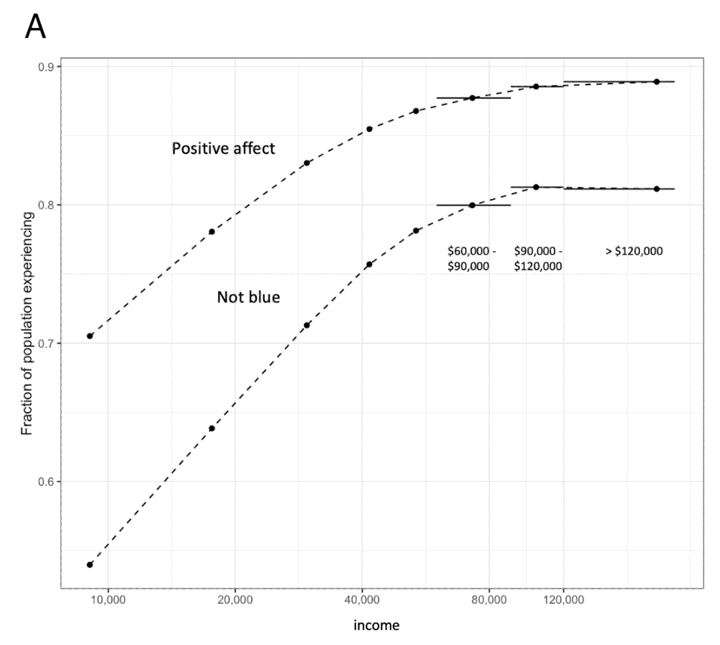
Round 1: The $75k plateau? In 2010, Kahneman and Deaton found that happiness rose as annual income increased initially at lower incomes, but eventually it leveled off and happiness plateaued at between $60,000 and $90,000 annual income ($75,000 midpoint). From my post
Below 60,000 dollars a year, people are unhappy, and they get progressively unhappier the poorer they get. Above that, we get an absolutely flat line. I mean I’ve rarely seen lines so flat.
Here is a reproduction of the chart in that paper.
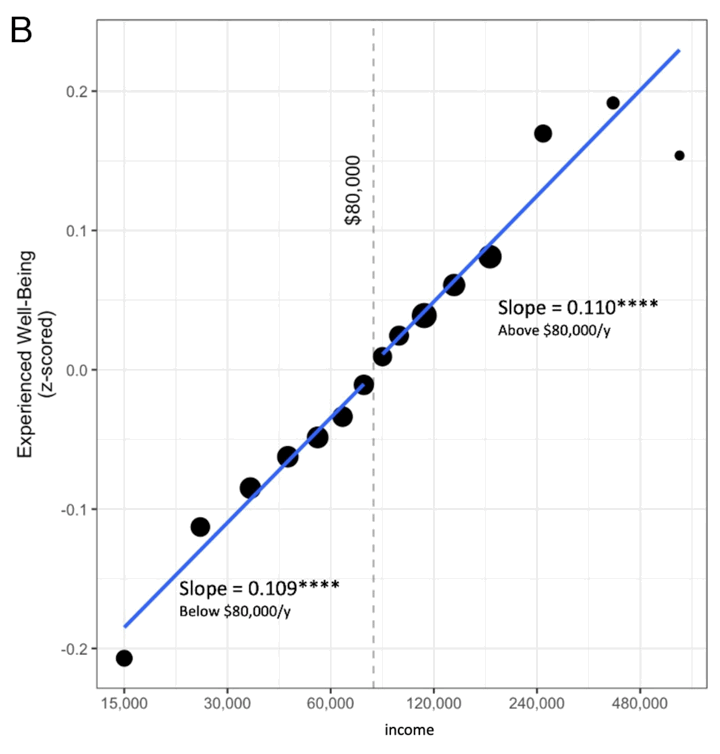
Round 2: No plateau. More money, more happiness. In 2021, Killingsworth found that happiness rose steadily with income well beyond $75,000 with no plateau effect. I wrote the post Here is a reproduction of the chart in that paper.
Round 3: Adversarial collaboration leads to a bit more nuance. Kahneman and Killingsworth decided to collect more data (especially at higher incomes), and analyze it together. Here’s the chart of their findings from their paper :
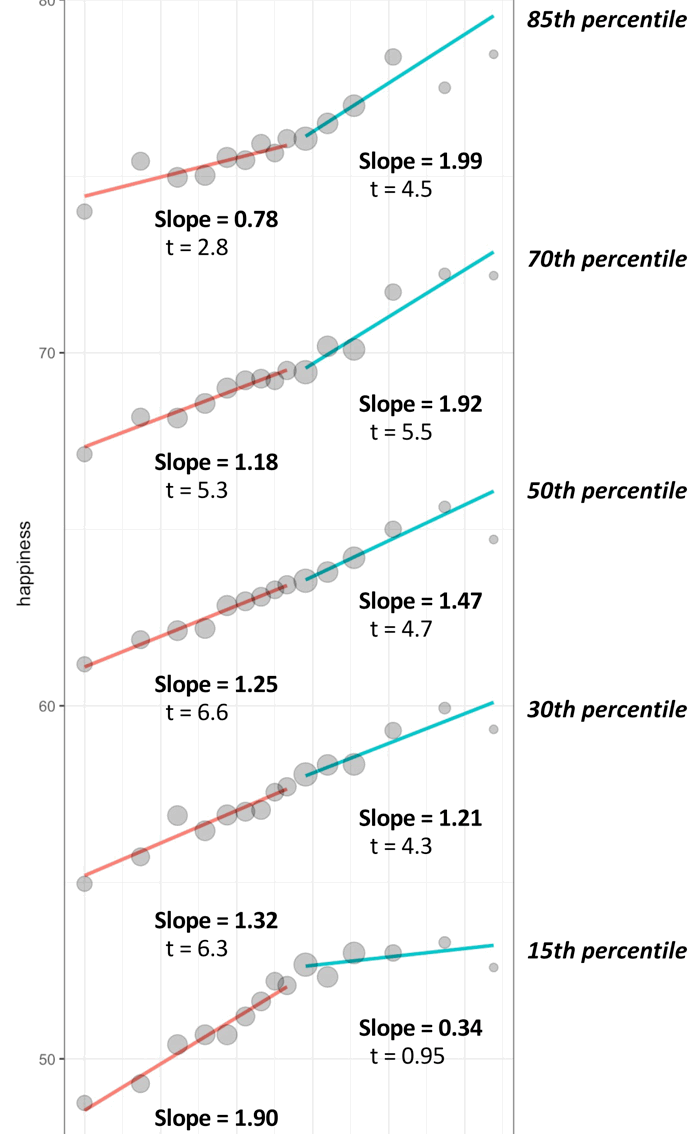
Looking at the chart, you can see the two major conclusions:
- For the happiest 80% of people (most people), happiness continues to rise with income, even with very high incomes.
- For the unhappiest 20% of people, happiness rises up to about $100,000 in annual income and then plateaus.
“In the simplest terms, this suggests that for most people larger incomes are associated with greater happiness,” says Killingsworth, a senior fellow at Penn’s Wharton School and lead paper author. “The exception is people who are financially well-off but unhappy. For instance, if you’re rich and miserable, more money won’t help. For everyone else, more money was associated with higher happiness to somewhat varying degrees.”
The paper also explores why Kahneman and Deaton may have previously overstated the flattening pattern and why Killingsworth failed to find it. I doubt this will be the last round of this debate.
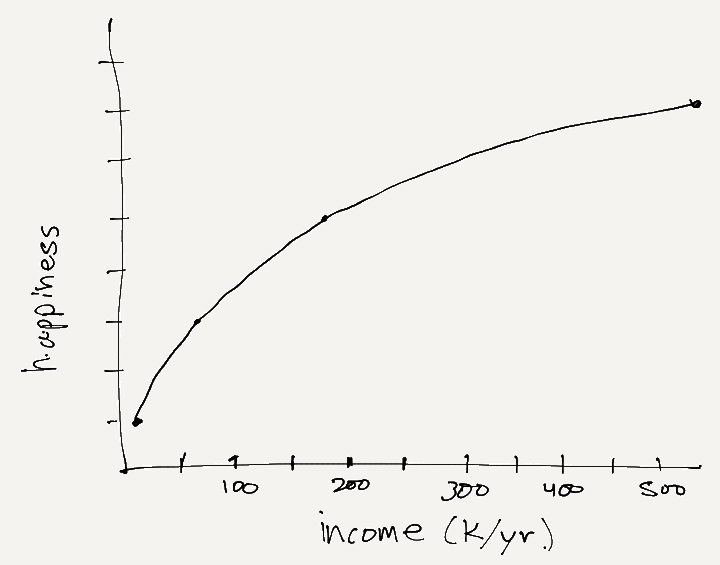
I would simply point out (again) that they are saying happiness tends to correlate with log(income), not income. To illustrate what this means, in order to match the amount of linear happiness increase from $20,000/yr to $60,000/yr income, you would have to go from $60,000 to $180,000 year, or then $180,000 to $540,000 a year, and so on. That would look more like the sketch below.
My take. Getting a $25k annual raise will make a person currently earning $50k a much larger happiness boost than a person currently earning $150k. But, that $150k earner will still become slightly more happy (unless they simply tend to be miserable no matter what). Sounds about right to me.
Additional sources: , ,
“The editorial content here is not provided by any of the companies mentioned, and has not been reviewed, approved or otherwise endorsed by any of these entities. Opinions expressed here are the author’s alone. This email may contain links through which we are compensated when you click on or are approved for offers.”
from .
Copyright © 2004-2022 MyMoneyBlog.com. All Rights Reserved. Do not re-syndicate without permission.
Related Posts