has built an enviable catalogue of instantly recognizable furniture, from Michel Ducaroy’s to Yabu Pushelberg’s . But co-CEO Antoine Roset, who represents the fifth generation of the family-owned business, is increasingly focused on strengthening the identity of the brand behind those designs. In recent years, this ambition has manifested in collaborations that step beyond the world of interiors. In 2025, the French manufacturer partnered with bicycle maker Origine Cycles on a limited-edition performance bike, and this year, it joined forces with fashion house BOSS to give the Togo chair a tailoring-inspired makeover.
While the brand may be exploring new directions, its archive of iconic pieces remains its bread and butter. As uncertain economic times make producing new collections riskier (and costly), the brand is lucky to have a roster of tried-and-true designs to pull from, driving a growing wave of reissues from names the likes of which include Pierre Paulin and Philippe Morel-Lab. The challenge, then, is to find the balance between sticking with what works and pushing the envelope.
We caught up with Roset to discuss the creative and commercial considerations that inform these decisions — and what he hopes Ligne Roset will stand for in the years ahead.


The last time Azure spoke with you, you were beginning to implement a slower, more considered approach to developing collections. How has that manifested in practice over the past few years?
- AR
-
When we say we’re slowing down, we’re trying to be more mindful regarding what our customer brings into their home and the durability of the product. It’s our responsibility as a manufacturer, especially as a family business, to make sure that we produce enough projects, not too many every year in the market. We are shrinking our collection a little bit — we have such a large collection that any consumer won’t see the difference — and we try to approach the new collection, not only through design and adding products because we like them, but also through what the market wants, how people are buying, what are the real needs, and so on.
Looking at the 2026 collection, how does it reflect what you’re seeing in the market right now?
-
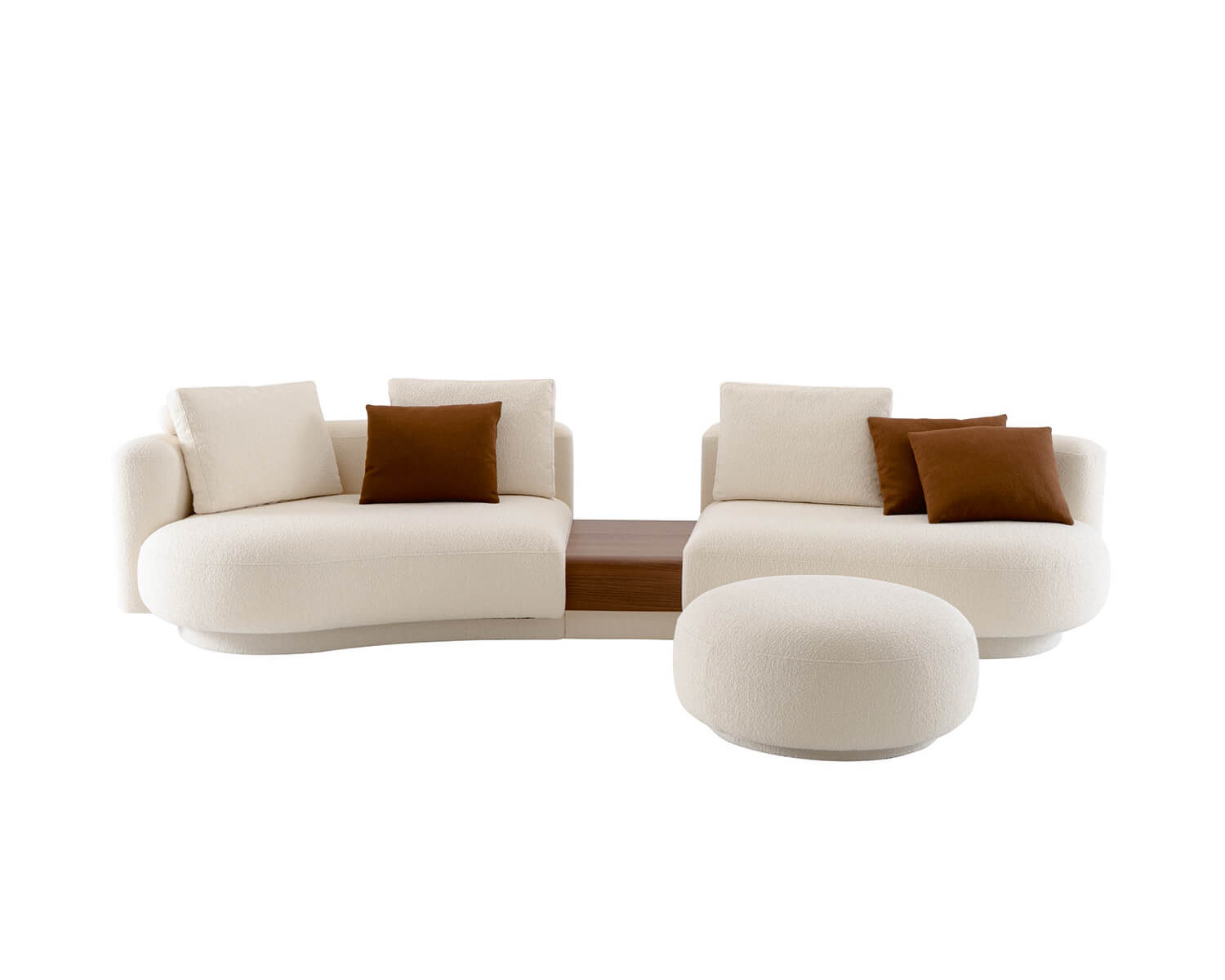
There is still a huge demand, especially in Europe, for the reedition of products. People are still really looking at the 50s, the 70s, a little bit of the 80s. This year we re-introduced Marsala by Michel Ducaroy and the ML 80 by Philippe Morel-Lab, both from the 70s, and working with our two designers Pierre Paulin and , last year we have introduced small pieces from the 50s, and we see this picking up slowly but surely, and it’s responding to the market. These are the two big trends. We still also need big pieces that appeal to an international audience, so we’ve added the new Anja sofa, which is more dedicated to big living rooms, more classic in a way, with this round shape and where you can add components to make the size you want, very rich materials.
Some people are telling us, ‘You’re only doing reeditions, you’re not very creative.’ But this market doesn’t want to be creative. We can see that for the last eight to 10 years, the reedition is really the biggest trend. And thank God we have a very nice collection, so we don’t need to go and imitate the style of the 70s. With Michel Ducaroy, we had so many collections that we can still probably produce a few years of re-editions without a problem.

How do you balance the commercial appeal of these established designs with the investment and risk involved in developing something entirely new — and make sure that the collection retains a singular brand identity?
-
The 50s are remarkable in terms of design, and I would say the 70s still feel super modern today. When you look at them, I don’t see much improvement compared to 80, 90 per cent of what’s on the market. It’s easy to build a collection around. Where we struggle is how we add new products, because there is a process, a cost to launch a collection. When you are very creative, you are always taking a risk. And right now, maybe the economics are not the best to take so much risk. Even though, I have to say, we are sitting on the Ploum right now during this interview, and it launched in 2010, when the financial crisis hit the entire world. We were a little bit foolish to do it, but it has been a success. So, we need to continue to be creative. But it’s a balance — and it’s not easy.

You presented your latest collection at the Palais de Tokyo through an imaginary hotel and speakeasy, with a particular emphasis on your contract capabilities. Is your growing involvement in hospitality design beginning to influence the development of your residential collections?
-
There’s a certain group of customers that really like the feeling of having a hotel-like spirit in their interior, especially in the bedroom. With the stress people have today when they watch TV, and look at social networks, when they hear about the news around the world, having a very comfortable, relaxed place is like a cocoon. When you arrive in a nice hotel room, you feel secure. So if we can bring that feeling home, why not? We wanted to show that the boundaries between contract hotels and residential are getting closer, and when you are working with a brand like Ligne Roset, you can almost ask us to do anything, and we should be able to deliver.

Design, maybe more than ever, is looking outside of the industry for inspiration. You’ve recently collaborated with BOSS and Origine Cycles — two rather different companies outside the furniture industry. Are you interested in expanding into the fashion and lifestyle market?
-
It’s an excellent question, and I’m happy you’re asking because that means that it works. I’ve been working for this company for 20 years, and my father and my uncle have done an amazing job developing our products and relationships with designers. We have to continue the heritage of what they have created, but we’ve arrived at a level where we feel confident that we can continue in that direction.
Where we want to work is more on the brand itself. And when we do partnerships, we’re trying to reach people who have the same approach but don’t necessarily express it through the same product. Ligne Roset is speaking to people who like design, so meaning having a nice product, well-designed, comfortable, and so on. Origine is speaking to people who like to bike, but the product is super modern. With Actes Sud, they’re appealing to people who like to read very good quality books. And with BOSS, it’s an approach to fashion that’s contemporary, modern, young. And we thought this is a high-end fashion brand, what would a sofa made by them look like? Their approach to Togo was interesting because they said if we’re going to do leather, we need to do a twist — just like how you can wear a jacket with jeans or a pair of sneakers, you don’t wear a suit anymore. I think fashion is very good at reading trends, and they are always advanced compared to us because they are working not for 2027 today, they’re already working on 2028 trends. So, they are the ones who are driving the customer to what they’re going to purchase.
All of our collaborators have the feeling of being part of the same group. We chart the brands, and we try to find the circle that fits all the brands. It’s about finding your same customer in new places. If we want to build a brand that people think about, we need to be active as a brand, not only a product. I hope that the brand will be recognized on its own, not only for the product, but through characteristics that define it: anti-conformism, CSR, and in a way, a certain coolness, a certain approach, a vision of our world.

Working with brands from these different industries, have you learned anything about the way that they approach design that you’re planning to take forward?
-
It’s like any partnership in life. If you’re in a relationship and you think that you’re the one running the show, after a few weeks, there’s no couple anymore. Other brands have learned a lot from us, especially when it comes to our product. And with BOSS, we learned a lot about the art of marketing and how to do a campaign quickly, how we can reach the entire world — and also why fashion is approaching design that way. It took us two years to get to the final product, because the first idea they came with, we were like, we don’t get it. So they said, okay, we understand, but we really want to work together. And they came with this idea of the Togo, and I think it’s quite cool.

You previously expressed reservations about furniture adopting the pace of fashion. What do you think furniture can learn from fashion without taking on its constant cycle of novelty?
-
We’ve reached the limit of consumption in our world. We throw away tons of food every year. I don’t see why we should produce more food when we’re not even capable of delivering it to those who need it. It’s the same thing with our industry. There is more than enough cabinetry, seating, rugs and so on, but we have to deliver the right products to the right people.
We work a lot on durability. When you buy a Ligne Roset product, you should be able to keep it for 20 years. I’m not telling the customer what they have to do, but if they want to keep it, they should have something that will retain the same quality, the same comfort, the same elegance. And we can see it through our collection. We have products like Togo that have gone more than 50 years without discontinuation. That’s just to show you that we are not in a trend of changing things for the sake of changing things. Slowing down doesn’t mean decreasing what we do — our company can still continue to grow, but it’s a different approach.

You’ve recently updated the Togo’s foam to incorporate recycled material through a mass-balance system. What does that change mean in terms of measurable environmental impact? And are there other material innovations being developed at your factories that could shape future collections?
-
We do a carbon neutral recap every year, so we know exactly what the worst offender for carbon production is in our industry, and for us it’s the heating system of the factories and the foam. We decided to talk to our partner supplier, and they said, “Yeah, we can find some solutions.” And the idea is to bring reused components — like oil from restaurants — and break them down to create the molecules that are used to make foam, which are isocyanate and polyols. The way we did it, we didn’t have to change the recipe of the foam, and material’s durability won’t change. Whereas when you use another process, you don’t know, so you have to wait 10 or 15 years to do the research and development.
Right now, we are not yet capable of using only recycled materials, so it’s a mix — about 50 per cent. But we are working on increasing it until we have more and more recycled components. And the next step is how much of this can we put into our collection? The ideal future would be 100 per cent on both sides. The biggest barrier is to get the components, and it has an upfront cost because you’re creating a new process. You have to make sure you have enough material to create the demand, and that you arrive at the right price — because if we start offering green foam but at a very high price, no one will buy it.

What are you working on right now that you’re particularly excited about? Are there any new collaborations you can tell us about ahead of next year’s launches?
-
Next year, we have the chance to be the first editor, manufacturer and distributors of Pierre Paulin in the world. It will be the 100-year anniversary of Pierre Paulin, and we will definitely be celebrating — so stay tuned.
As for other designers, I’m happy to work with anyone as long as we share the same vision regarding the product, the design, the approach of the market and things like that. We’re always willing to have more designers from abroad. I think maybe our generation will be able to work a bit more with more international designers. Pierre and Michel were really focused on European designers, but we are already talking to North American and Asian designers. The world is spinning, and I think the idea is just to work with the ones who are really interesting and interested in the brand.
The post appeared first on .
Related Posts