Robots are not anymore just limited to the ones we envision because of sci-fi movies and TV shows. While there are still of course a lot being developed that may resemble humans, or at least human movement, there are also those that come in all shapes and sizes. Some are meant to be functional while some are a bit more experimental in nature. There are also those that may seem like a toy but are meant to demonstrate what these robotic devices can do.
In something that brings robotics, automation, and STEM education together, the NikolaToy ESP32 Self-Balancing Cube Robot emerges as a captivating blend of science, engineering, and play. Inspired by the groundbreaking Cubli project developed at ETH Zurich, this compact robotic cube doesn’t just roll — it balances, jumps, spins, and entertains, all while showcasing the fascinating dynamics of motion control and inertia. At first glance, the NikolaToy may appear to be a simple metal cube, but beneath its sleek exterior lies an advanced system of sensors, motors, and algorithms.
Designer:
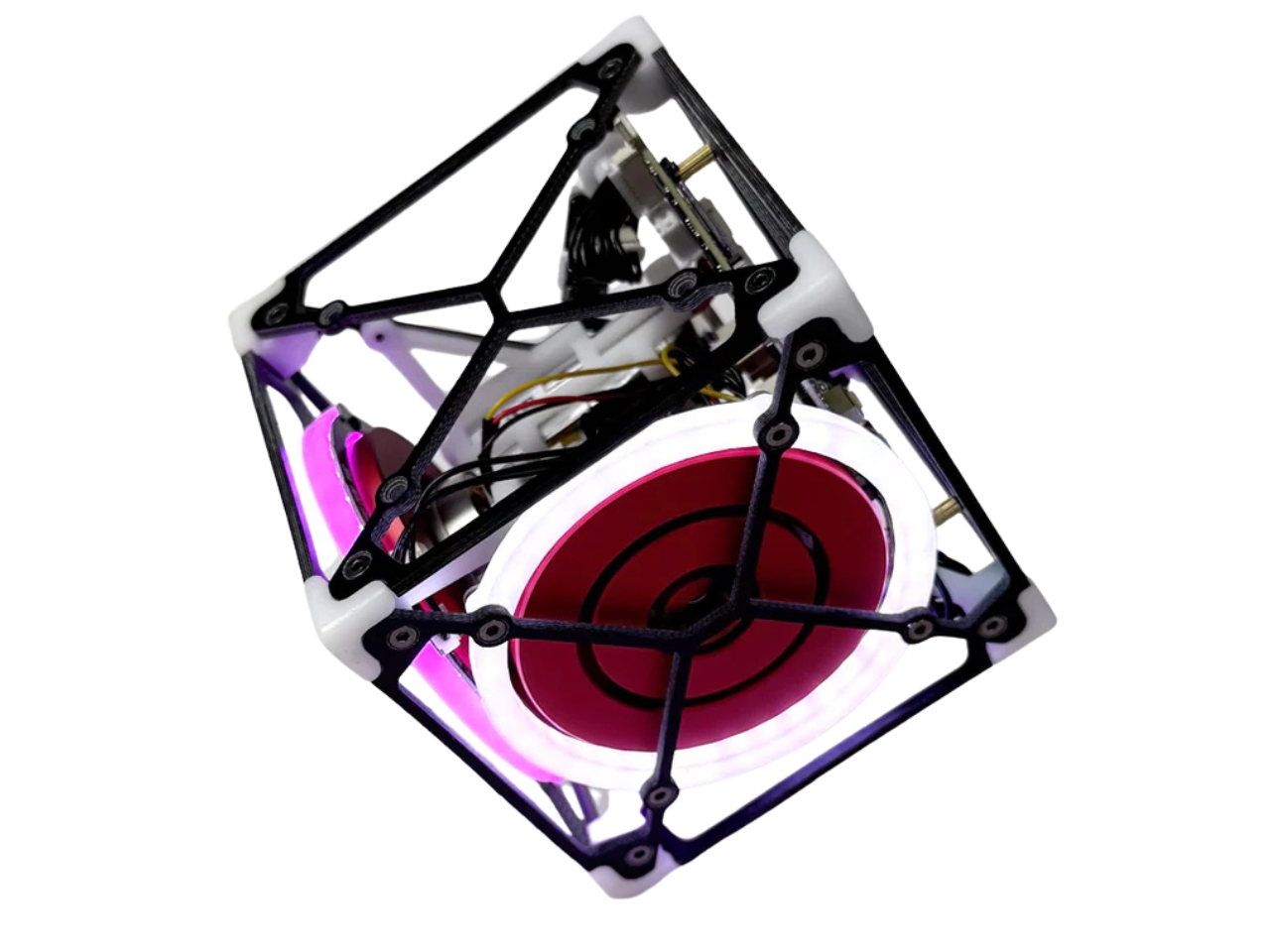

Powered by the ESP32 microcontroller, the robot employs a reaction wheel-based balancing mechanism — essentially, it uses internal flywheels (weighted discs) that spin rapidly to create torque, which in turn allows the cube to maintain balance on its edges or even a single corner. This is the same principle that allows satellites in space to adjust their orientation without thrusters. Now, that same concept is in a toy-sized package, ready for experimentation and fun.

Using data from onboard gyroscopes and accelerometers, the NikolaToy can stand itself upright and balance precariously in ways that defy intuition. The robot isn’t just about stillness. It can jump from a resting position to standing, and even spin itself in place — a remarkable feat for a device with no external wheels or legs. Via a mobile app (iOS/Android), users can interact with the robot, adjusting its behavior and triggering movements remotely.

This robot isn’t just a novelty toy of course. It can be used for classroom demonstrations of physics principles like angular momentum, feedback loops, and inertia for STEM students and educators. The open-source nature also makes it a fantastic tool for custom modifications or as a base for more complex robotics projects. It’s more than just a toy (although it can be that as well) as it’s a a tangible manifestation of engineering principles in action. Whether you’re a student exploring physics, a developer experimenting with control algorithms, or a tech enthusiast looking for your next gadget obsession, this little cube has a lot to offer.

The post first appeared on .
Related Posts