For decades, solar panels occupied an awkward place in the built environment. Celebrated for efficiency yet criticized for their visual rigidity, they were often concealed behind parapet walls or relegated to distant landscapes. Their contribution was undeniable, but their presence was treated as a compromise rather than a composition, or always was a technical layer added after the architecture had spoken.
That perception is now undergoing a decisive shift. The rise of Solar Sculptures signals a new design language in which renewable energy becomes expressive, intentional, and visually engaging. By integrating advanced photovoltaics with bold structural forms, designers are transforming energy systems into landmarks. What was once hidden is now highlighted, allowing sustainability to move from background utility to cultural and aesthetic centerpiece.
1. Beyond the “Blue Rectangle”
For years, solar technology was visually synonymous with flat, blue-black rectangles arranged in strict grids. While functionally effective, this rigidity constrained architectural expression, forcing designers to treat solar panels as technical add-ons rather than integral design elements. The aesthetic limitations often created a tension between sustainability goals and visual harmony.
Emerging innovations are dissolving these boundaries. Flexible thin-film cells and organic photovoltaics (OPV) now enable energy-harvesting surfaces to follow curves, wrap around volumes, and adapt to complex geometries. Solar installations can become fluid, sculptural, and expressive — transforming renewable energy from a utilitarian layer into a seamless, artistic component of contemporary design.
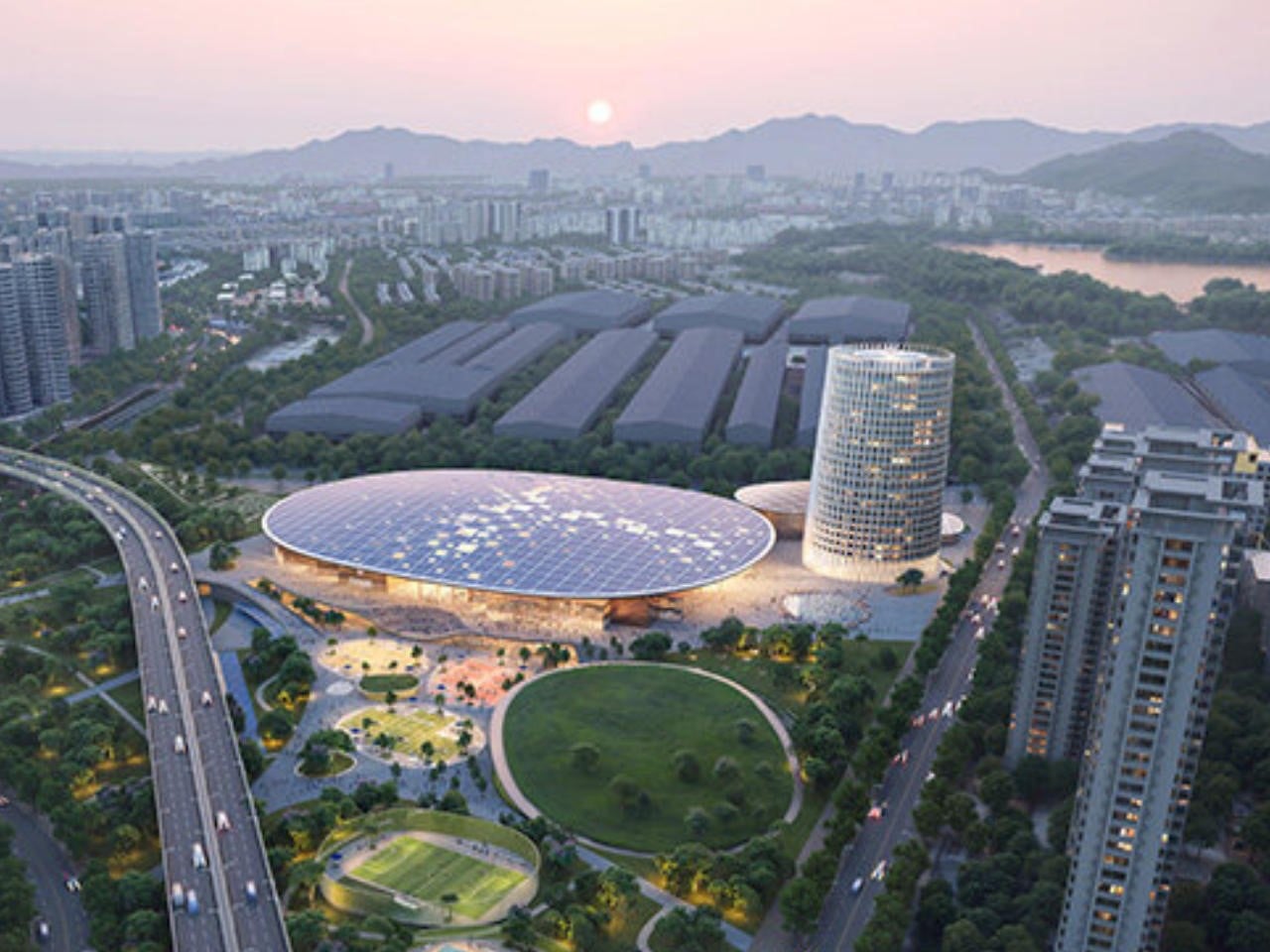
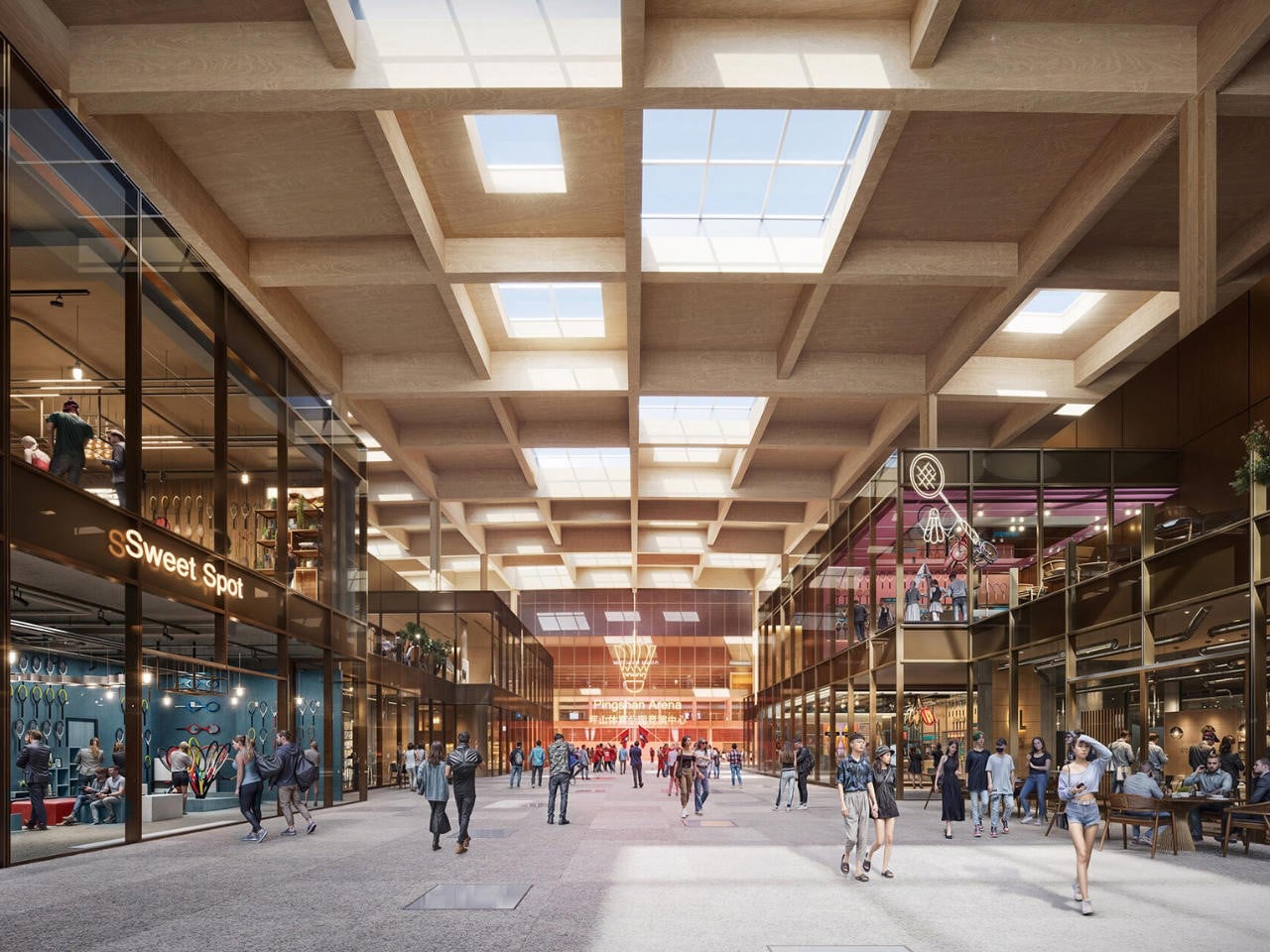
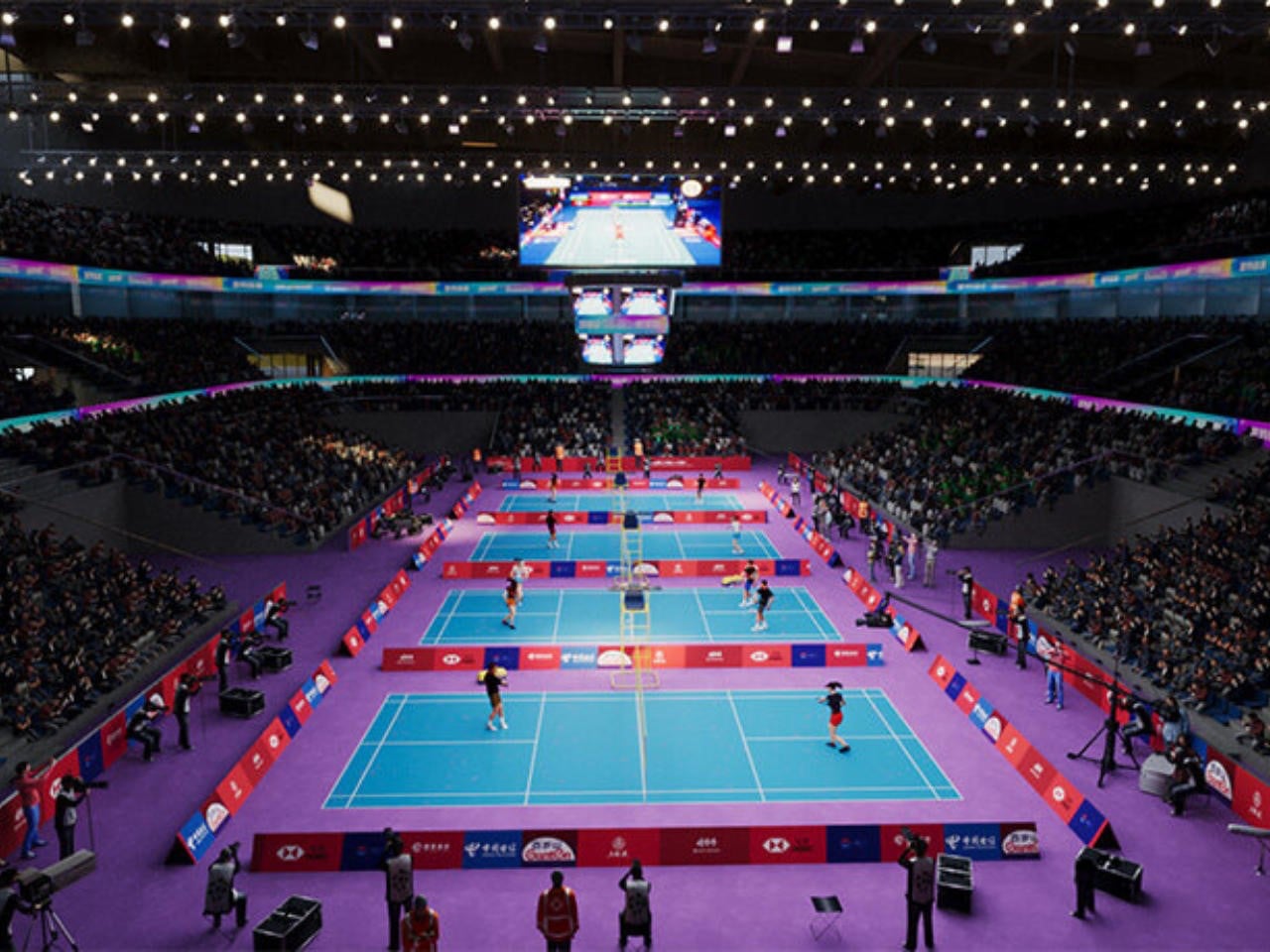
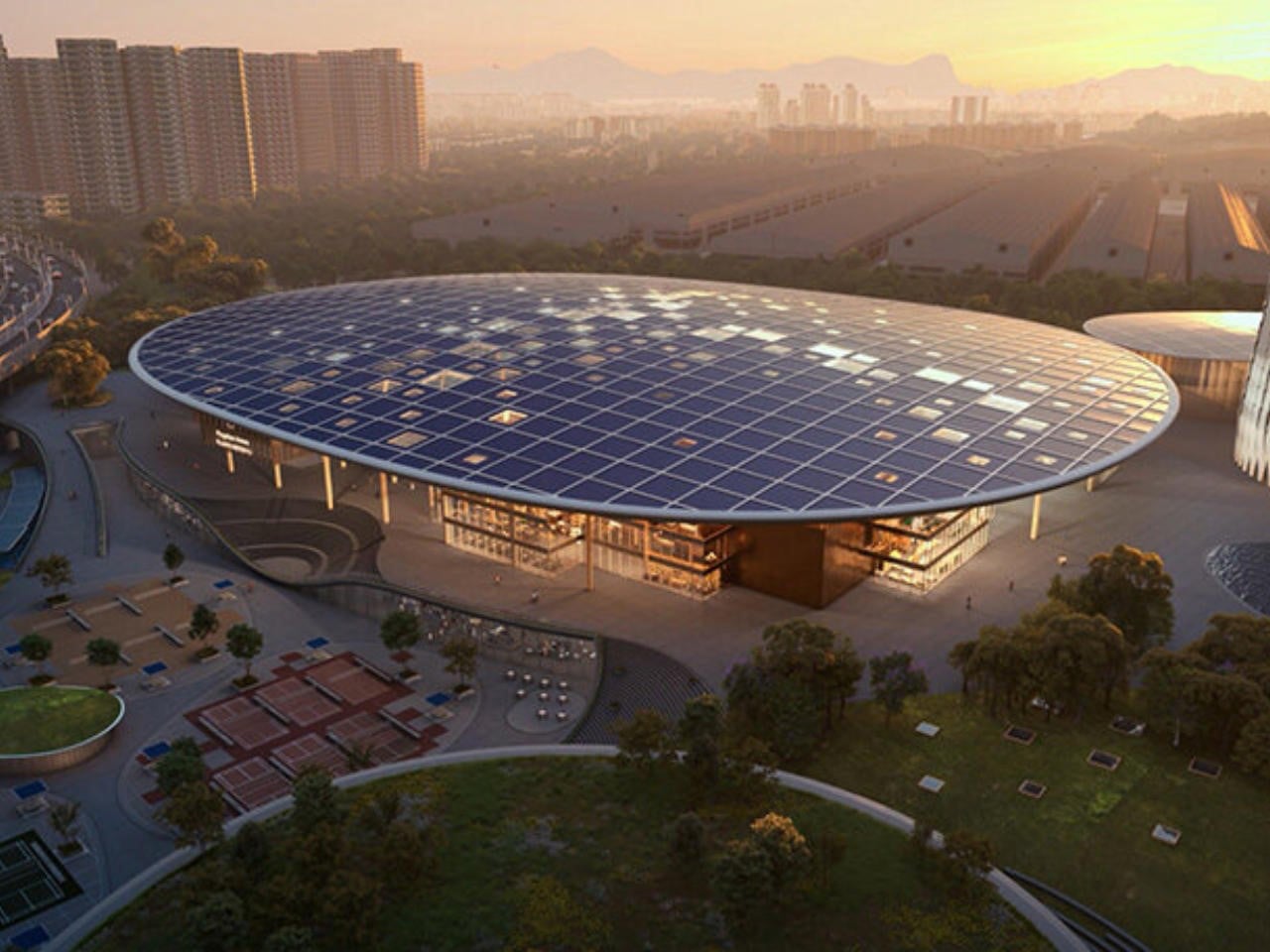
In a bold collaboration, MVRDV and Huayi Design have unveiled , a landmark sports complex in Shenzhen’s Pingshan district. Designed as a celebration of badminton, the project features a dramatic 240-metre rooftop shaped like a badminton racket head, complete with a grid structure resembling strings. Integrated photovoltaic panels transform the roof into a large-scale solar generator, allowing the complex to produce clean energy while making a powerful architectural statement. The development will house China’s National Badminton Training Centre, a professional arena, public fitness facilities, and commercial spaces under one iconic form.
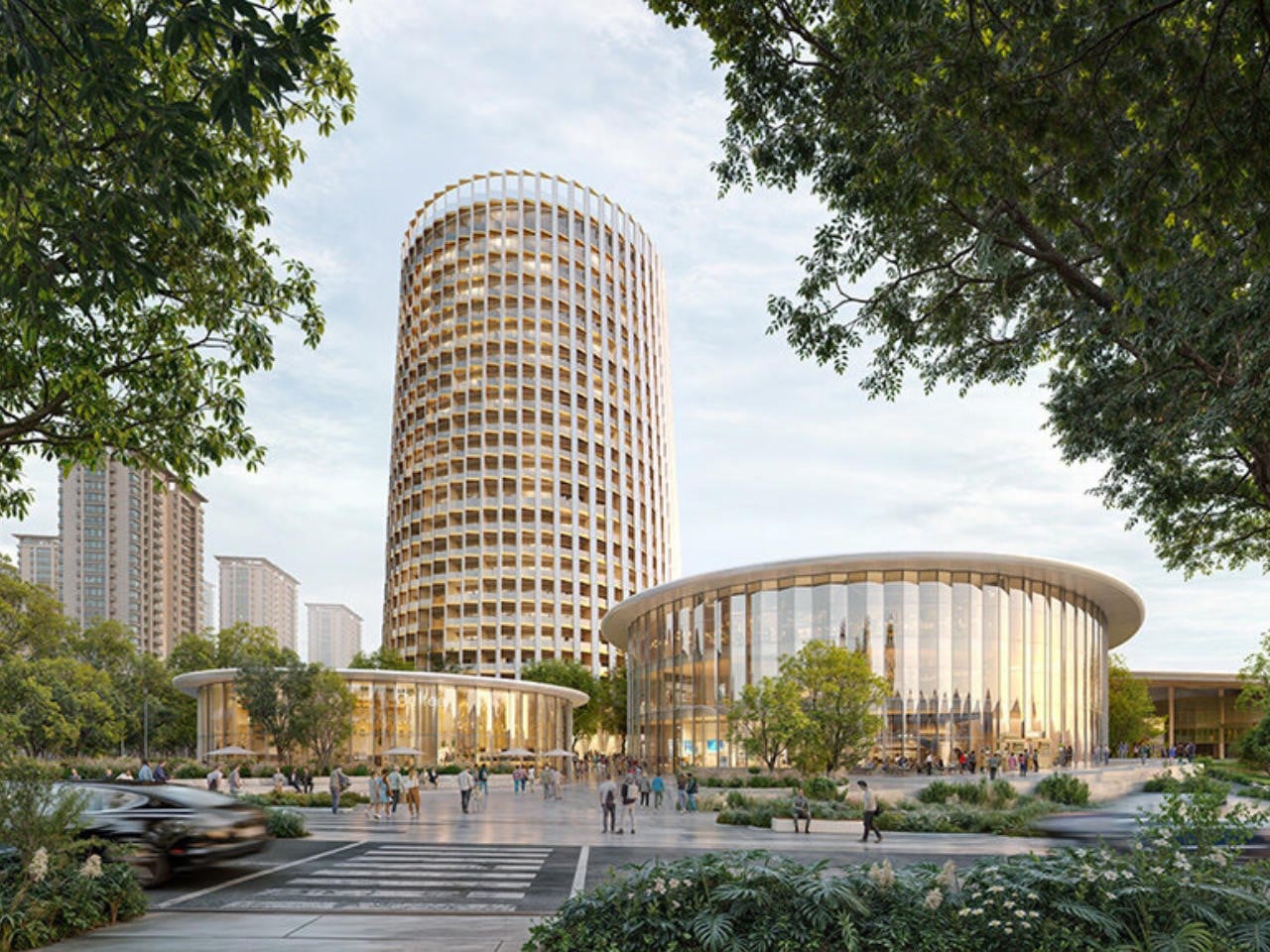
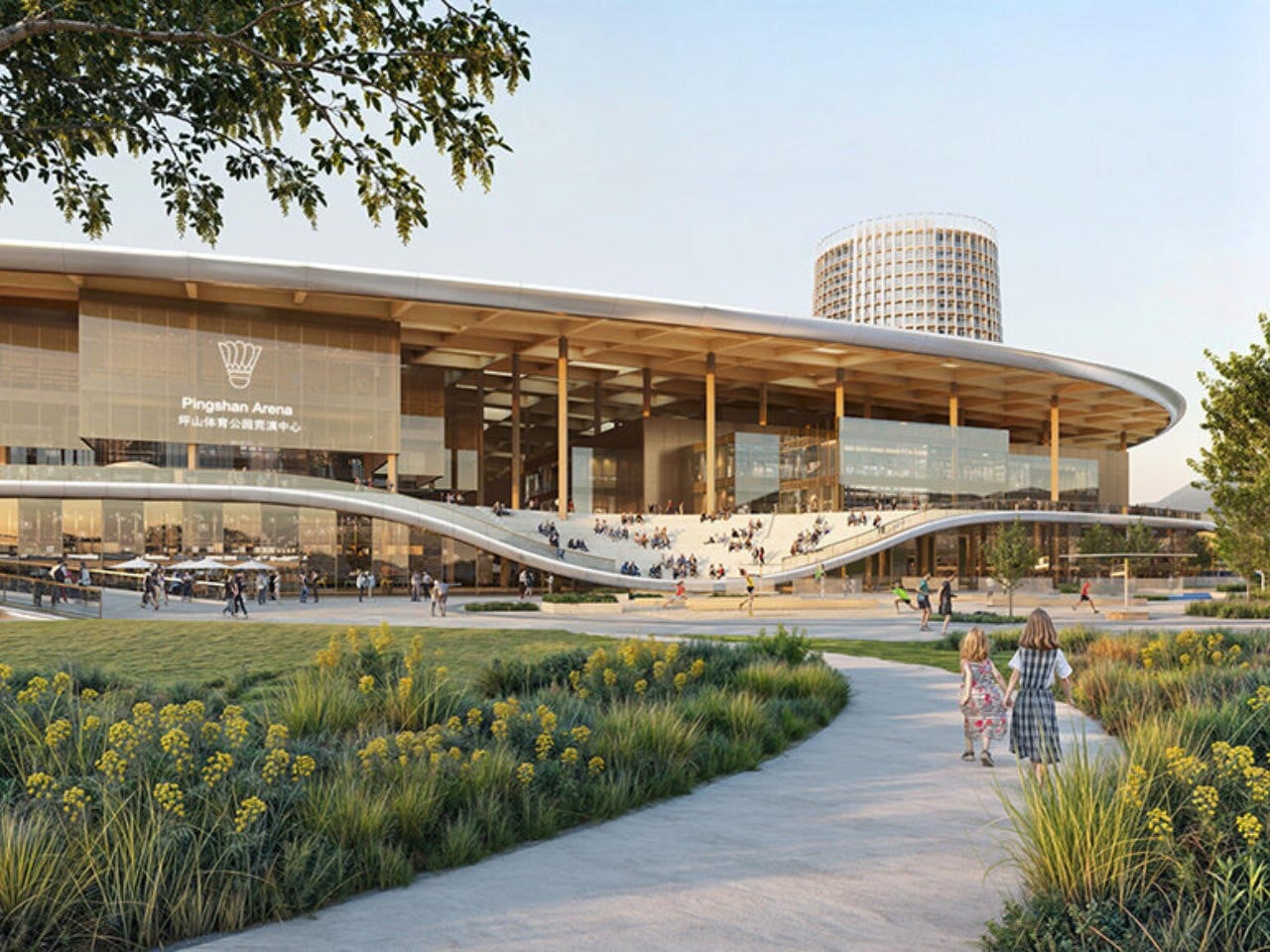
Beyond its striking silhouette, the complex is carefully zoned for elite athletes and the public. A T-shaped promenade connects key facilities and leads to a central plaza — the symbolic “sweet spot.” A 23-storey shuttlecock-inspired tower incorporates hotel rooms and athlete residences with direct private access to training areas. Surrounding parks, courts, and a National Fitness Centre extend its reach, creating a sustainable, community-driven sports destination.
2. Biomimicry and the Solar Tree Effect
Nature has become an influential guide in the evolution of solar design. Instead of imposing rigid, mechanical forms onto landscapes, designers now draw inspiration from organic structures that people instinctively recognize. Concepts such as solar “trees,” with branching arms and leaf-like panels, reinterpret renewable technology through shapes that echo the natural world.
These installations serve multiple roles beyond energy generation. They provide shade, create gathering points, and introduce sculptural landmarks within parks and plazas. By resembling trees or sun-tracking flowers, they soften the visual impact of technology, allowing clean energy systems to feel like a living extension of the urban ecosystem rather than an engineered intrusion.
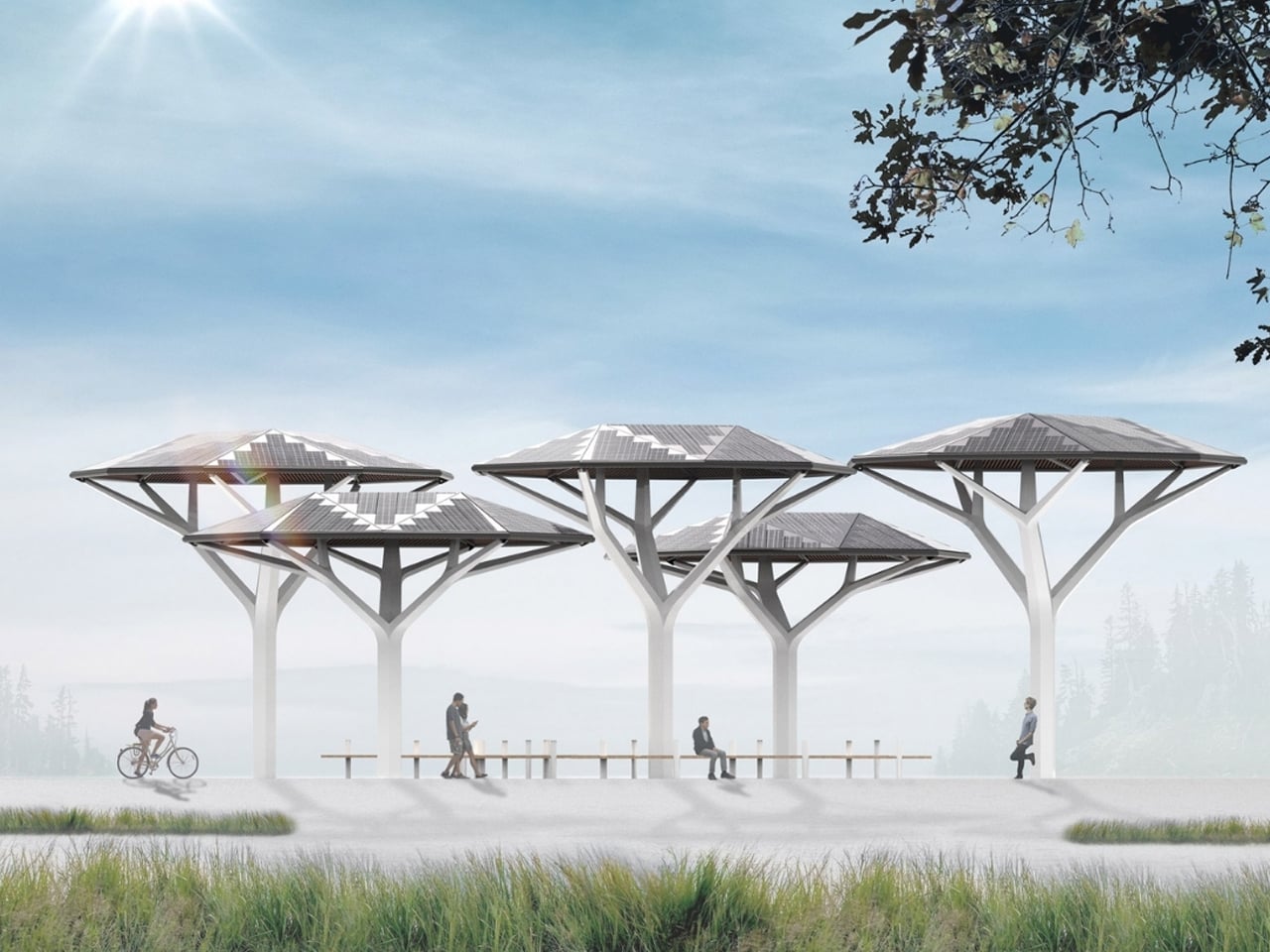
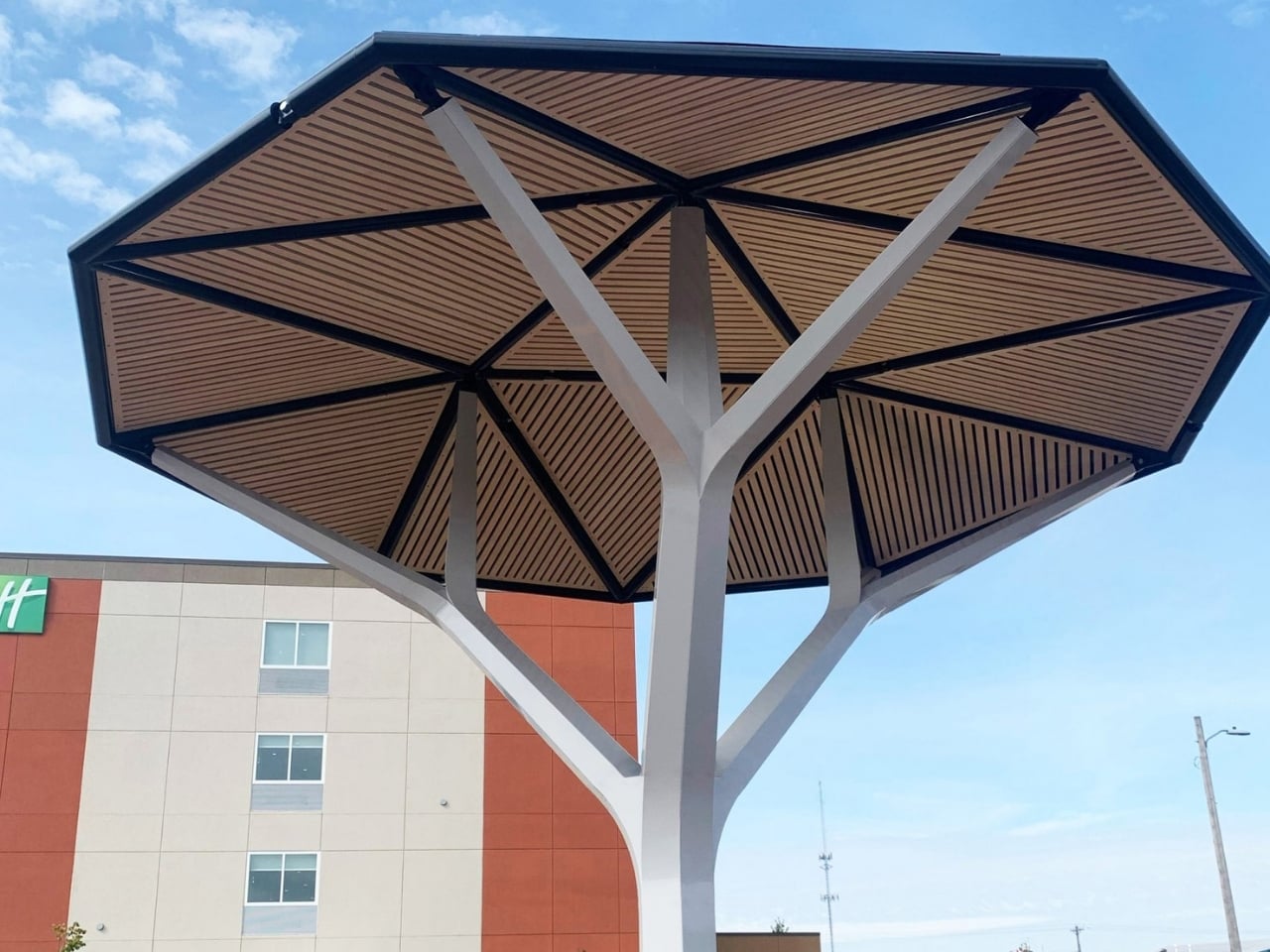
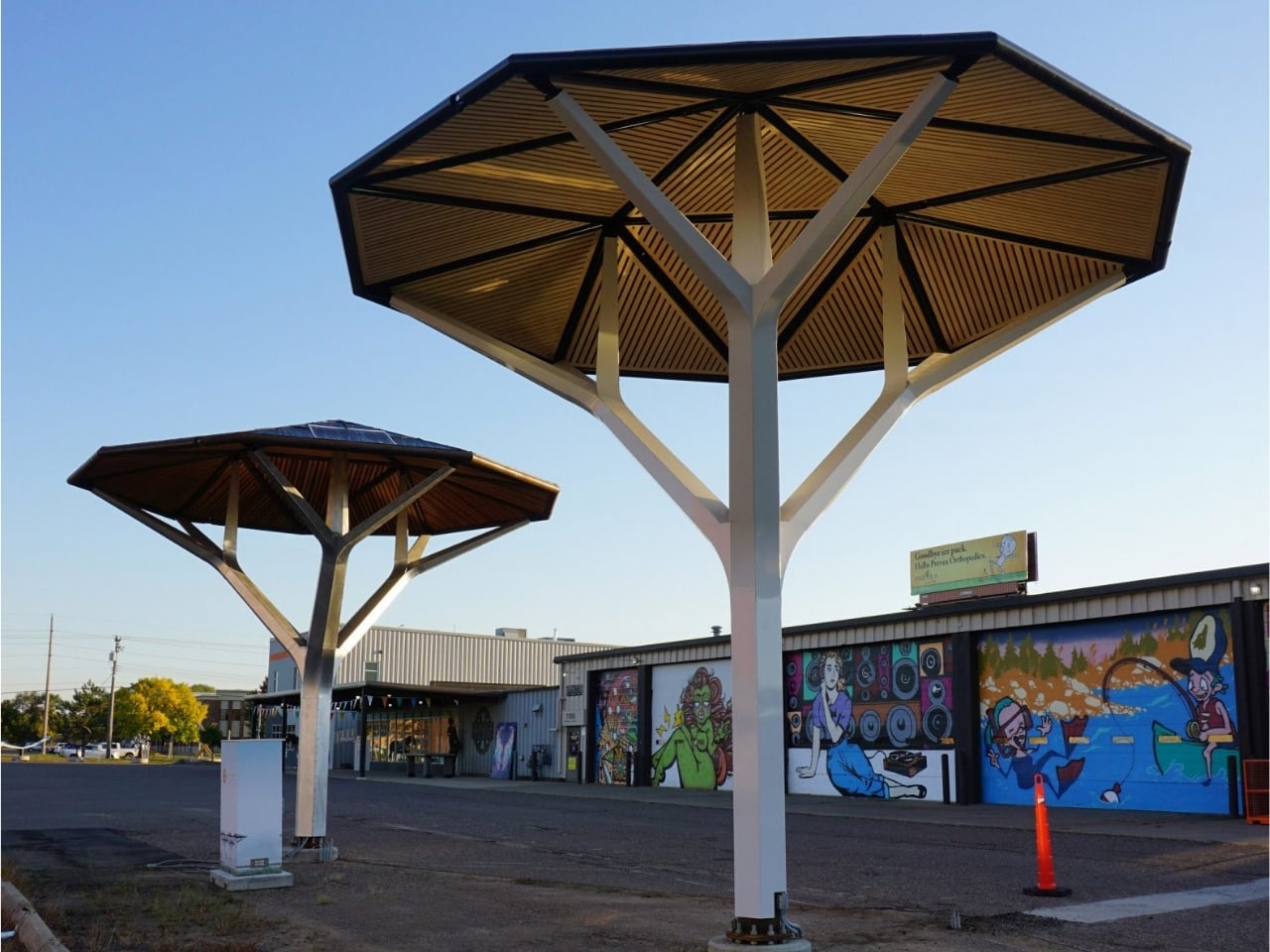
As cities look for smarter ways to integrate renewable energy into everyday life, presents a striking solution. Designed by Samuel Wilkinson, this tree-inspired solar canopy functions as both a shade structure and a clean energy generator. Modelled after the acacia tree found in eastern and southern Africa, Ecacia features 708 monocrystalline solar panels embedded within its expansive umbrella roof. The system captures solar power to run nearby public amenities, support lighting, or even charge electric vehicles, while also offering the option to connect to the main grid.
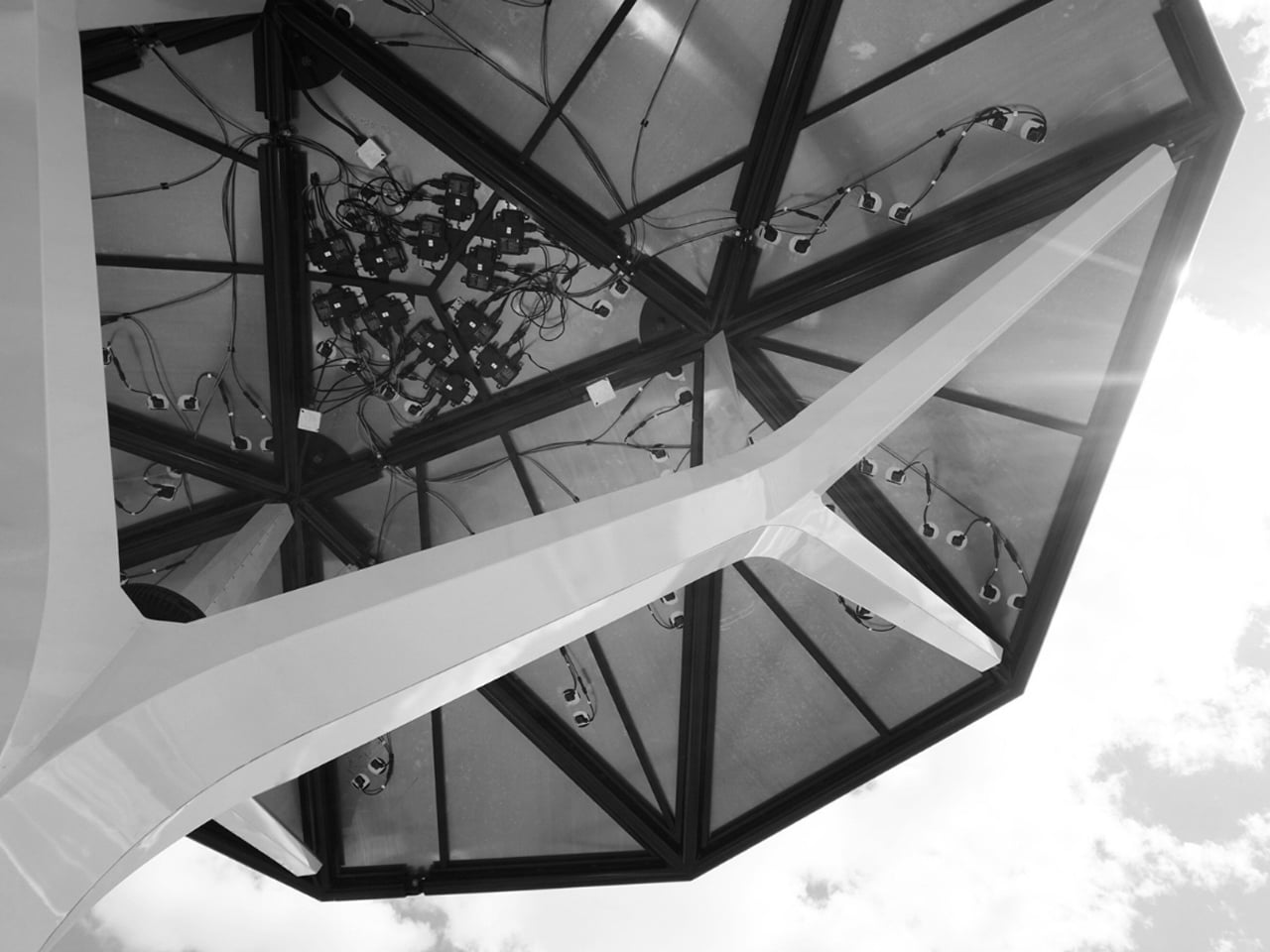
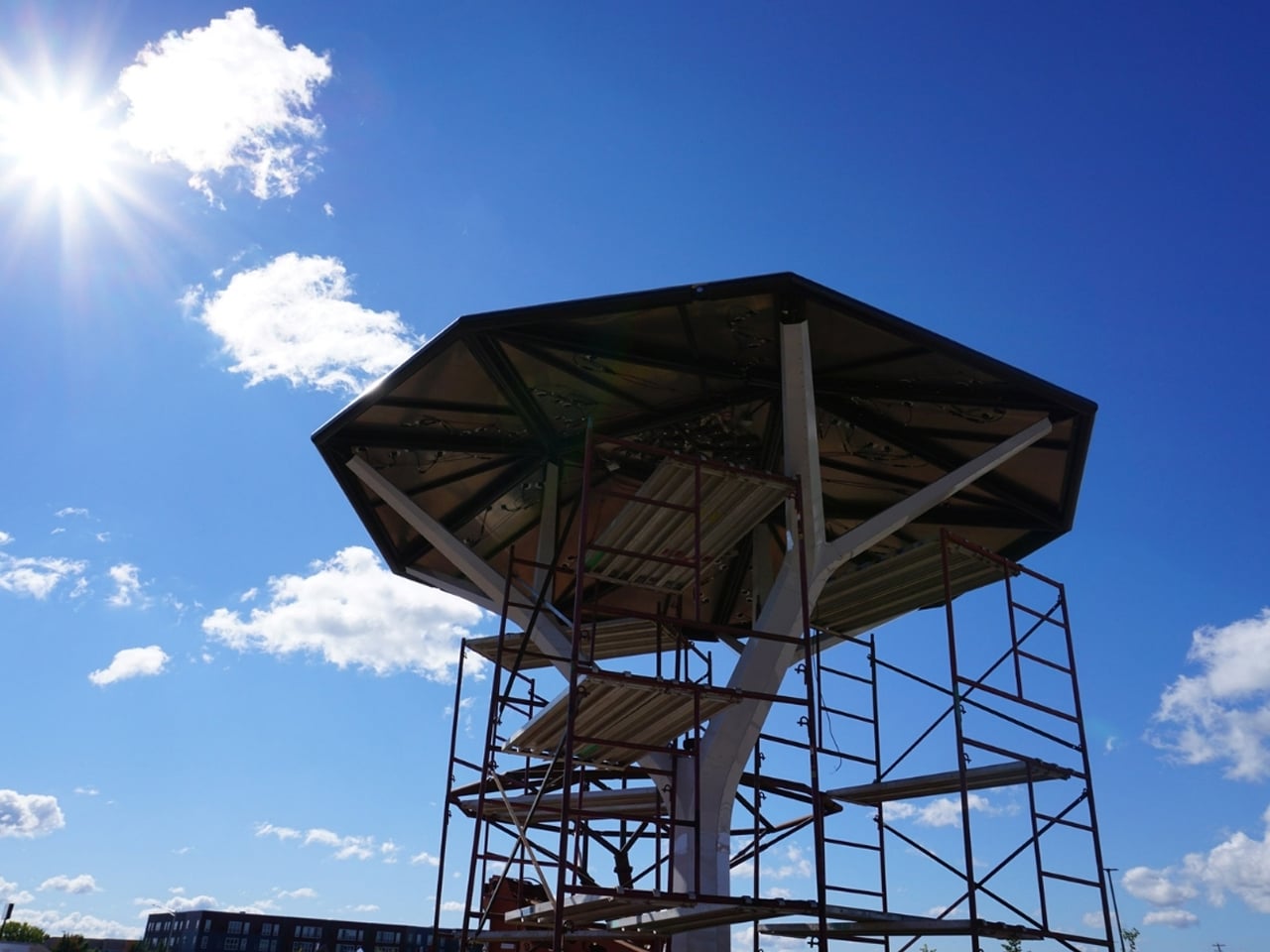
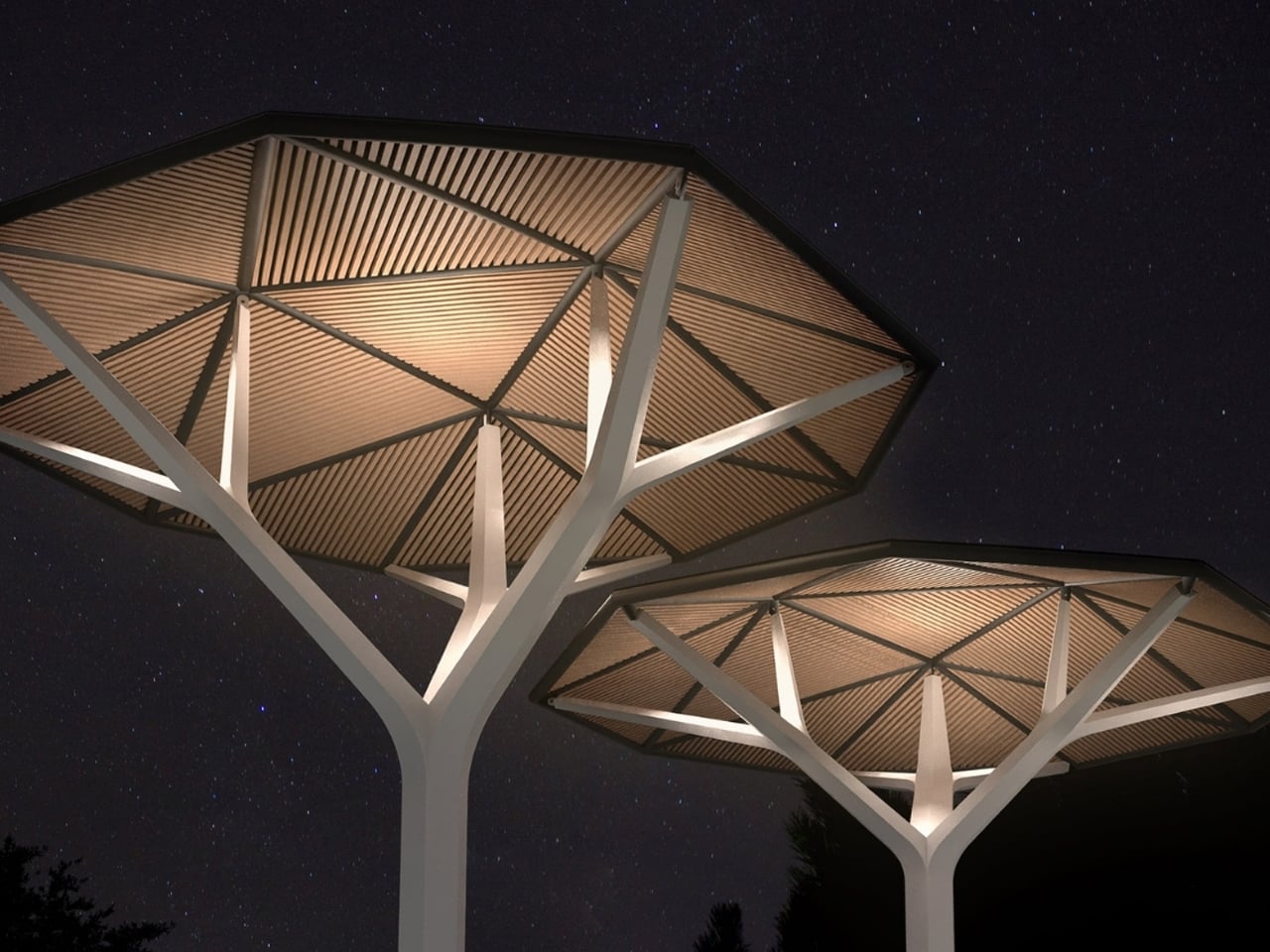
Each structure spans seven metres in width, with a timber-lined, faceted nonagonal roof supported by a steel trunk clad in aluminium. Available in heights of 6.7 or 5.2 metres, Ecacia includes programmable LED lighting and is engineered to withstand winds of up to 160 km/h. Designed for standalone or clustered installation, it merges sustainability, durability, and urban comfort into one cohesive product.
3. Energy as a Public Spectacle
Solar sculptures are transforming energy generation into a visible, shared experience. Rather than operating silently in the background, these installations often integrate interactive lighting systems that activate after sunset. The electricity captured during the day is redirected to illuminate LED displays, creating dynamic visual compositions within public spaces.
Colors, patterns, or intensity shifts reflect the amount of energy harvested, allowing communities to witness sustainability in action. Abstract performance metrics become immersive visual narratives, turning kilowatt-hours into moments of engagement, awareness, and collective celebration.
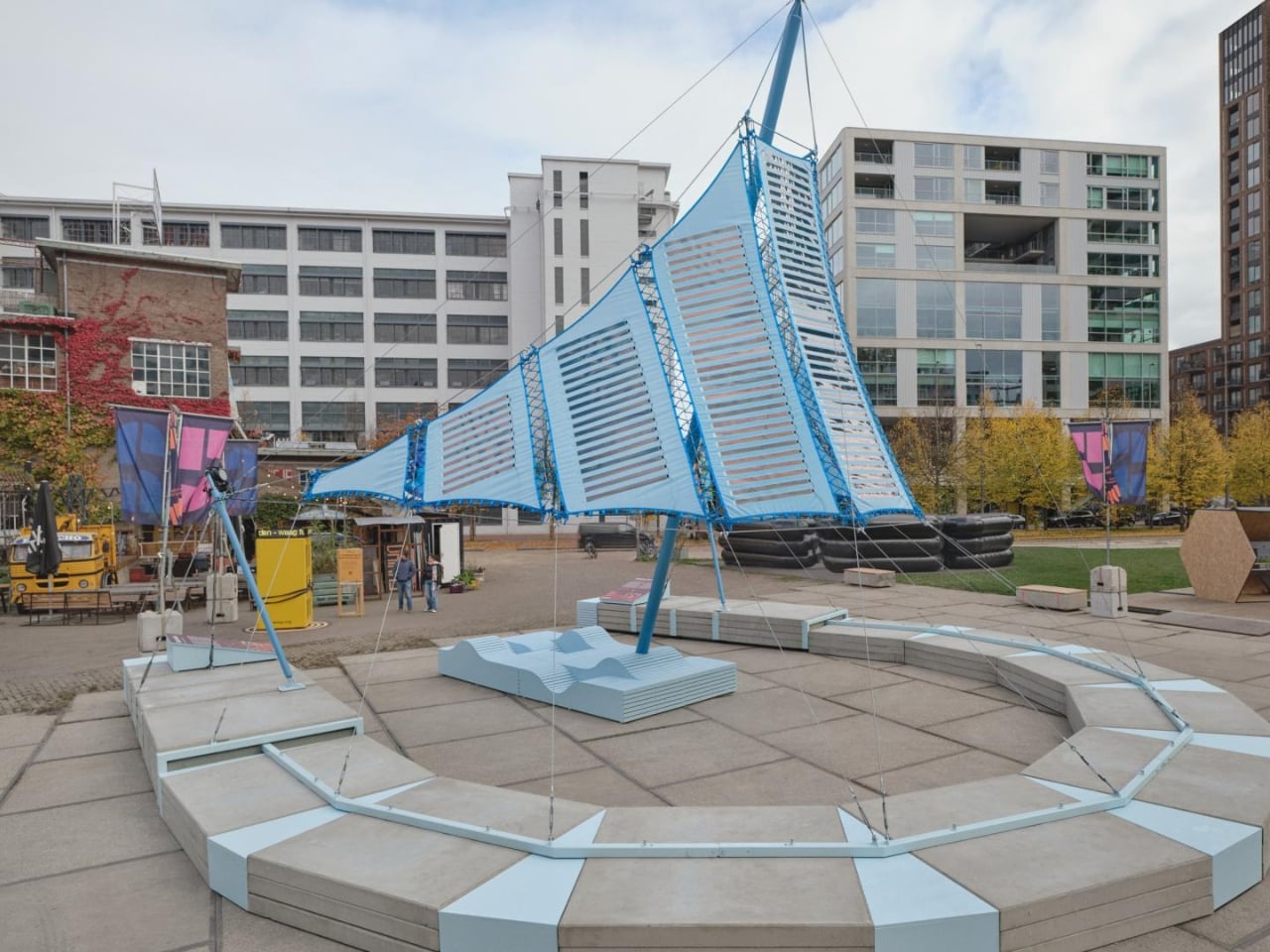
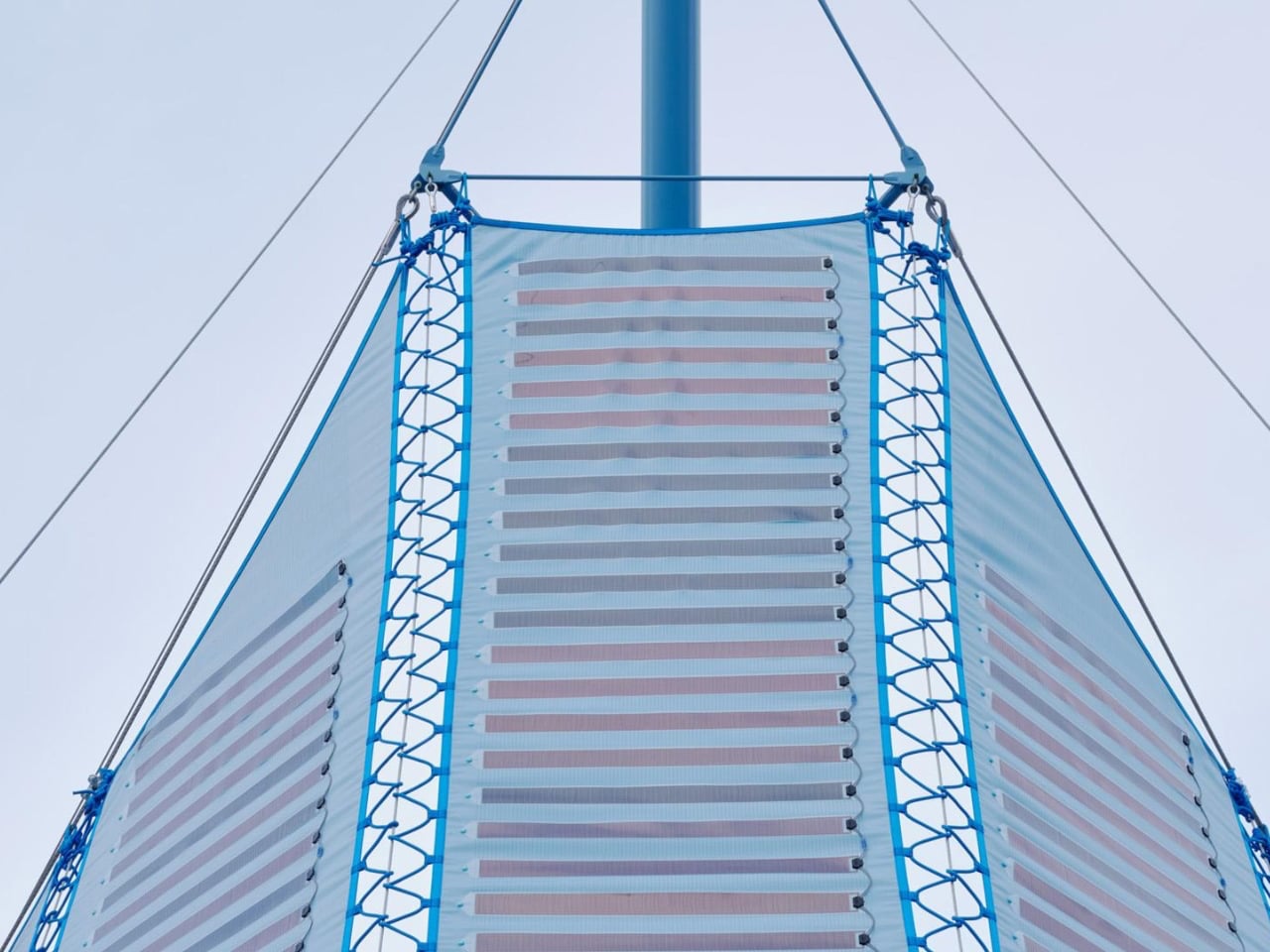
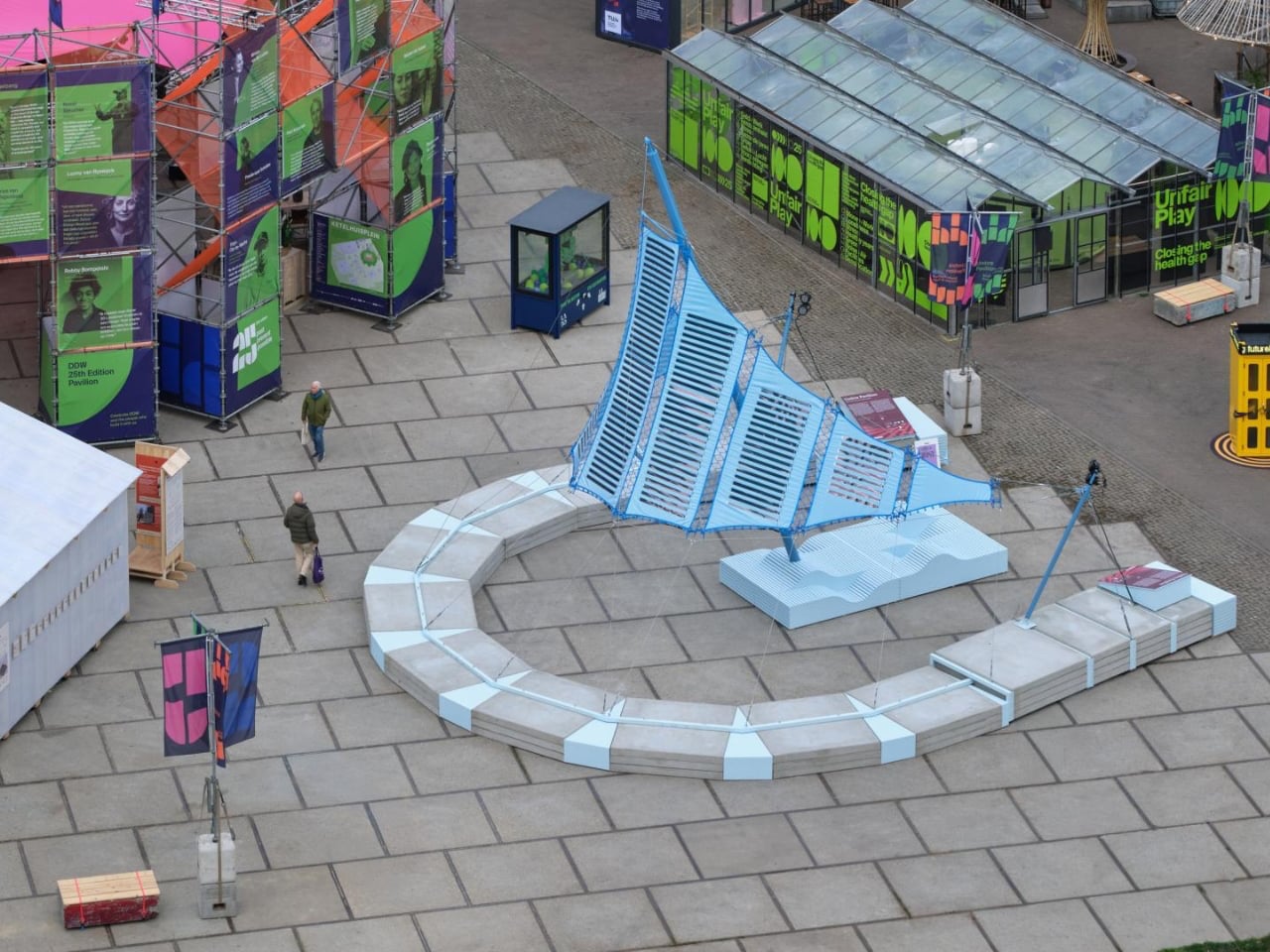
The by Dutch designer Pauline van Dongen reimagines how a building can function, not as a passive structure, but as an active energy generator. At the heart of the product is Heliotex, a sky-blue textile canopy woven from recycled polyester yarn and embedded with 150 organic photovoltaic cells. Spanning 40 square metres and rising nearly 10 metres high, the pavilion integrates 147 solar modules with a 3,000-watt energy storage capacity. The result is a lightweight, fabric-based solar system that merges performance with architectural elegance.
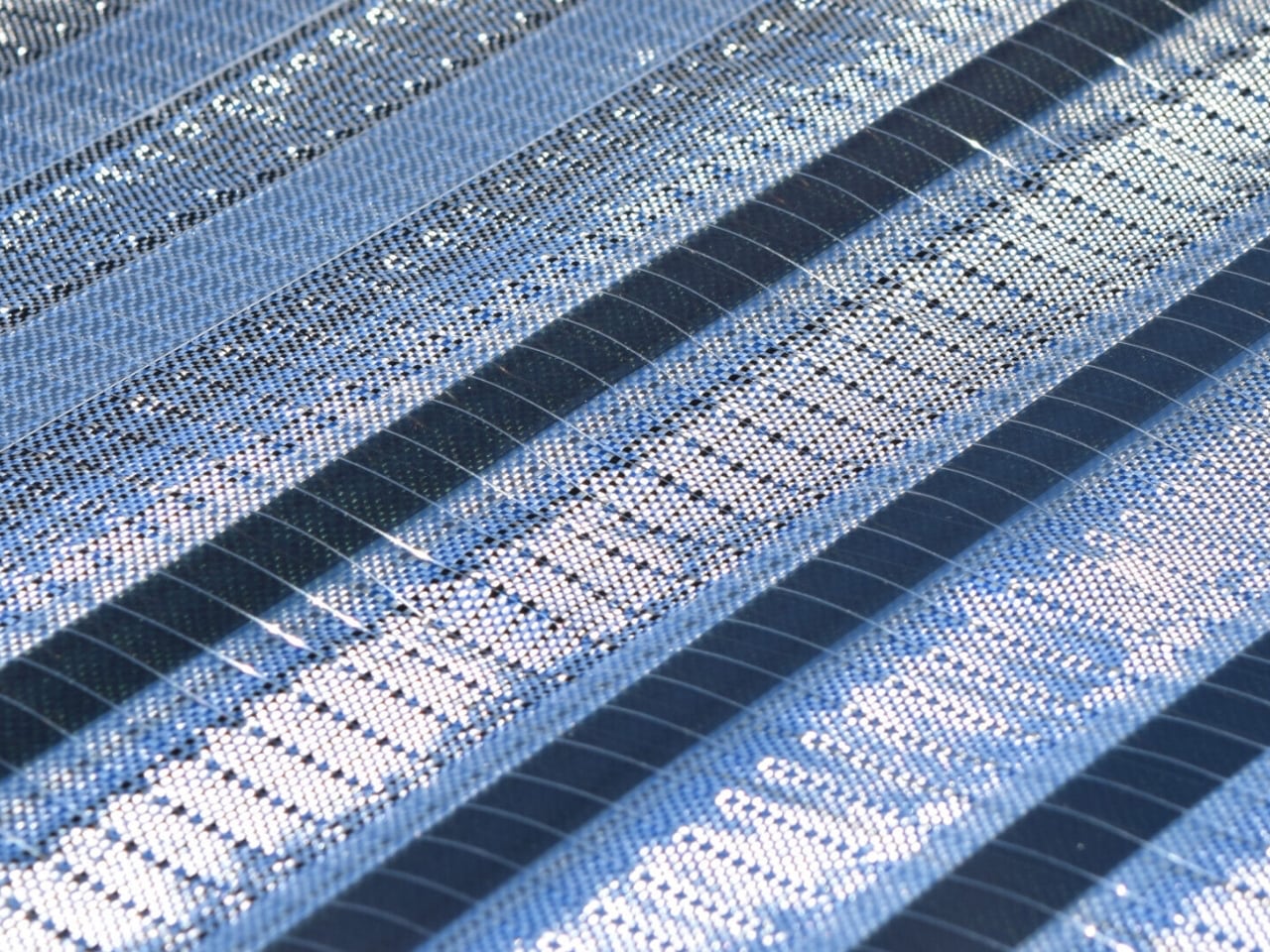
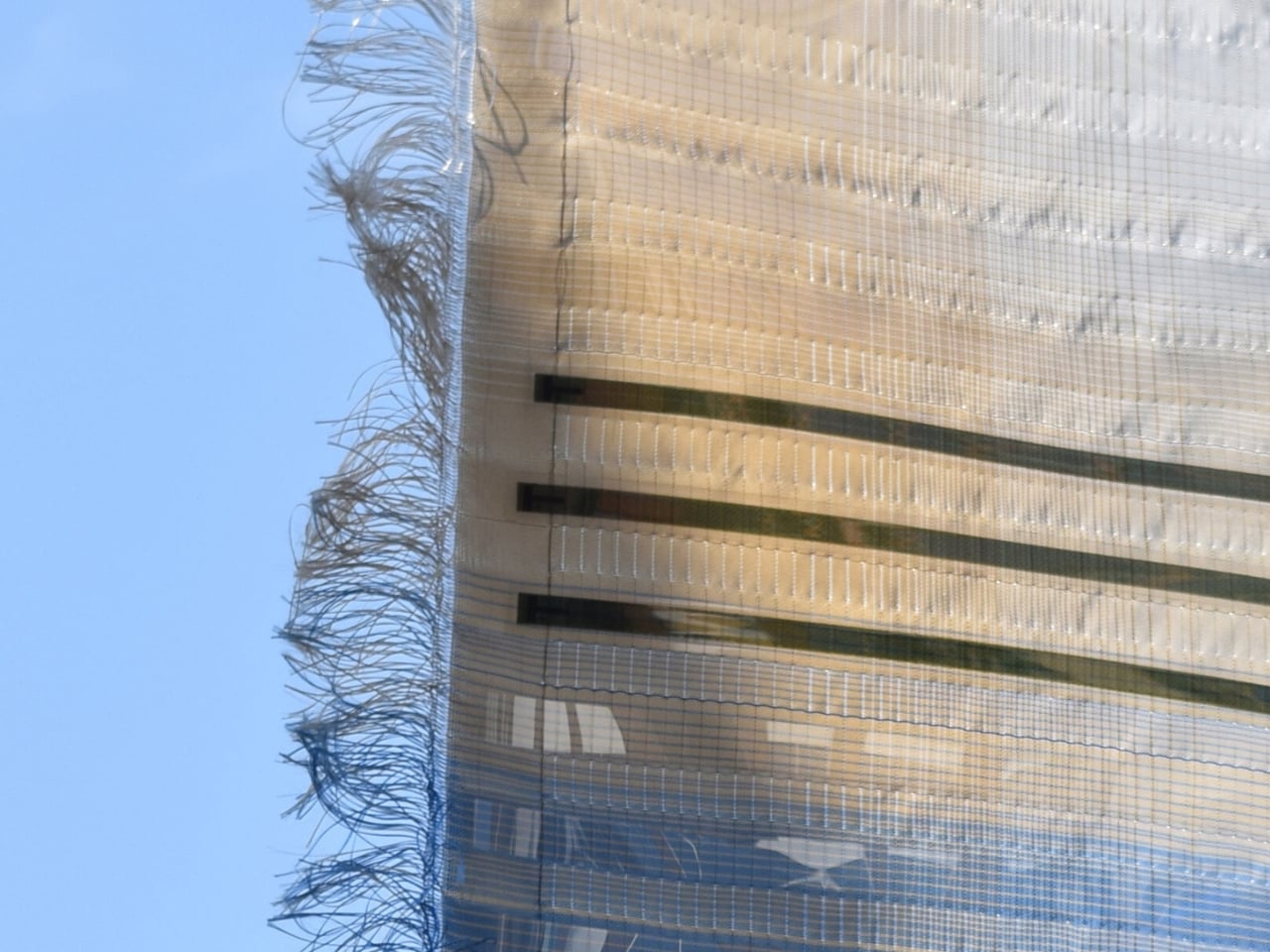
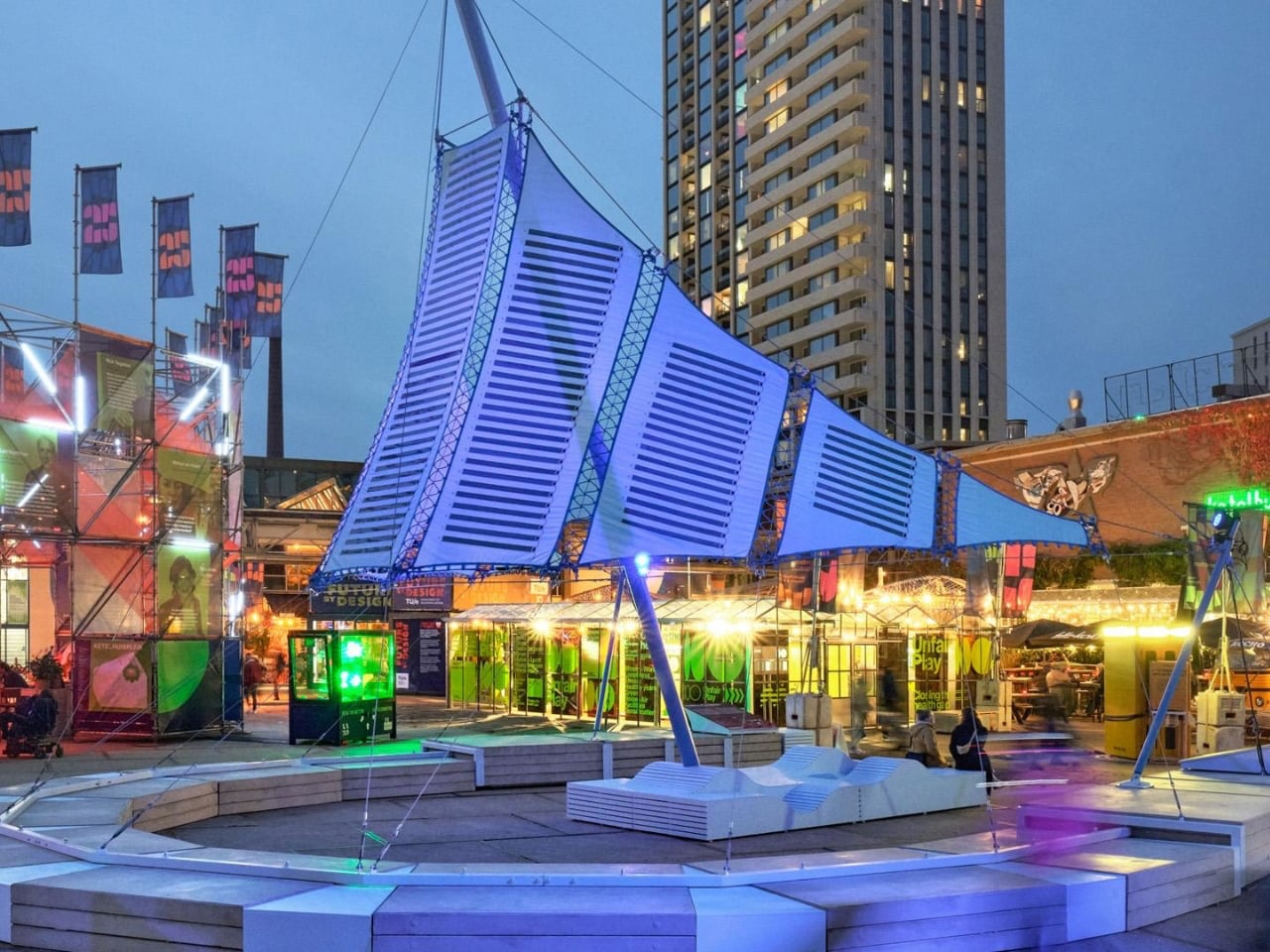
Unlike rigid rooftop panels, Heliotex weaves solar cells directly into flexible fabric, allowing variation in colour, density, and transparency. The textile currently produces 53 watts per square metre and is engineered to resist UV exposure, weathering, and fire — without toxic PVC coatings. Designed for façades, shade structures, and public installations, the system generates clean energy while seamlessly serving its everyday structural purpose.
4. From NIMBY to Neighborhood Icon
Renewable energy projects have long encountered the “Not In My Backyard” response, driven largely by perceptions of visual intrusion. Large arrays and utilitarian structures were often viewed as industrial impositions rather than community assets, creating friction between sustainability objectives and neighborhood acceptance.
Solar sculptures are reshaping this narrative. When energy systems double as elegant shade canopies, artistic landmarks, or interactive installations, their presence gains cultural and social value. What once triggered resistance can now inspire attachment and pride. By aligning environmental function with visual delight, designers and developers are discovering that communities are more likely to embrace and celebrate renewable infrastructure.
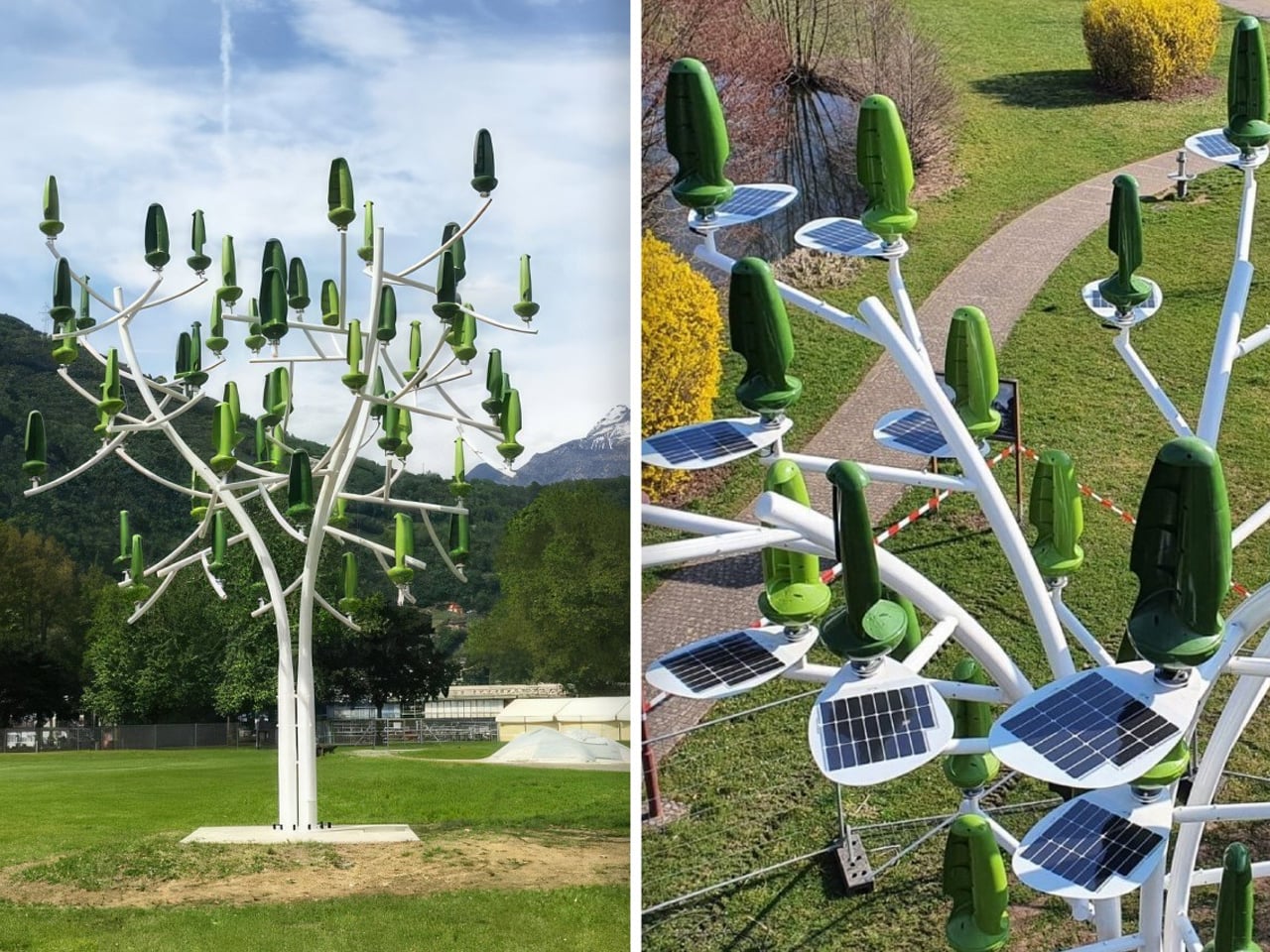
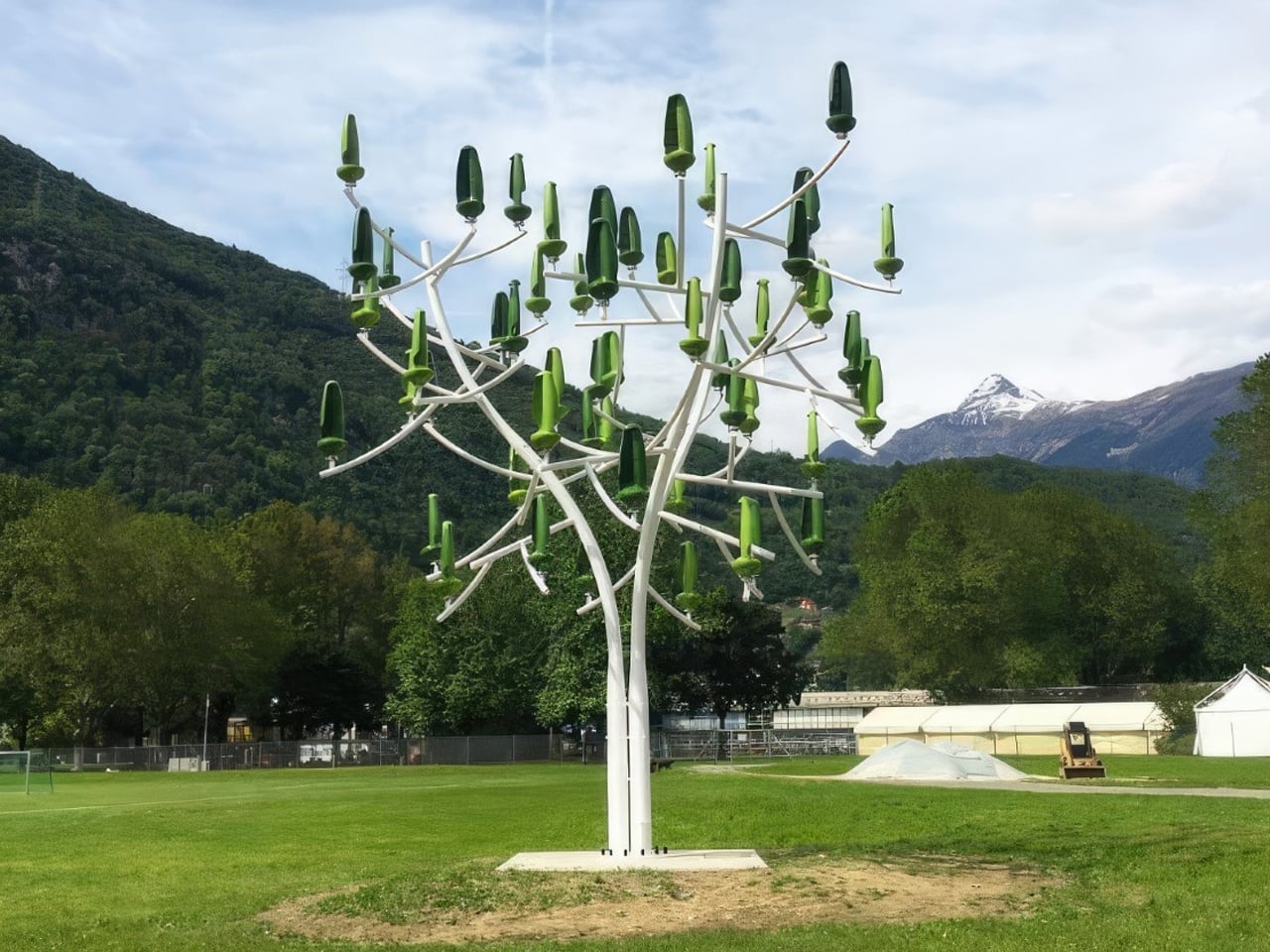
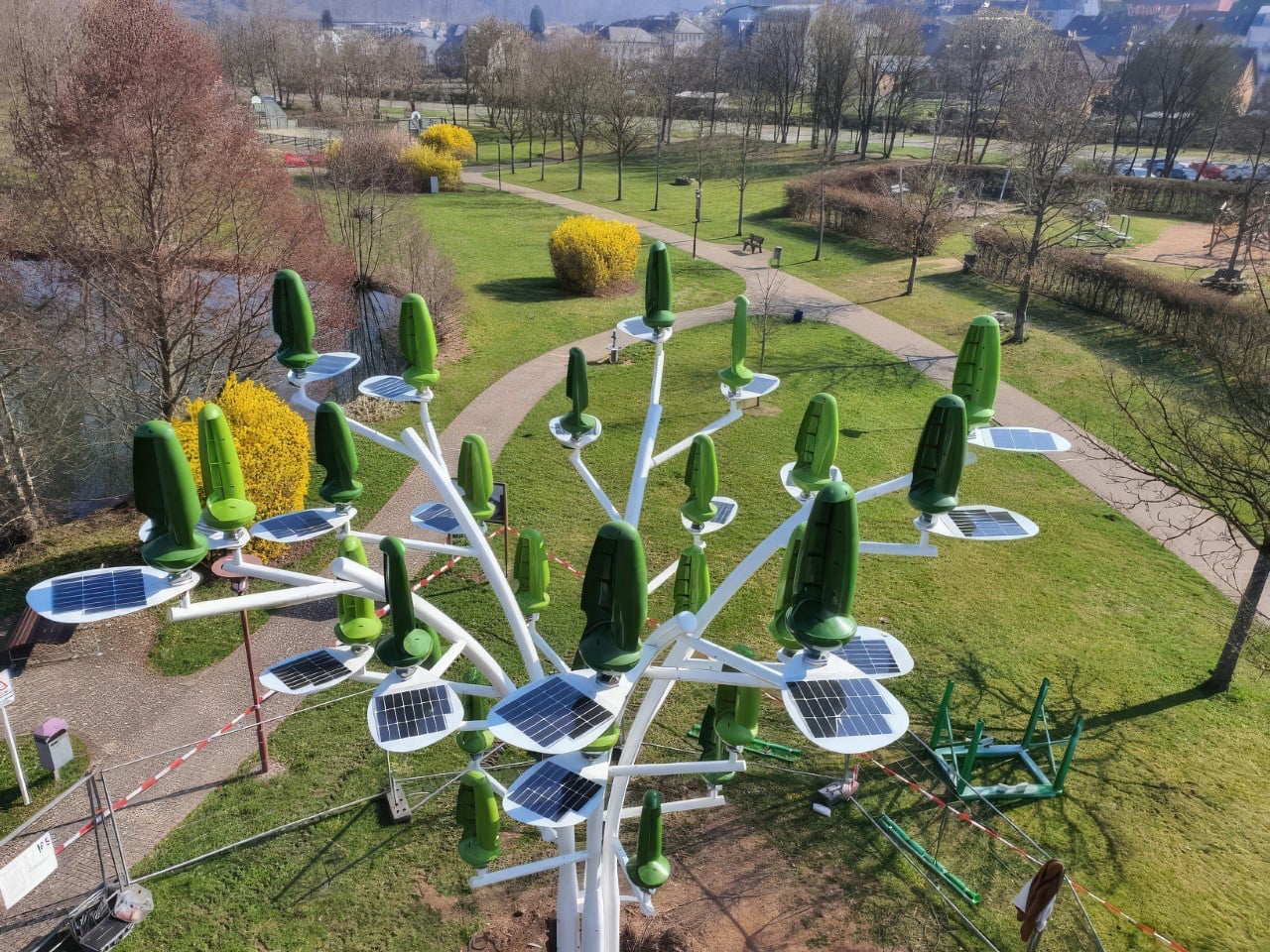
In the search for cleaner energy, introduces the Aeroleaf Hybrid, a tree-shaped micro-wind turbine that combines wind and solar power into one integrated system. Designed as a sculptural energy solution, the product features rotating leaf-shaped turbines that capture wind from any direction, paired with discreet solar panels at the base for added generation. This dual-source approach ensures steady, efficient output while reducing reliance on fossil fuels. Unlike conventional turbines, the Aeroleaf Hybrid is compact, quiet, and visually refined, making it suitable for urban and residential environments.
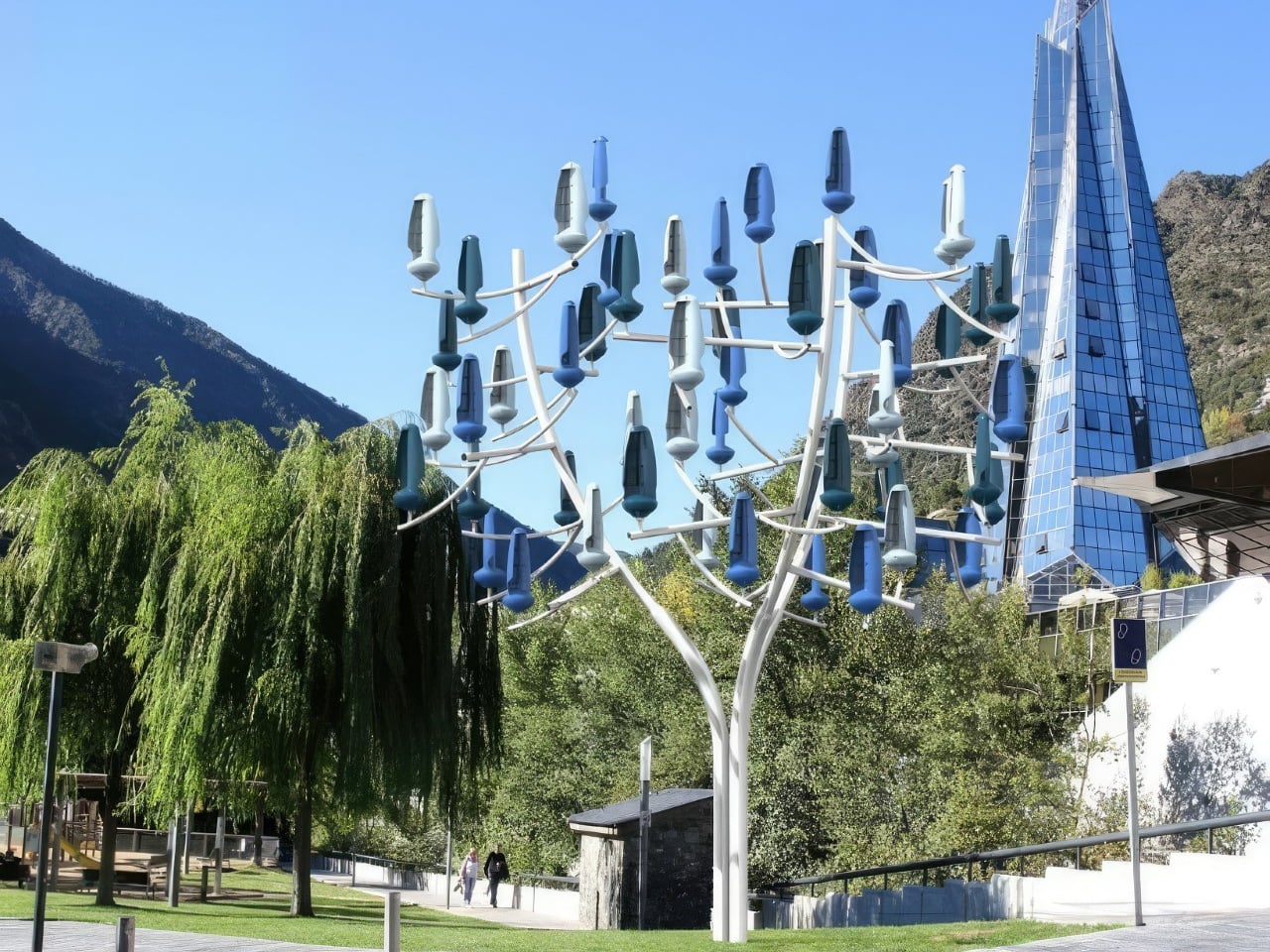
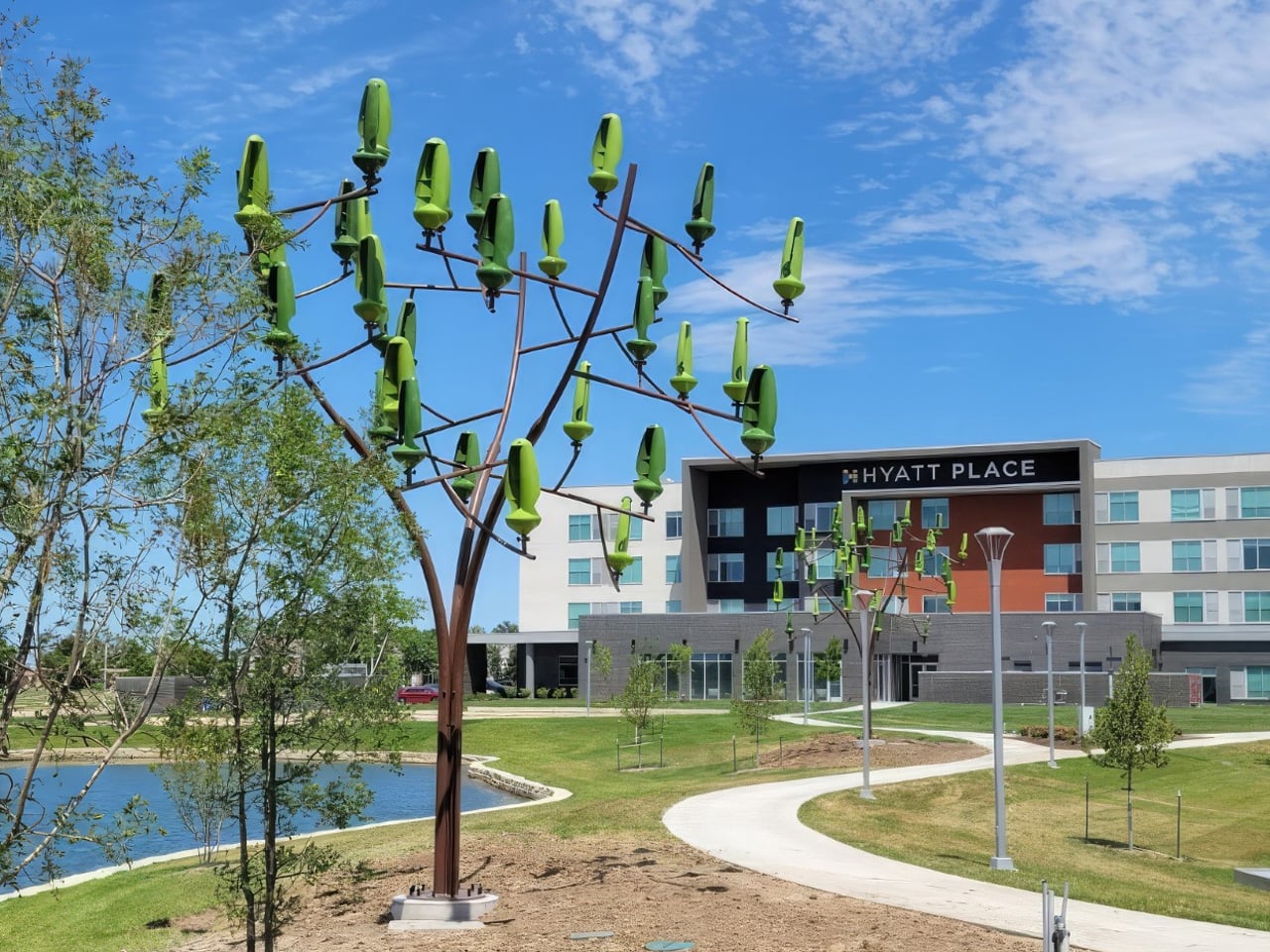
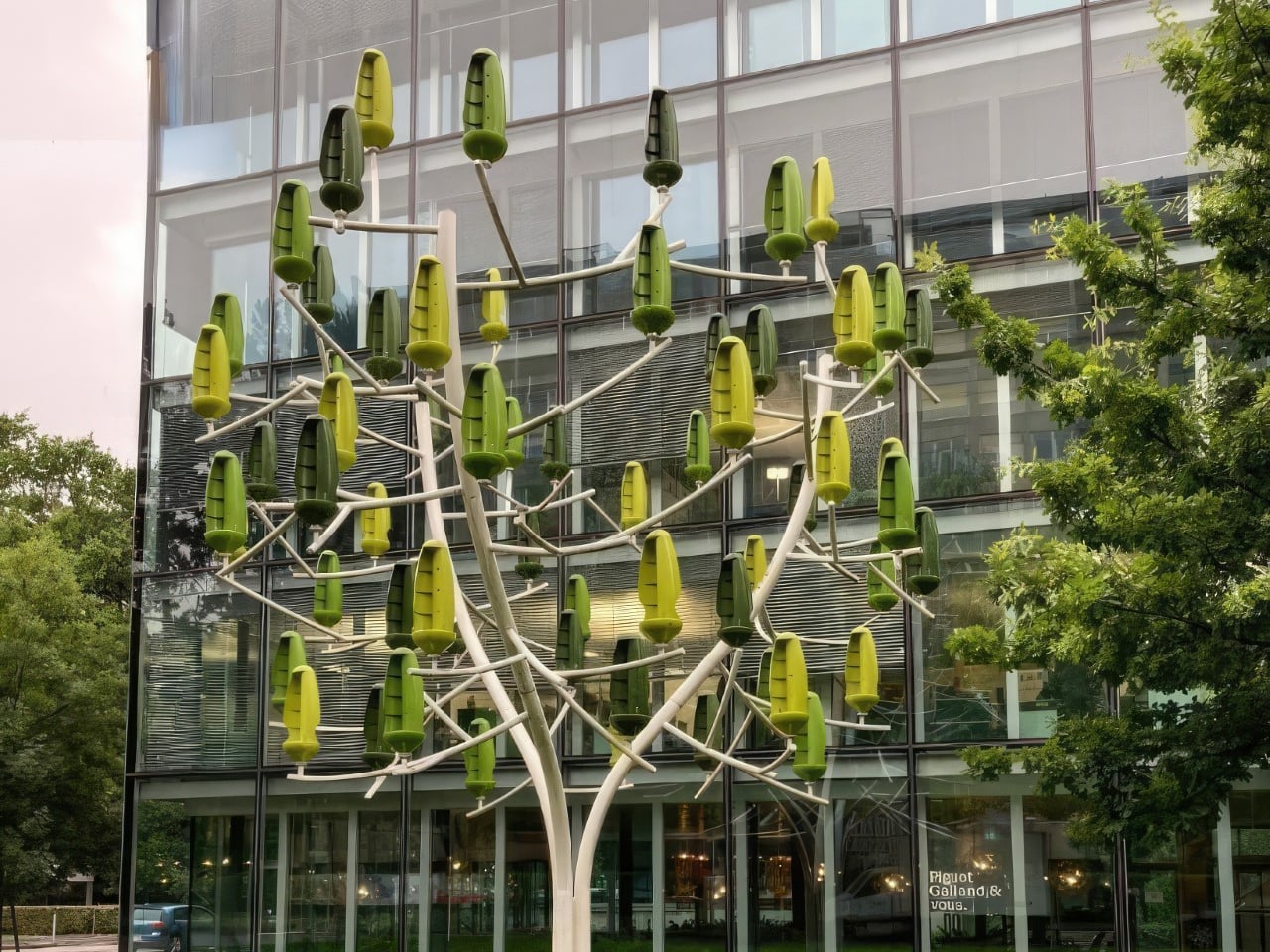
Built on patented vertical-axis micro-turbine technology with permanent magnet generators, each Aeroleaf can produce a minimum of 300 watts. Available in three formats, namely Wind Tree, Wind Palm, and Wind Bush, the system adapts to different scales and locations, from rooftops to public parks. Custom colour options further enhance integration, transforming renewable infrastructure into functional, design-led energy architecture.
5. Solar Sculptures as Multi-Functional Infrastructure
Solar sculptures are redefining the role of public installations by merging energy generation with everyday utility. No longer conceived as standalone artworks or isolated power sources, they are designed as integrated smart-city hubs. Features such as shade canopies, seating, ambient lighting, and digital connectivity transform these structures into active contributors to urban life.
This layered functionality strengthens their value proposition. By incorporating Wi-Fi hotspots, device charging points, and even EV charging stations, the installations justify their spatial footprint while delivering tangible public benefits.
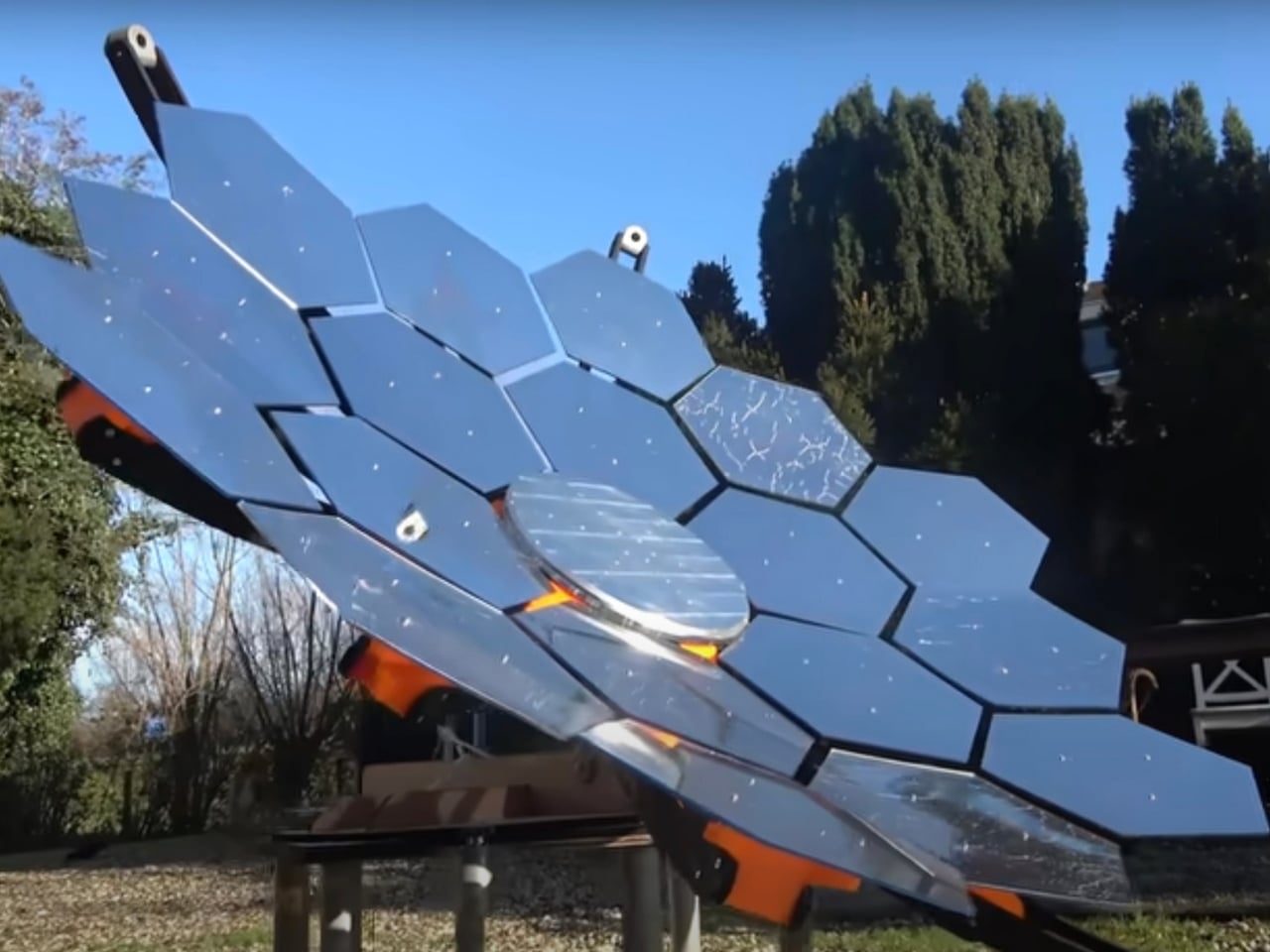
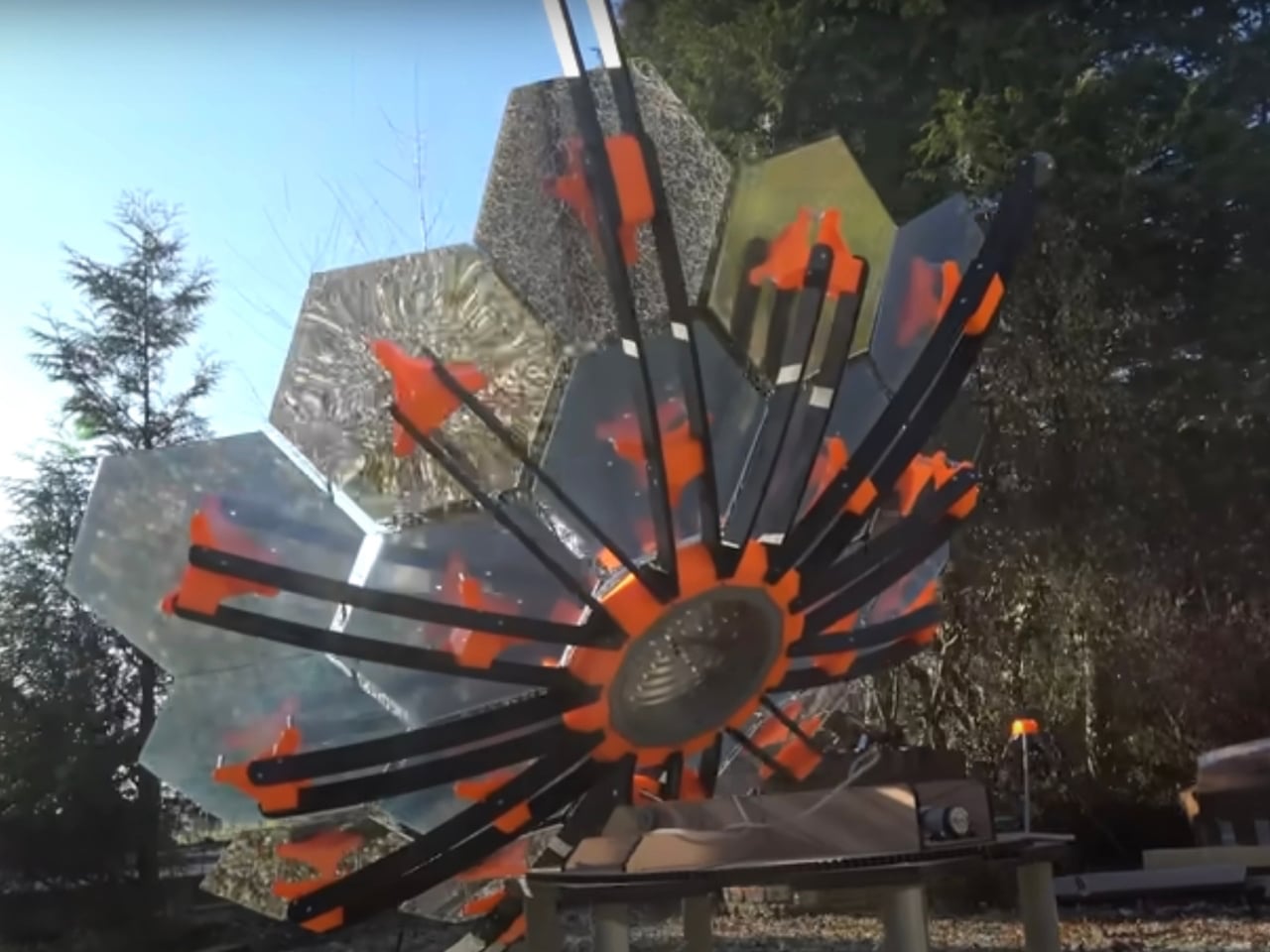
This product is designed to deliver clean, reliable energy in a compact and portable format. Ideal for emergency backup, outdoor trips, or reducing household electricity costs, this combines efficiency with practicality. Inspired by advanced space-grade systems similar to those used in aerospace applications, it transforms sunlight into usable power through a streamlined and user-friendly setup.
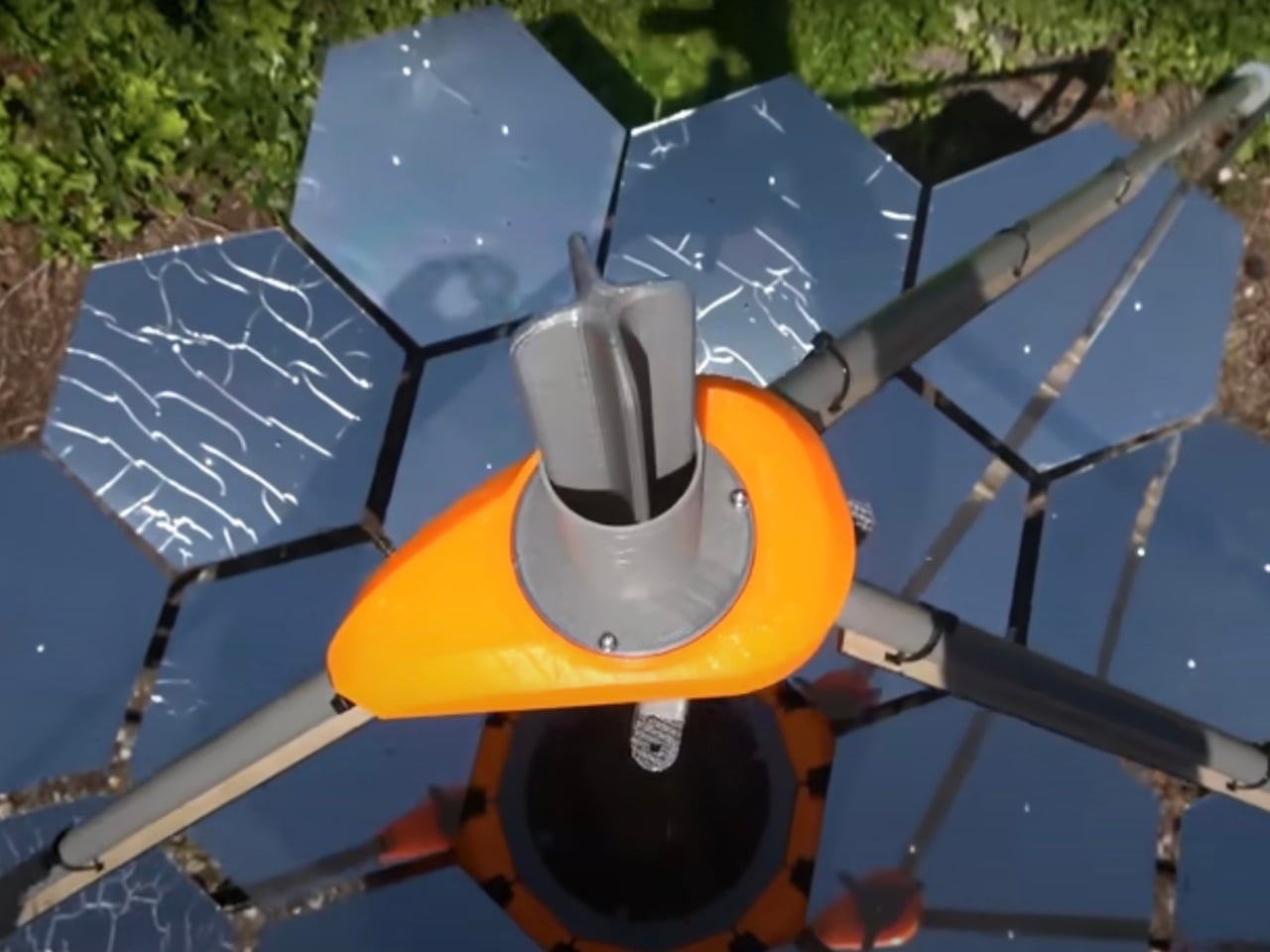
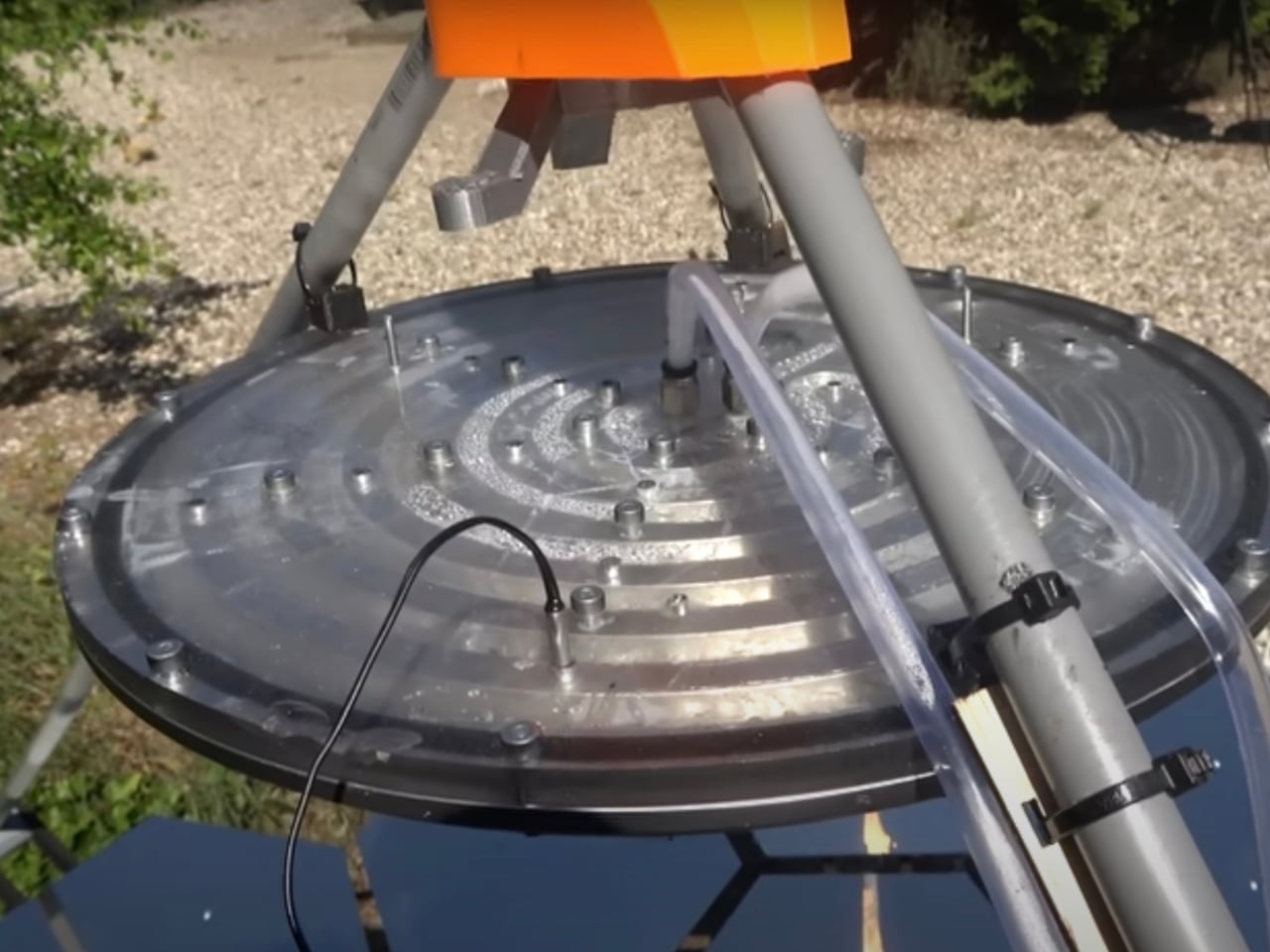
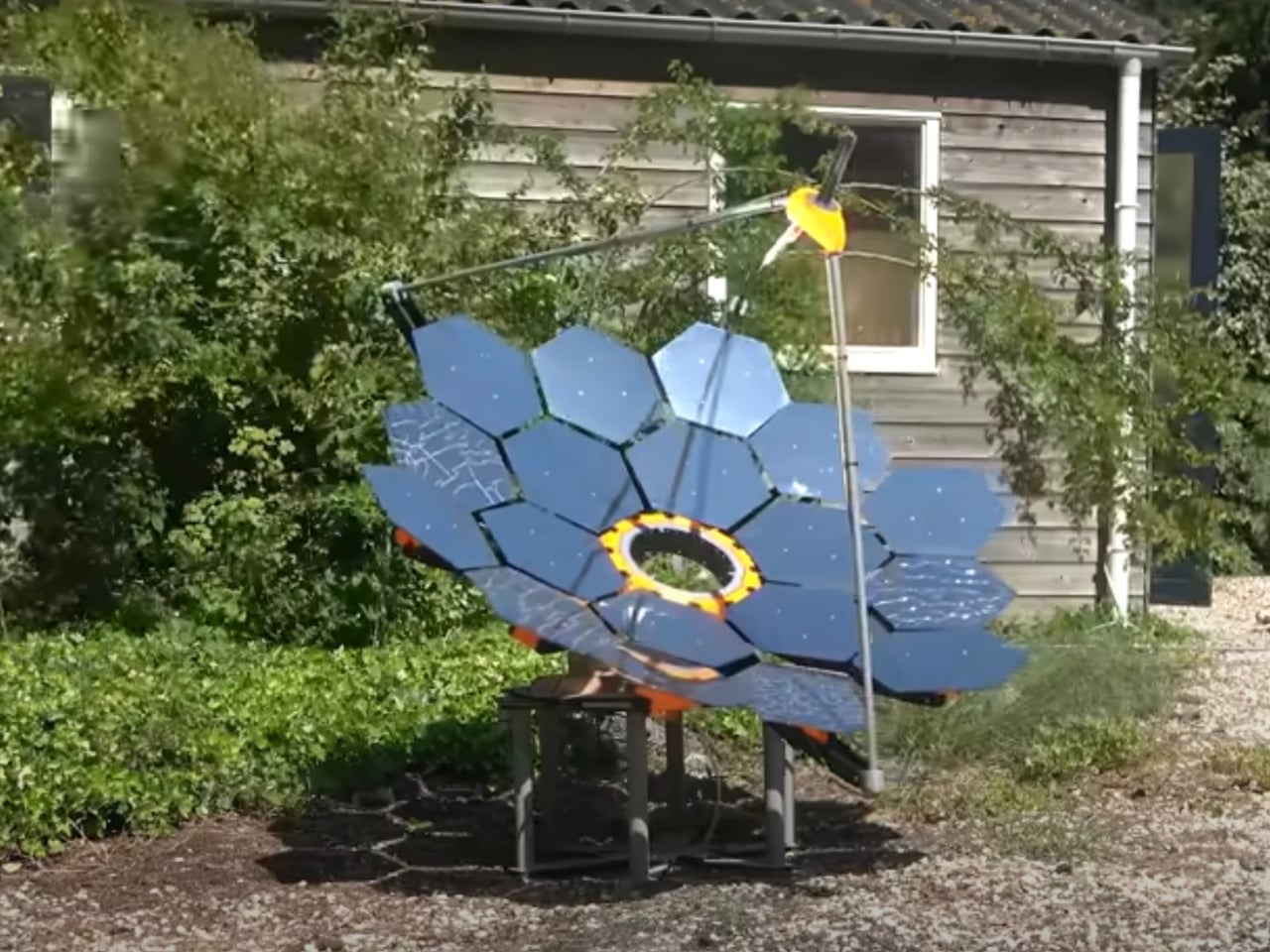
The generator includes high-efficiency solar panels, long-lasting lithium iron phosphate batteries, a charge controller, integrated power outlets, and a durable portable casing. One enhanced version features 18 mirrors that focus sunlight onto a black collector plate, generating significant thermal output — heating 20 litres of water in just over 30 minutes. Engineered for performance yet designed for real-world use, this solar generator offers dependable energy, lower operating costs, and a sustainable alternative to traditional fuel-powered systems.
Solar sculptures signal a future where clean energy and design are inseparable. What was once concealed infrastructure now shapes identity, experience, and place. As photovoltaics grow lighter, flexible, and expressive, cities will treat sunlight as a resource and muse, transforming everyday surfaces into generators of power, meaning, and beauty.
The post first appeared on .
Related Posts