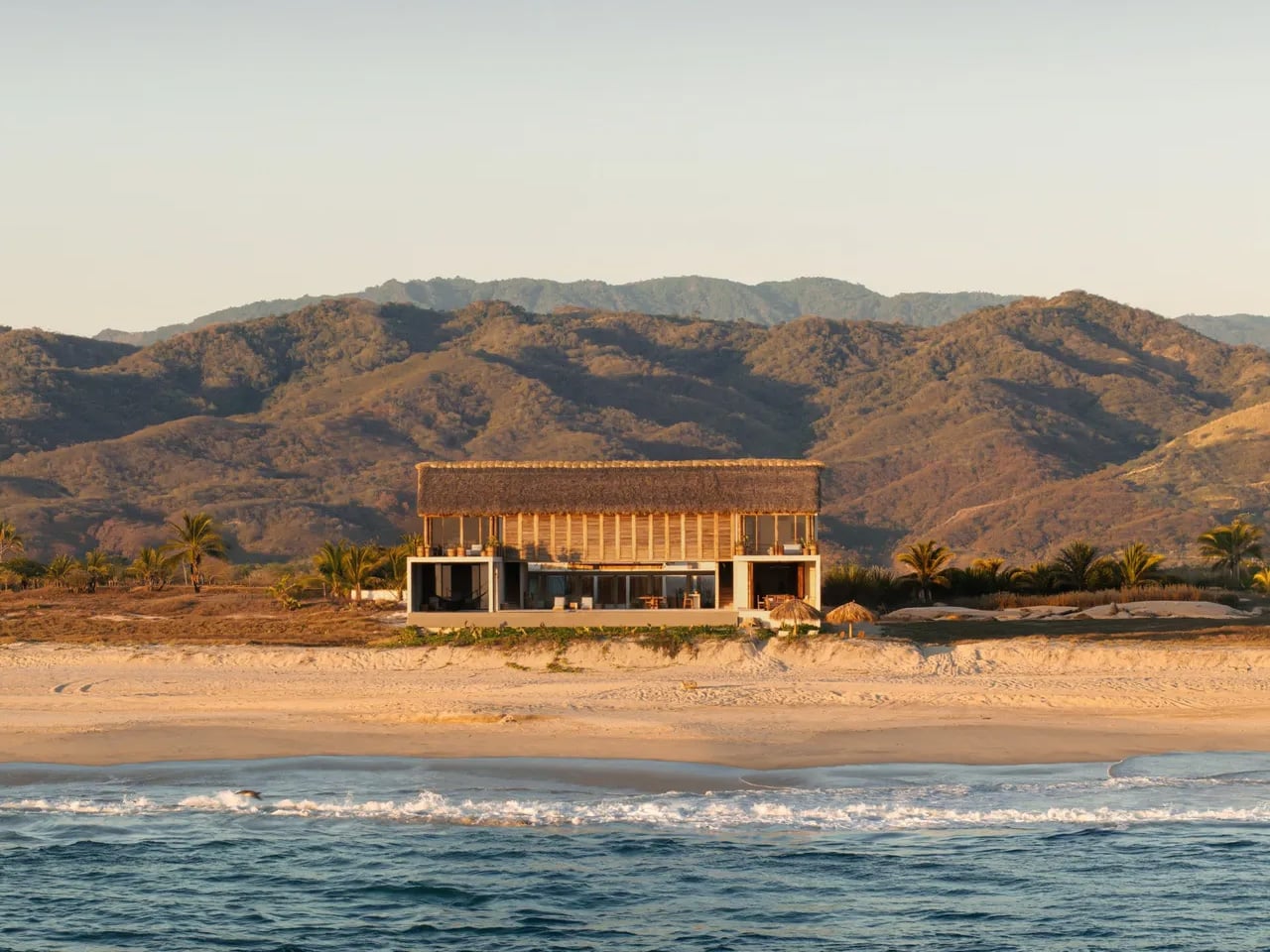
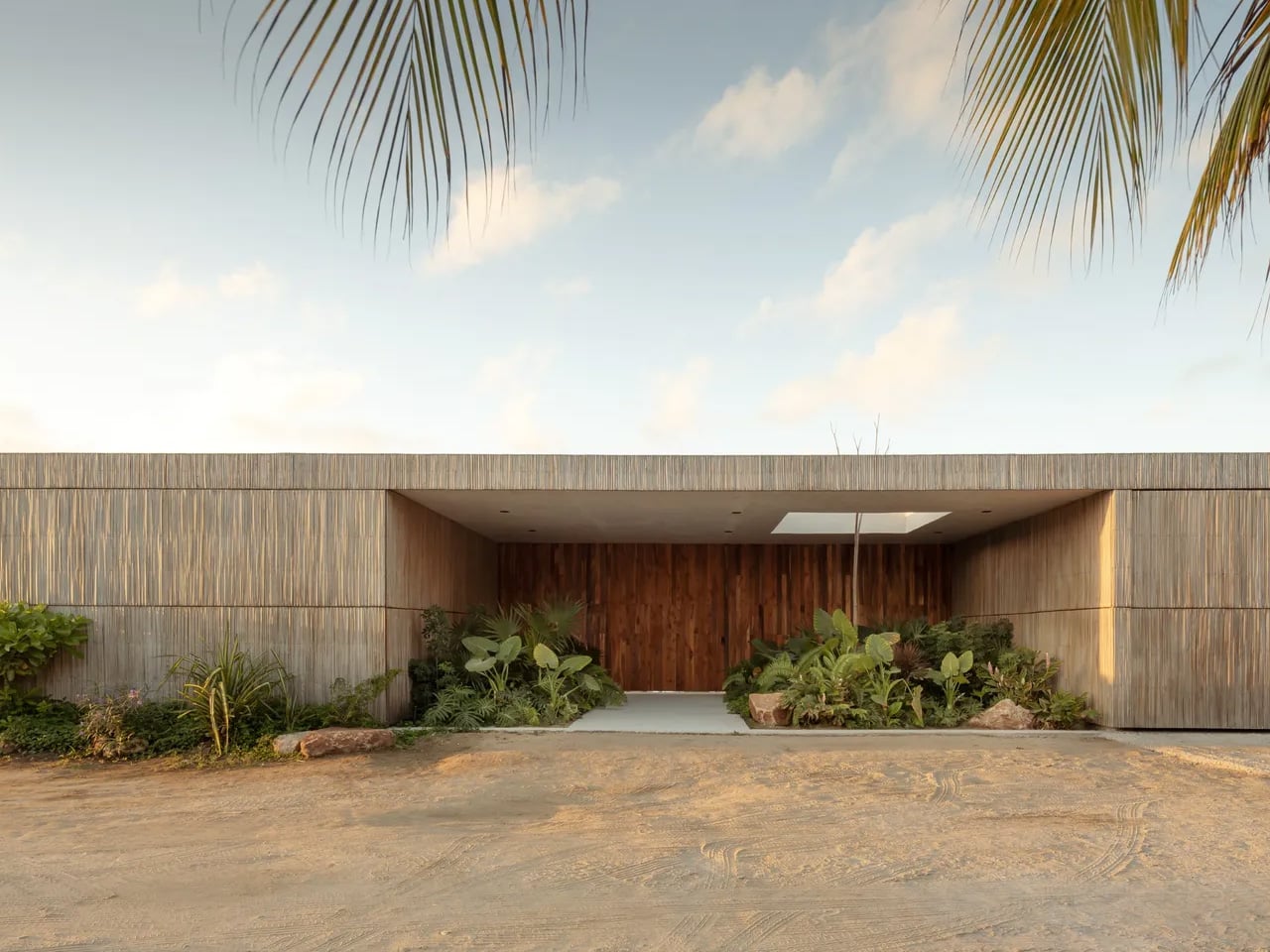
On the sandy shores of Puerto Escondido, a house sits quietly and dares you to want less. It draws its DNA from local monasteries and haciendas — not as pastiche, but as a genuine reckoning with how people have always lived on this stretch of Mexico’s Pacific coast. The result is something that feels simultaneously ancient and completely of its moment: a building that reads as ruin and refuge at the same time.
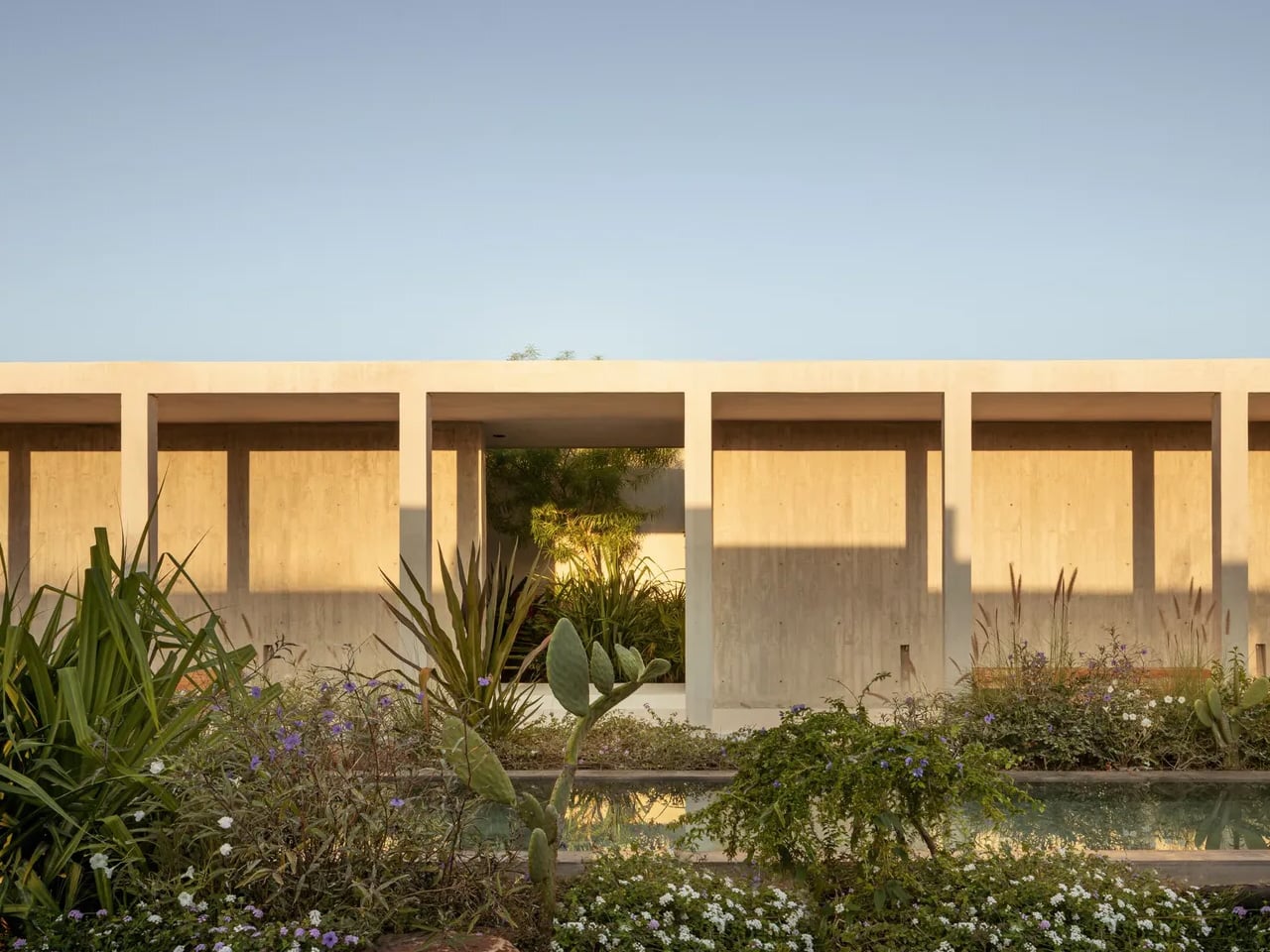
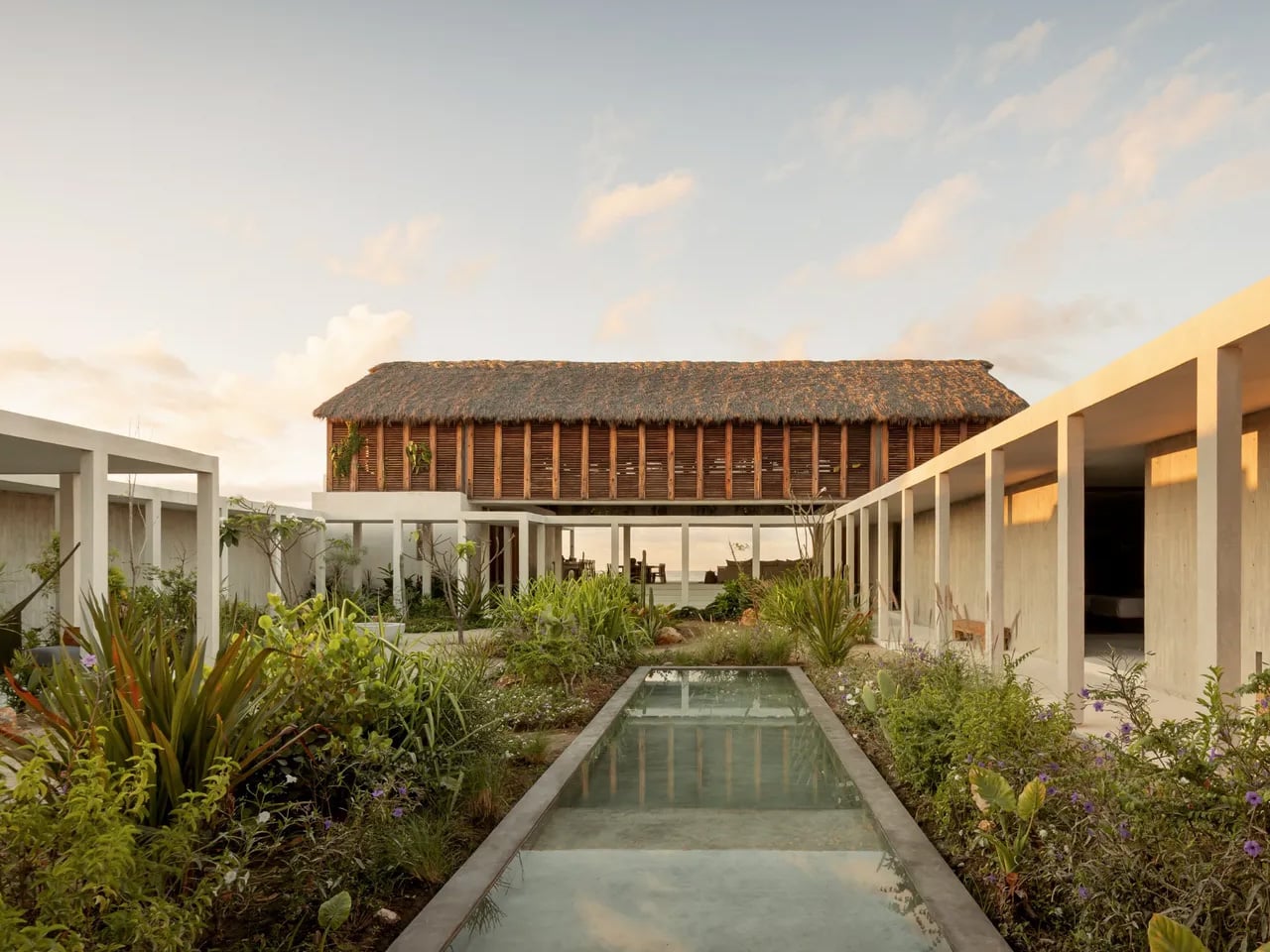
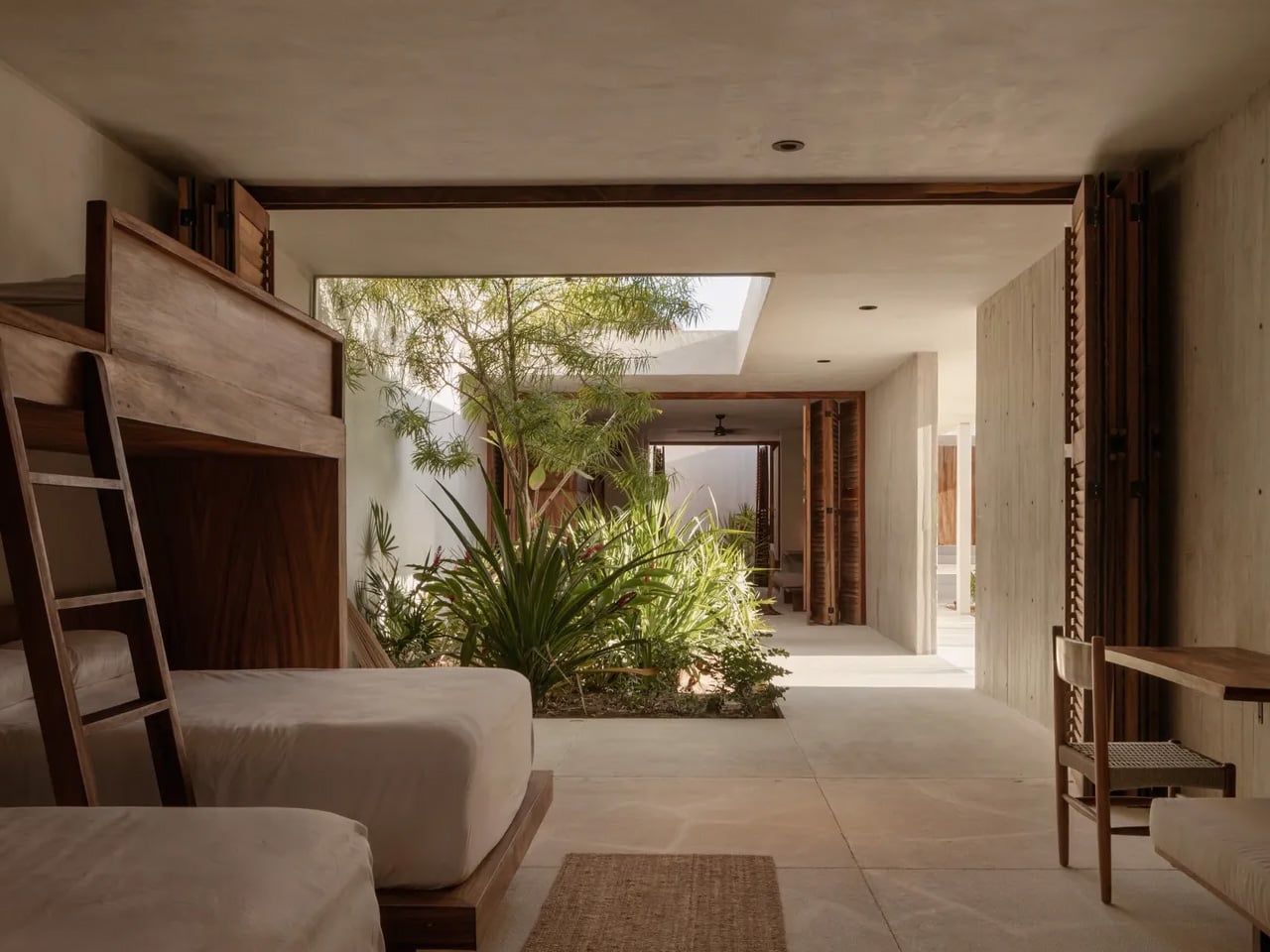
Exposed concrete forms the structural backbone of the project, but Anonimous never lets it feel cold. Planted courtyards punctuate the plan, pulling light and greenery into the heart of the house, while a green roof softens what would otherwise be a hard, monolithic silhouette. The dialogue between the man-made and the grown is constant — every room feels like it’s negotiating with the landscape rather than ignoring it.
Designer: Anonimous
The showpiece is the palapa: a 20-meter-long, 12-meter-wide thatched roof constructed from parota wood and local palm. It’s the kind of element that could easily tip into theme-park territory, but here it reads as structurally and culturally inevitable — a direct reference to vernacular building traditions that have been managing Pacific coast heat for centuries. Beneath it, the spaces breathe. The heavy concrete base and the light, fibrous canopy above create exactly the kind of contrast Anonimous seems most interested in: openness against closure, mass against weightlessness, stillness against the constant movement of the ocean beyond.
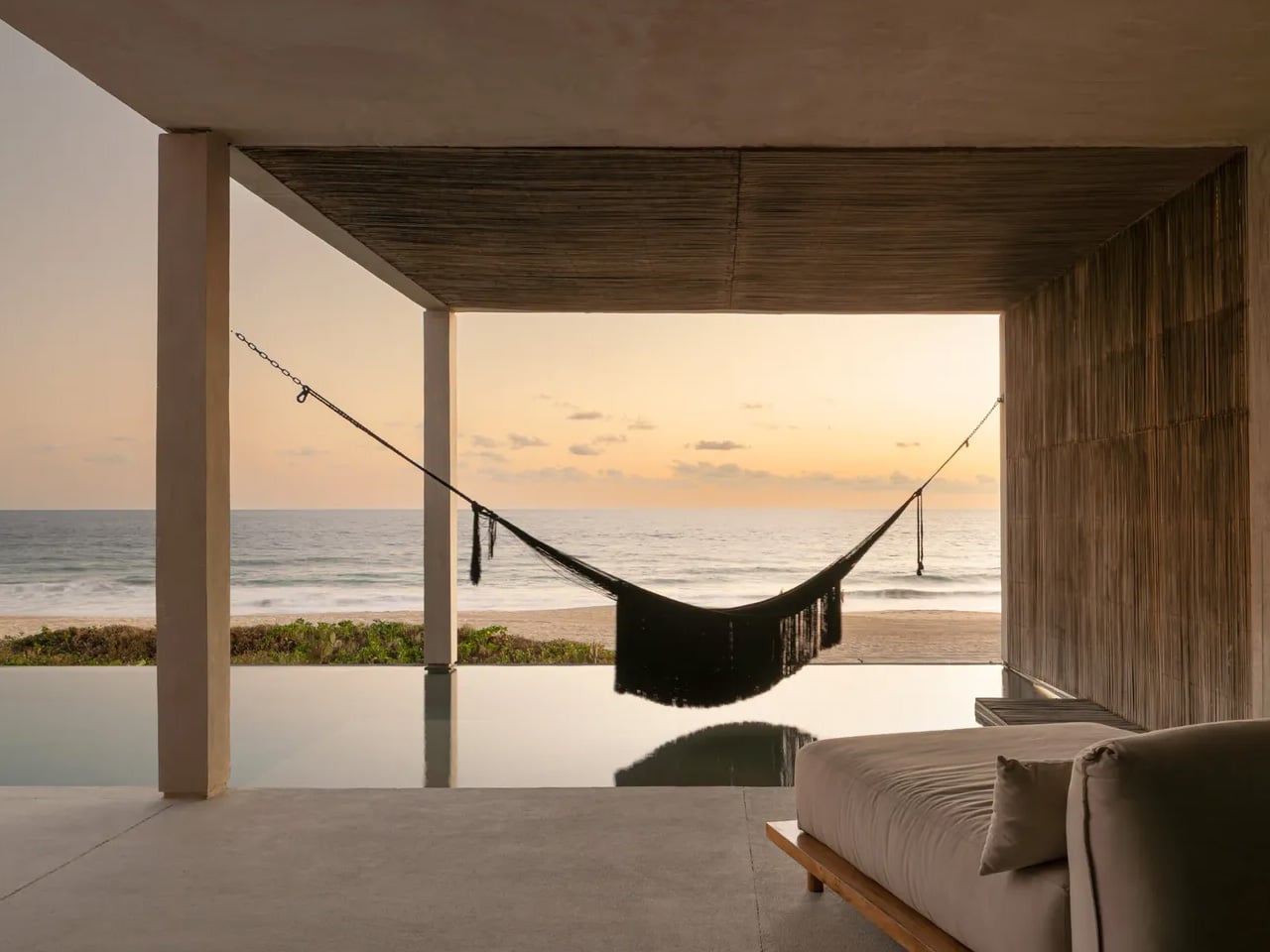
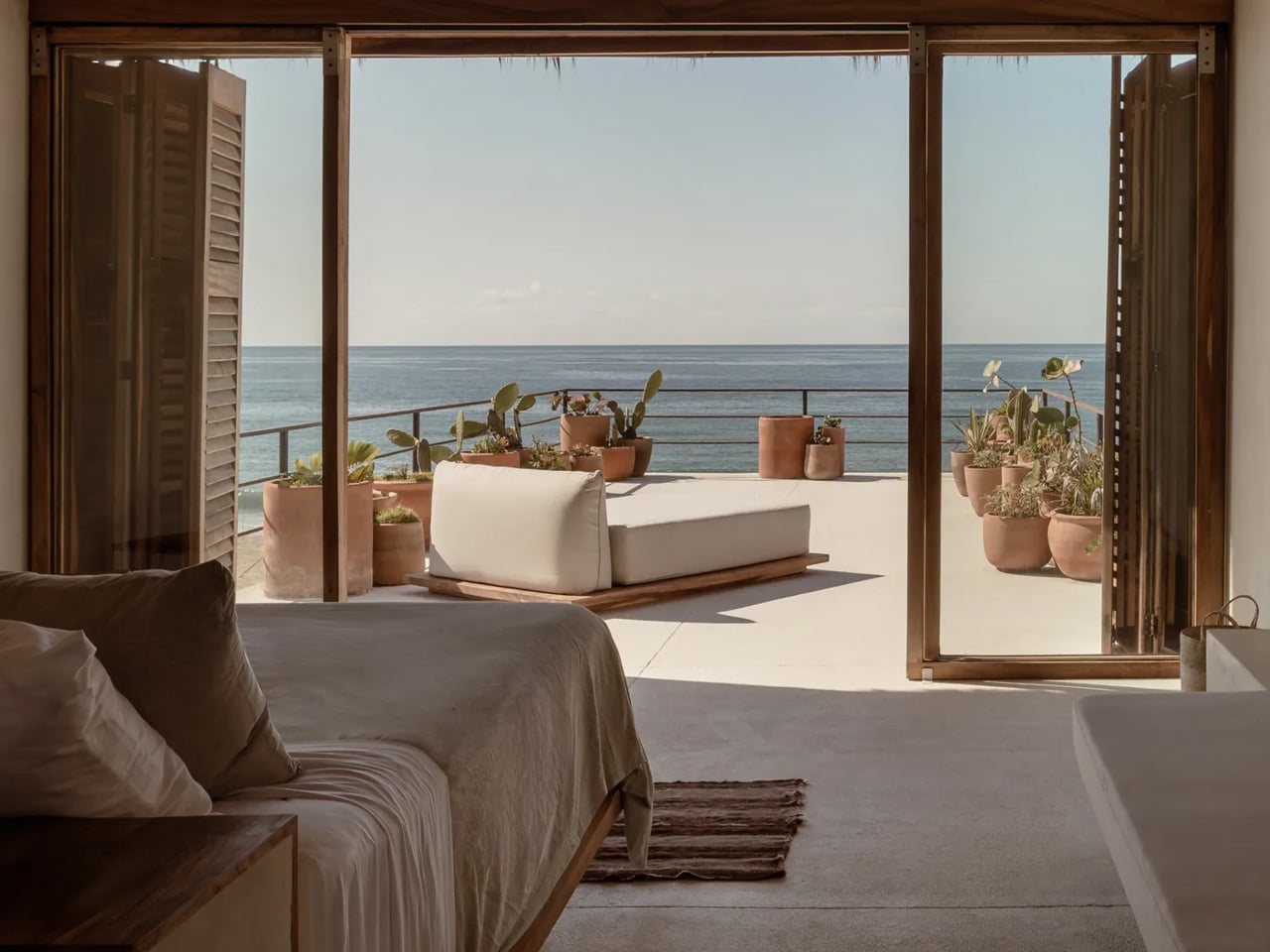
Upstairs, a rooftop plunge pool frames views of the Pacific through concrete beams, turning what could be a gratuitous amenity into something almost architectural — a framed picture of sky and water that changes with every hour of the day. Terraces and balconies extend naturally from the interiors, blurring the line between inside and outside until that distinction stops mattering altogether.
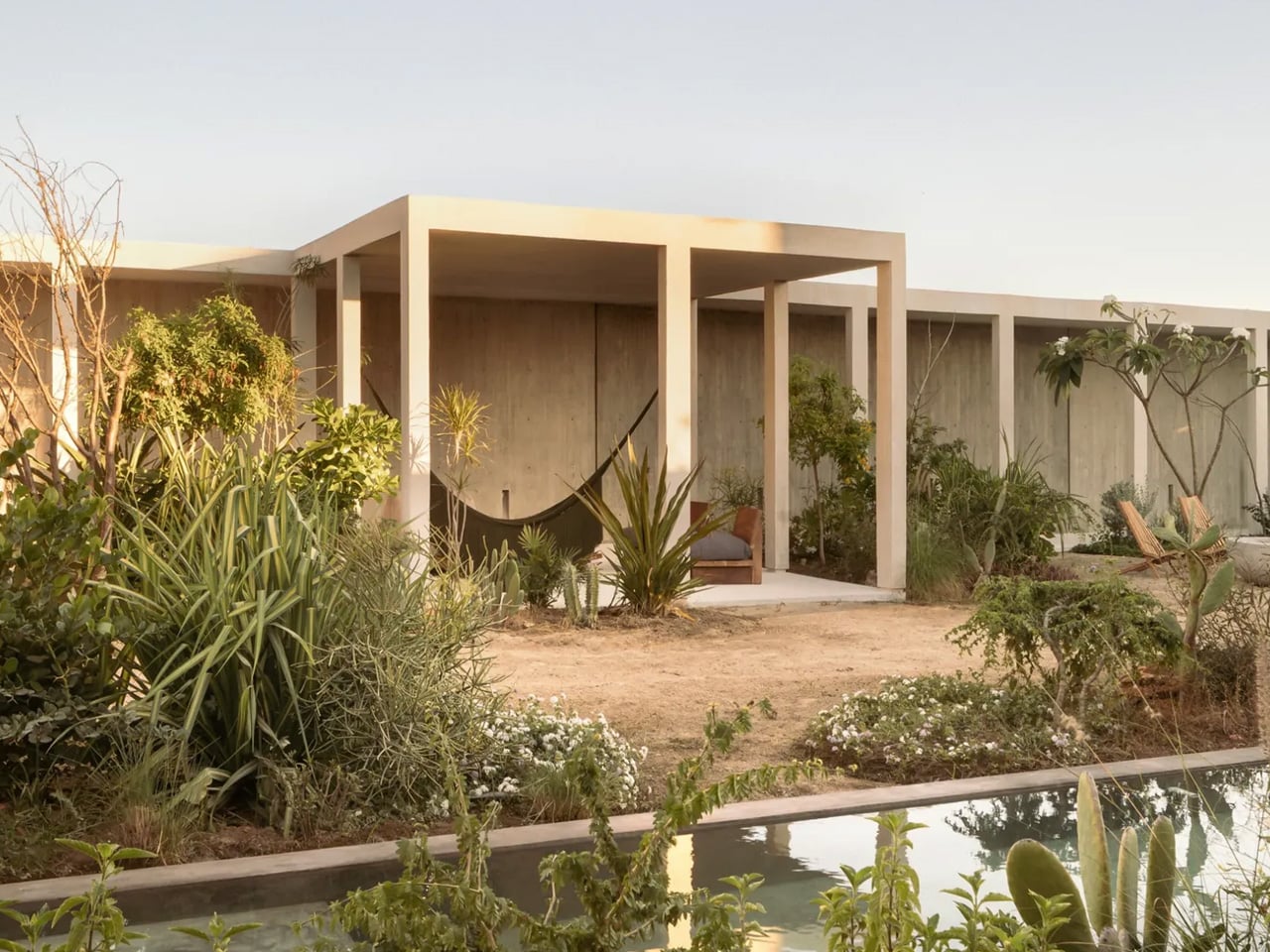
Casa Copycha isn’t trying to impress you with spectacle. It works through atmosphere — through the sound of waves filtered by palm thatch, through the play of dappled Pacific light on raw concrete walls, through the feeling that the building knows exactly where it is and has made peace with that completely. In a moment when coastal architecture often defaults to glass maximalism, that kind of grounded confidence is genuinely rare.
The post first appeared on .
Related Posts