This restaurant on a Japanese island features a thatched roof and large cardboard tubes

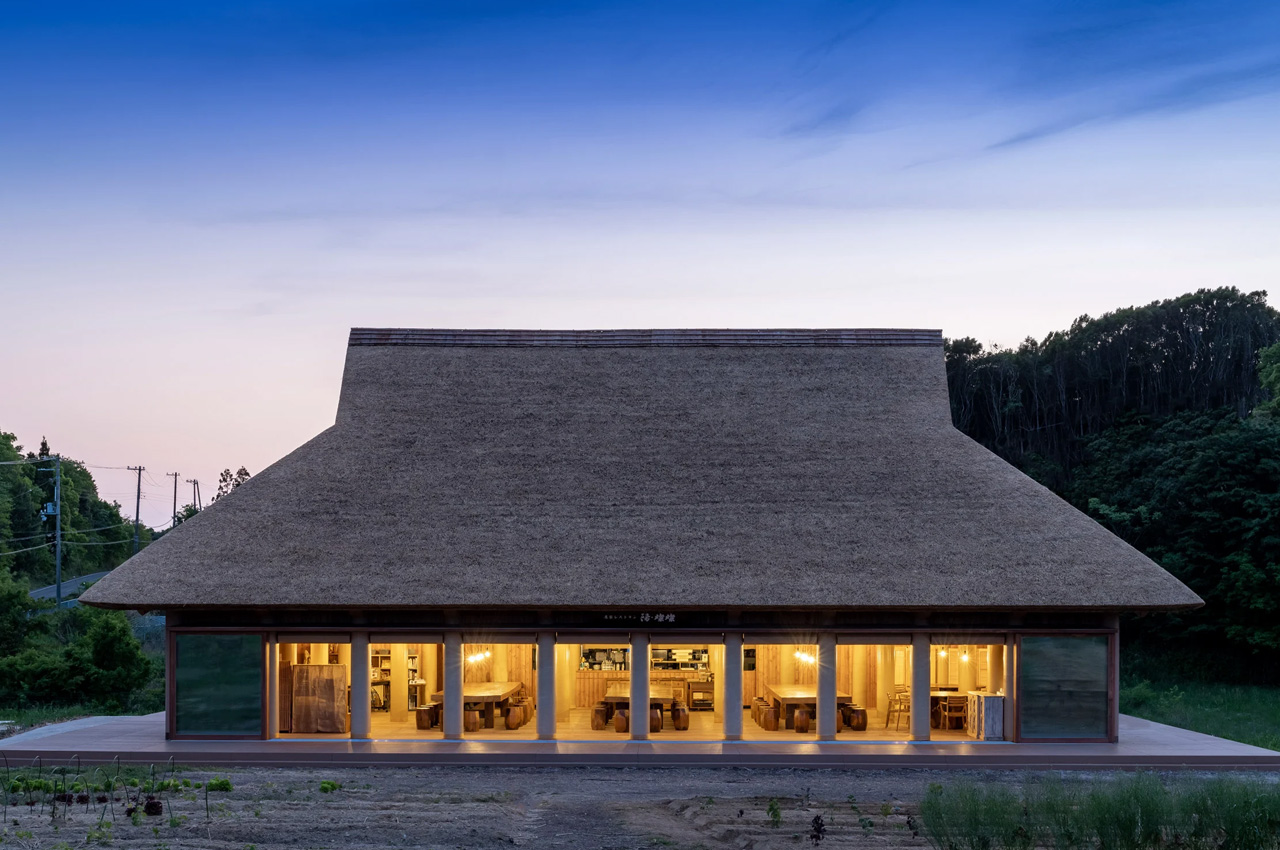
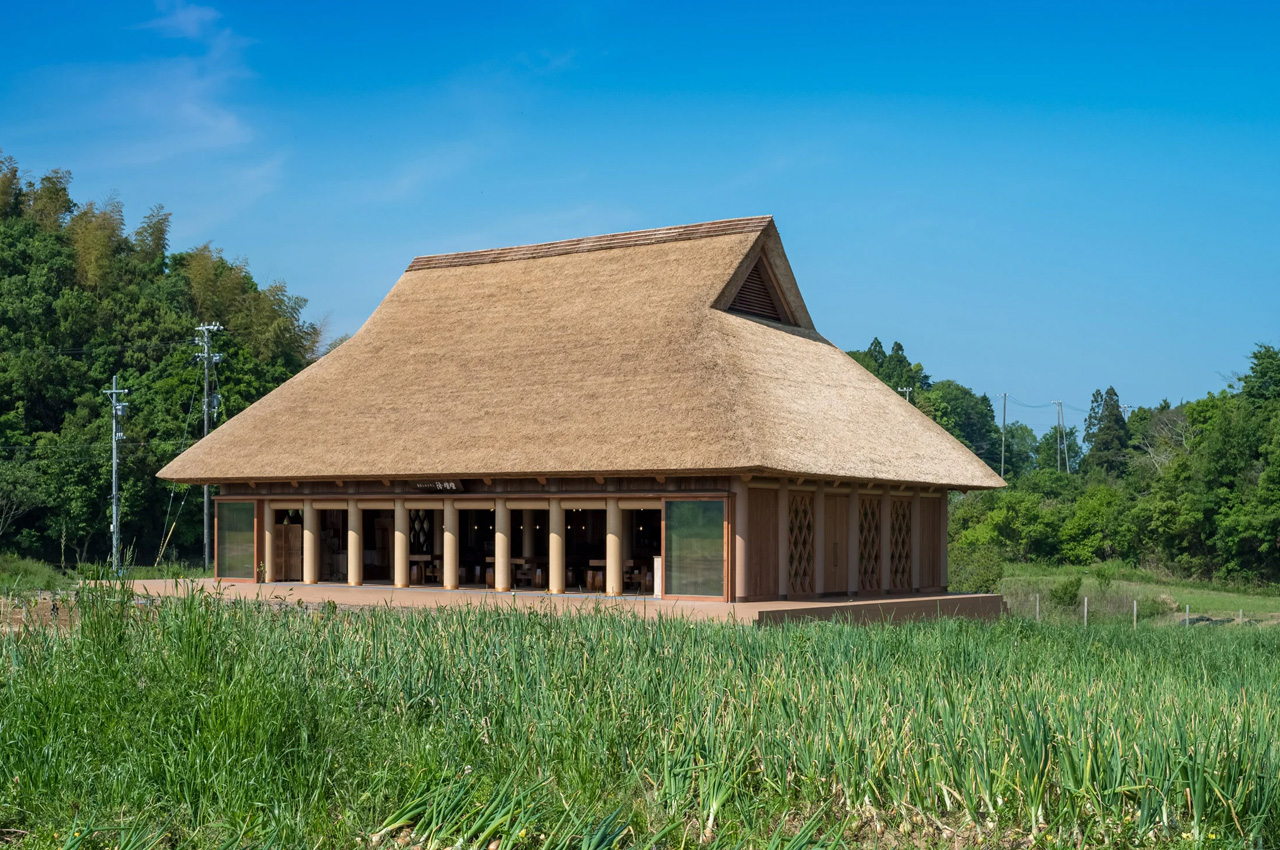
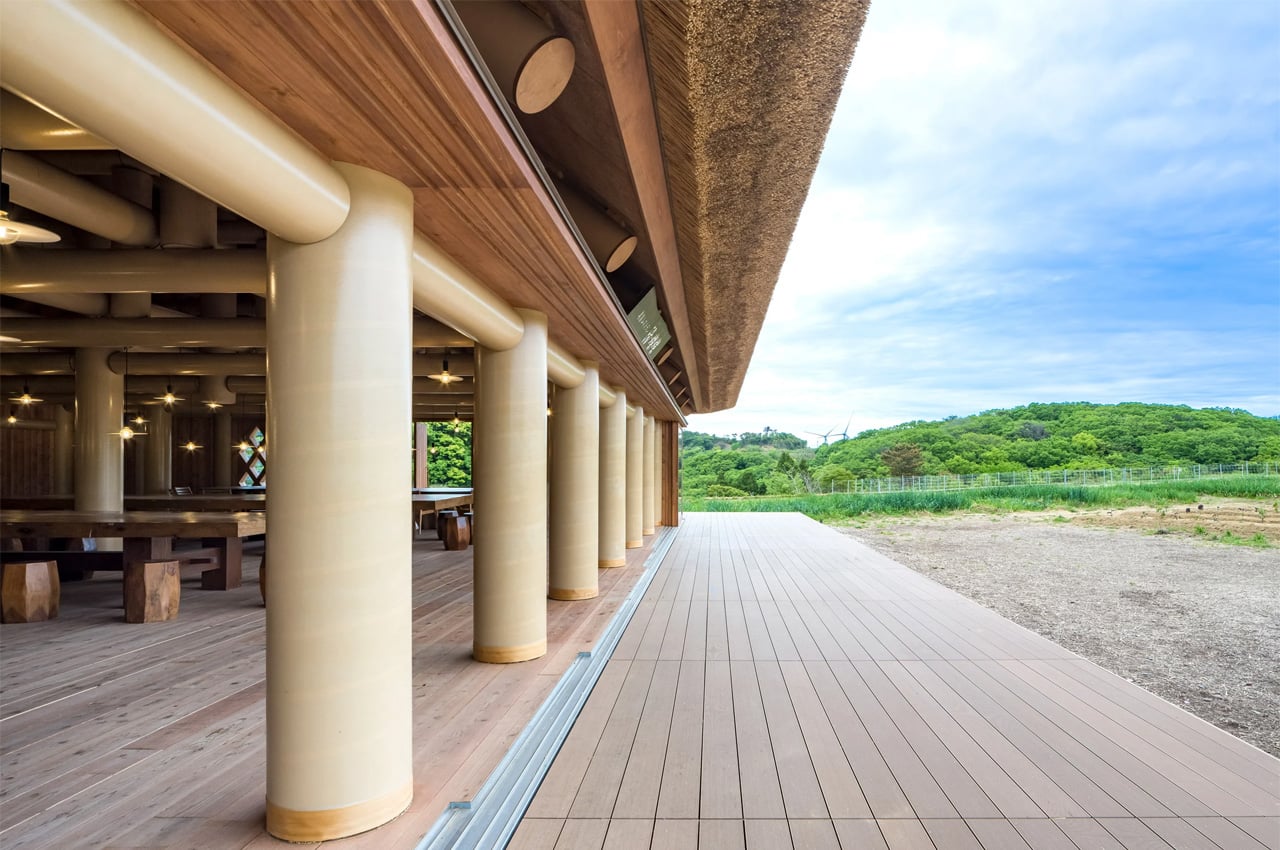
Architecture studio Shigeru Ban designed the unique Farmer’s Restaurant on Awaji Island. Situated in the middle of a field on the Japanese island, the restaurant features a thatched roof, and huge cardboard tubes, giving the structure a rather raw and unfettered aesthetic. The restaurant also functions as a music hall!

Designer: Shigeru Ban
This restaurant on a Japanese island features a thatched roof and large cardboard tubes

This restaurant on a Japanese island features a thatched roof and large cardboard tubes

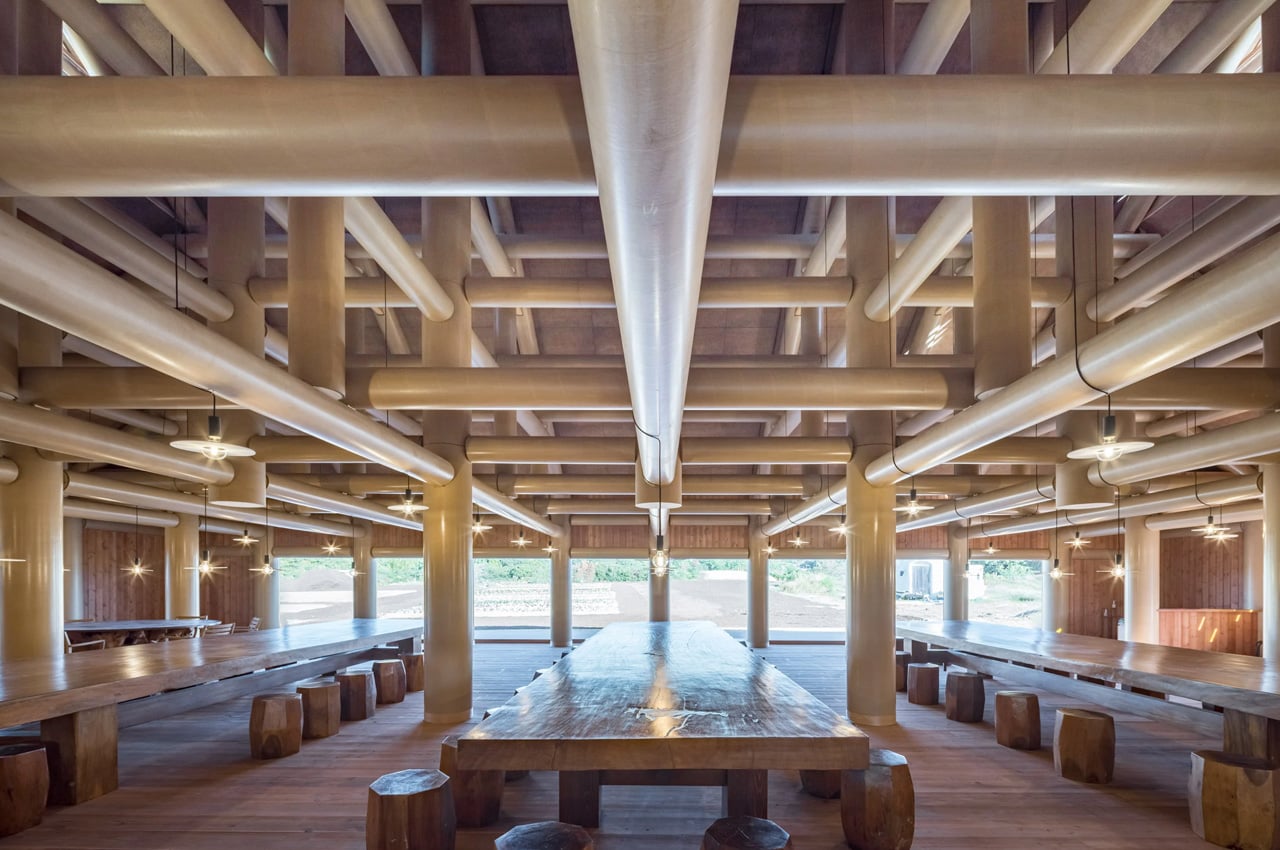
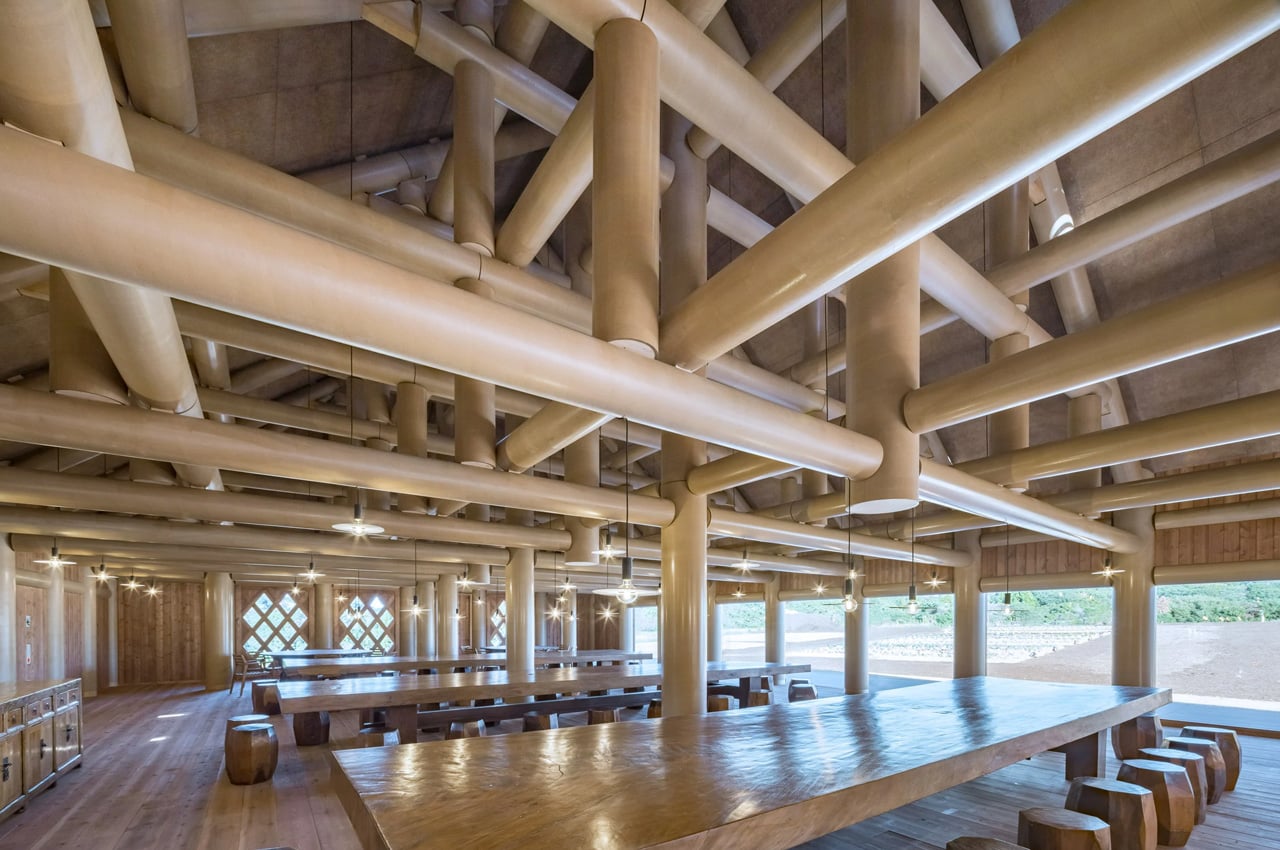
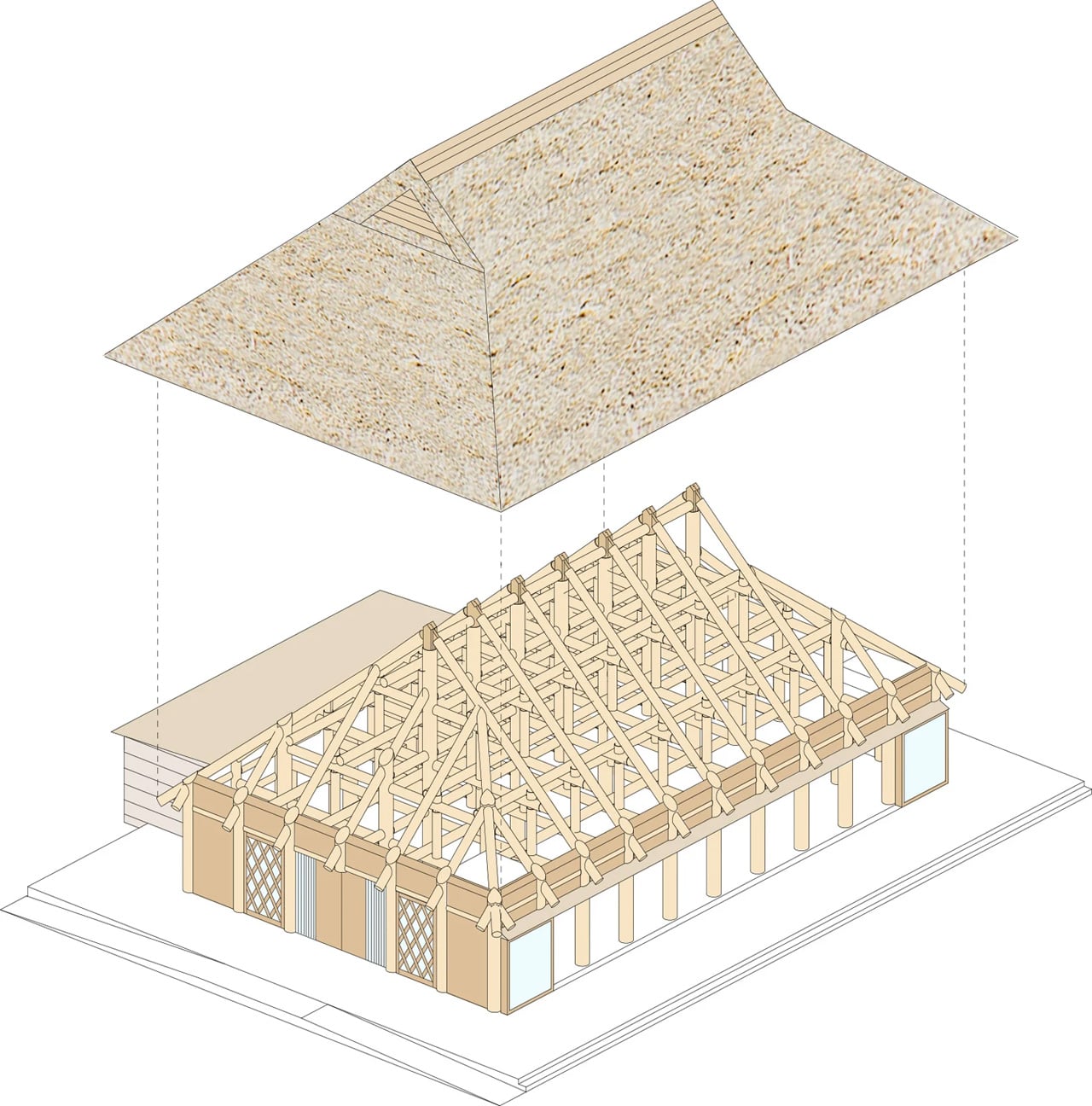
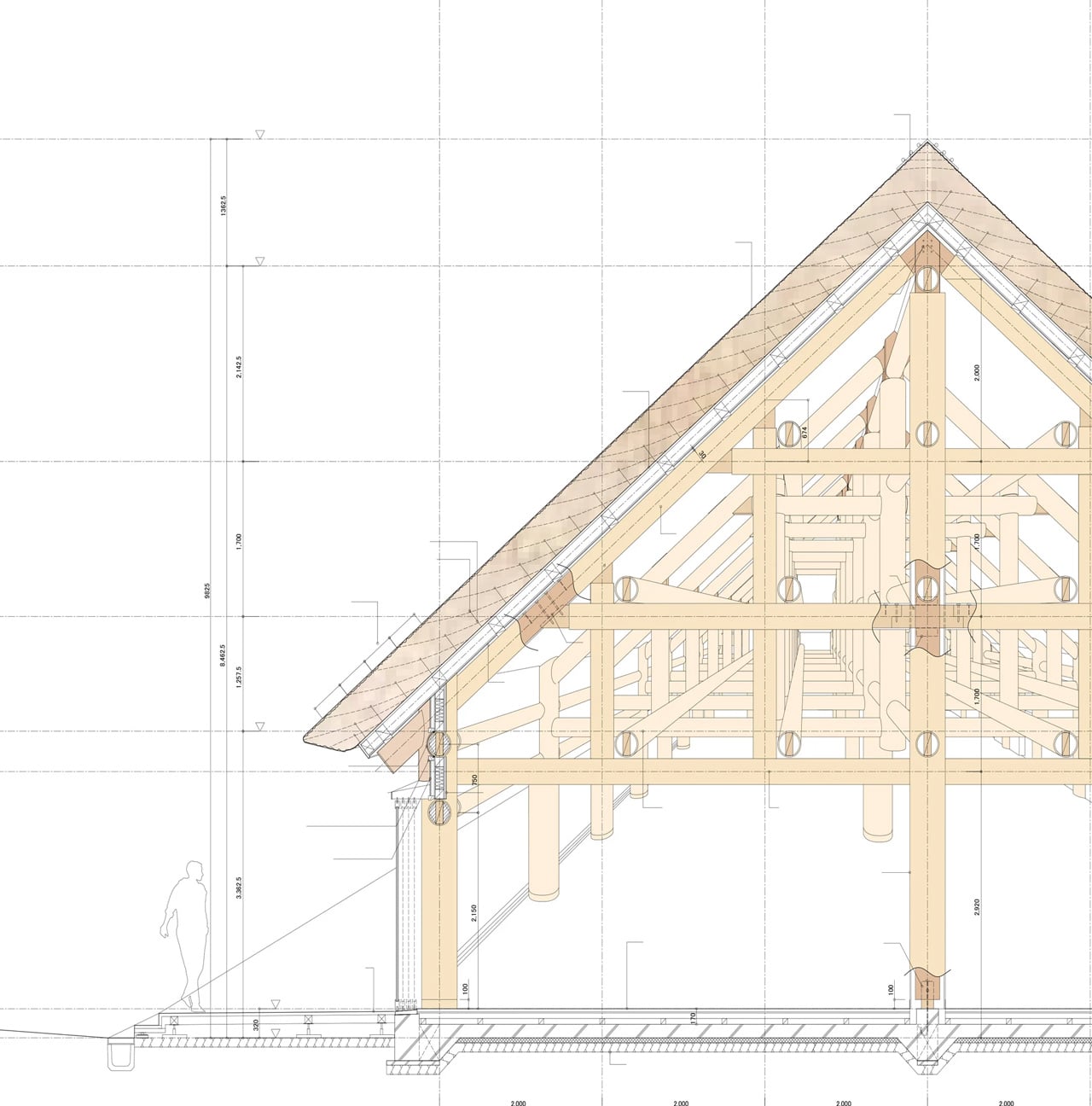
The restaurant was commissioned by the agricultural company Pasona Agri-Partners Inc, in an attempt to bring farm-fresh veggies to the table, by serving food prepared from vegetables straight from the field! It is heavily influenced by traditional Japanese farmhouses, which is quite evident in its large thatched roof. The restaurant’s rather raw look, chunky beams, and columns pay tribute to the massive trees used to build traditional Japanese farmhouses. These rustic elements were crafted from two pieces of Japanese cypress wood, covered in cardboard tubes.
This restaurant on a Japanese island features a thatched roof and large cardboard tubes

This restaurant on a Japanese island features a thatched roof and large cardboard tubes

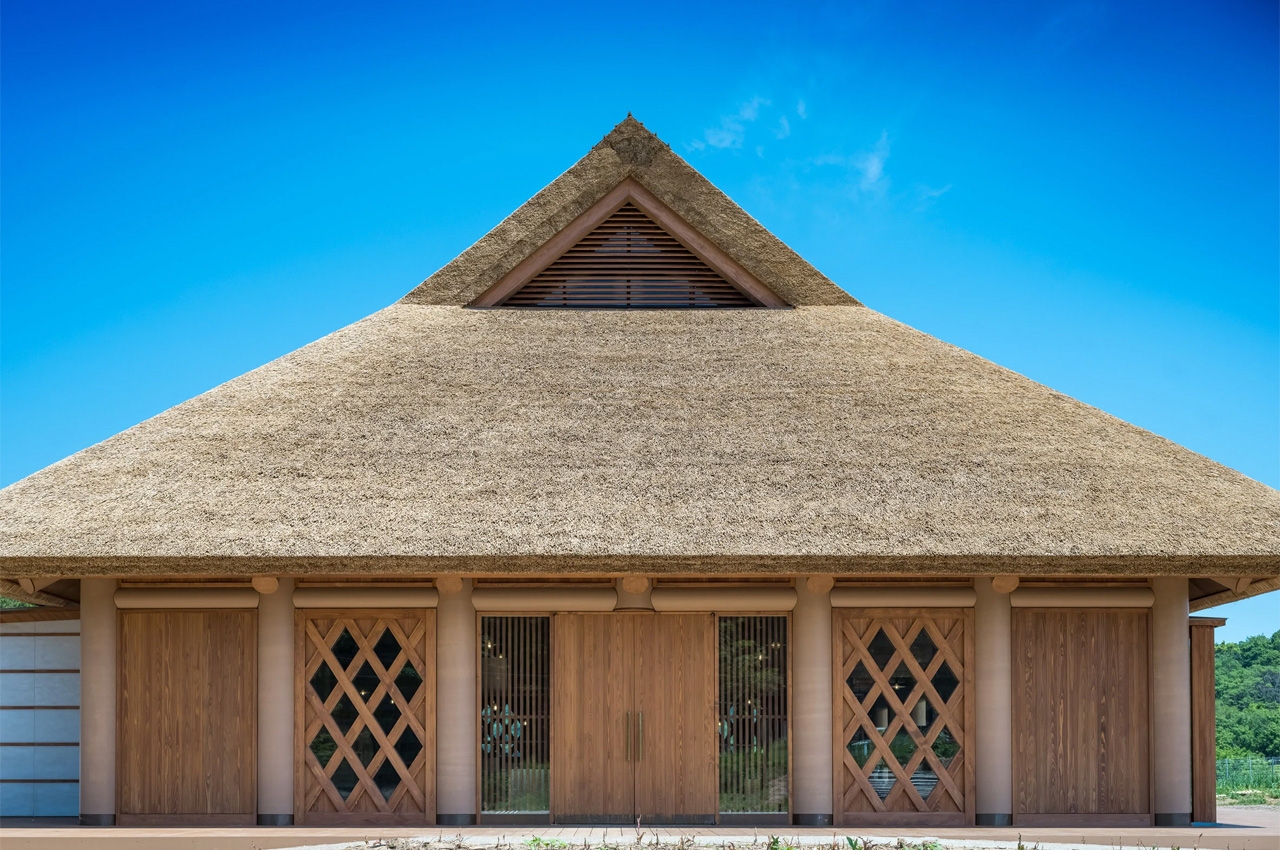
The Farmer’s Restaurant also showcases Shigeru Ban’s ‘Paper Tube Structures’ system, – his iconic and pioneering utilization of cardboard tubes as components in the architecture. The cardboard tubes have been coated in waterproof paint, and are designed to be replaced later since they are placed outside. Wooden panels, doors, and various openings mark the exterior of the restaurant, alongside the chunky columns. The interiors of the restaurant feature wooden flooring, stools, and banquet tables.
This restaurant on a Japanese island features a thatched roof and large cardboard tubes

Ban also integrated his modular Paper Partition System (PPS), which was created to provide privacy to people seeking refuge in refugee centers. PPS utilizes thin cardboard tubes as partitions – in the form of structures and textiles. A single unit can be built by three people in five minutes.
This restaurant on a Japanese island features a thatched roof and large cardboard tubes

This restaurant on a Japanese island features a thatched roof and large cardboard tubes

The post This restaurant on a Japanese island features a thatched roof and large cardboard tubes first appeared on Yanko Design.

©

Related Posts

A Fancy Modern Resume Template for Adobe InDesignA Fancy Modern Resume Template for Adobe InDesign
Download A Fancy Modern Resume Template for...
Check out this stunning and versatile feminine resume template by...
Read more
This restaurant on a Japanese island features a thatched roof and large cardboard tubesThis restaurant on a Japanese island features a thatched roof and large cardboard tubes
This LEGO Gear Train Takes 90 Trillion...
If you’ve ever stared at one of Mondrian’s compositions and...
Read more
This restaurant on a Japanese island features a thatched roof and large cardboard tubesThis restaurant on a Japanese island features a thatched roof and large cardboard tubes
Coffee machine concept adds a touch of...
I am a coffee lover but most of the time,...
Read more
This restaurant on a Japanese island features a thatched roof and large cardboard tubesThis restaurant on a Japanese island features a thatched roof and large cardboard tubes
OnePlus Pad Go 2 Battery Lasts From...
Tablets have settled into a role somewhere between couch companion...
Read more
An installation of realistic ceramic birds on a wall.An installation of realistic ceramic birds on a wall.
Sarah Conti’s Expressive Ceramic Birds Migrate Through...
Detail of “(Im)Migration.” Photo by Rio Chantel. All images ©...
Read more
A Vibrant Group Exhibition, ‘Thread Count’ Celebrates the Legacy of Anni AlbersA Vibrant Group Exhibition, ‘Thread Count’ Celebrates the Legacy of Anni Albers
A Vibrant Group Exhibition, ‘Thread Count’ Celebrates...
When we see a painting, we don’t generally ask ourselves,...
Read more