In the wee hours of a busy Saturday morning, on June 28, 1969, police raided The Stonewall Inn in Manhattan’s Greenwich Village, a renowned hangout for the LGBTQ+ community. During the 1950s and 1960s, few businesses openly welcomed gay people, and the legal system was against them—even two consenting adults in the privacy of their own home could face years in prison or a psychiatric institution if convicted of the crime of sodomy. Bar raids were common, but this one was particularly fraught due to the volume of people, and police quickly lost control. A riot erupted, which sparked even further protests over the coming weeks in what became known as the .
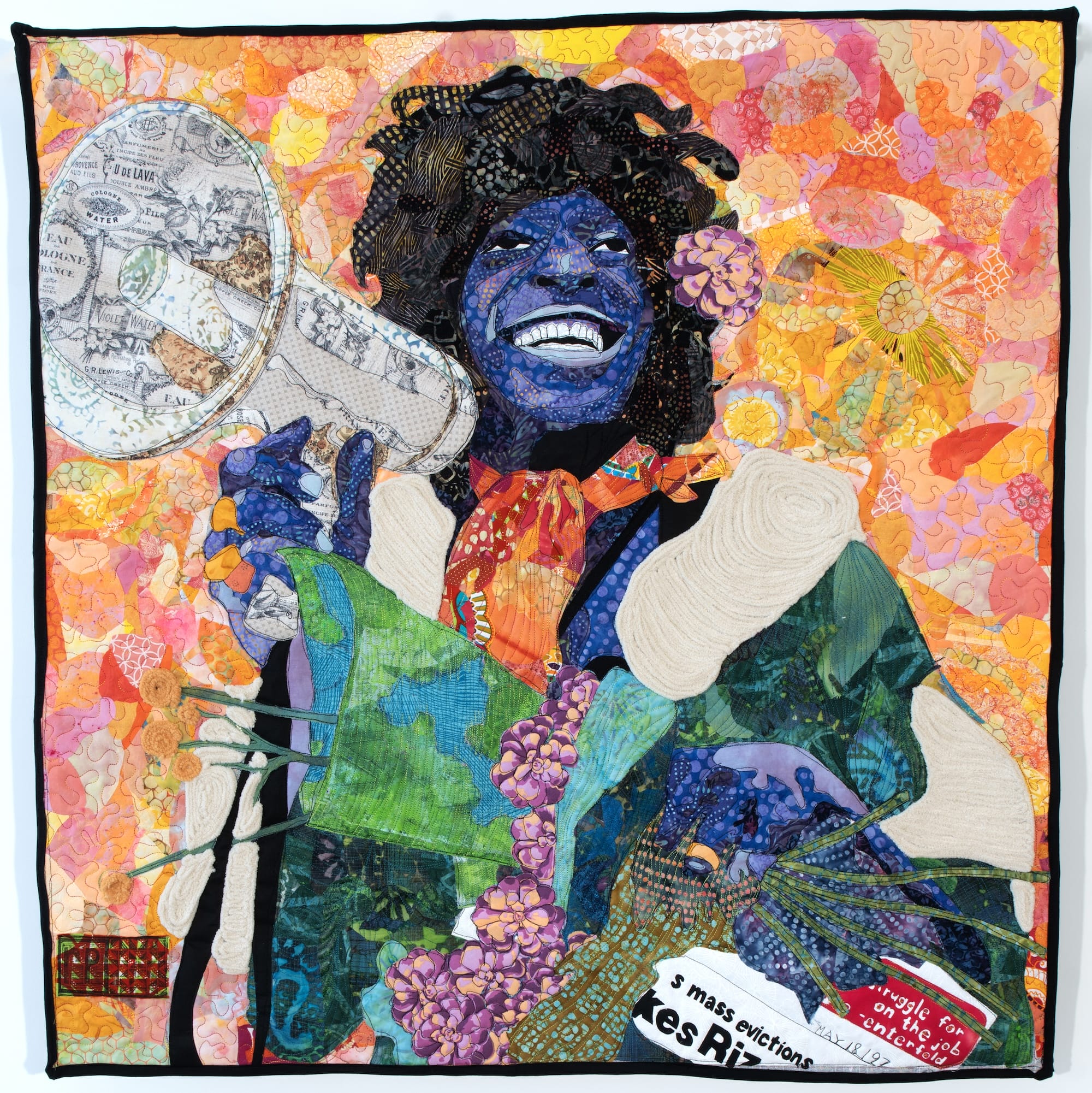
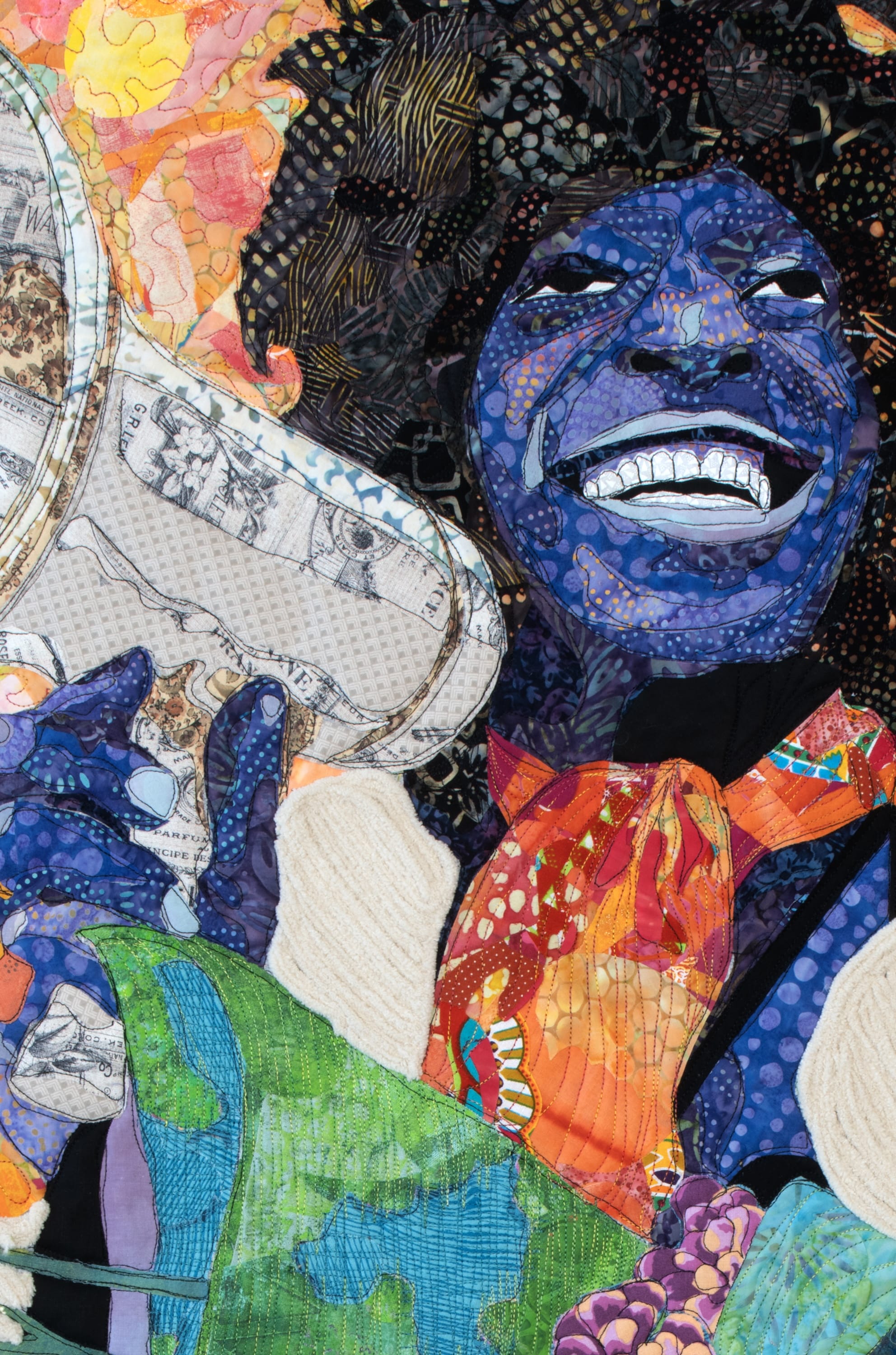
Among those on the front lines, from the raid onward, was —the “P” stands for Pay It No Mind—a Black transgender woman who advocated throughout the 1960s and 1970s for gay and transgender rights, LGBTQ+ youth, and those affected by HIV and AIDS. Known fondly as The Saint of Christopher Street, nodding to the well-known and for the gay community (and home of The Stonewall Inn), she was widely known for her effervescent smile, creative clothing, and the flowers she would often wear in her hair.
For quilter , Johnson proved a beautiful and vibrant personality for a large-scale textile work in We’re Still Here: Quilted Works Curated by Carolyn Mazloomi at .
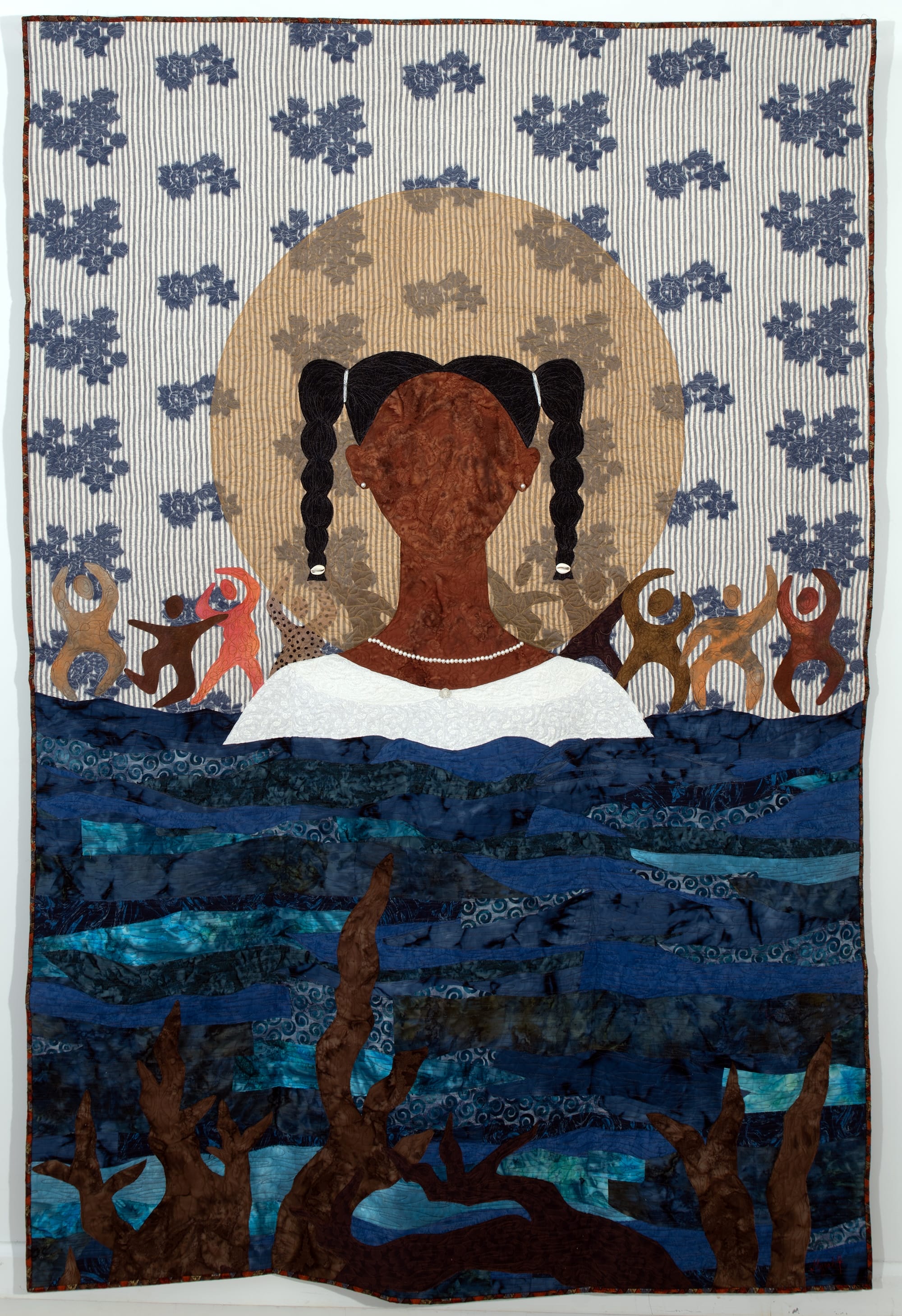
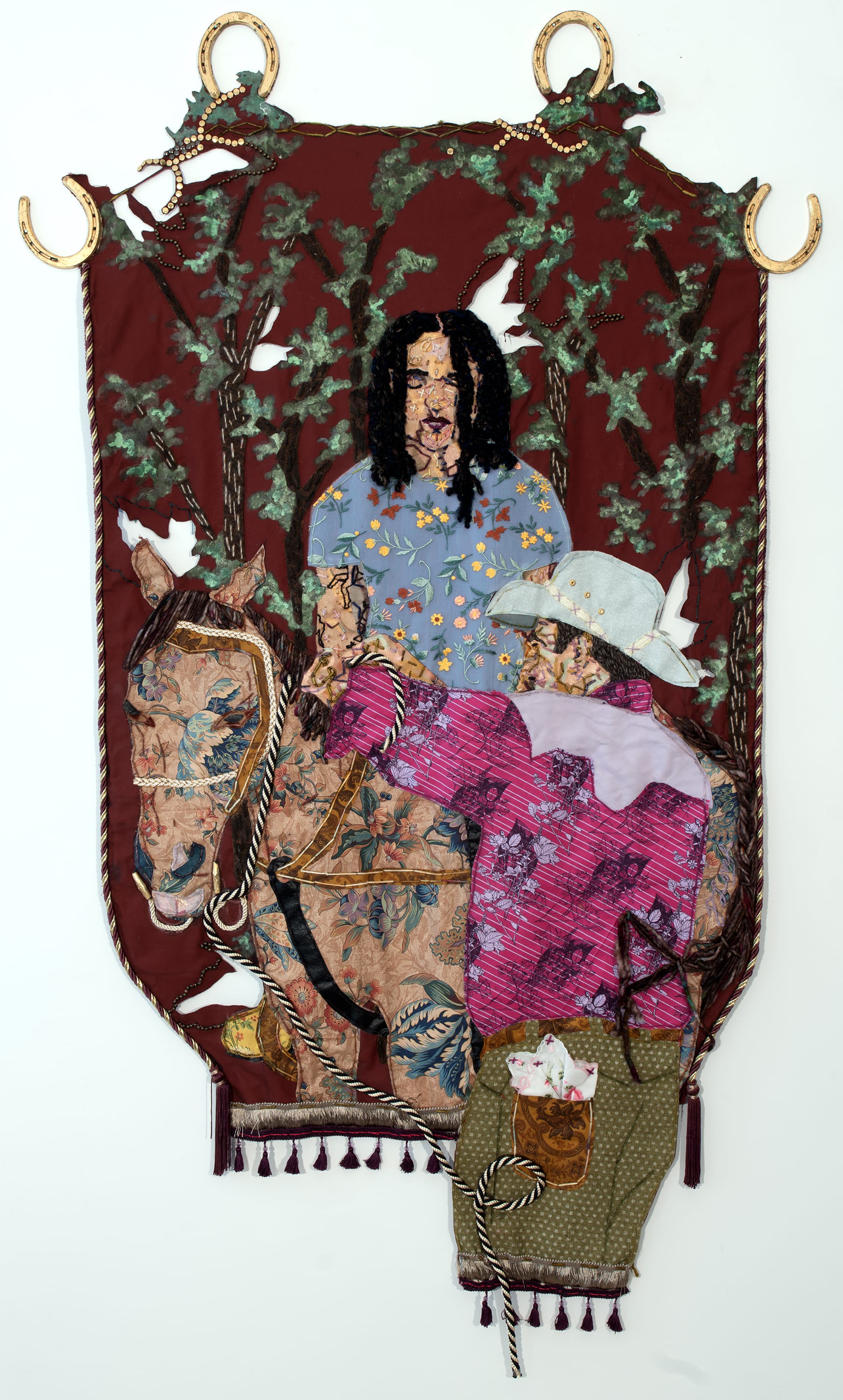
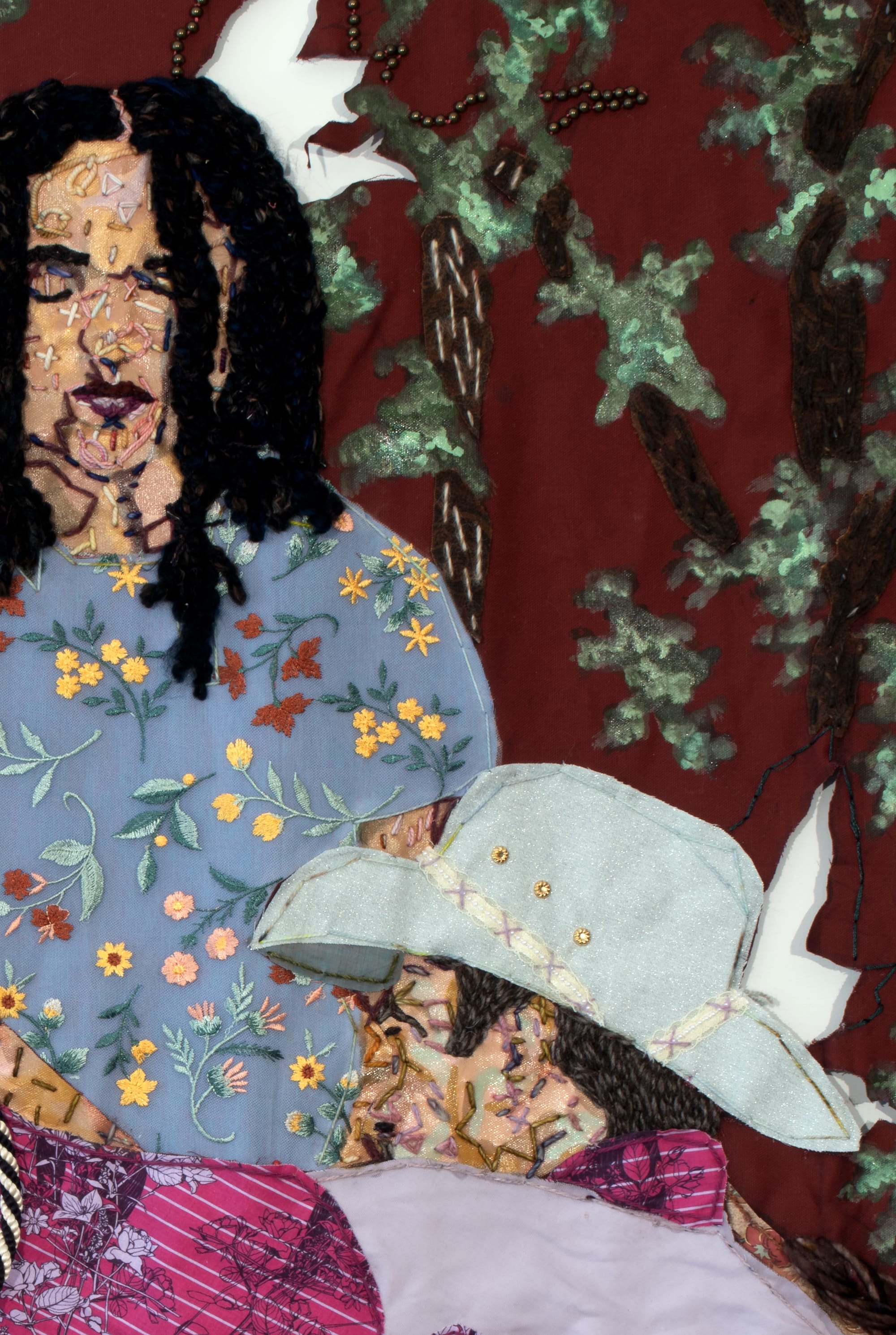
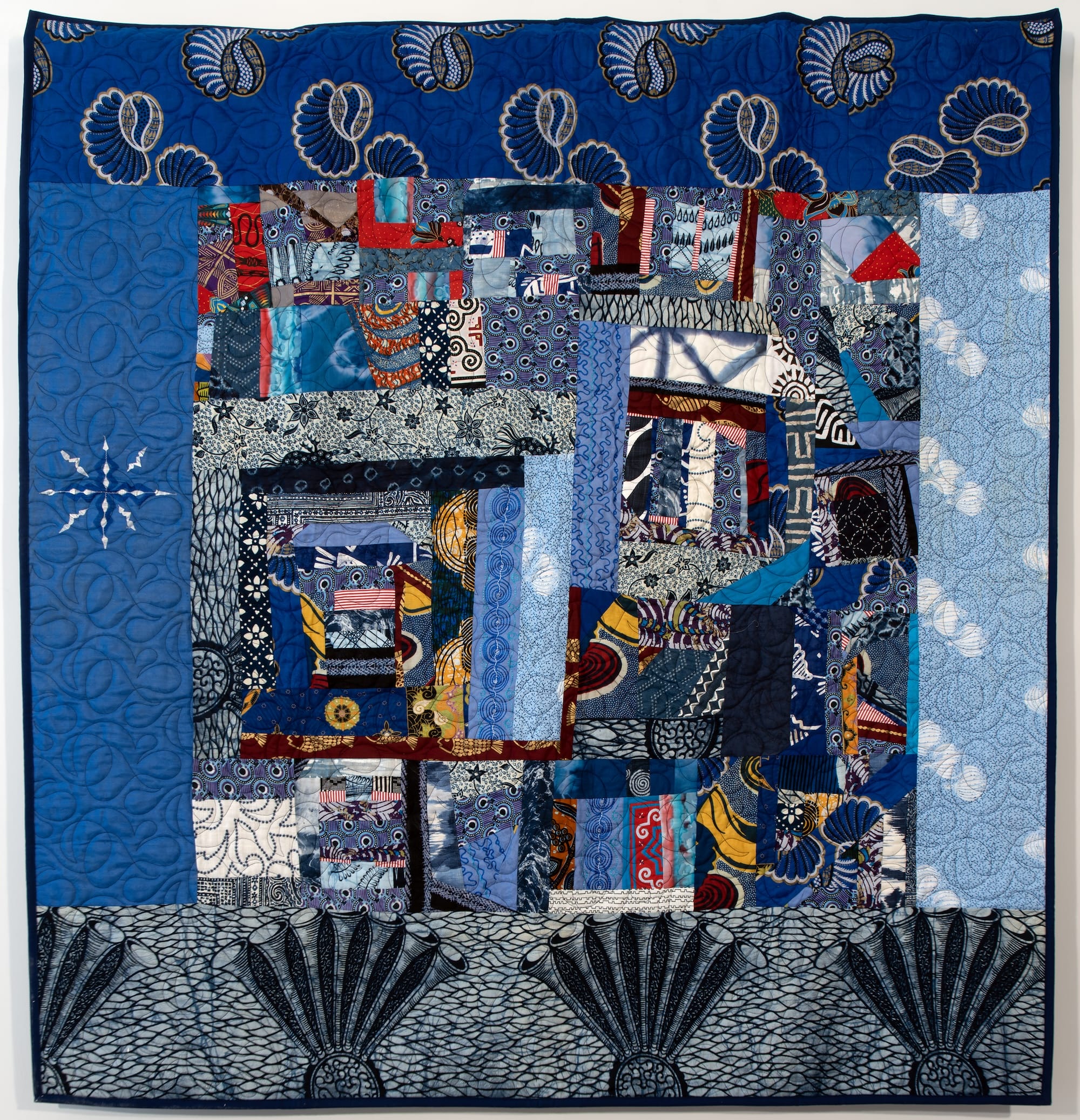
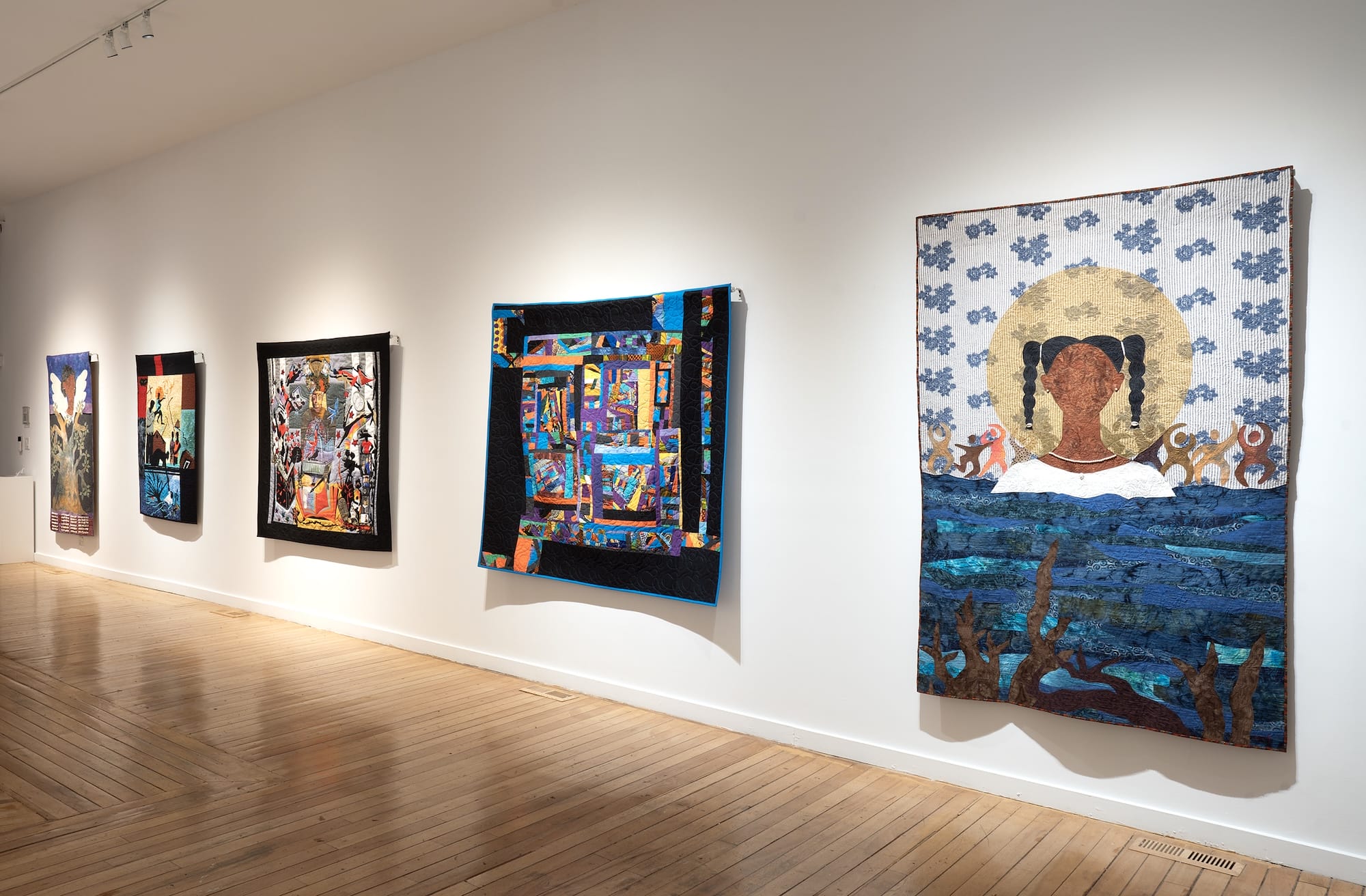
The works of 15 contemporary quilt artists take center stage in the expansive group exhibition. The show emphasizes work created by members of the (), which historian, curator, and quilter founded in 1985. Boldly pictorial and incorporating a wide range of materials, the pieces in We’re Still Here transcend the definition of quilts as stitched bed coverings; the compositions are rooted in the timeless craft of piecing and sewing, yet their portraits, stories, and collages surge into the realm of art.
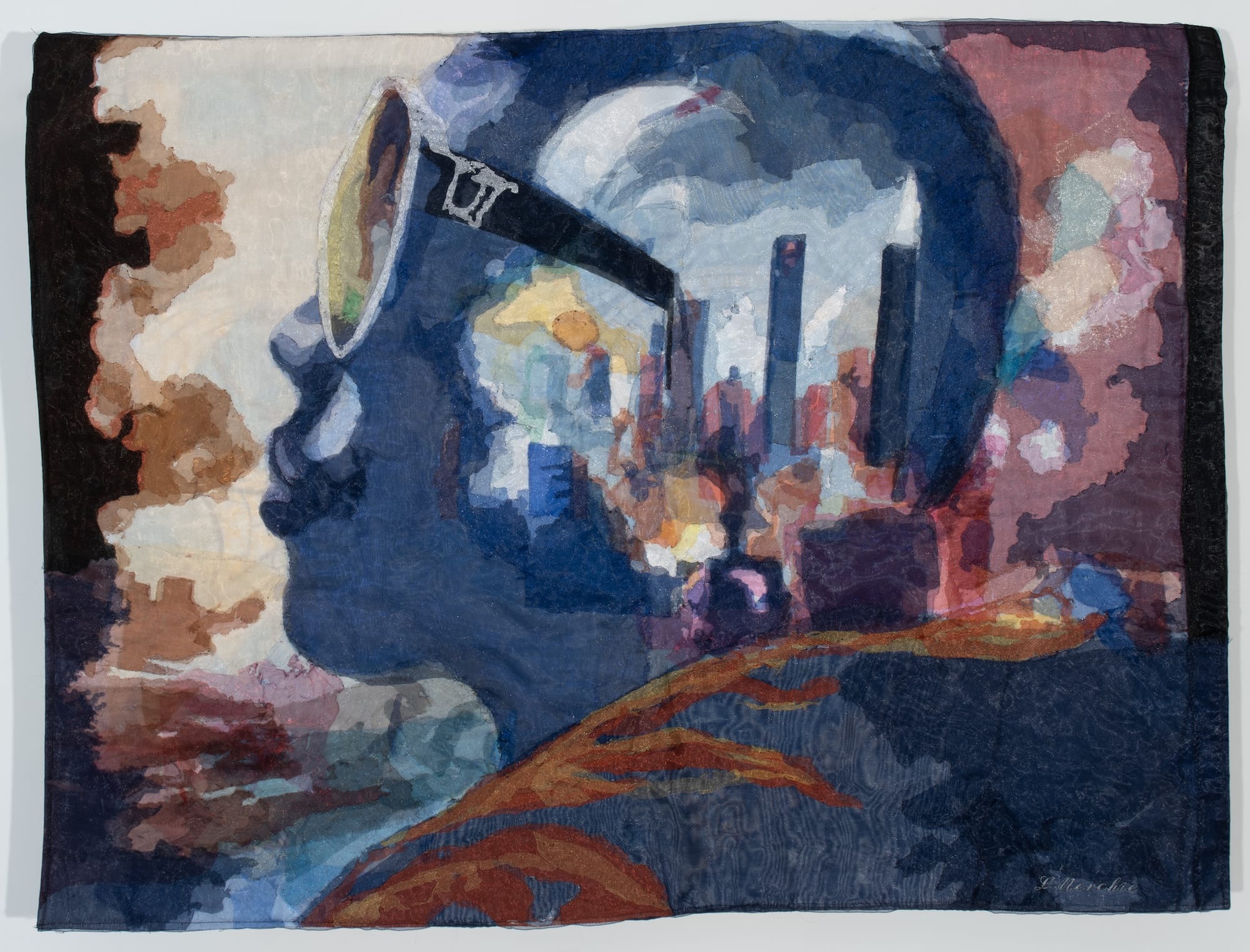
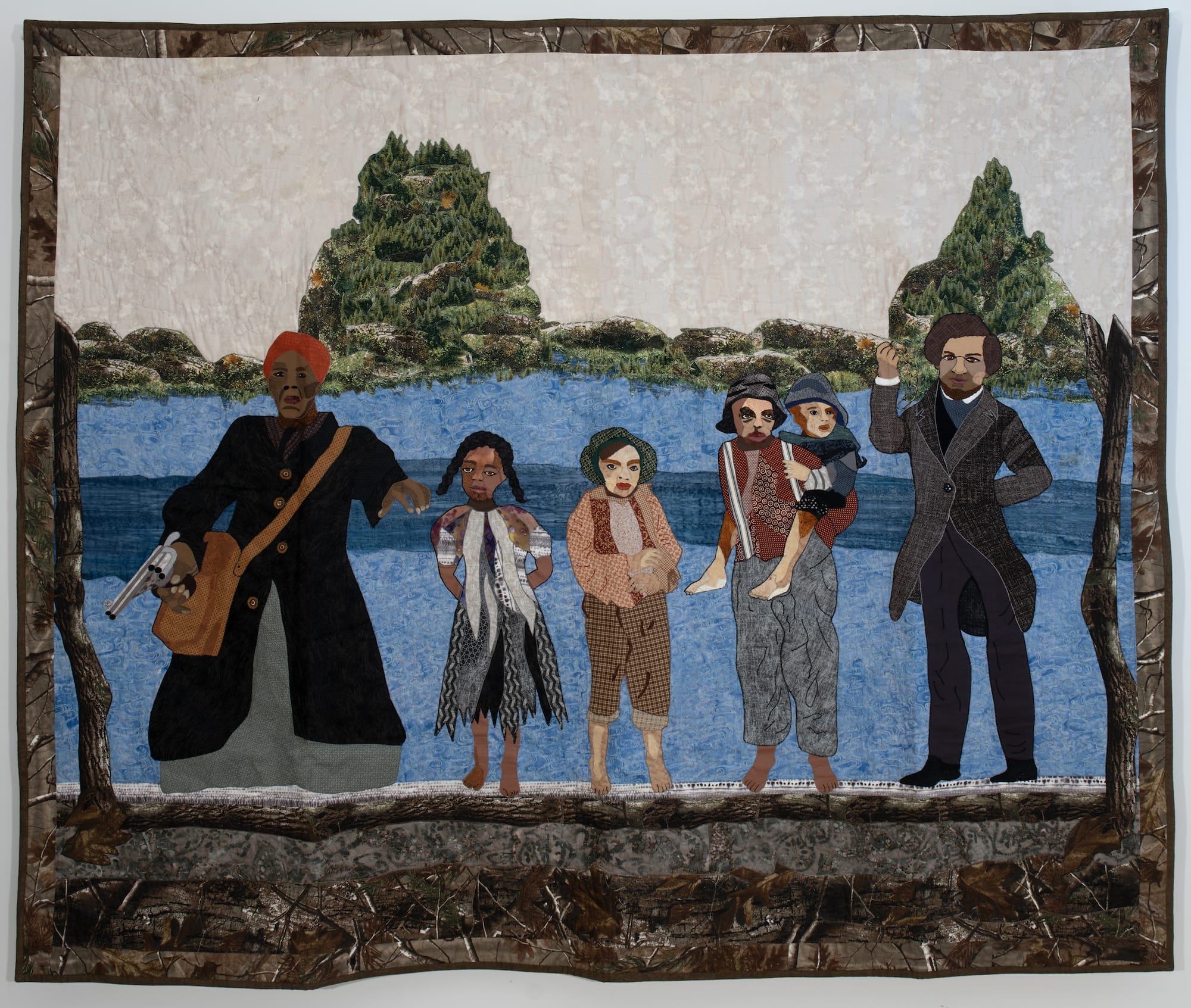
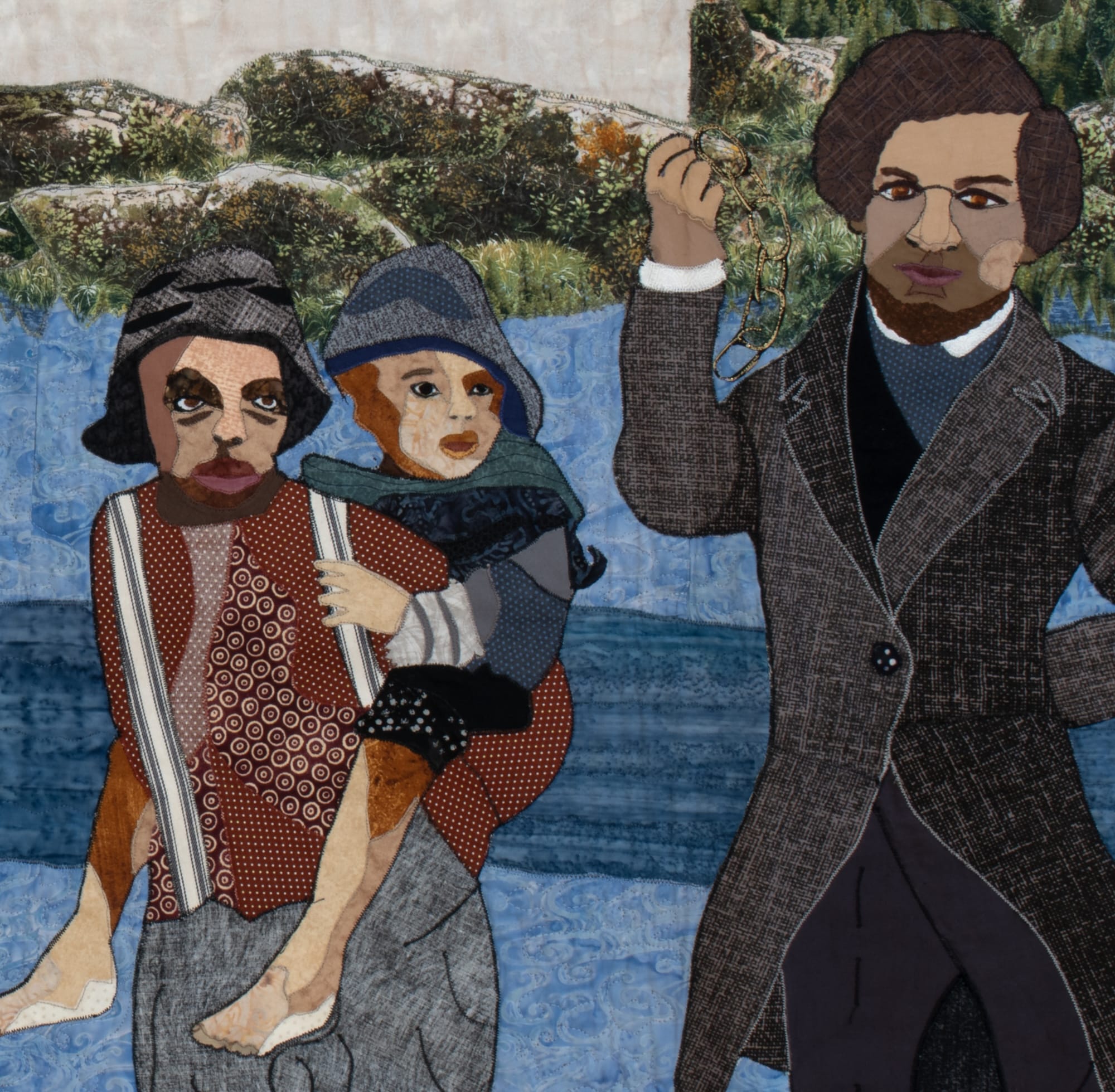
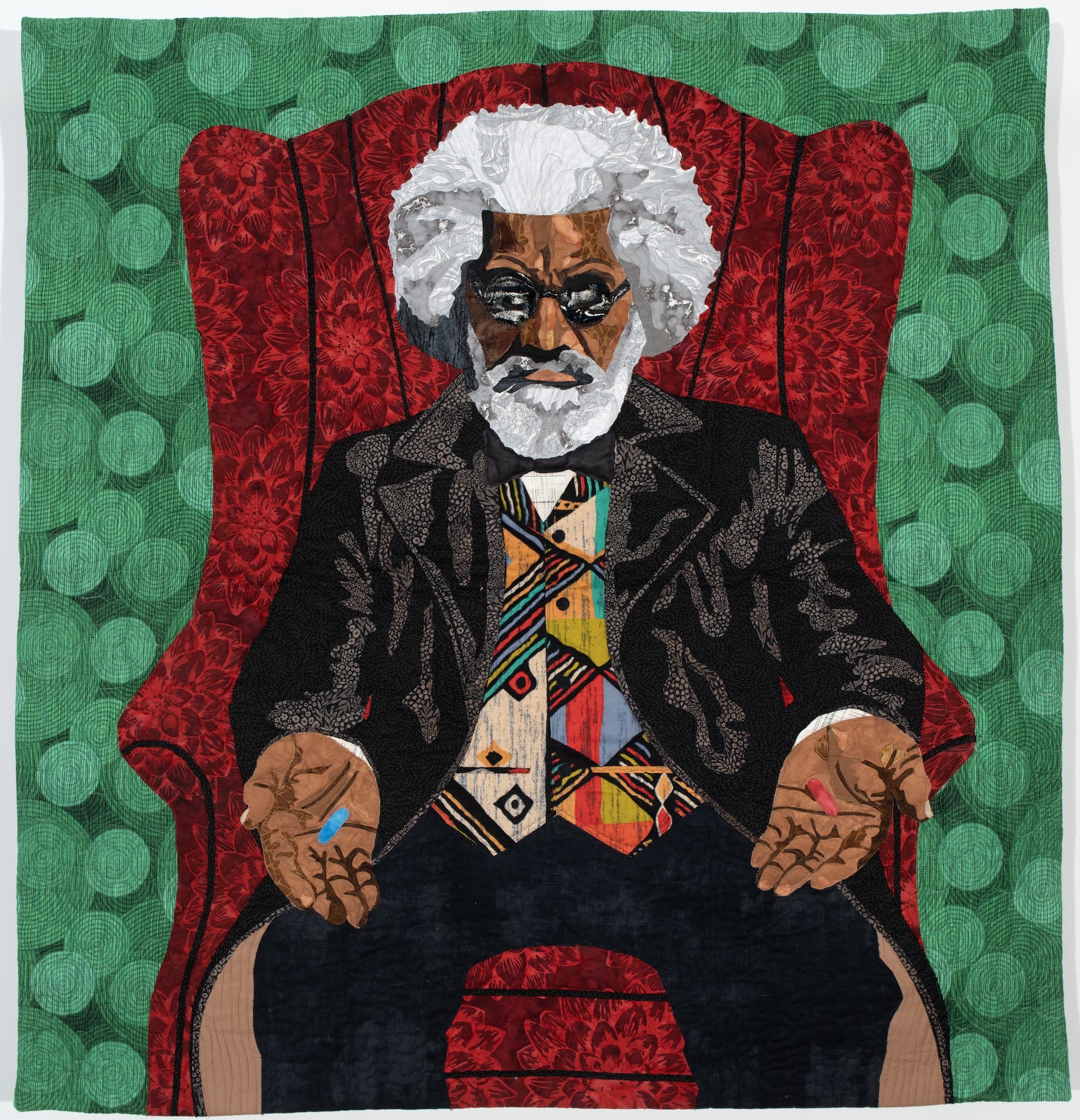
’s “Climate Change in my Head: Afro Future Still Here,” for example, adopts a watercolor-like appearance with layers of nylon. Like many works in the show, a crucial topic is rendered front-and-center. Alita Aldridge’s “Underground Takes a Village” reflects the cooperation needed to make the viable for enslaved people seeking freedom. And ’s “The Oracle of Liberation” depicts abolitionist Frederick Douglass holding red and blue pills—a reference to the 1999 film The Matrix—in which we’re presented with a choice between seeing reality for what it is or remaining ignorant.
In addition to history, Black community, family, and other themes, bold portraiture recurs throughout the exhibition, such as in ’s “Maya Angelou II.” The renowned writer and civil rights activist peers over symbolic representations of her life’s work, including a bird fleeing an enclosure in a nod to her seminal memoir, I Know Why the Caged Bird Sings.
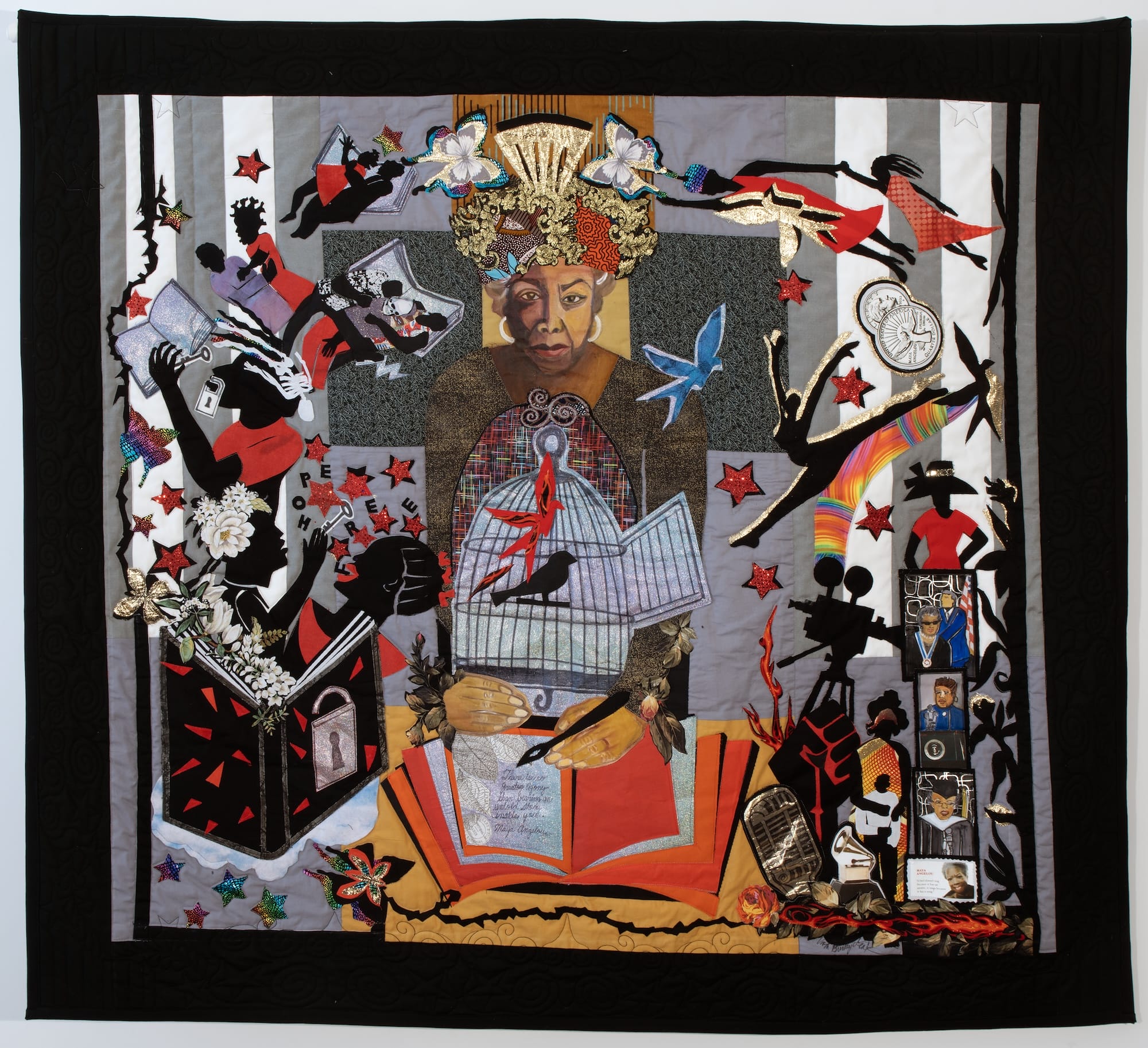
“All of the work I make, and the work of my fellow quilters, deals with Black history and material culture,” Mazloomi says in a statement. Through WCQN, along with curatorial projects and in advocacy of the art form, she strives to raise critical awareness of Black quilters’ practices. “This exhibition is our way of saying that our history cannot be erased by any politician or revisionist force; our work will always showcase our triumphs, suffering, creativity, courage, bravery, and genius of my people. Black history is American history.”
We’re Still Here continues through January 7 in Harlem. You might also enjoy Chronicle Books’ , Stories in the Seams: A People’s History of Black Quilts and Their Makers.
41 x 38 inches
Do stories and artists like this matter to you? Become a today and support independent arts publishing for as little as $7 per month. The article appeared first on .
Related Posts