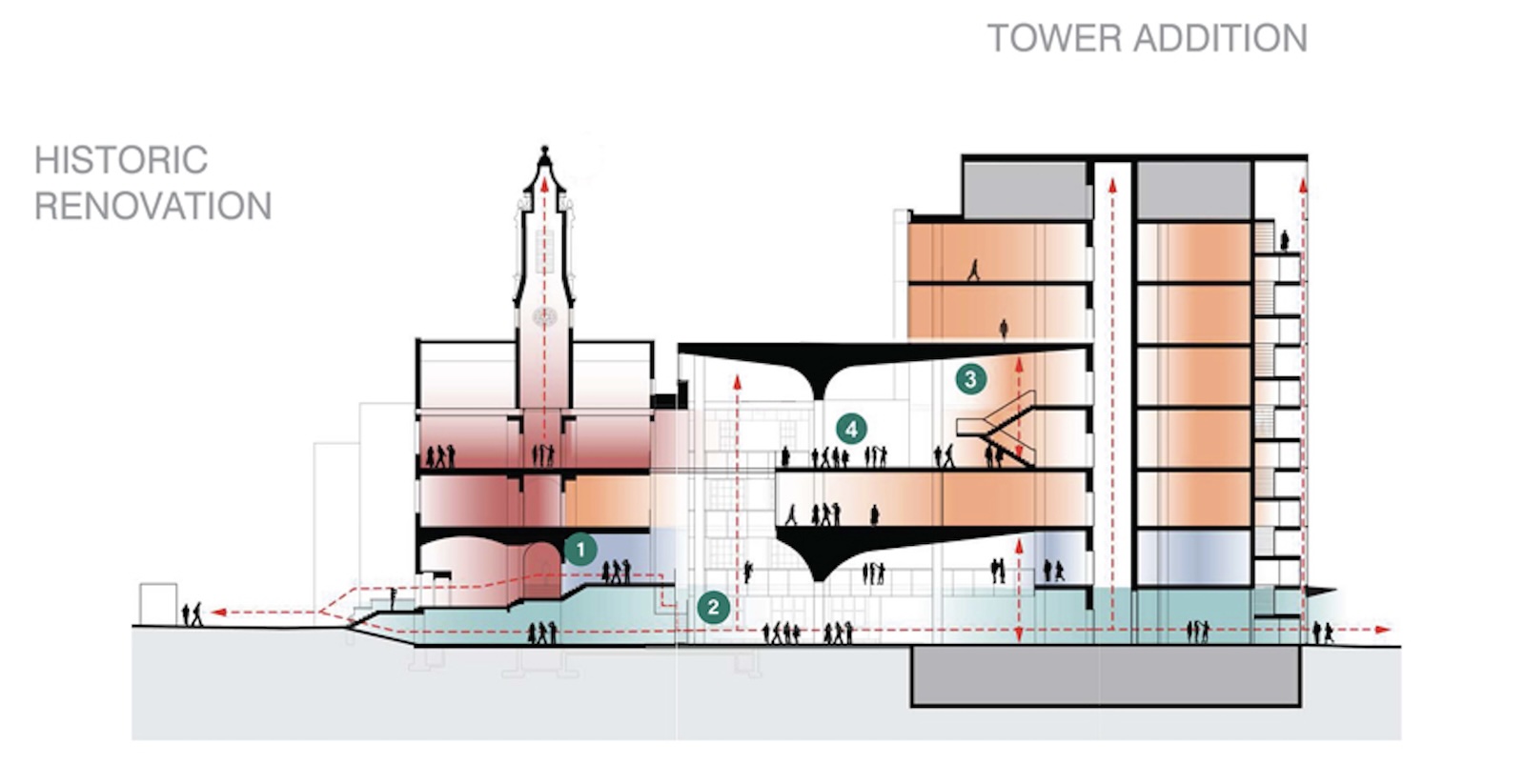
At the University of Alberta in Calgary, a century-old former facility for the dentistry and pharmacy department has been adapted into the generous gateway to the entire campus. The University Commons, as it’s called, saw the original 1922 building refurbished by ERA Architects (after the demolition of numerous recent additions) and a six-storey tower go up; the latter was designed by GEC Architecture, which bridged old and new with an atrium that weaves the two buildings together. When it came time to program and fit out the interiors, Zeidler Architecture led the way, creating .
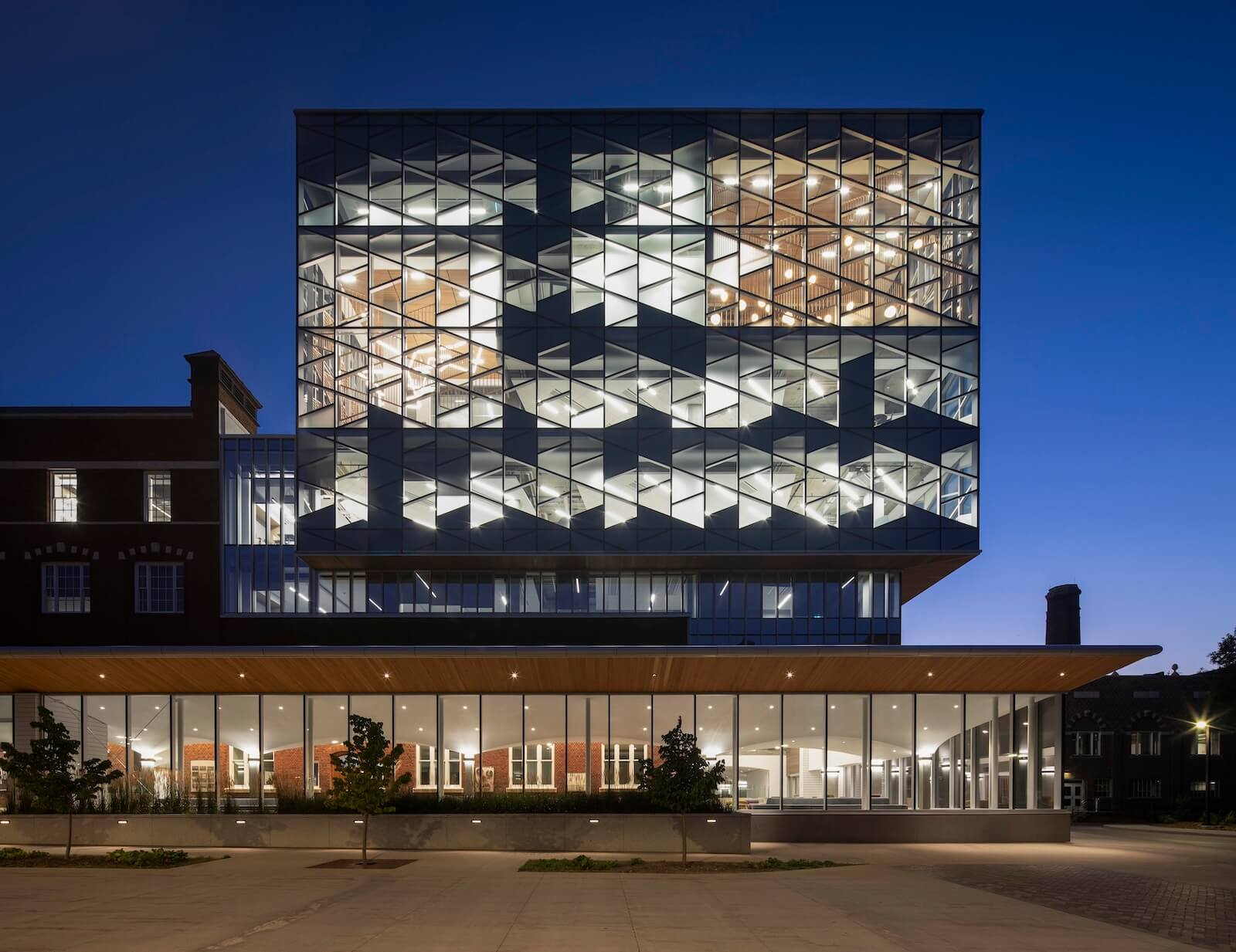
Positioned at a key entrance to the North Campus, University Commons is a 37,625-square-metre hub for everybody: faculty (the registrar, dean of students, and senior administration), students, researchers and prospective students. Where once there were fragmented interiors, now exists an array of spaces – including academic departments, open study areas and bookable meeting rooms – anchored by double-height “neighbourhoods” at the building’s corners where groups can meet and work together.
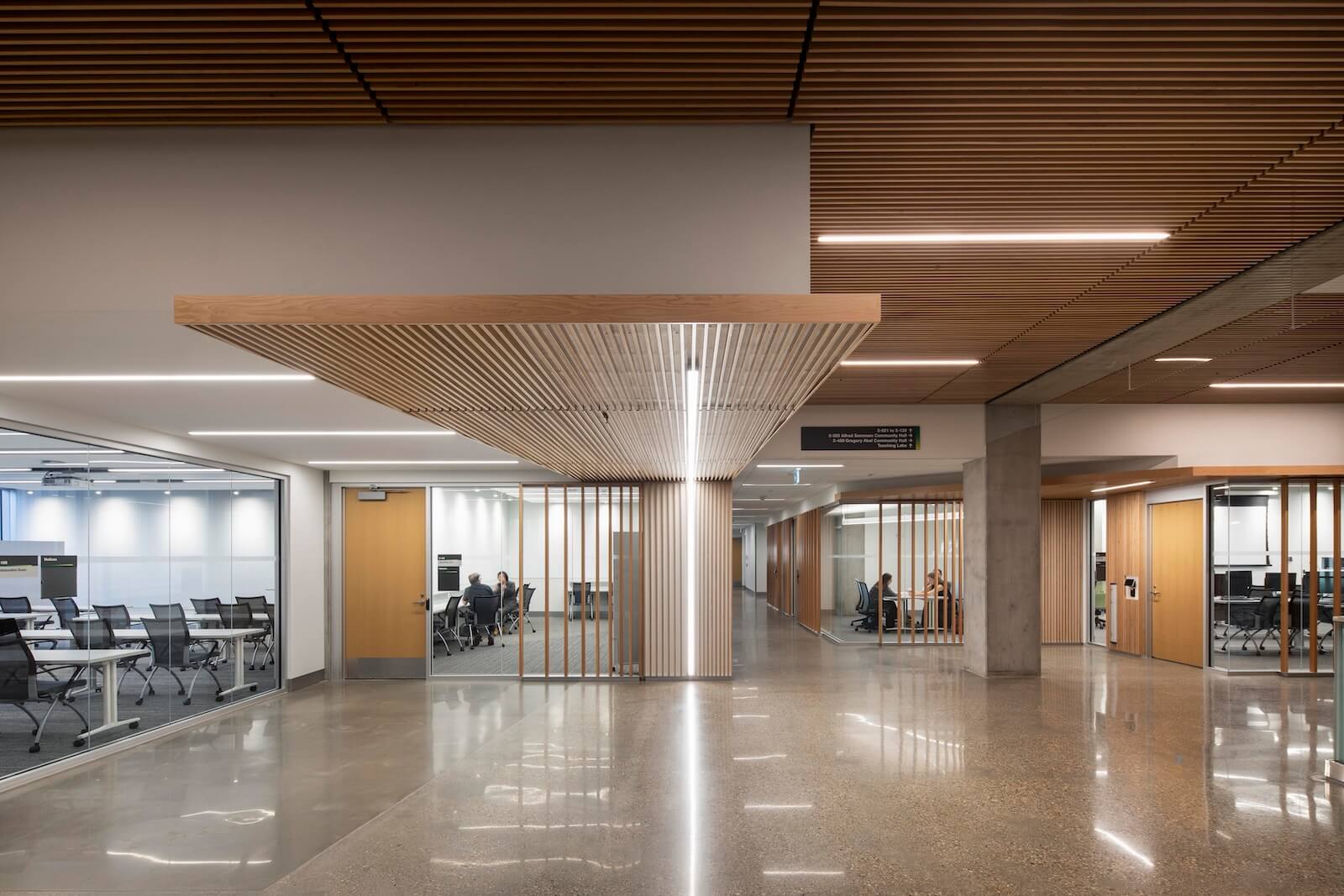
“It’s almost like a train station,” says James Brown, partner at Zeidler. “The building is meant to be a main meeting room for the university, a welcome central area where new students are introduced to campus, where alumni are welcome.” In many institutional learning settings, the meeting rooms are only for faculty. But the University Commons “breaks that,” says Brown. “Anybody can come in and use a meeting room.” After developing the program over a year and a half, the firm employed BIM to model the various spaces.
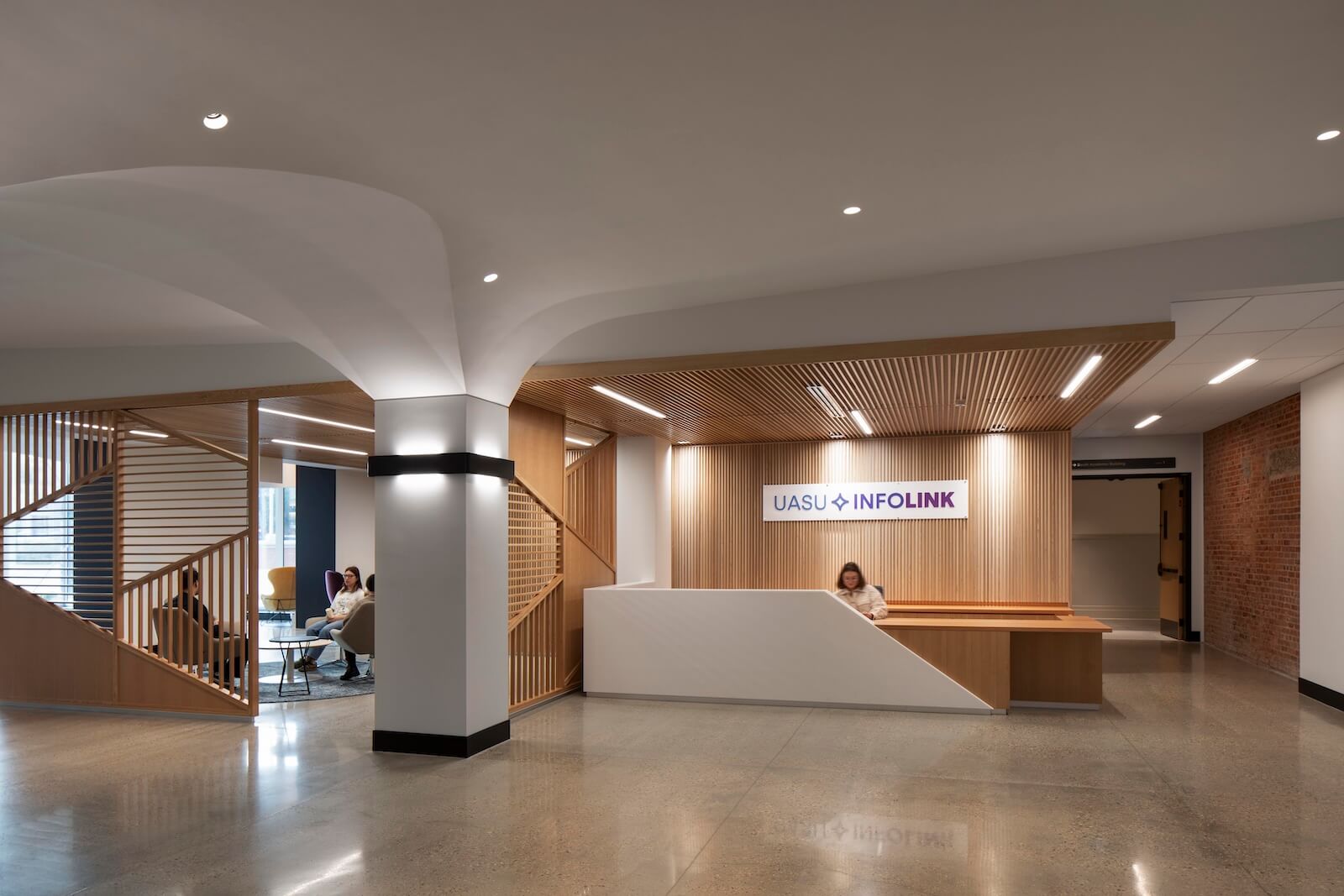
The firm notes that, more broadly, the design was guided by the tree of knowledge and the shared meal. “Both hold cultural meaning and shape the building’s spatial identity,” Zeidler states on its website. “The tree of knowledge provides a structural analogy, with circulation branching outward from the atrium, much like limbs from a trunk, into open teaching, meeting, and gathering zones.”
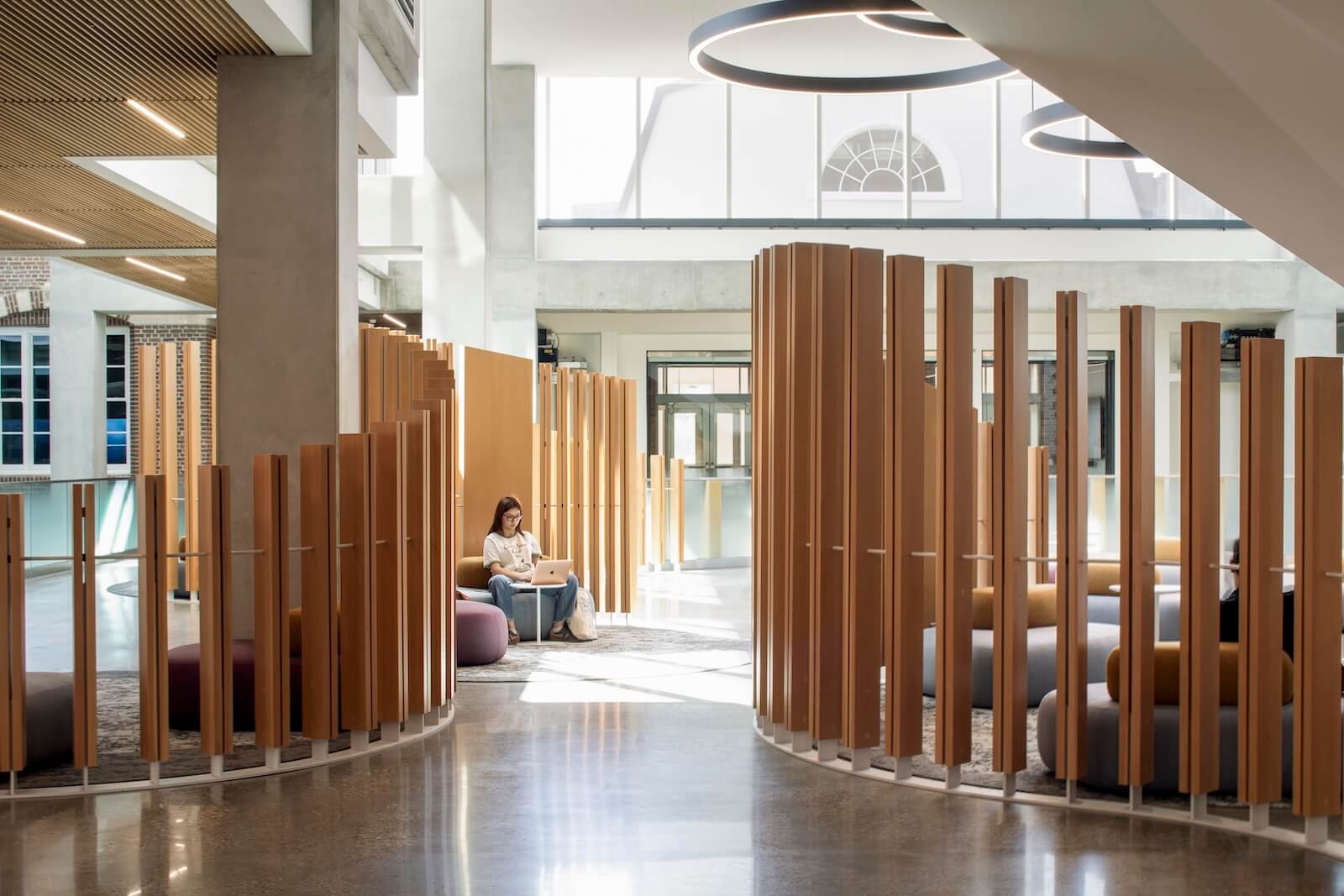
Warm wood, soft, dematerialized spatial enclosures, sculpted ceilings, dynamic meeting rooms, modern furniture – these elements animate the layout, alongside a number of space-defining interior details. These include the trellis-like wood gliders in the corner “neighbourhoods.”
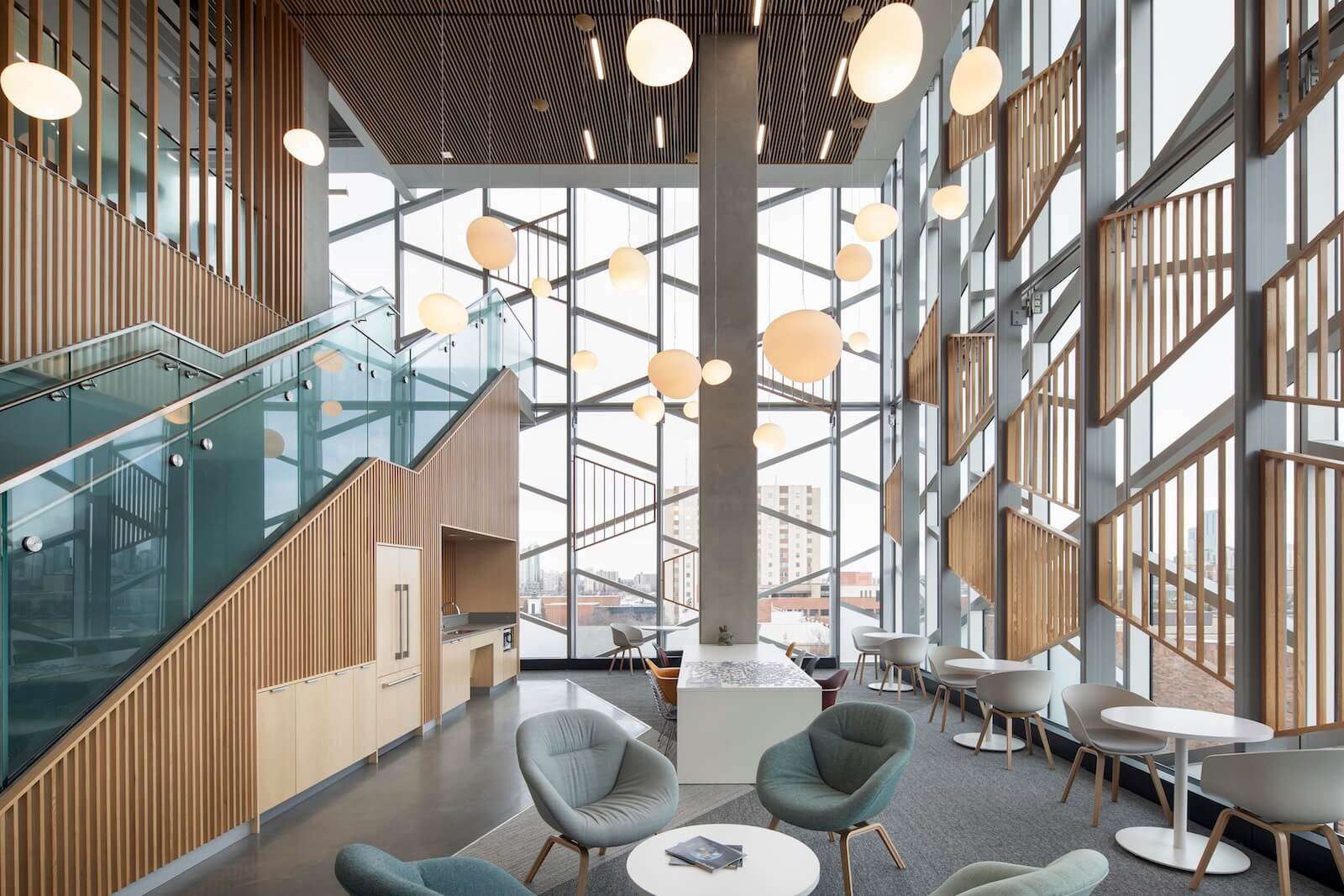
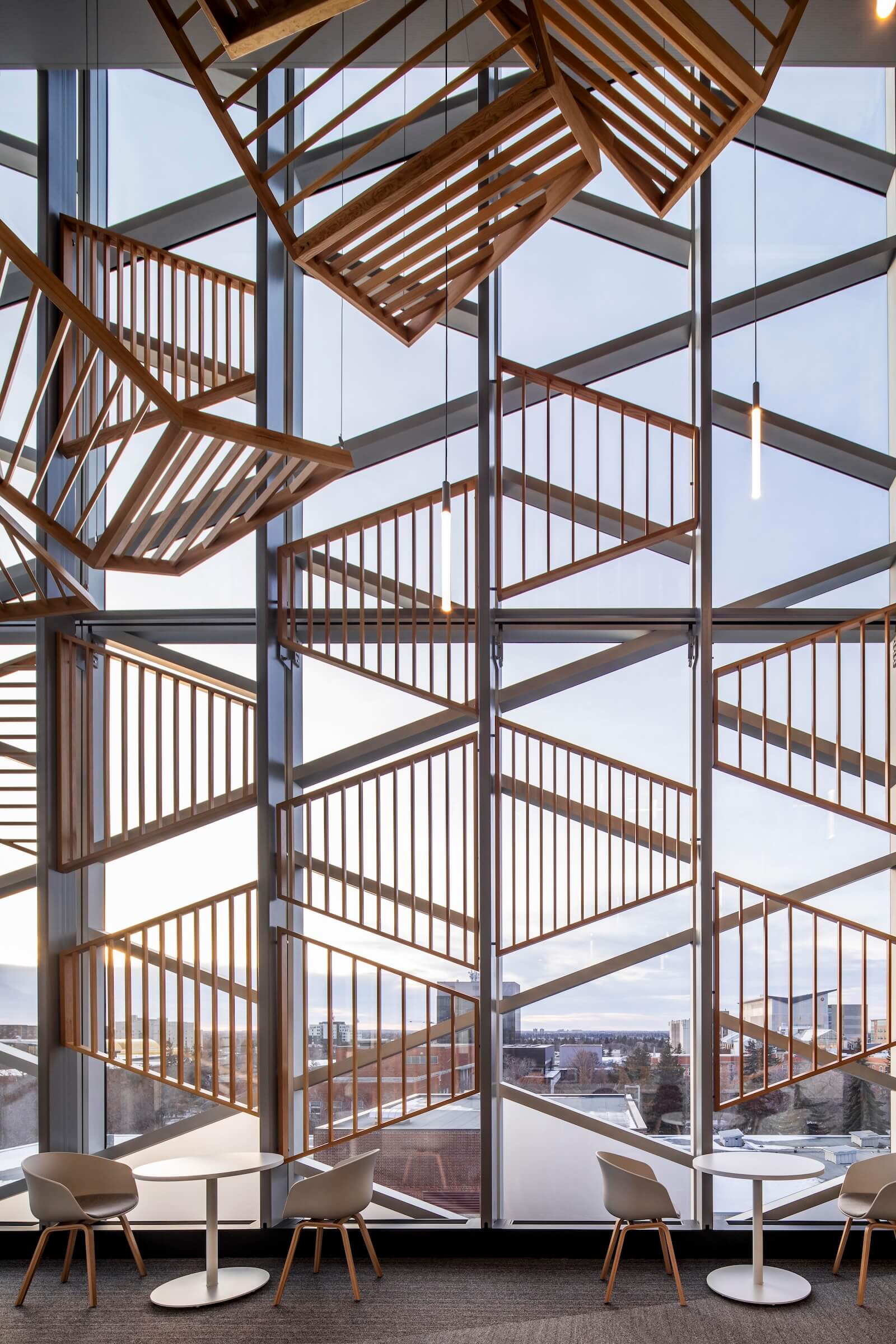
“When we saw the curtain wall that GEC developed for the new building, we saw the ability to riff off that organic quality,” says Brown. The gliders, which are used as irregular window screens and as suspended fixtures, echo the envelope’s geometric facade, re-interpreted in a leafy form. “We tried to bring in real trees, but there were concerns about maintenance. So we developed the feeling of being under the canopy with these gliders that create a dappled light.”
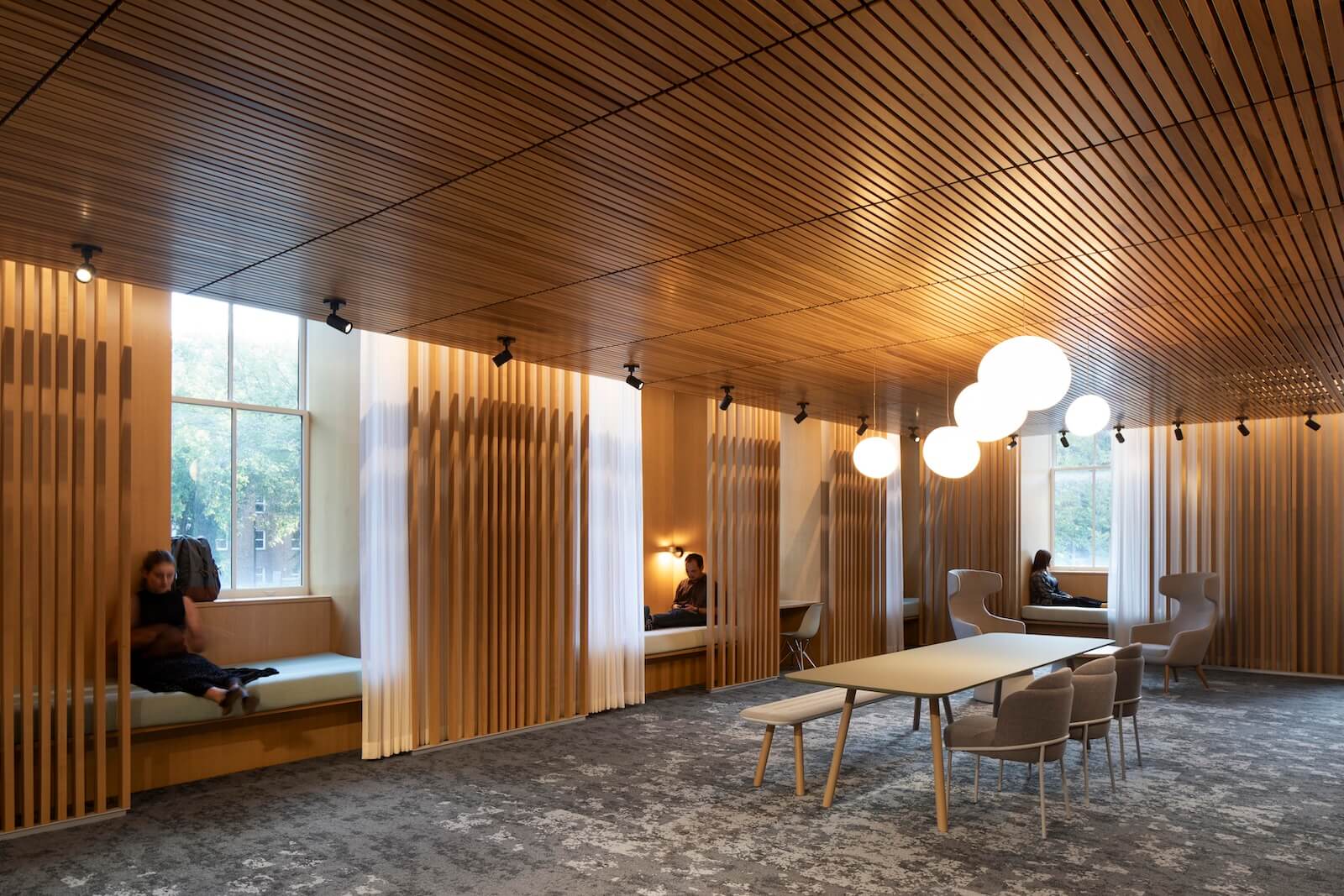
Besides the perimeter-facing neighbourhoods, the firm created nooks for focused study and intimate team meetings throughout. These include a dedicated calming room “designed with material softness and sensory regulation in mind” and lounge areas delineated by wave-like slatted partitions that sweep around them.
The boldest gesture, however, belongs to Christi Belcourt. The Métis artist created a stunning artwork for the oculus-like wood ceiling at the entrance of the building, where old meets new. Her beadwork-inspired floral inlay is a gift to the campus, one that recognizes the Indigenous history of the place.
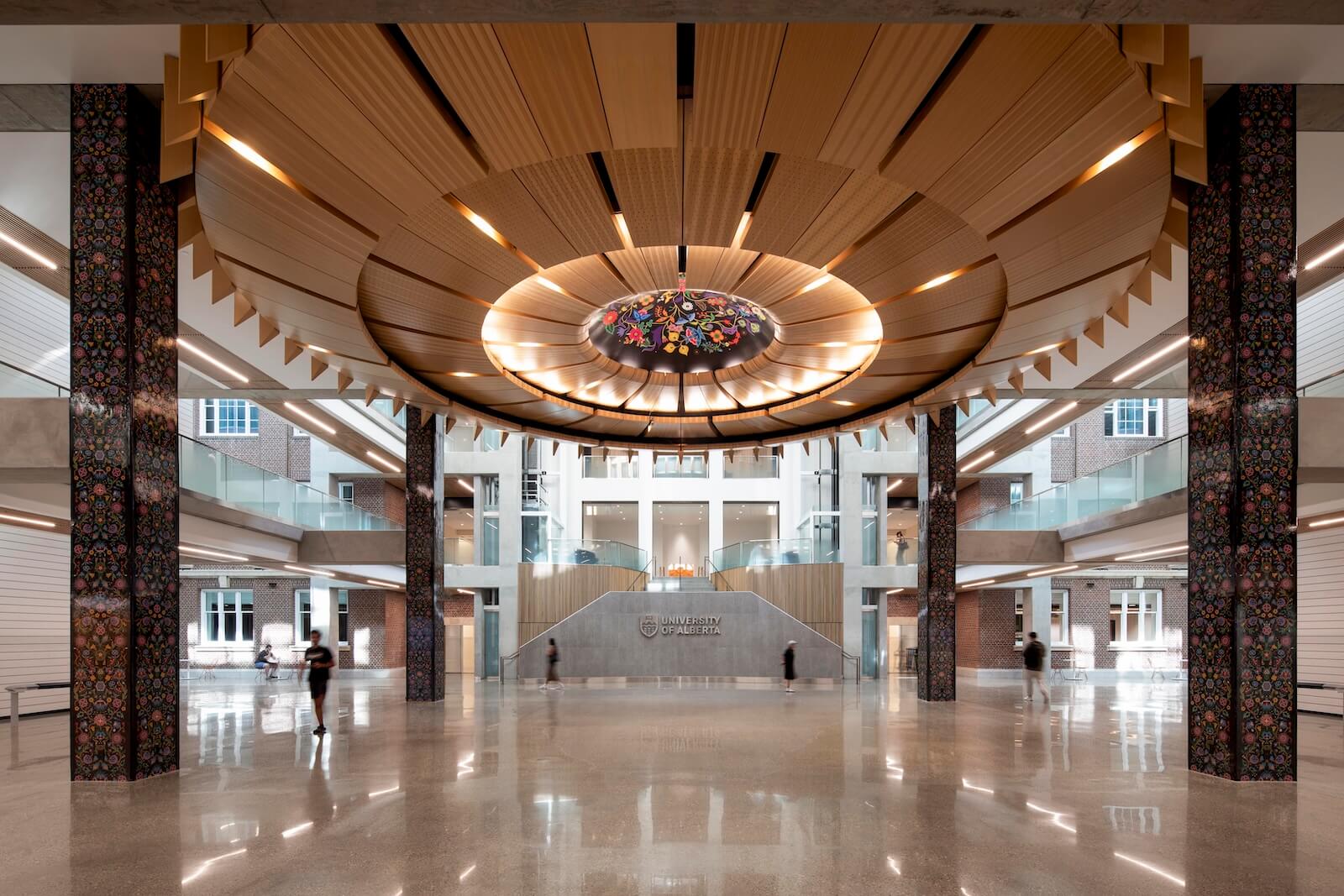
According to Brown, Belcourt’s artwork is also being applied in different configurations to other meeting rooms. It’s a testament to the school’s dedication to making the University Commons truly inviting, welcoming and meant for everyone.
The post appeared first on .
Related Posts