Pick up a used tennis ball and you’re holding an object that had a lifespan shorter than most houseplants. In professional matches, tennis balls get swapped out every seven to nine games, roughly thirty minutes of play, then they’re gone. For the recreational player, they last a few sessions before losing pressure, turning soft, and finding their way to a bin. From there, it’s a one-way trip to a landfill, where they’ll spend the next 400 years doing nothing useful except releasing methane. Around 400 million of them are produced every year, and only about 1% ever get recycled. That number sits with you after a while.
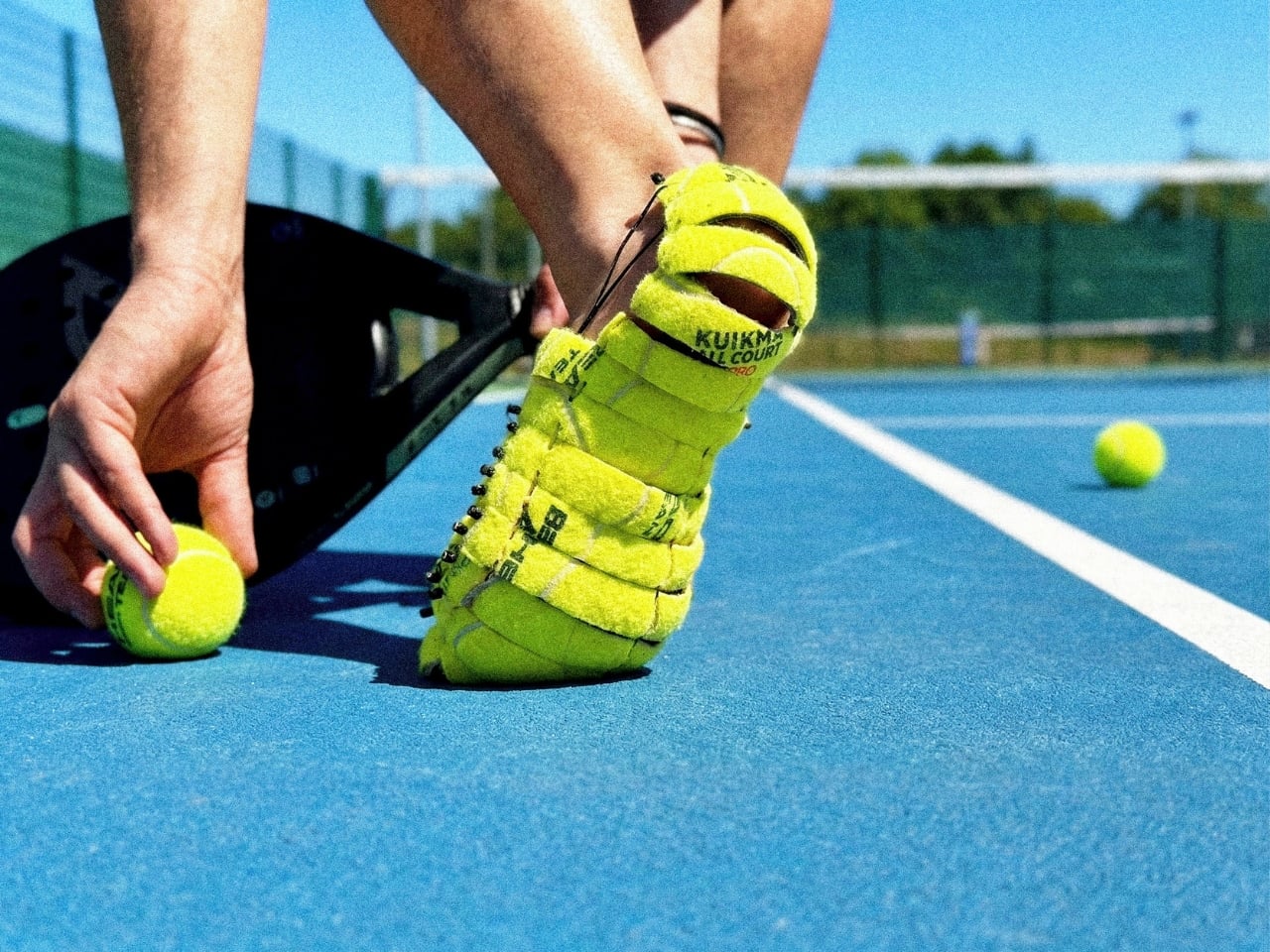
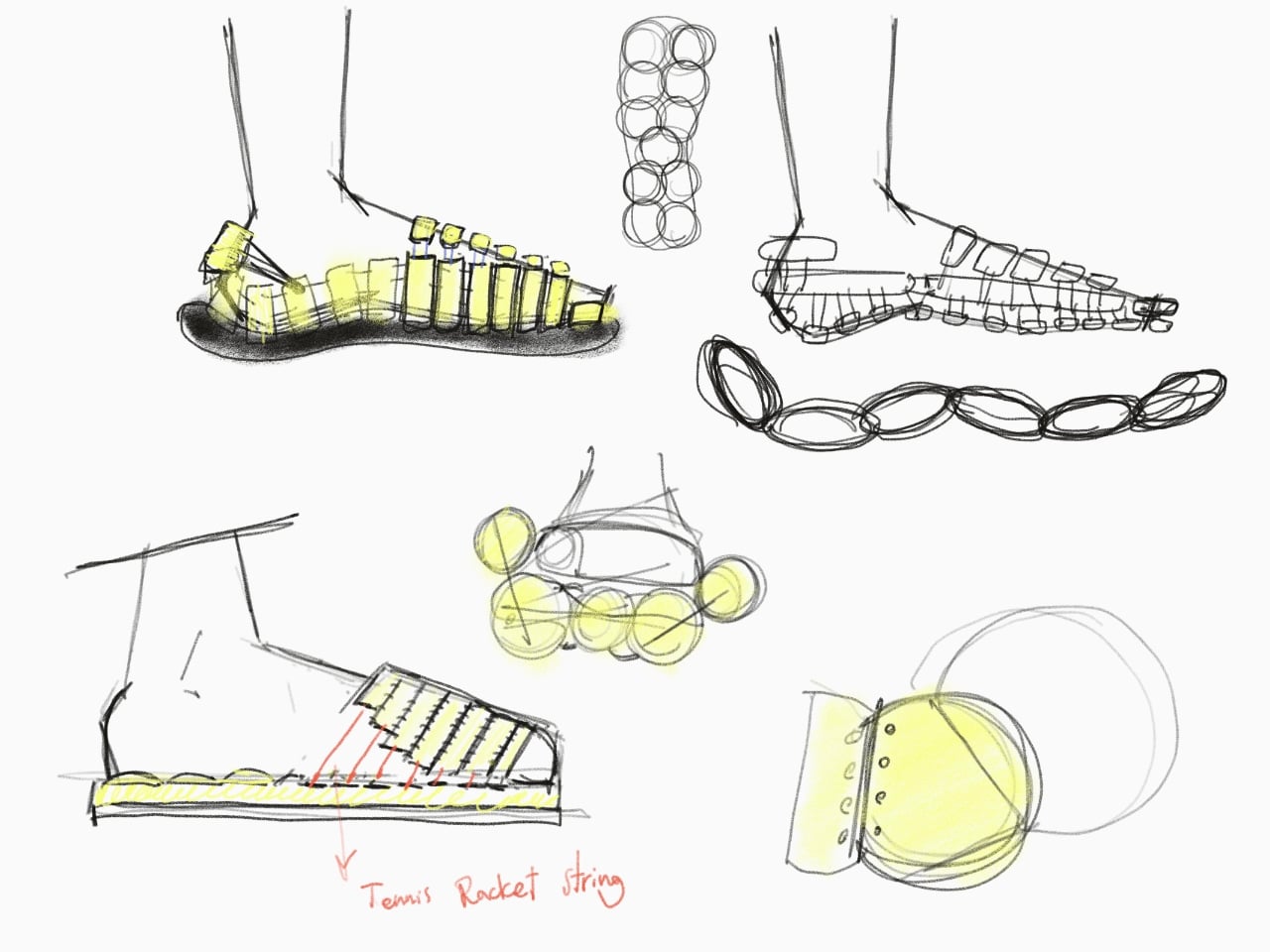
Soroosh Riazi Isfahani, a designer from the Royal College of Art and Imperial College London, has been sitting with it too, and his response is SLICE, a project currently entered into the James Dyson Award 2026. The concept: take used tennis balls and turn them into footwear. Not by grinding them down or melting them into something unrecognizable, but by actually cutting the ball into sections, using a custom guide to ensure precision, and then working those pieces into a shoe. The rubber and the felt stay intact. The material keeps its identity.
Designer: Soroosh Riazi Isfahani
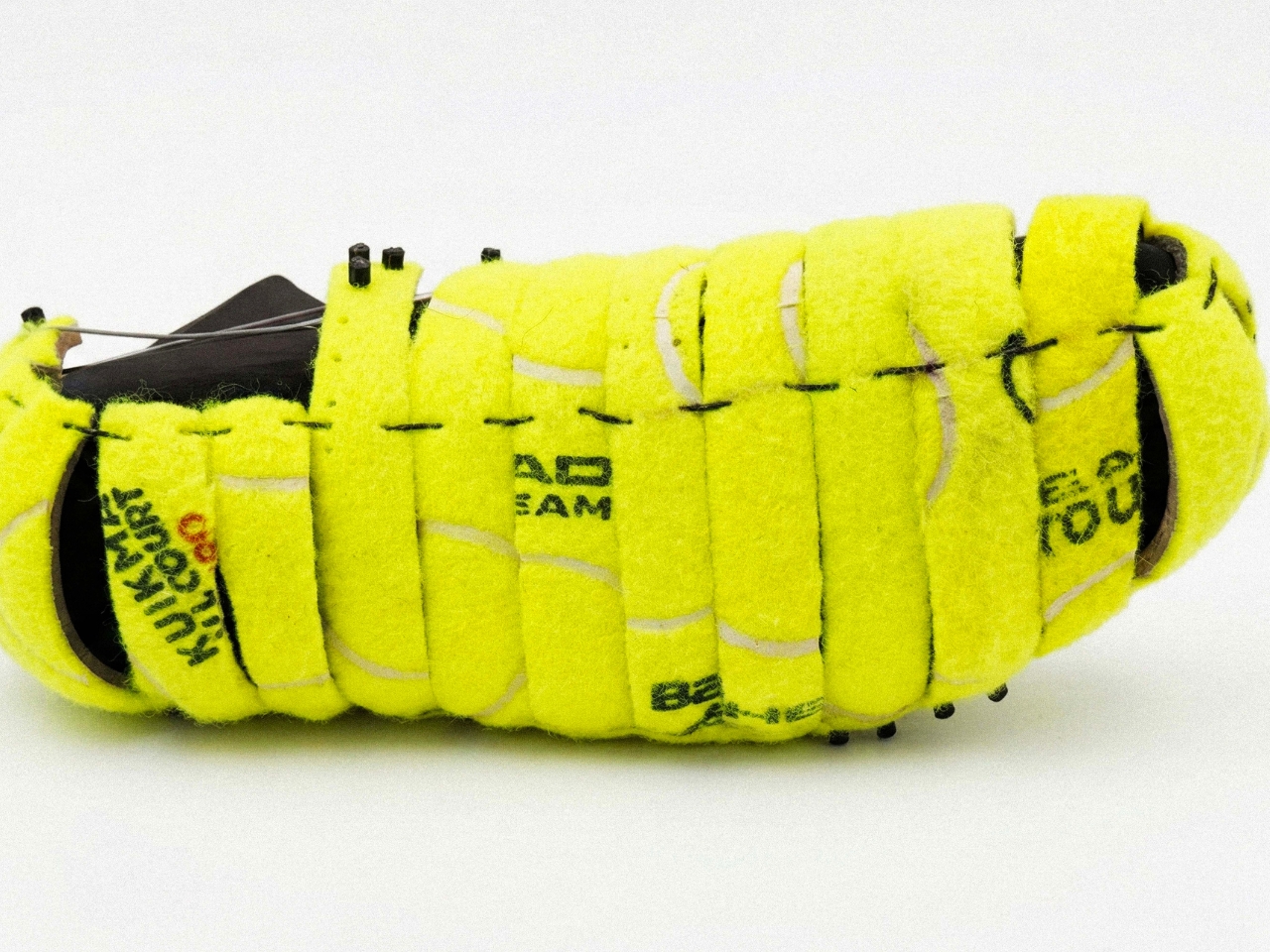
That distinction matters more than it might seem. Most sustainable design approaches rely on breaking materials down into raw components before rebuilding them. It works, but it also requires energy, processing, and usually some loss of material quality along the way. SLICE skips that step entirely. The ball is sliced, shaped, and reassembled into something wearable. It’s a different kind of thinking, one that asks not “how do we recycle this?” but “what is this material already capable of being?”
Isfahani actually started in the more conventional place. His early process involved shredding used tennis balls and blending the material with natural rubber to create an outsole. It’s a reasonable approach and one plenty of designers have explored in the sustainability space. But he moved away from it, and understanding why he moved away from it is the more interesting part of the project. Shredding destroys what makes the ball structurally interesting: the layers, the bounce, the felt surface that has its own tactile quality. Cutting preserves all of that. The final shoe doesn’t just use the material; it respects it.
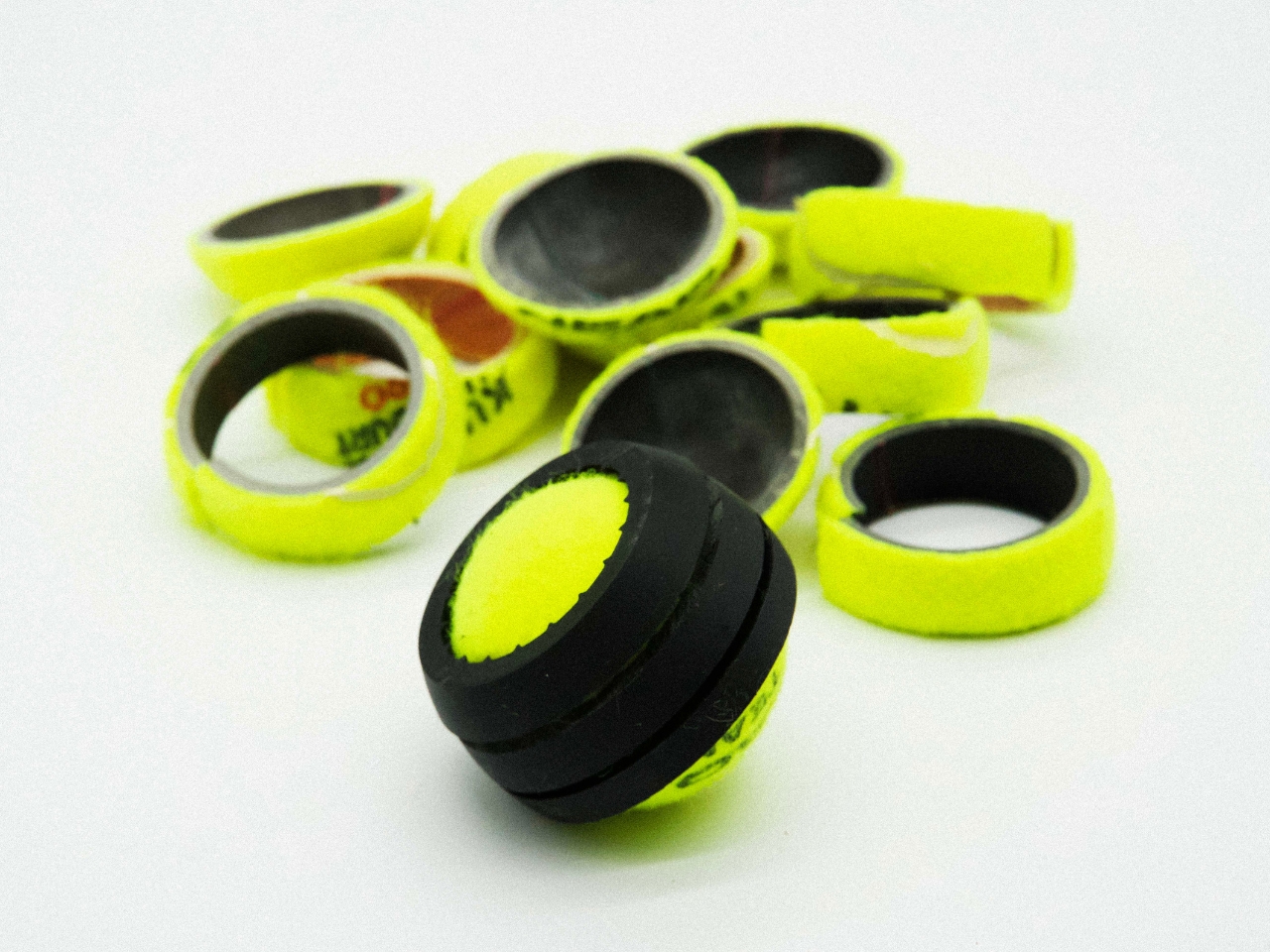
I’ll be honest that upcycling in fashion and footwear can sometimes feel performative. The “made from recycled materials” label has become so ubiquitous that it barely registers anymore. Brands slap it on shoes made from shredded ocean plastic and call it a day, and most of us accept it without looking too hard at what that actually means or whether the product will last. SLICE feels different because the sustainability logic is baked into the design method itself. You can’t separate the concept from the material. The tennis ball isn’t a marketing footnote; it’s the whole point.
The James Dyson Award has a history of surfacing ideas that sit at the intersection of elegant problem-solving and real-world urgency. What makes SLICE a compelling entry isn’t just that it finds a use for waste, it’s that it finds a use that genuinely fits. Tennis ball rubber is durable. The felt is grippy. These are properties that belong in a shoe, and yet for decades we’ve been throwing them into the ground and waiting four centuries for them to disappear.
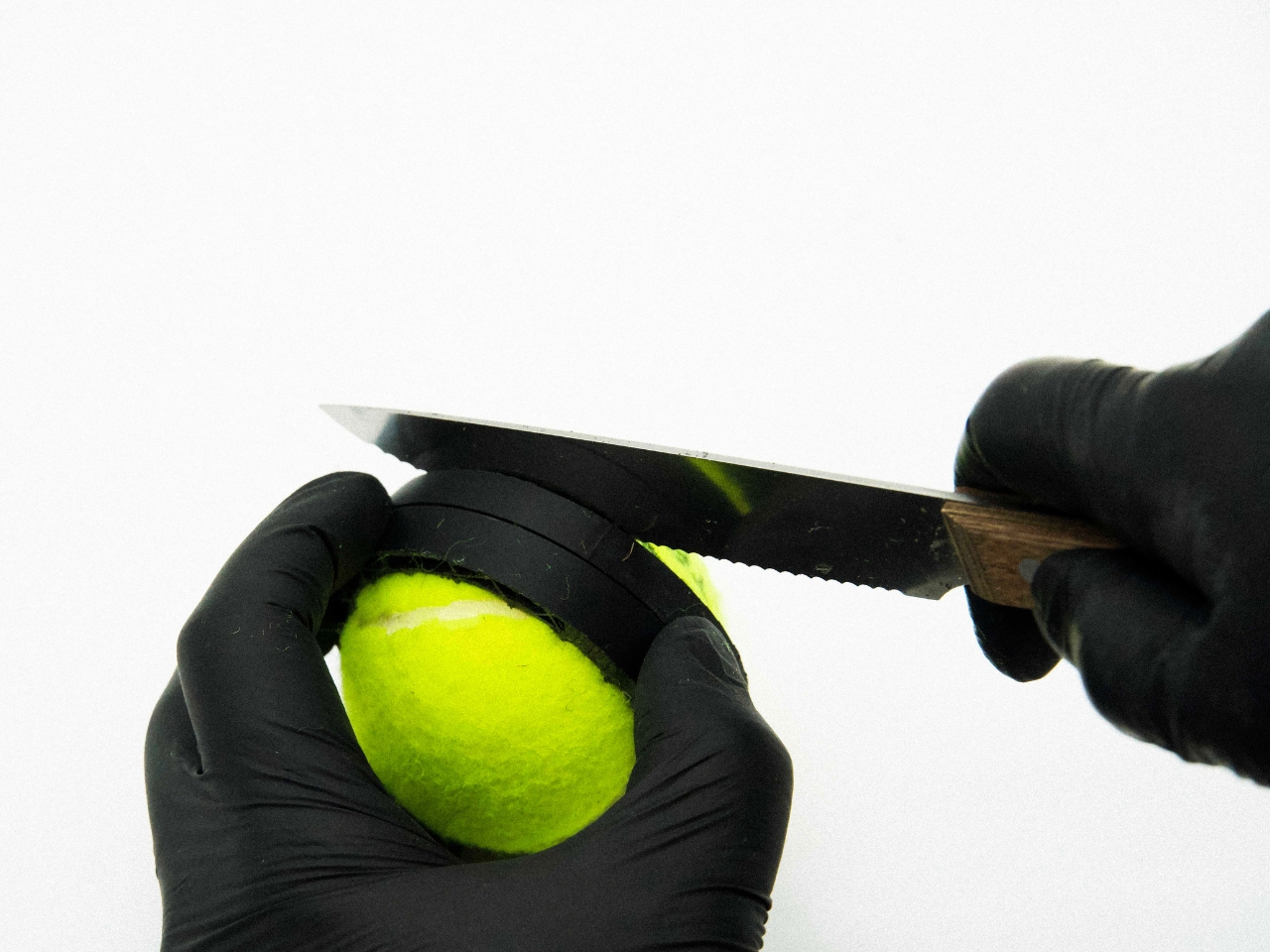
The footwear industry is one of the more difficult spaces to make sustainable at scale, partly because shoes are complex objects and partly because the systems for recovering and reprocessing them are still underdeveloped. A project like SLICE doesn’t solve all of that. But it demonstrates a design logic that could scale if the right people decide to take it seriously. One custom cutting guide, one used tennis ball, one pair of shoes that didn’t have to extract anything new from the planet. For a ball that gets thirty minutes of professional play, that feels like a more fitting ending.
The post first appeared on .
Related Posts