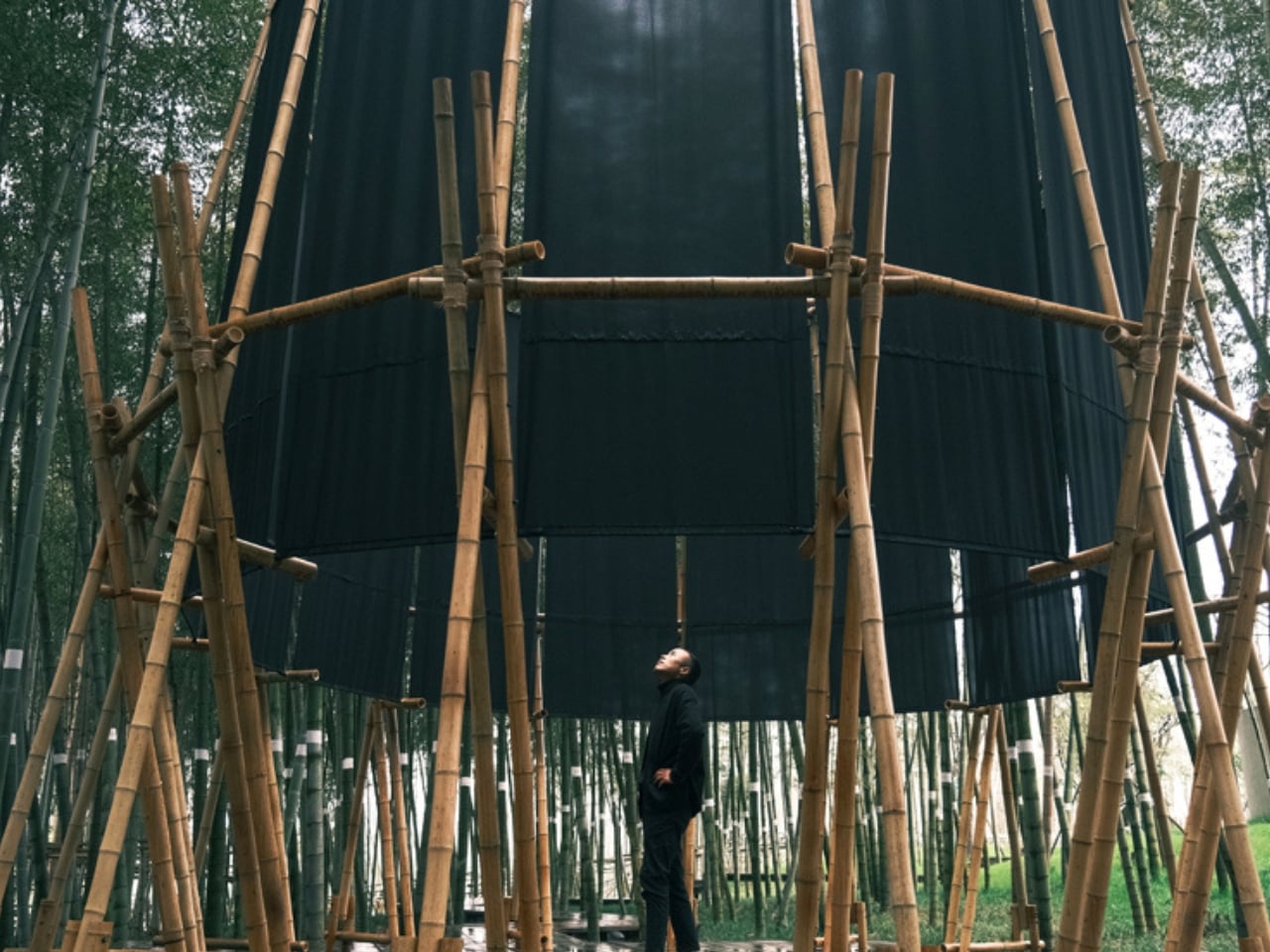
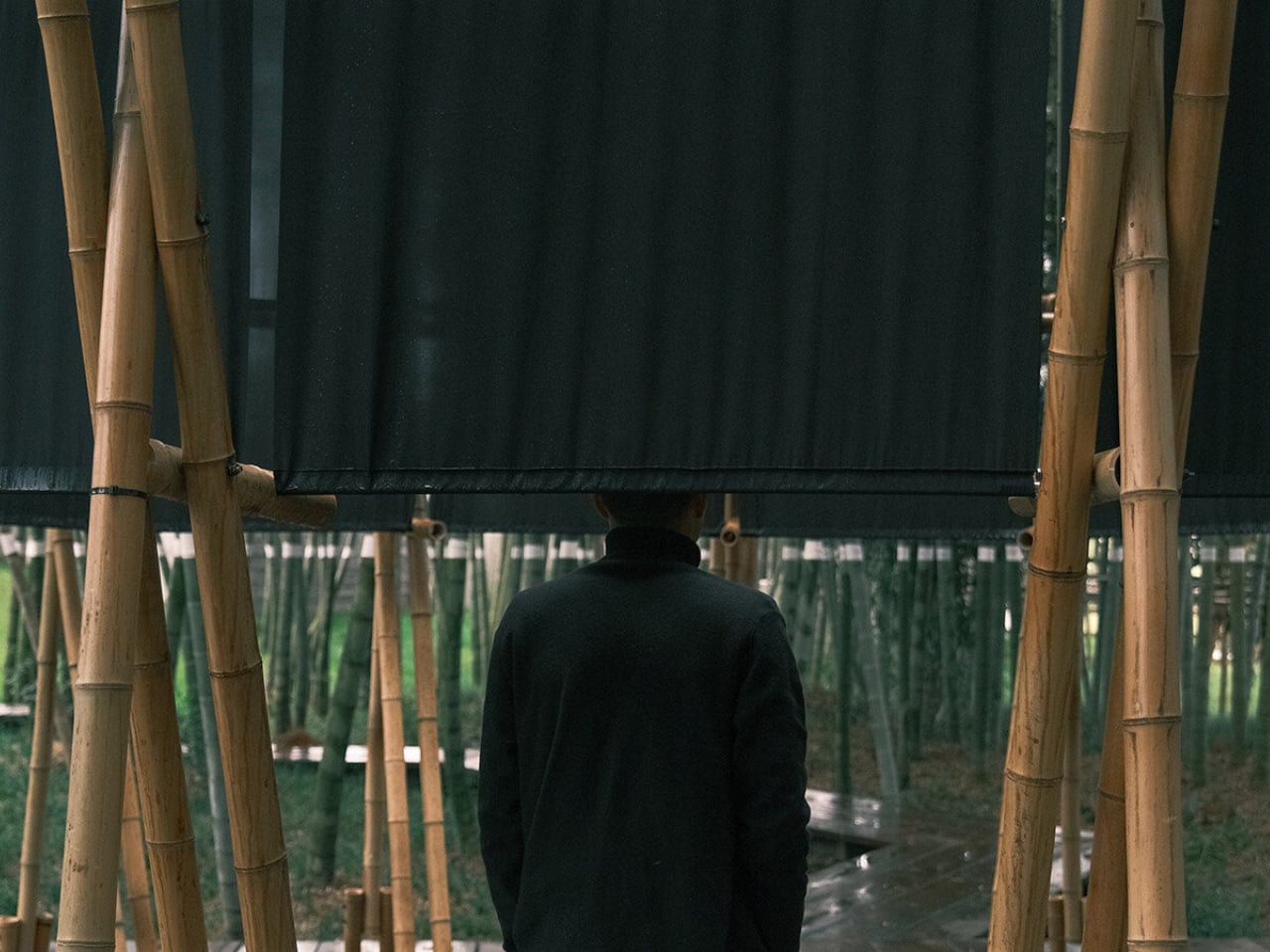
Not every piece of architecture asks something of you before you step inside. Most buildings are passive that way. You walk through a door, and that’s that. But the Veil Tower, a temporary bamboo pavilion tucked into a moso bamboo grove in Xianning, Hubei, opens with a demand: lower your head and bow your body to cross the threshold. It’s a small, deliberate act, and it sets the tone for everything that follows.
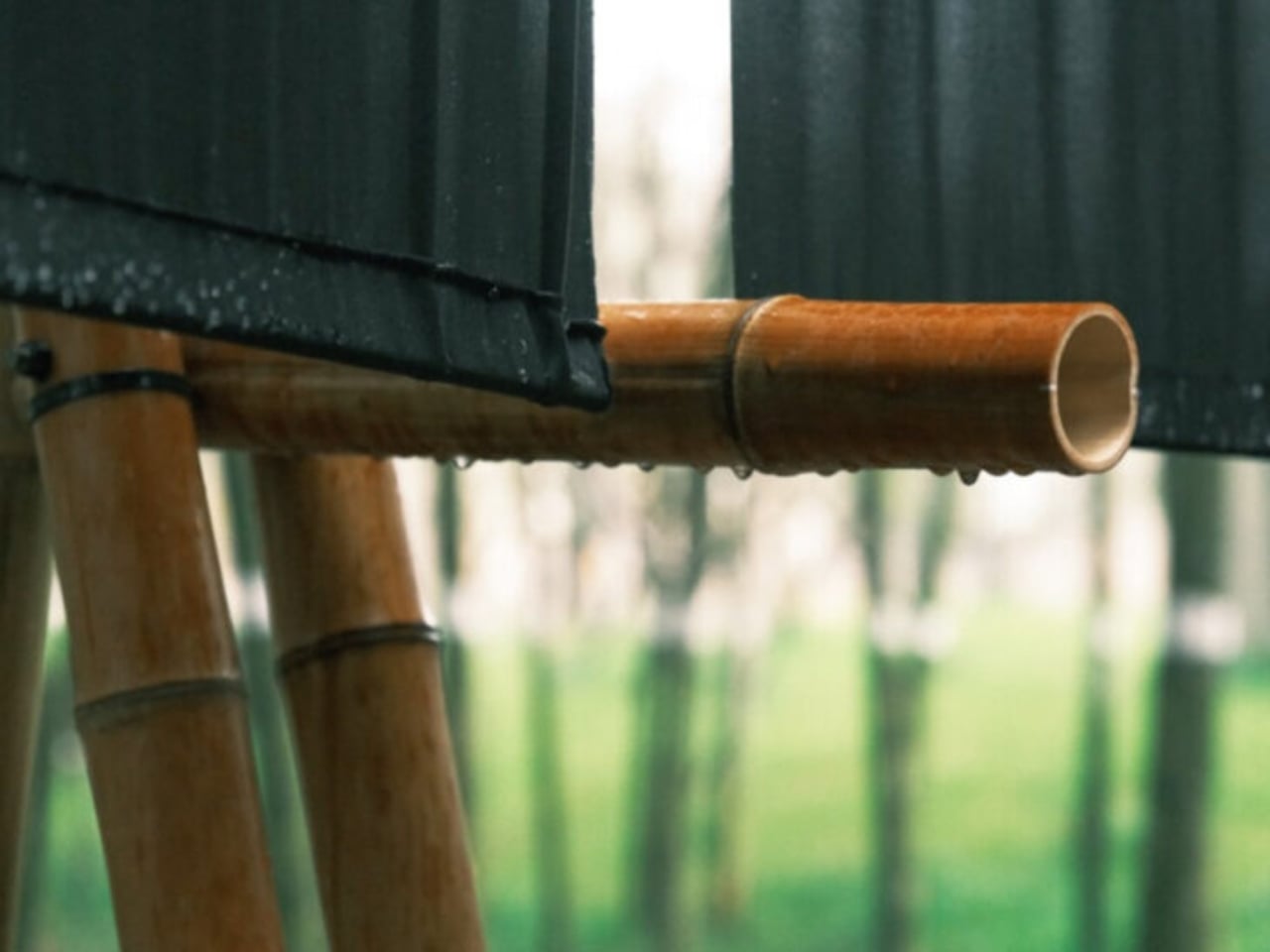
Designed by gèngjin Architecture Office and completed in March 2026, the Veil Tower is a 28.3-square-meter ephemeral structure built from local raw bamboo, black cotton-linen fabric, coarse hemp rope, and steel components. The materials are humble by any measure. The result is anything but.
Designer:
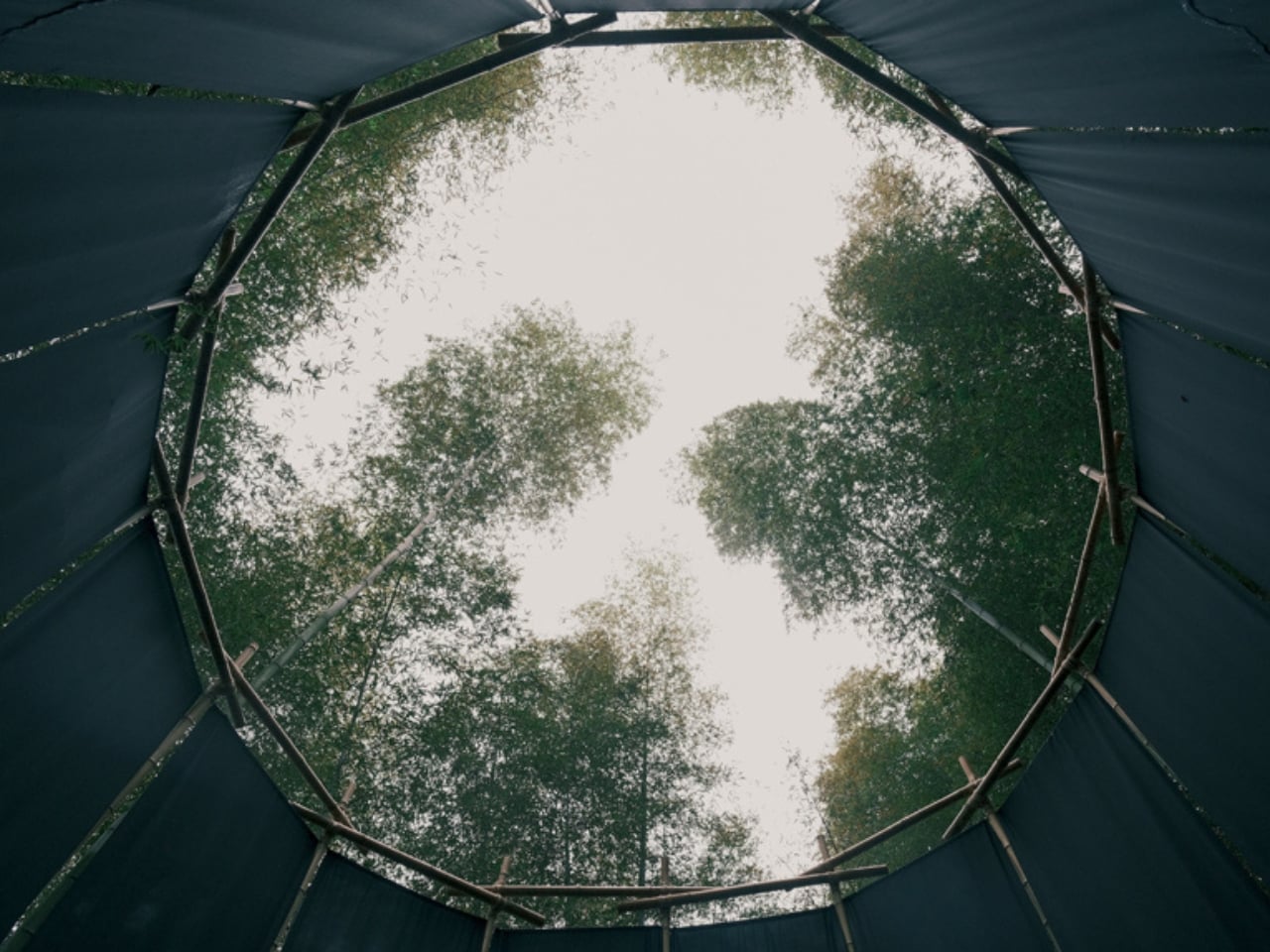
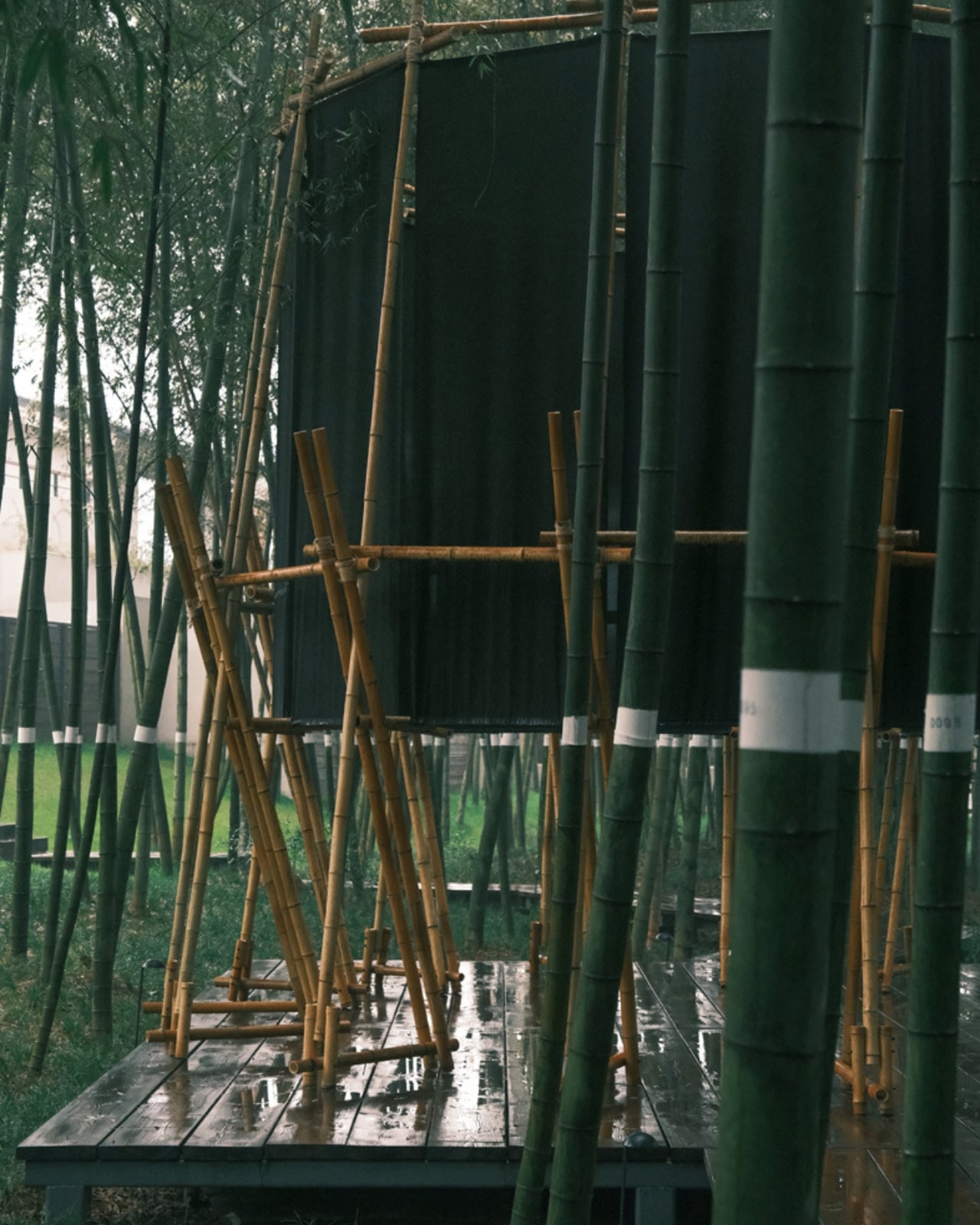
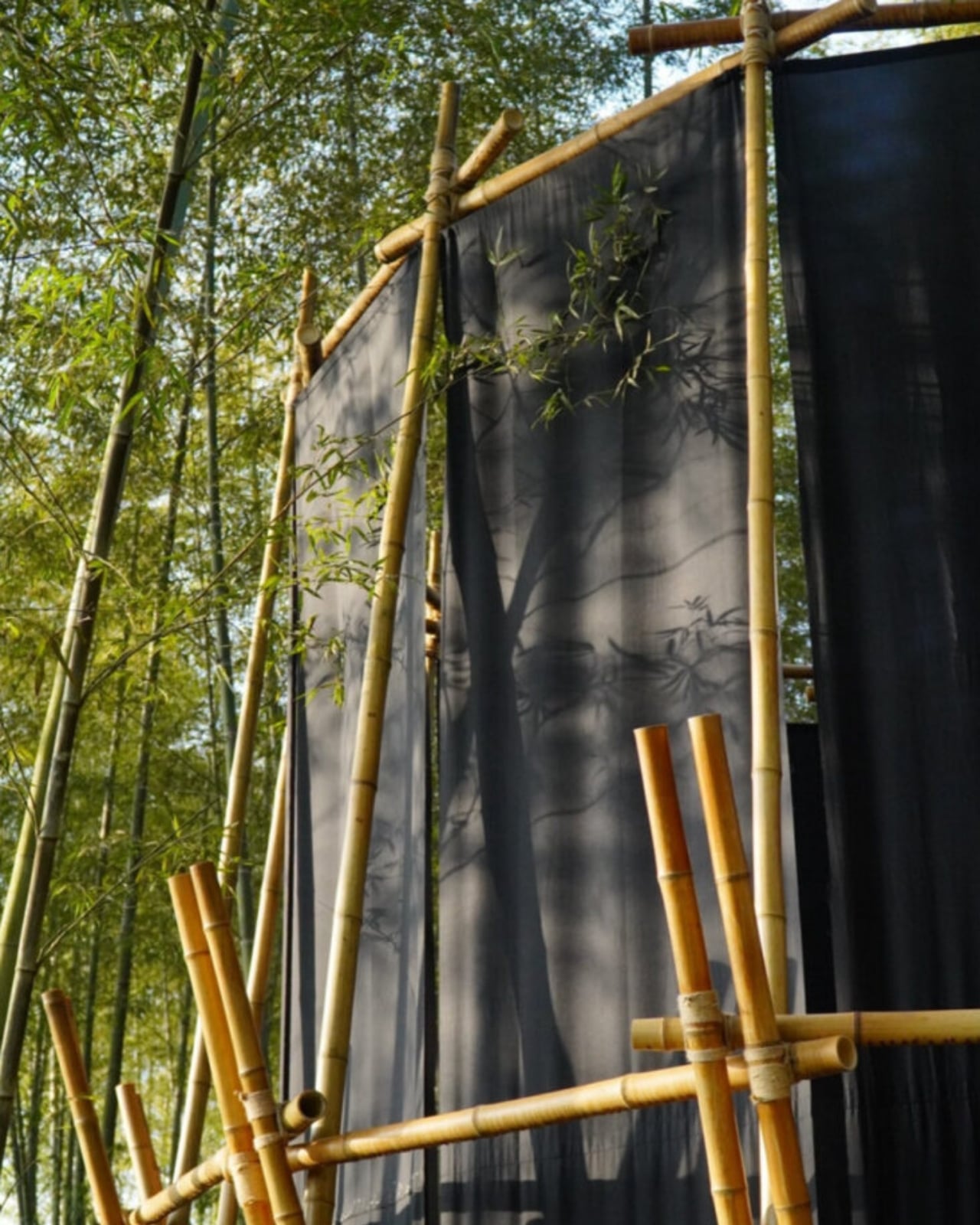
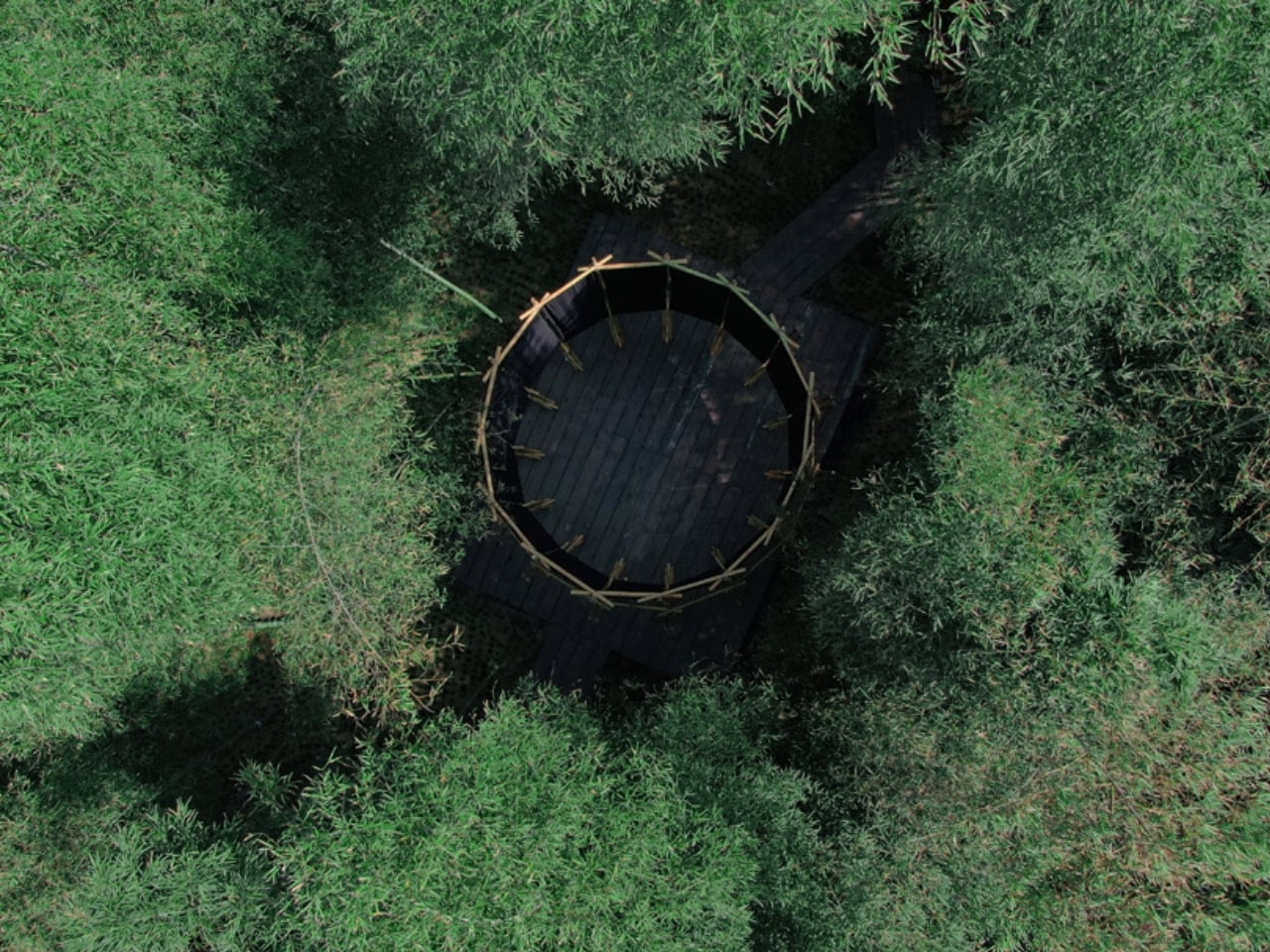
The concept originated from an imagined gesture: peeling bamboo to reveal its inner skin. That idea became the structural and poetic foundation of the whole project. Fifteen bamboo frames were assembled into a pentadecagonal (15-sided) matrix, and from that frame, 15 panels of black fabric were suspended to form what the designers call the “Bamboo Inner Pith Membrane.” The fabric sits at roughly 60 percent light transmittance, which is a technical way of saying that under dappled sunlight, it produces something that looks like an ink-wash painting in motion.
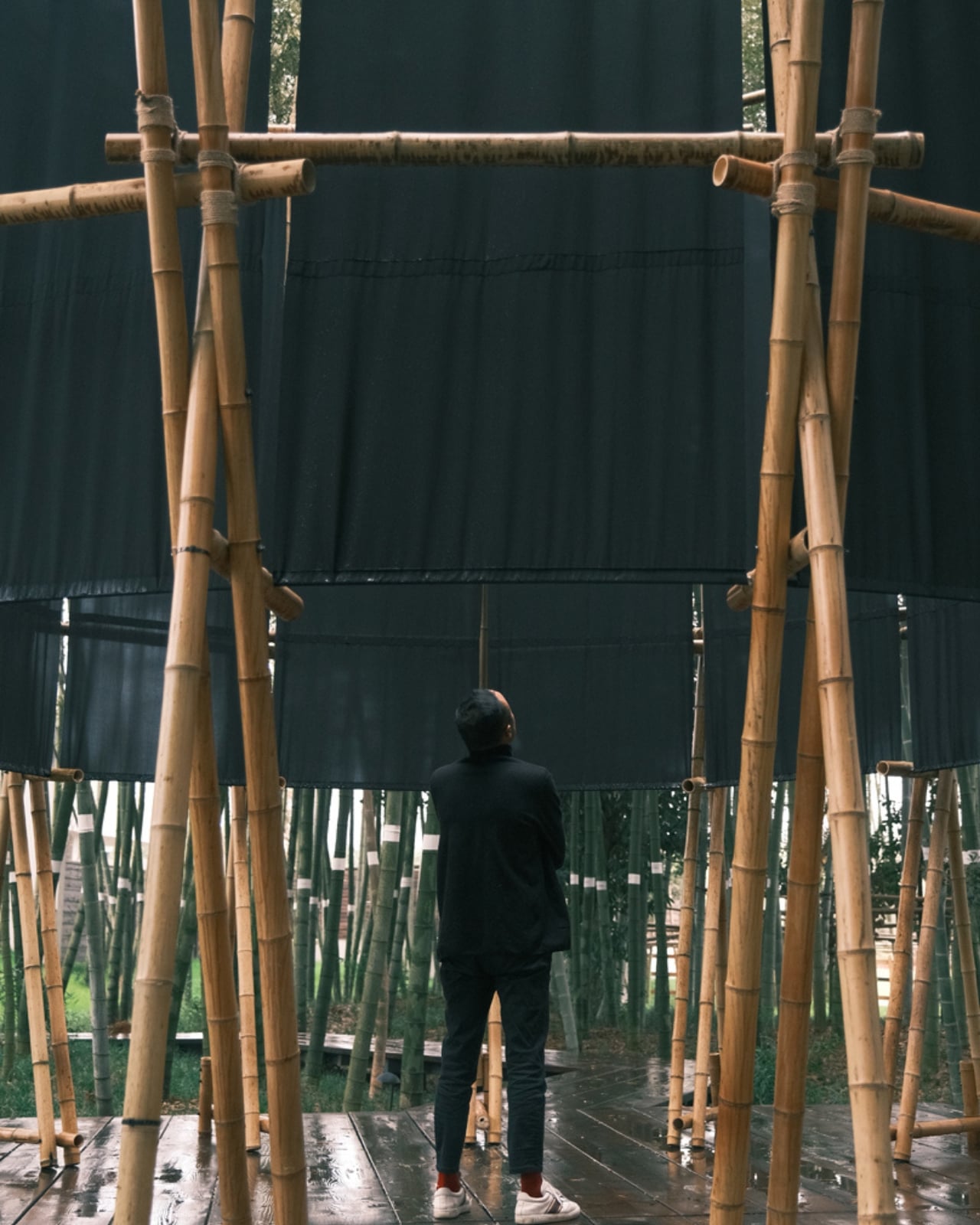
The design draws from the ceremonial spatial archetypes of Chu culture, one of the ancient civilizations of southern China, particularly its collective ritual platforms. You feel that centripetal pull the moment you’re inside. The black curtain cuts off horizontal sightlines to the rest of the forest, so the only direction left to look is up. At the top, the structure’s open crown frames the sky, the clouds, and the swaying bamboo canopy above. Wind moves the fabric. Light shifts. The effect is contemplative in a way that feels earned rather than forced.
Architecture that demands quiet from you is increasingly rare. Most contemporary public installations seem designed for the five-second photo and nothing more. The Veil Tower doesn’t court the camera. Or rather, it doesn’t need to. The photographs you’ll find of it are genuinely striking, but they’re a byproduct of good design thinking rather than its purpose. The designers built something meant to be experienced physically, built collaboratively with local volunteers using traditional cross-lashing hemp rope and reversible joints, and built to leave no permanent mark on the land once it comes down. Every bamboo pole and every length of fabric is fully recoverable.
That last point matters more than it might sound. The conversation around sustainable architecture often gets bogged down in grand claims and complex certification systems. What gèngjin did here is quieter and more convincing: they used materials that were already there, built with methods that can be undone, and created something that asks nothing from the earth it stands on. The Veil Tower is part of a larger series called “Calibrations within the Bamboo Grove,” alongside two other site-specific installations at the same location. The name alone tells you a lot about the mindset. Not impositions within the bamboo grove. Calibrations.
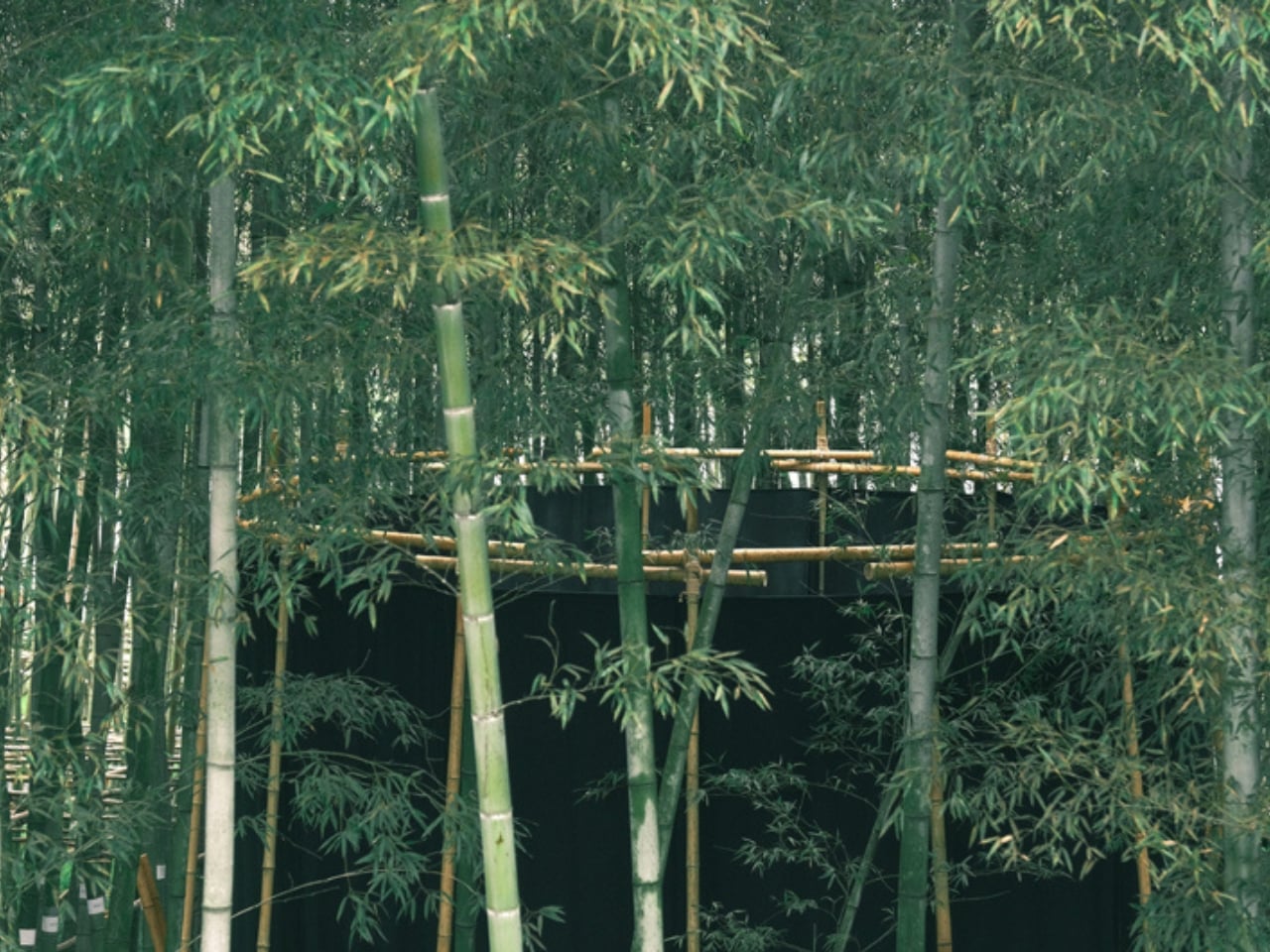
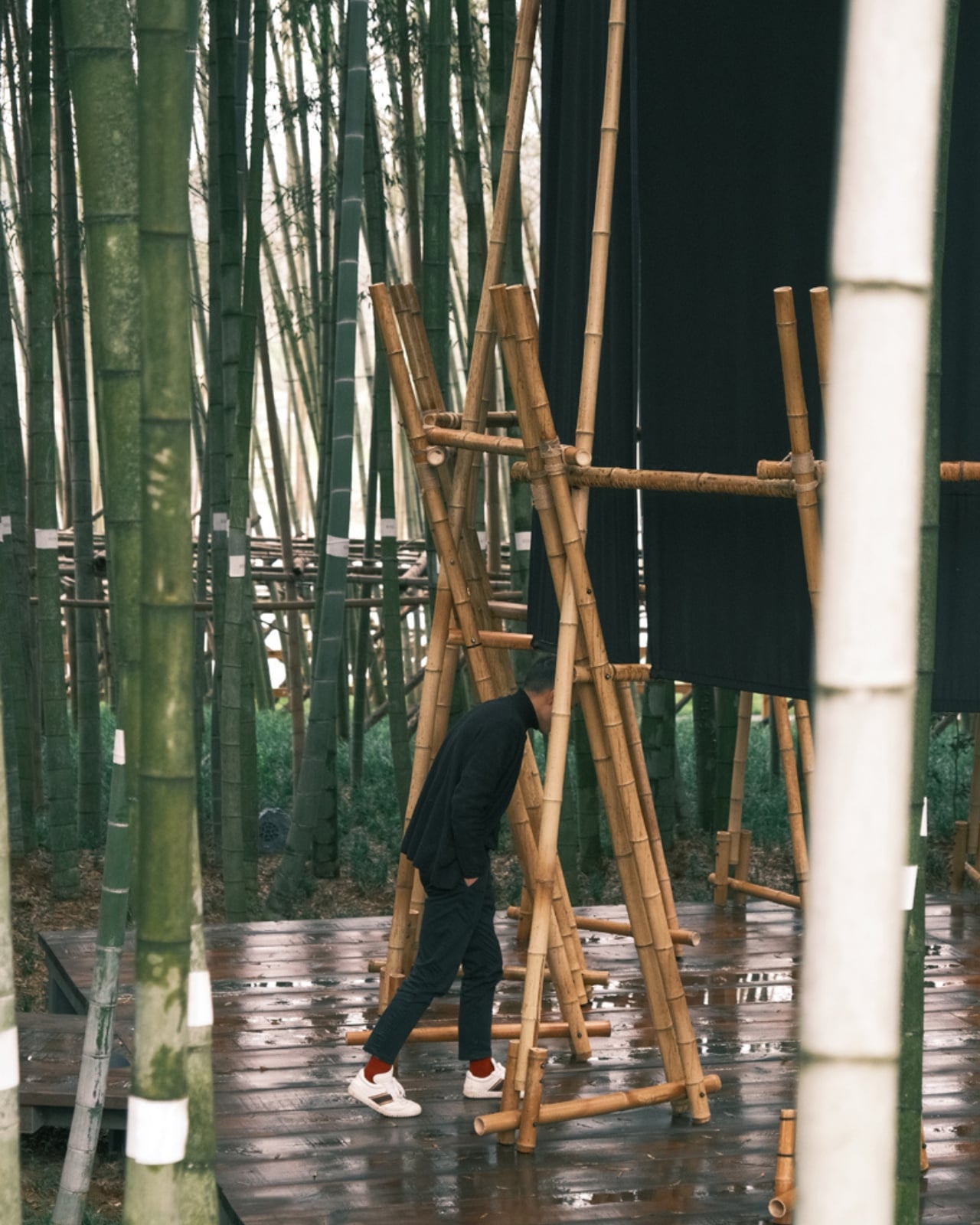
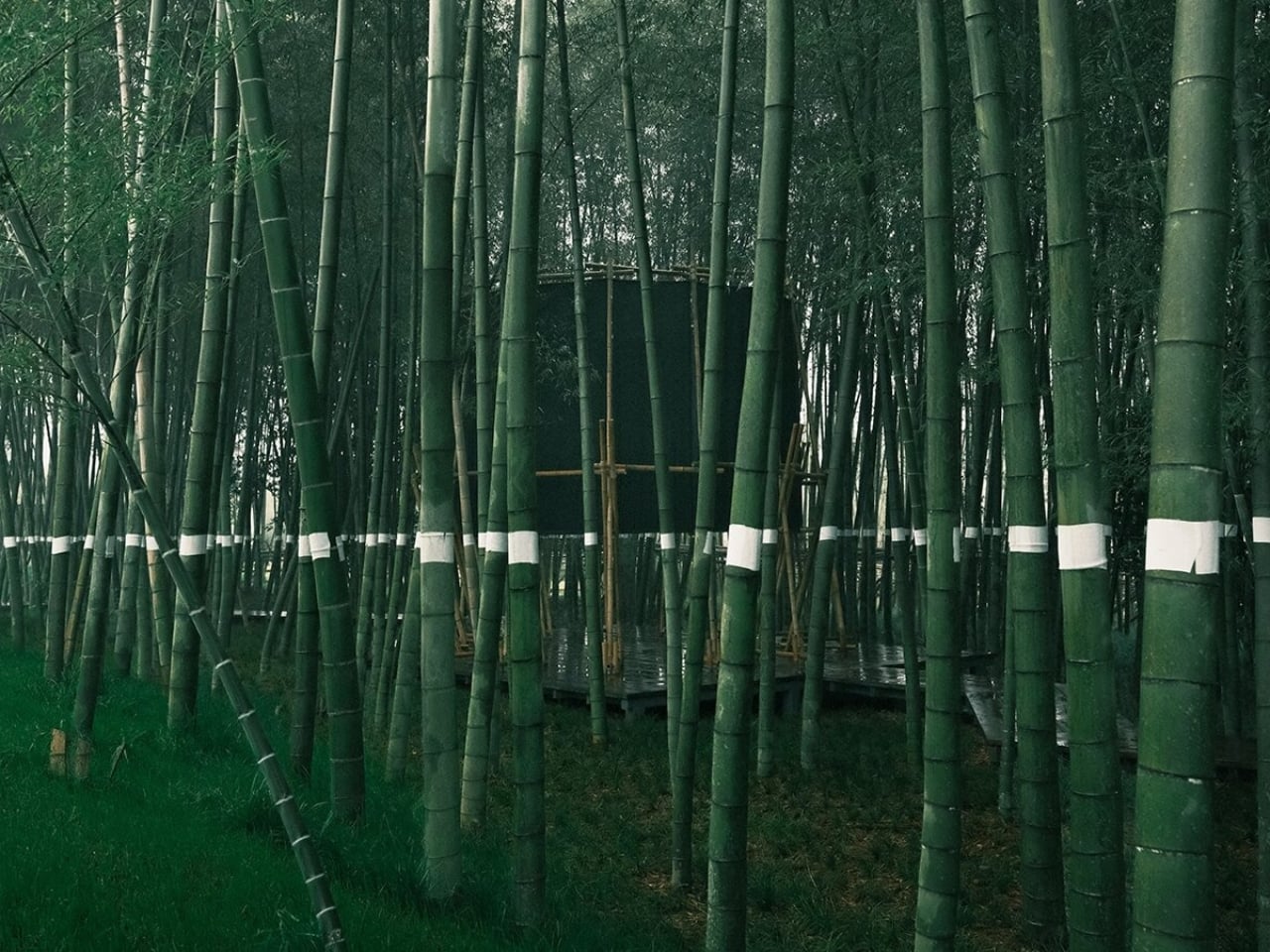
Xianning is known across China as the “Land of Moso Bamboo,” and the bamboo grove at ANNSO, a boutique hotel on the site, is the kind of place where dense canopies filter sunlight into fragmented patches and the vertical repetition of culms creates a slight, disorienting sense of being enclosed by nature itself. The designers describe it as a place you can see through but never fully penetrate. The Veil Tower takes that sensation and deepens it intentionally. Inside the structure, the enclosure is complete, until you look up and the whole sky opens.
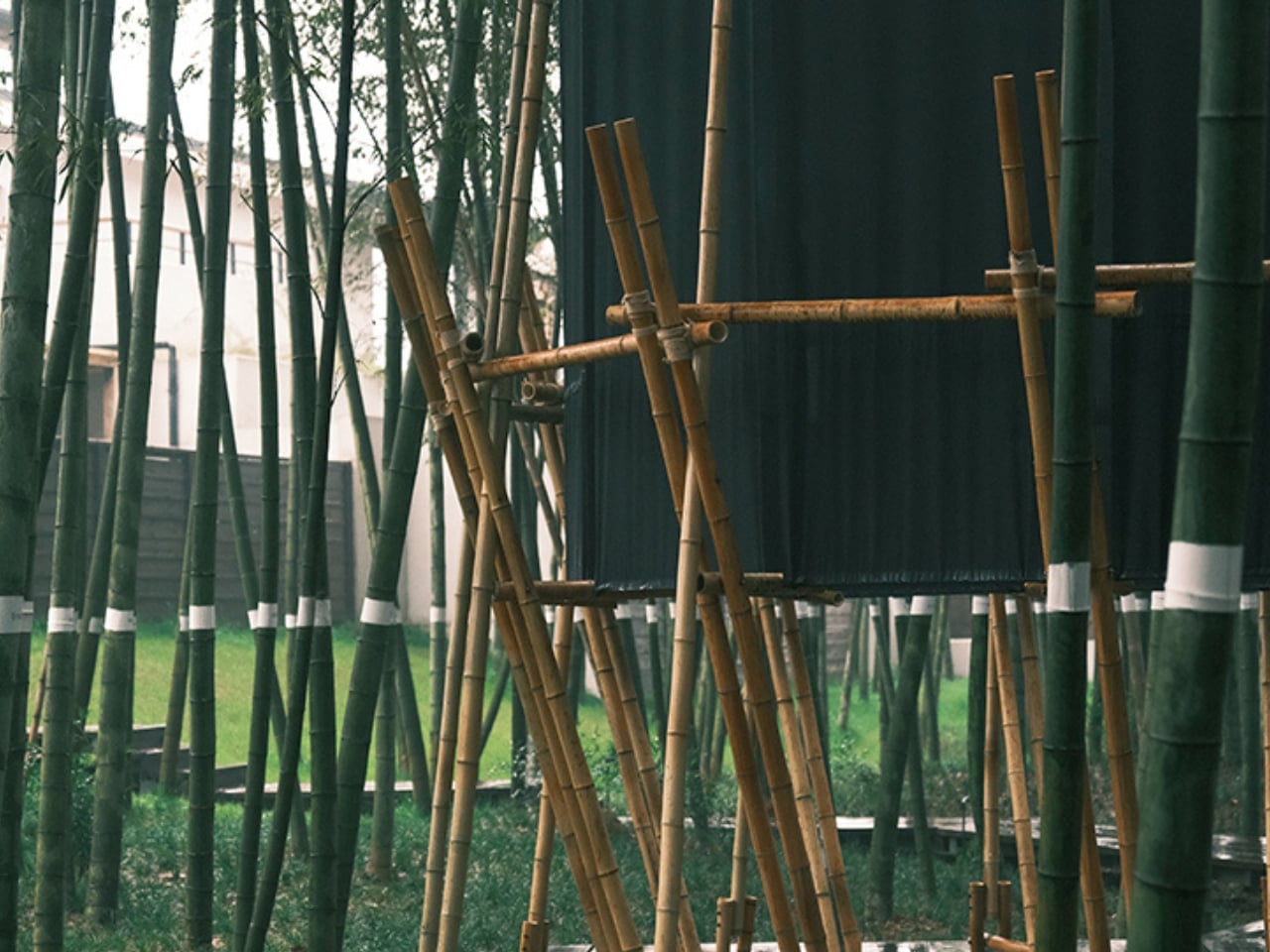

Temporary architecture often carries an apologetic quality, as if impermanence is a limitation to be explained away. The Veil Tower flips that entirely. The fact that it will eventually come down, leaving no trace, is part of what makes it feel significant. It doesn’t try to outlast its moment. It just asks you to bow at the door, step inside, and look up.
The post first appeared on .
Related Posts