This year, Worktech has been in Melbourne and Sydney to explore the future of work and, of course, the workplace. The conferences bring together some of the people most closely engaged with those questions of the future of work, from real estate to technology and business.
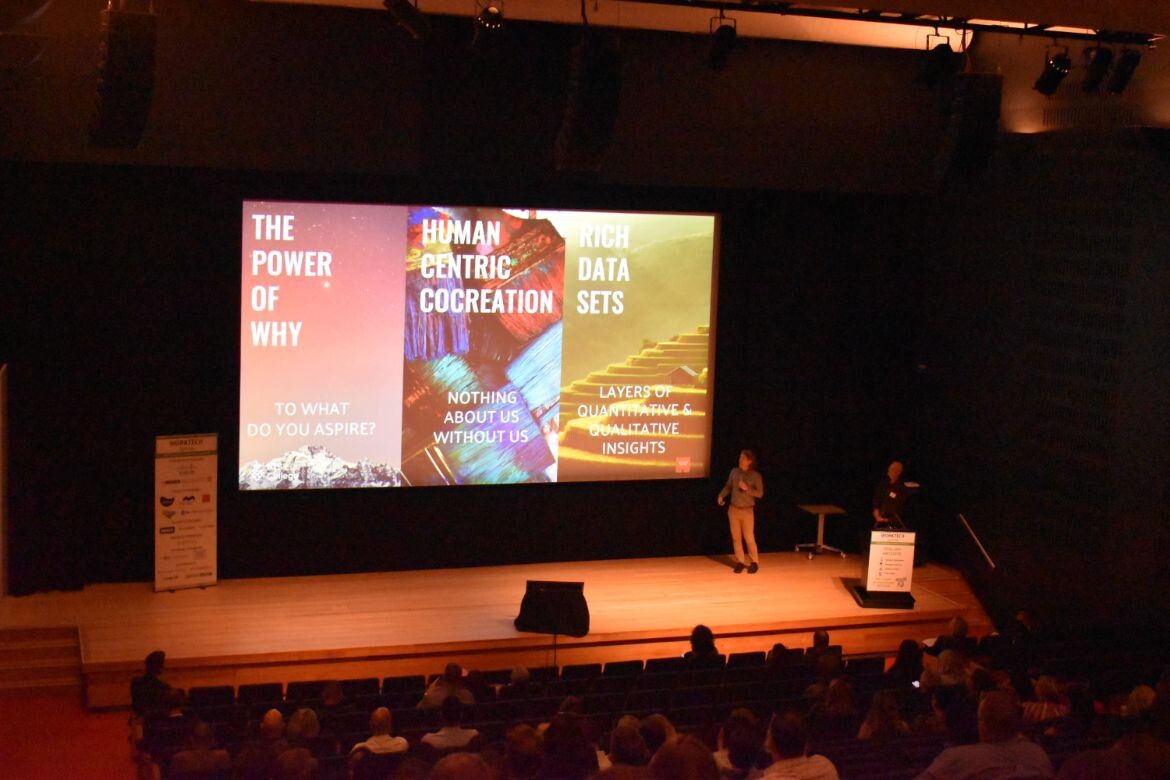
One of the sessions in Sydney was led by Camilla Frumar, senior consultant at Gallup. Undertaking research across 160 countries, Gallup certainly has an international scope and claims to take research samples representative of 98 per cent of the world’s population. It means that their workplace insights have credibility.

Frumar defines wellbeing as “all the things that are important to how we think about and experience our lives,” emphasising that this means different things to different people. Variety and difference, then, are at the core of workplace needs if wellbeing is to be taken care of.
Gallup’s research – using both quantitative and qualitative data – is harnessed to outline several broad themes that are held universally in common. These fundamentals of wellbeing are summarised in five key categories: career, social, community, physical and financial.
Related:

Perhaps the most significant learning point is the importance of a holistic approach. No single one of these categories is sufficient alone – fixation on career alone, for instance, might only lead to burnout. The crucial issue for workplaces is finding a formula to marry wellbeing with engagement.
A similar point was made in a separate talk given by Eoin Higgins, senior consultant at Veldhoen + Company, and Alex Murphy, managing director of UTS College. Higgins speaks about the way of working as “a system of correlated parts,” an approach that seeks to centre human experience rather than just the workplace as a physical setting.
Murphy set out another series of core issues for the hybrid workplace: community, collaboration, creativity and connectedness. Tying it all together is trust – the idea that employees need to be given autonomy to work in ways that suit their individual needs in being productive. It’s the opposite approach to one that dictates a fixed quota of days in the office or set hours; what matters is productivity, not how it’s achieved.

Communication is the key in terms of leadership and management, according to Frumar. It is the number one skill required for effective leadership in a workplace that takes wellbeing seriously, particularly in terms of managers providing meaningful and regular feedback.
The modern, hybrid workplace is all about the human and the space. Hybrid fit-outs are required but not without open ways of working in which people are trusted to be autonomous and able to find a balance between productivity, wellbeing and engagement.
Worktech
Photography
Courtesy of Worktech



The post appeared first on .
Related Posts


](https://www.creativeboom.com/uploads/articles/ab/ab29e3ffef115ddd4d5c6d0d4e59c3e9deb2c5f9_840.jpg)