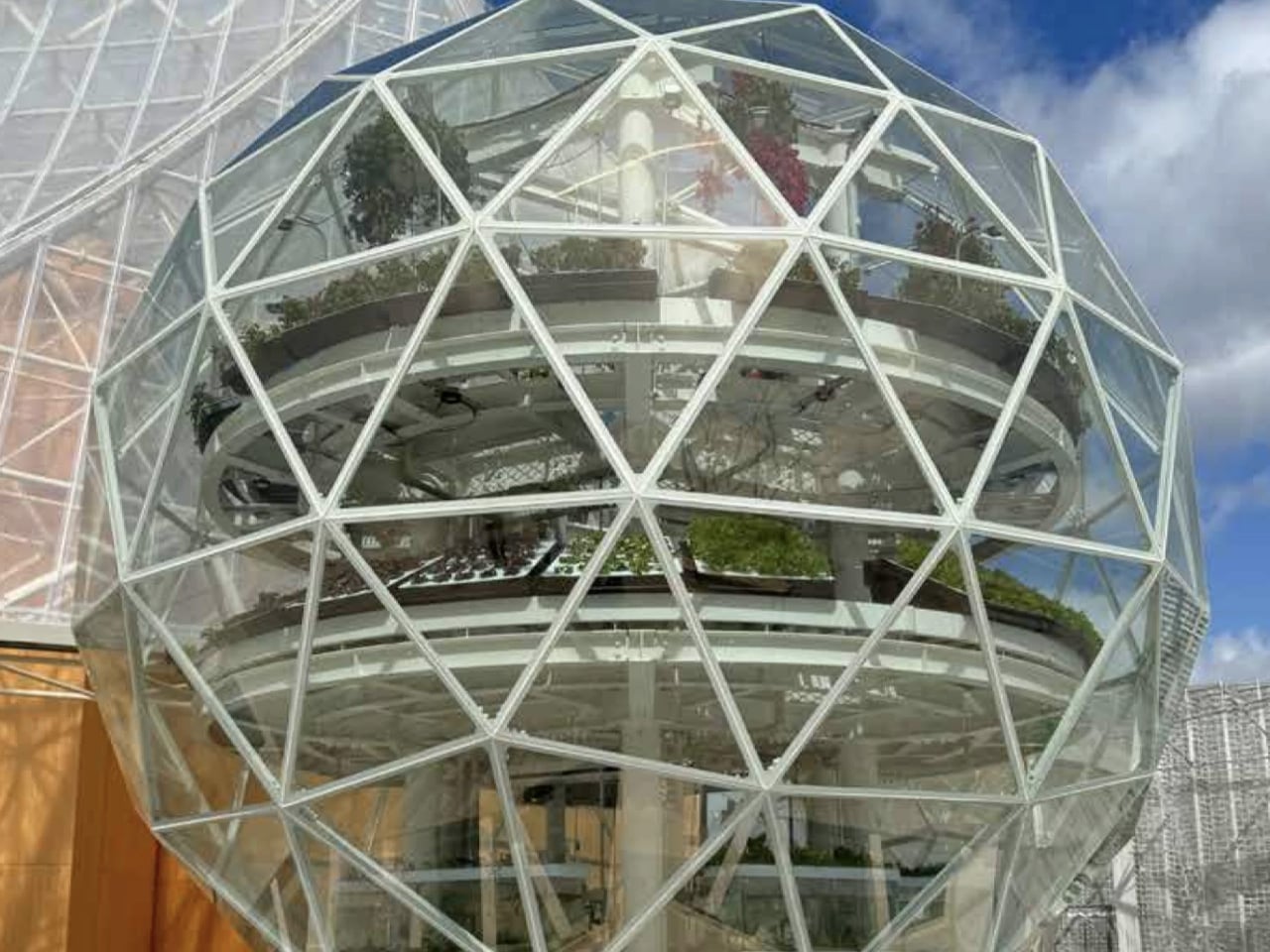
Perched at the Osaka Health Pavilion during Expo 2025, a translucent dome hums with life. Inside, tomatoes ripen above brackish water while pufferfish swim below, their waste feeding the plants that clean their home. This is “Inochi no Izumi,” or “Source of Life,” a 21-foot-high sphere that reimagines how cities might feed themselves. The dome’s genius lies in its vertical arrangement. Four water compartments form the base: seawater, brackish water, and two freshwater tanks. Each supports aquatic species matched to its salinity, from marine groupers to freshwater sturgeon. Above each tank rises a corresponding tier of hydroponic crops, creating four parallel ecosystems stacked inside a single structure.
The nutrient cycle starts underwater. Fish excrete ammonia-rich waste that specialized microbes convert into nitrites, then nitrates. Pumps lift this nutrient-loaded water to feed the plants directly overhead. As roots absorb nitrogen compounds, they return purified water to the tanks below. Nothing leaves the system. Nature’s wetland cycling becomes an engine for food production. The broader the range of compatible species, the more resilient and self-sufficient the ecosystem becomes. That diversity mirrors natural systems but remains optimized for human consumption.
Designer: , Osaka Metropolitan University’s Plant Factory R&D Center & Tokyo University of Marine Science & Technology
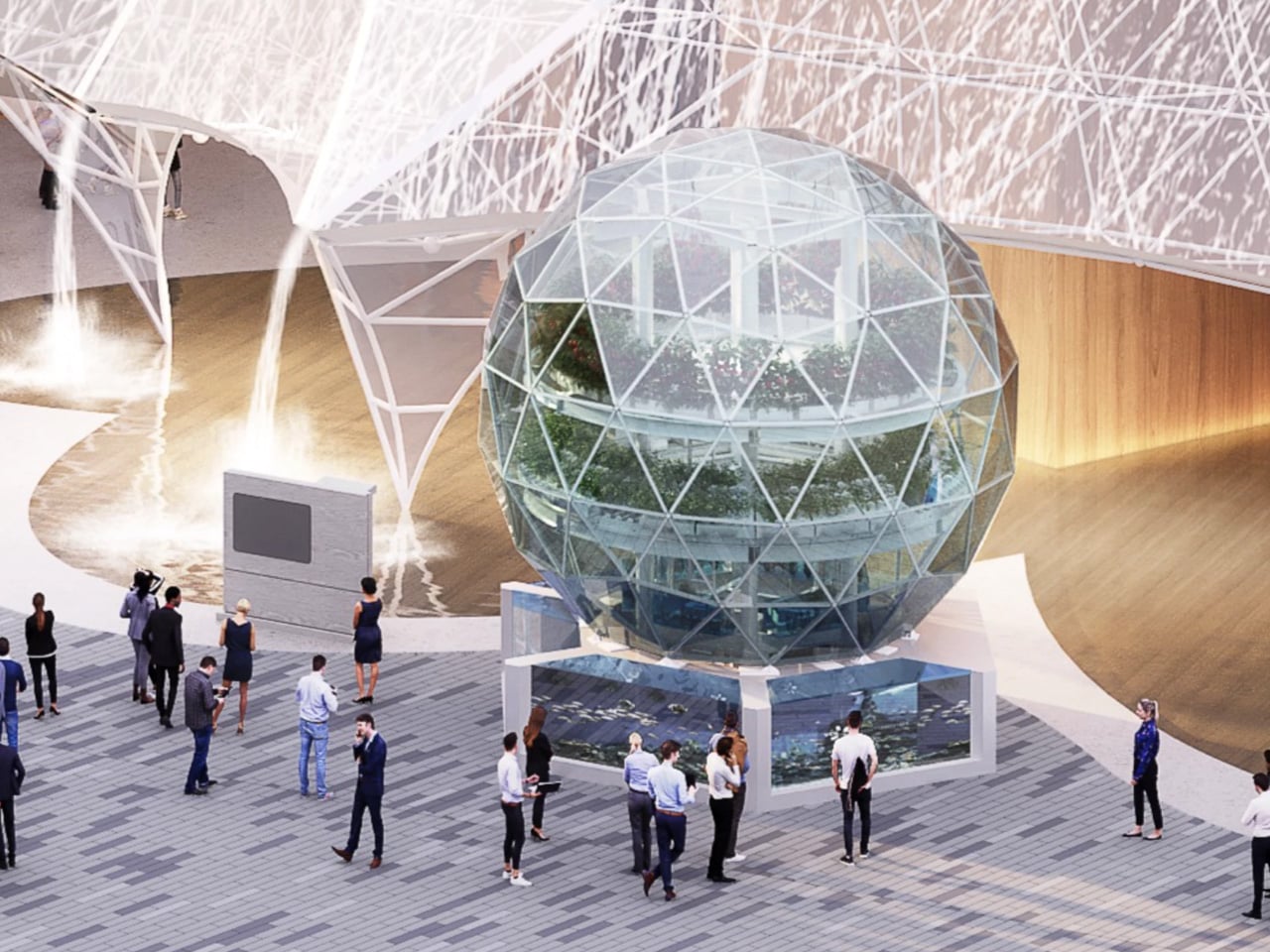
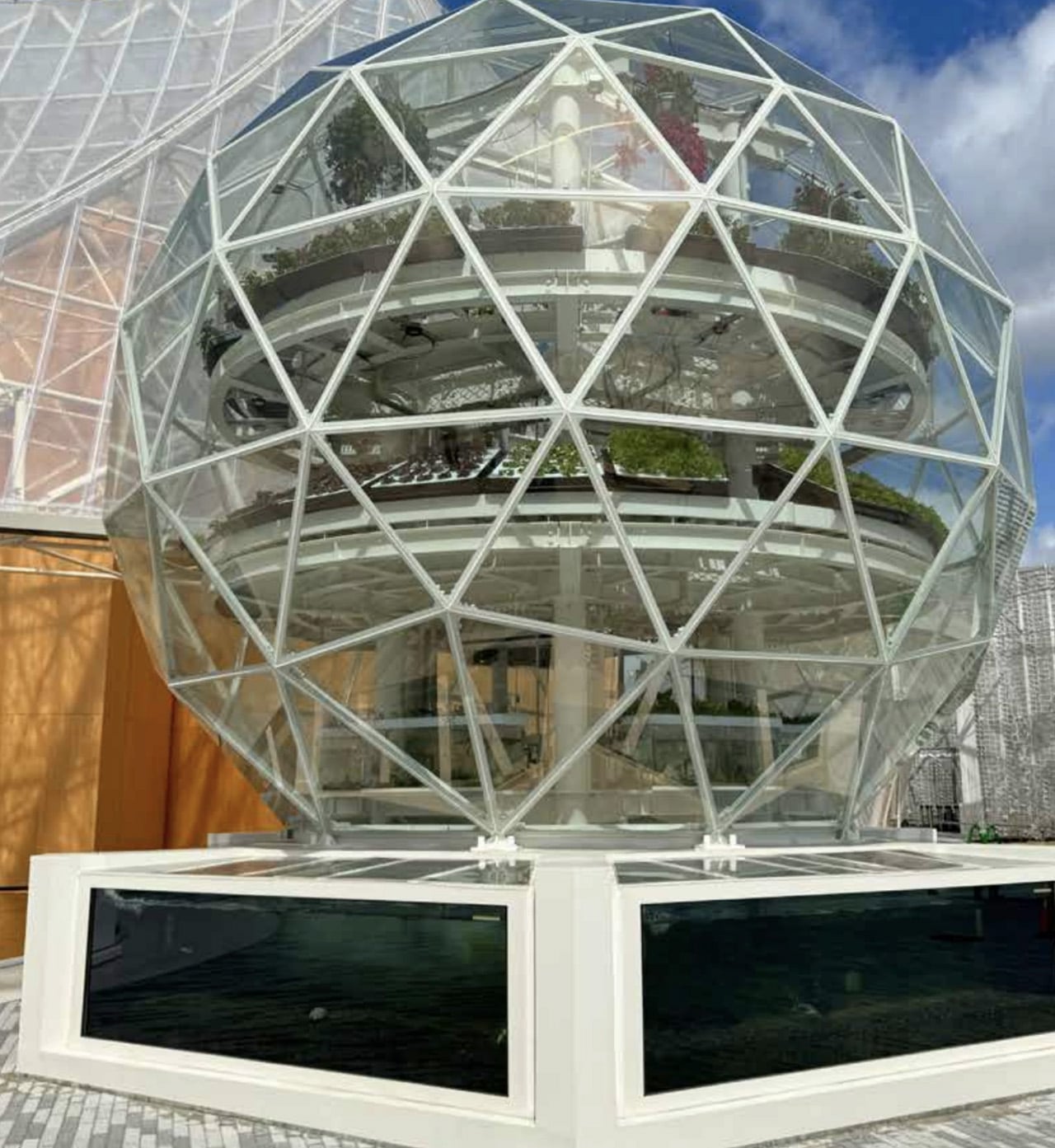
Each layer hosts plants suited to its water source. Salt-tolerant halophytes like sea asparagus and sea purslane grow above the seawater tank housing red seabream and black porgy. Sea grapes flourish in the saltwater itself. Move up a tier, and semi-tolerant tomatoes thrive on brackish water where Japanese pufferfish and ornamental carp glide. The freshwater zones support functional vegetables—nutrient-dense herbs and lettuces—while edible flowers, including nasturtium and marigold crown the top tier, their beds rotating via built-in motors to optimize light exposure.
The dome’s outer skin consists of transparent ETFE panels stretched across 245 steel structural bars connected by 76 joints. This geodesic framework, built using VikingDome’s T-STAR system, covers 1,378 square feet while weighing just over two tons. The entire structure arrived at Yumeshima Island on three pallets. Its design maximizes sunlight penetration while maintaining stable internal temperatures, creating a microclimate where multiple growing zones coexist.
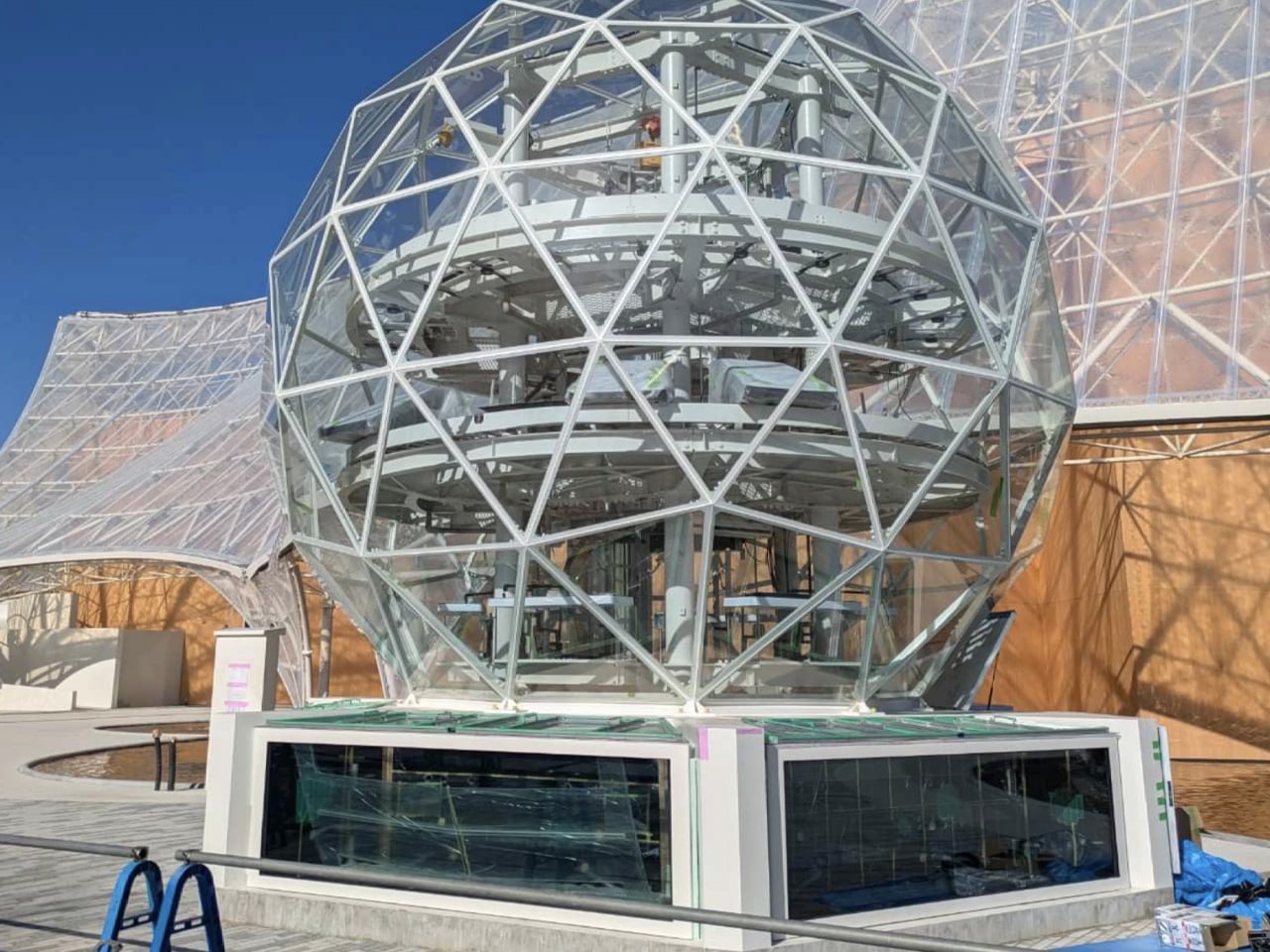
Developed with Osaka Metropolitan University’s Plant Factory R&D Center and Tokyo University of Marine Science and Technology, this system demonstrates agricultural biodiversity at work. The practical applications extend beyond exhibition. Dense urban centers with limited ground space could host these modular systems on rooftops or in narrow lots. Land-poor regions where traditional farming struggles could gain food independence. Disaster-prone areas might deploy closed-loop domes for decentralized production unaffected by soil contamination or water scarcity.
What makes Source of Life compelling isn’t revolutionary technology. The core principle—aquaponics—has existed for decades. Rather, it’s the elegant integration of ecological understanding with space-efficient design. Commercial agriculture often chases yield through inputs: fertilizers, pesticides, energy. This dome inverts that logic, asking what happens when we design with nature’s cycles instead of against them. As cities grow and climate pressures mount, feeding urban populations sustainably demands fresh thinking. This geodesic greenhouse suggests one path forward: upward, inward, and circular.
The post first appeared on .
Related Posts