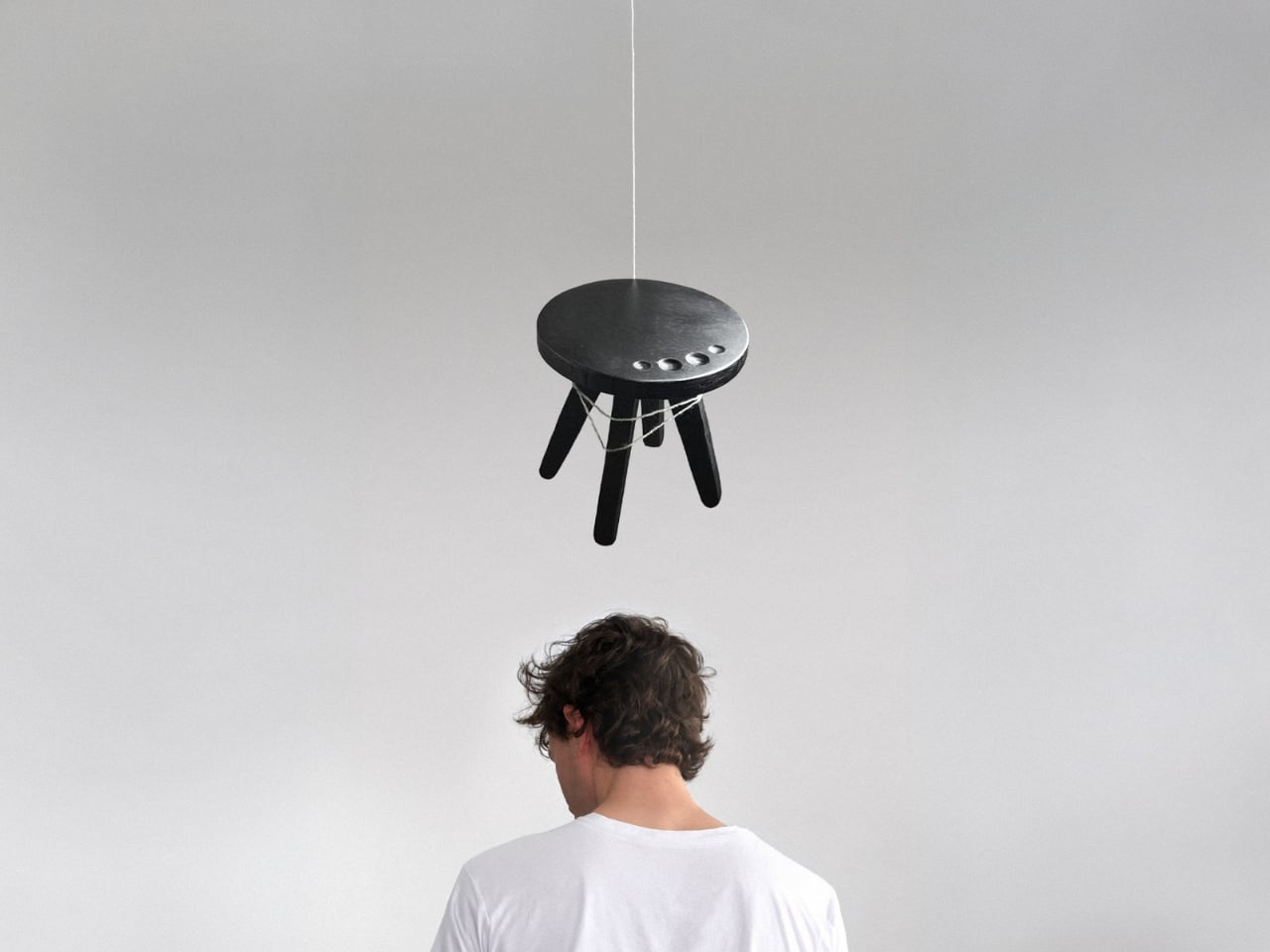
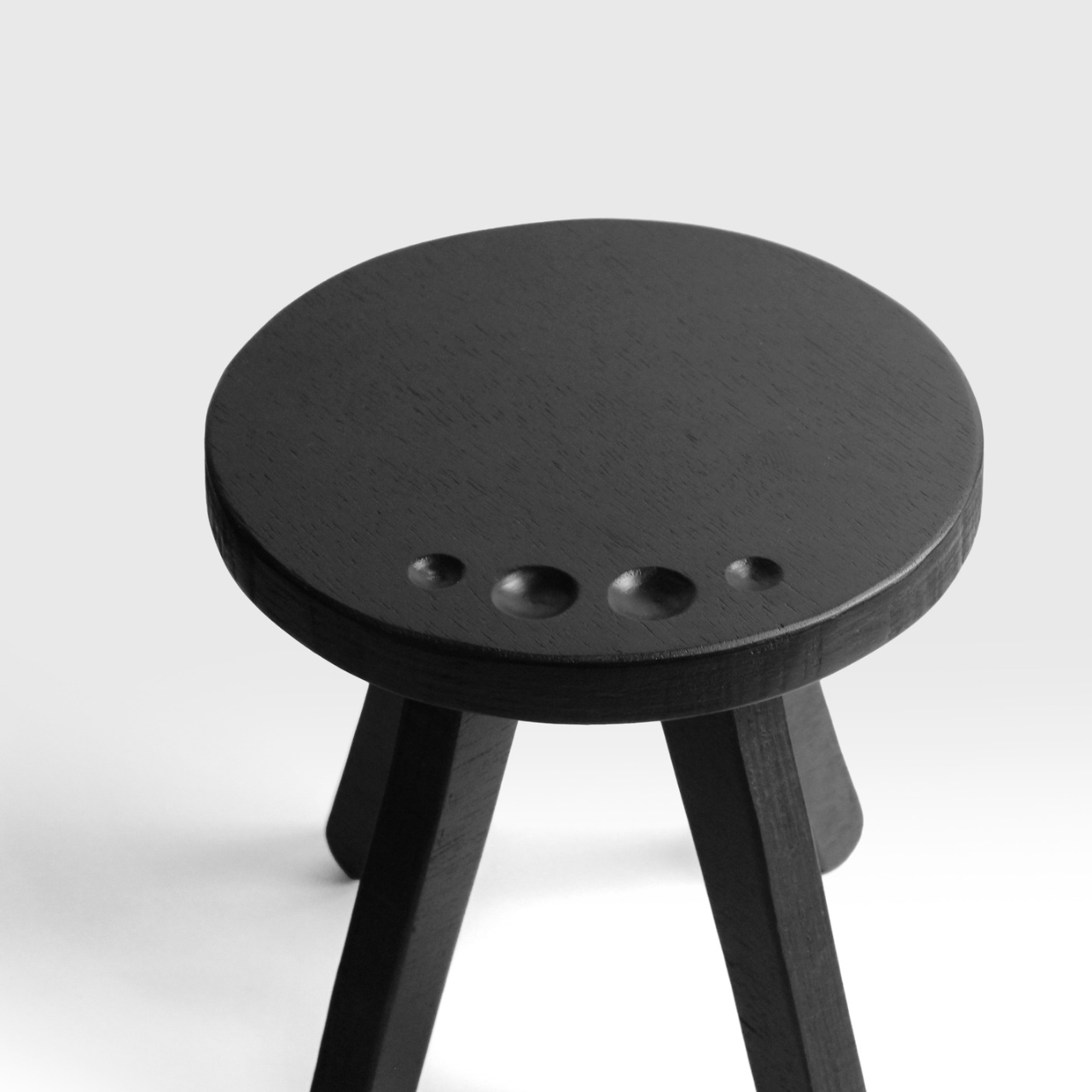
A thumb in a spider’s eye sounds like a terrible idea. On Fabrício Auler’s Tocaia Stool, it’s how you’re supposed to pick the thing up. Four dimples sit near the rim of the round wooden seat, two large ones flanked by two smaller ones. At first they look like a face. Then you see the photo of a hand grabbing the stool, and you realize the face is also the handle.
A little stool is useful partly because it can go wherever you need it, from the entryway when you’re putting on shoes to the living room when you need another seat. But a round seat gives you nowhere obvious to grab. Auler’s concept, which he built as a prototype, borrows the face of a jumping spider to give your thumb a place to settle while your fingers curl under the rim. It’s a small fix for a piece of furniture you’re likely to move more often than you sit on it.
Designer:
The close-up of the grip explains why those dimples sit so close to the edge. Your hand can pinch the seat without reaching across it, and none of the recesses goes all the way through. A cutout would be easier to spot and might give you more to hold on to, but it would also make the handle the first thing you noticed. Here, most of the seat stays flat, so if the stool ends up next to the couch with a book on it, the spider gets to keep its face.
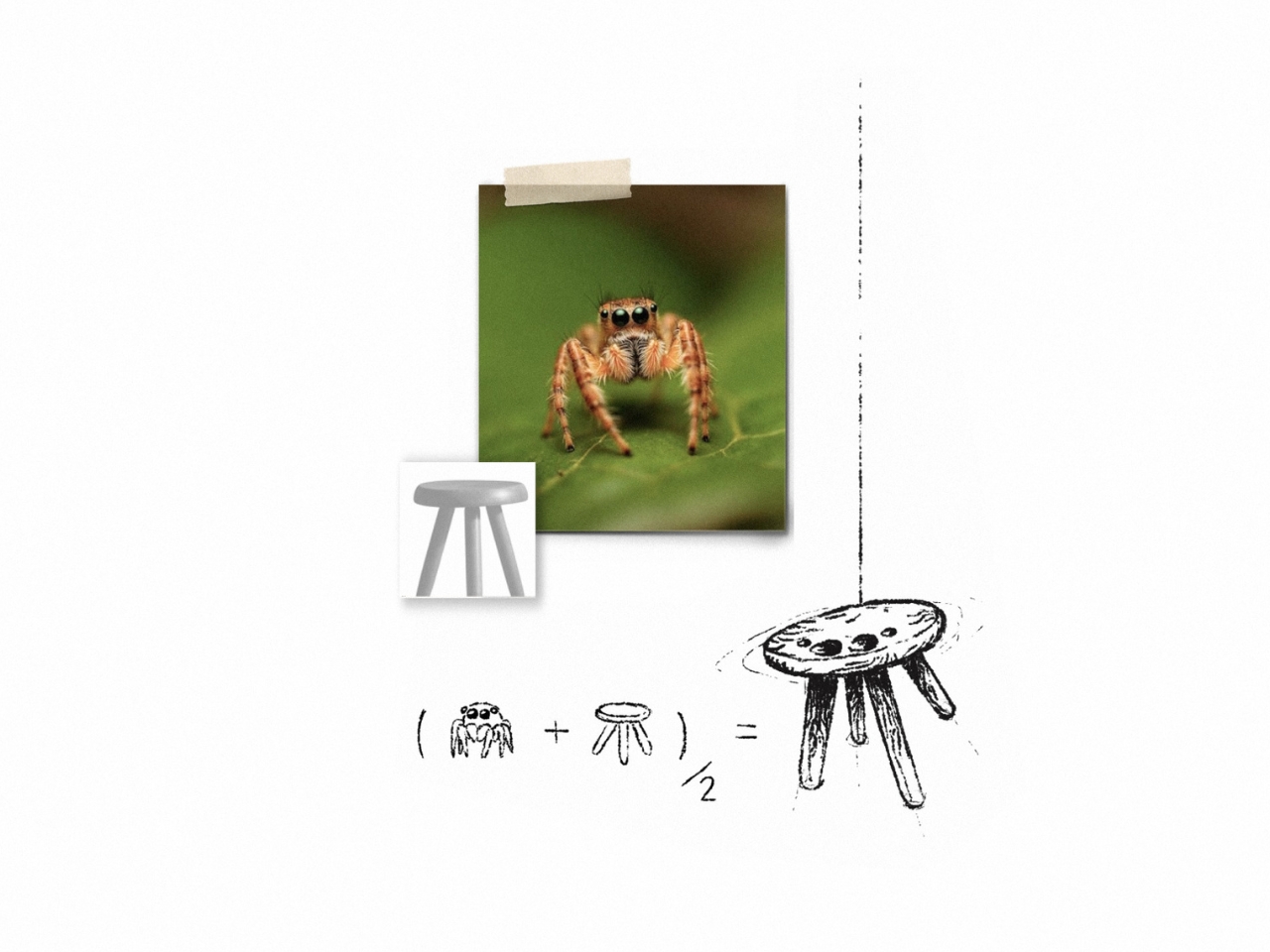
I like that Auler stopped at four legs. The project sketch puts a picture of a jumping spider next to an ordinary round stool, and the finished shape lands closer to the stool than you might expect. The legs angle outward, but they don’t bend into anything resembling a spider’s joints. The face does most of the work. Had Auler gone for eight legs, I’d probably read the whole thing as a prop. With four, it looks like furniture right up until it looks back at you.
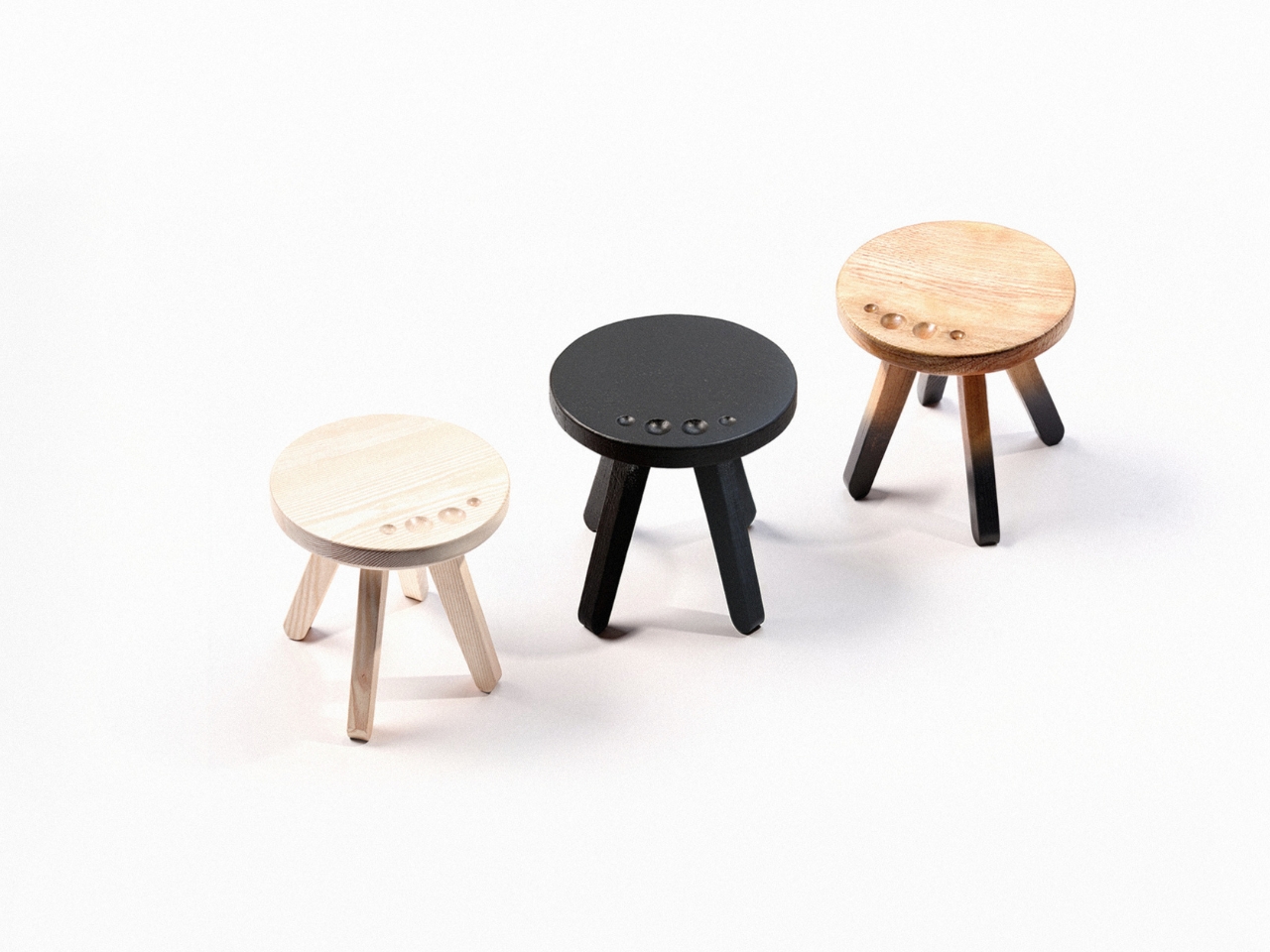
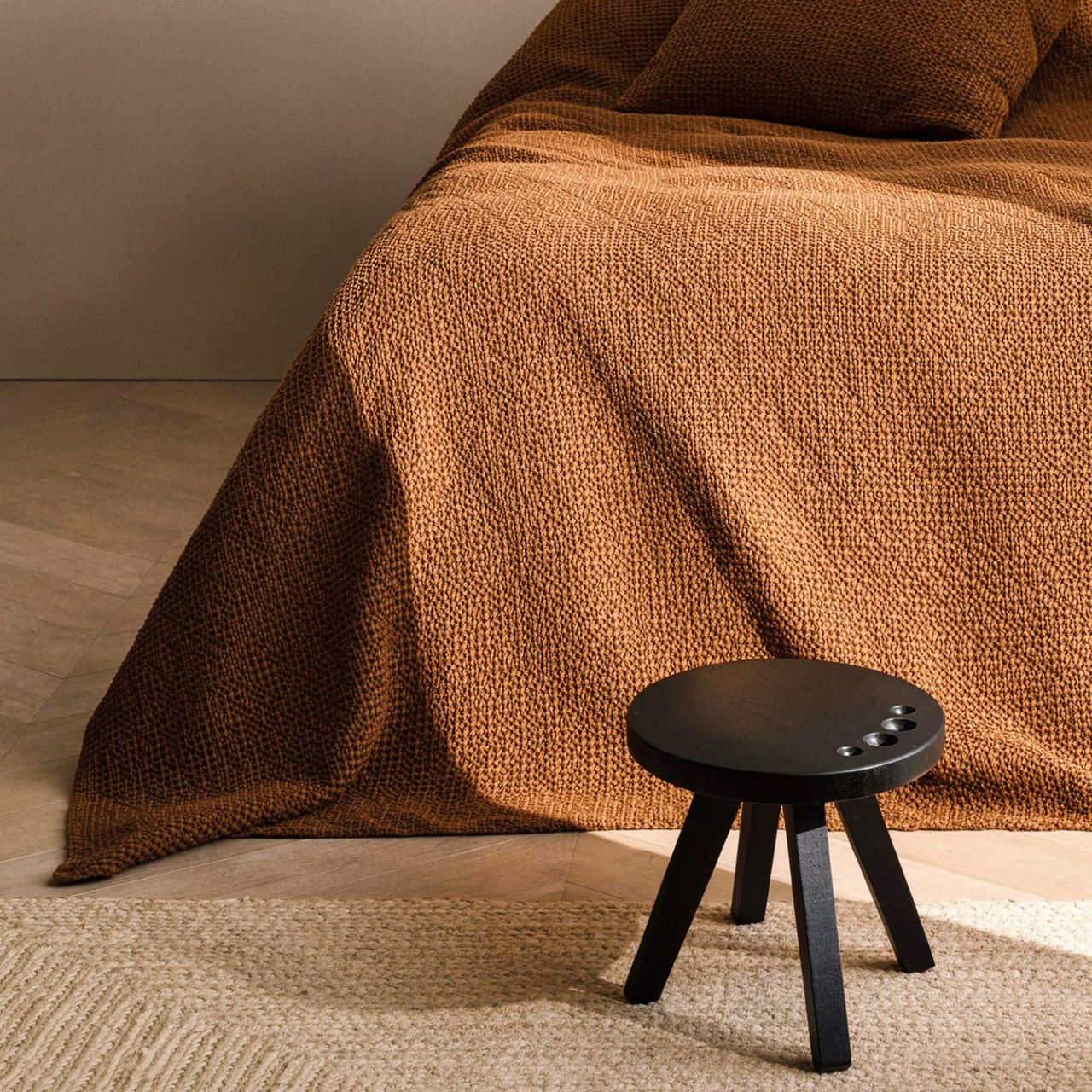
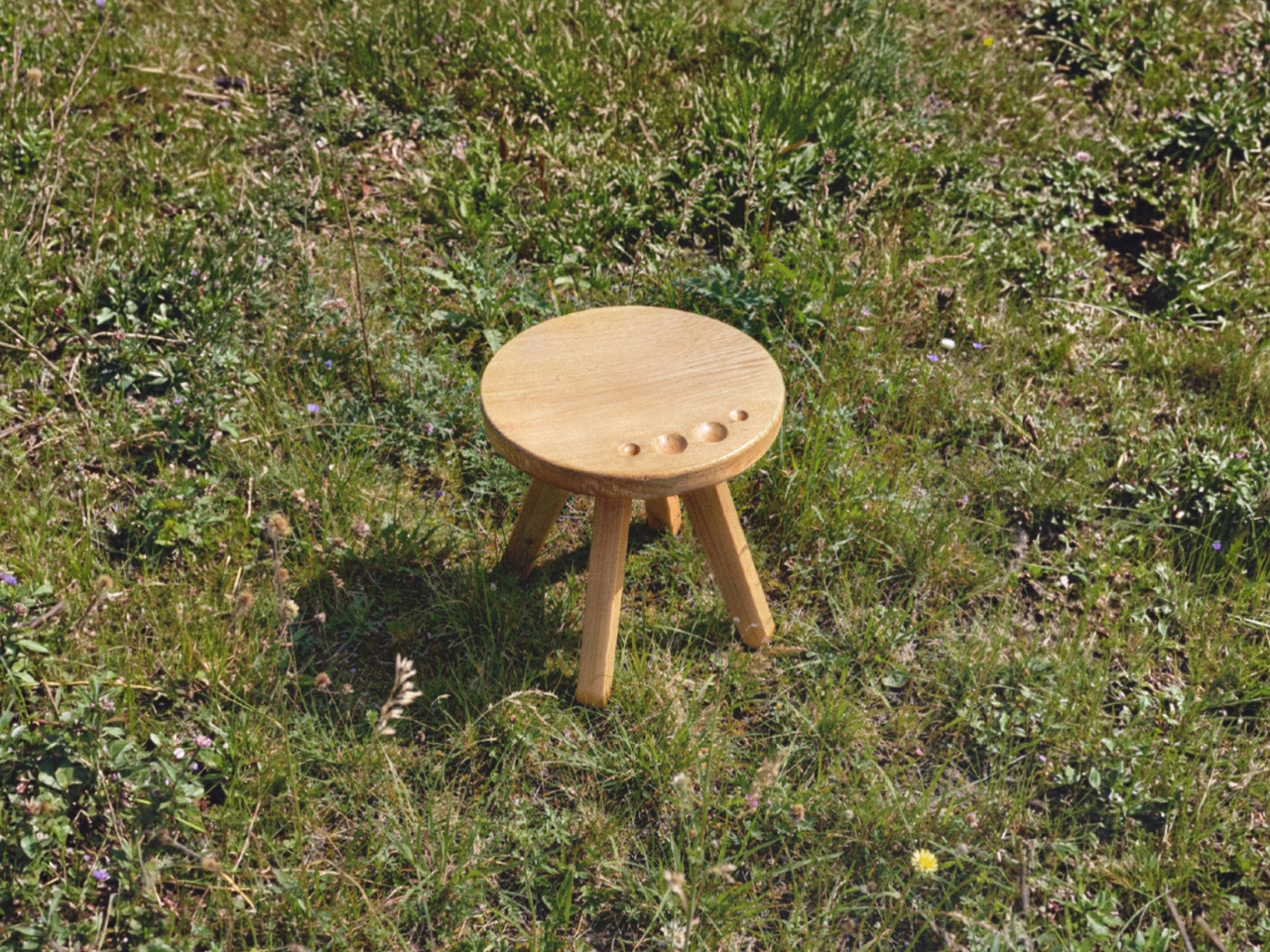
The finishes shift that balance more than I expected. The pale wood version looks almost anonymous from the side. On the black one, light catches the inside of each dimple and makes the eyes much harder to miss. My favorite is the version with a warm wood seat and legs that darken toward the floor. It has enough of the black stool’s creepiness to carry the joke, but the grain across the top still makes it look at home next to a stack of paperbacks.
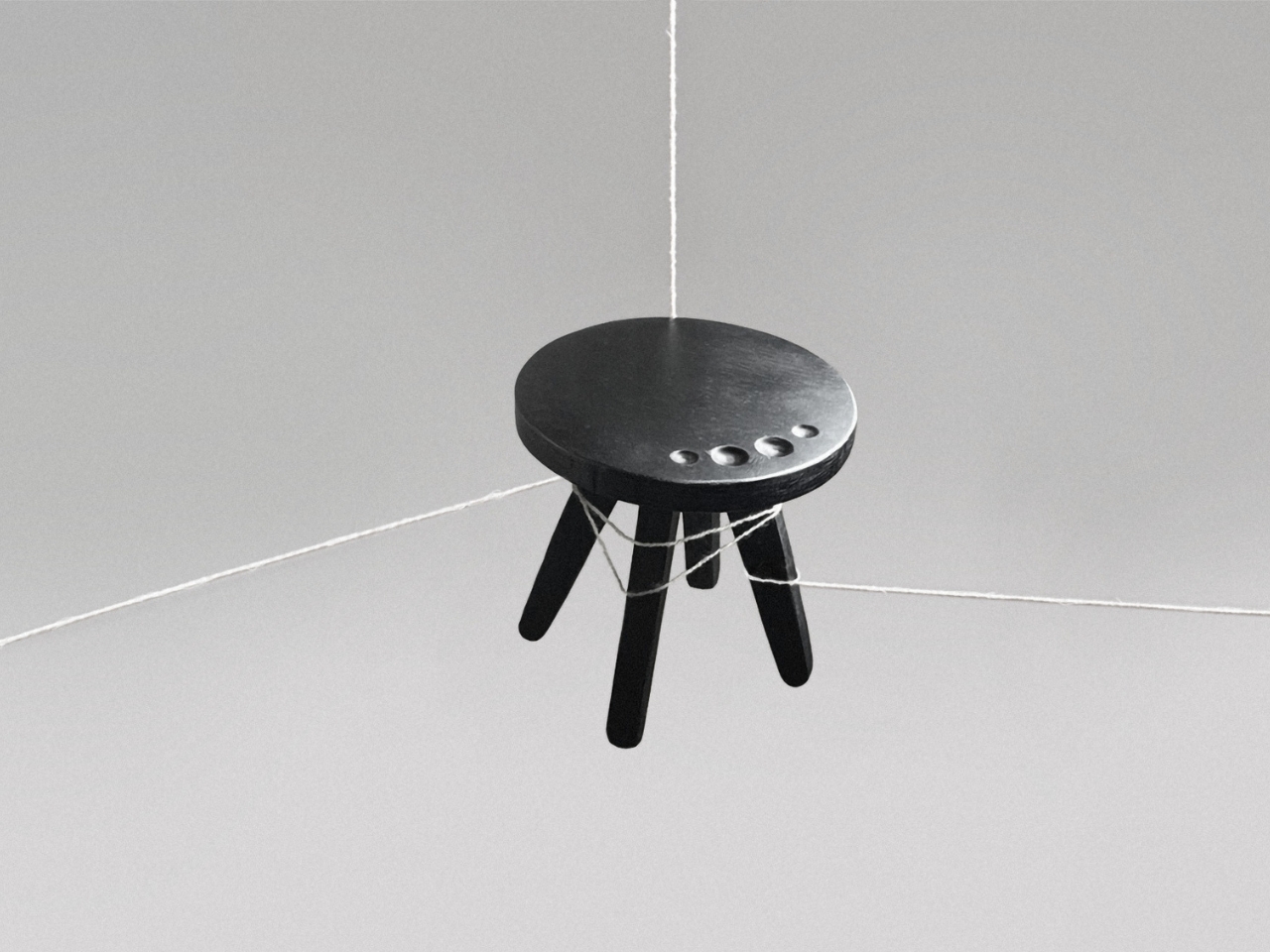
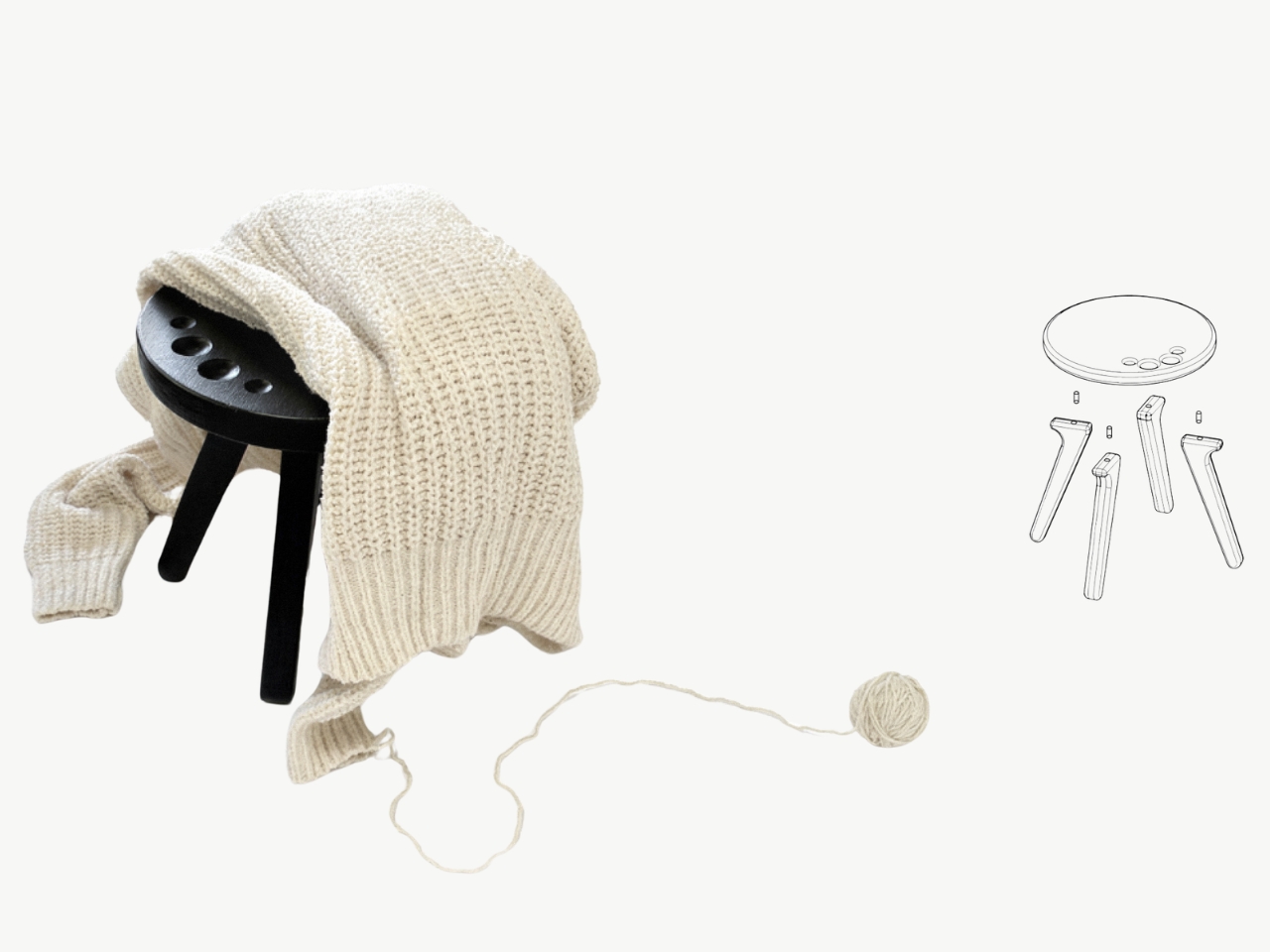
Tocaia means “ambush” in Brazilian Portuguese, which fits Auler’s description of a stool lying in wait between the bed and the bathroom. The project photos take that idea about as far as it can go: one shows the black stool dangling on a white thread above someone’s head. I prefer the shot where it’s under a cream sweater, with just enough of the seat showing for the eyes to peek out. A stool disappearing under yesterday’s clothes requires considerably less imagination than one descending from the ceiling.
The workshop shots bring it back down to earth. They show a round seat blank, legs laid out on the bench, and the recesses already cut into the bare wood. I appreciate seeing those holes before the black finish turns them into eyes. They make it clear how little Auler had to change about a familiar object to give it a personality. Even if you never see a spider, the larger dimples still tell you where to put your thumb.
That’s why I’d rather have the Tocaia by the front door than on a shelf as a conversation piece. The joke has a better chance of landing when someone actually reaches for the stool and discovers what the eyes are for. I’d still park it well clear of the route to the bathroom, though. A stool that looks like it’s waiting to trip you is funnier when it doesn’t get the chance.
The post first appeared on .
Related Posts