There are times when I really would want to try going to a gym but all those exercise equipment can be pretty intimidating. It also seems like the people there know how to use it and what they’re doing and there isn’t room for people like me who may make fools of themselves when trying them out. So when I saw this playground that seemingly has exercise equipment that look inviting, I wish there was something like that in my city.
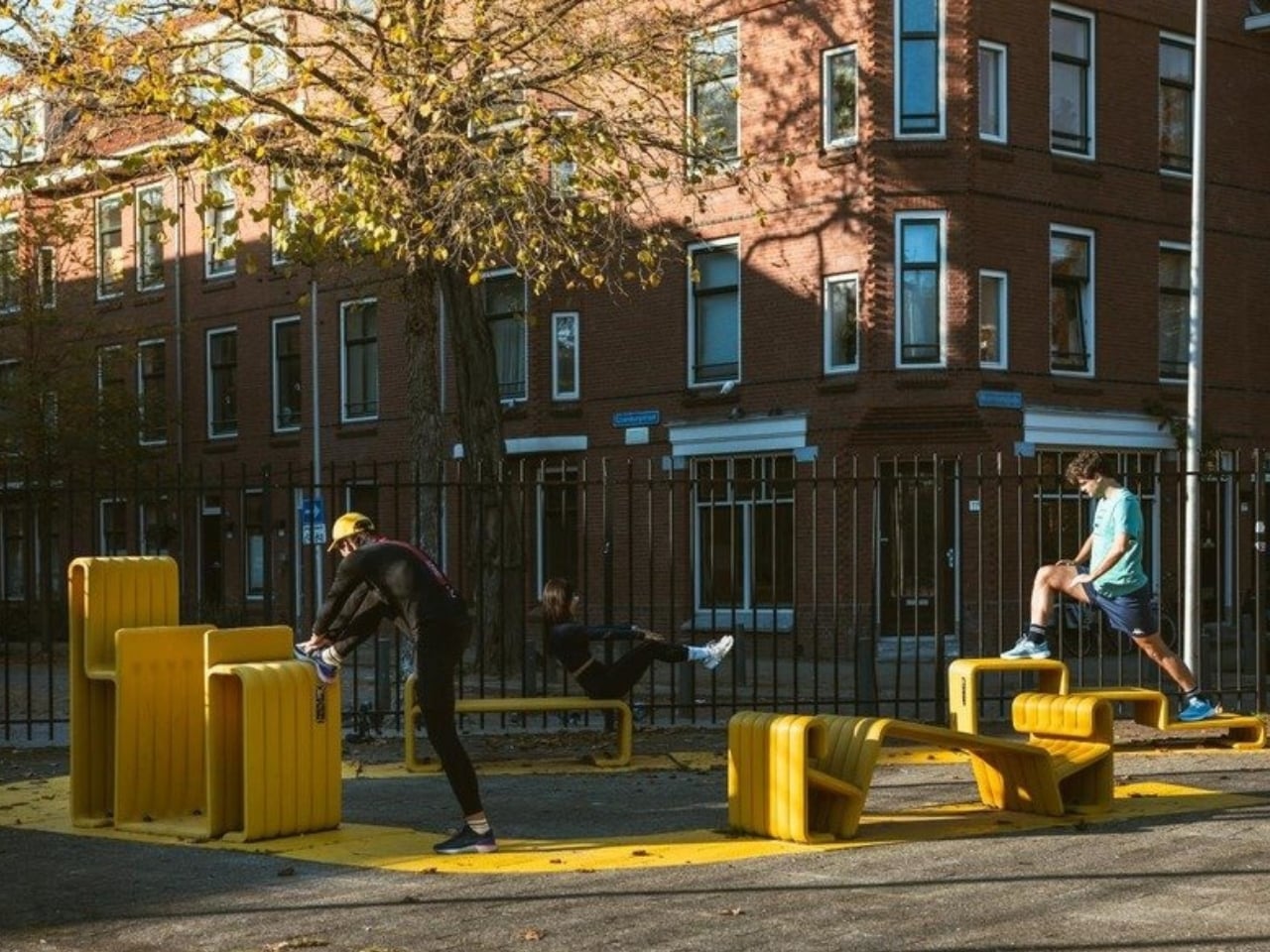
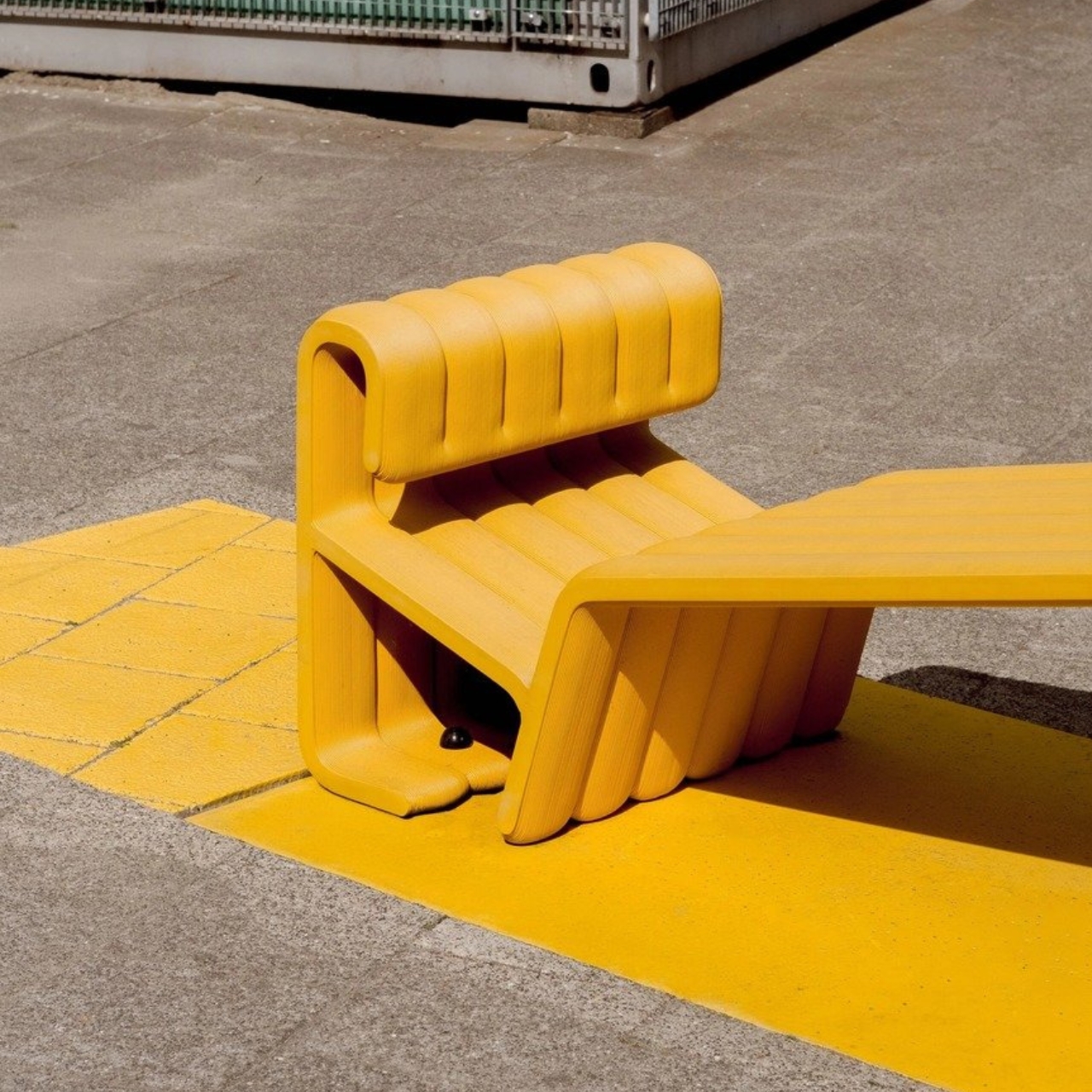
Gym Elements, a collection of public outdoor fitness objects by Rotterdam studio The New Raw, wants to give outdoor fitness a less technical appearance, using bright yellow sculptural shapes and soft curves to make the equipment feel more approachable. This was a project commissioned by the City of Rotterdam and developed in collaboration with Urban Ideals and Humankind. These are installed objects intended as permanent additions to public space and hopefully something that can be adapted to other public spaces as well.
Designer:
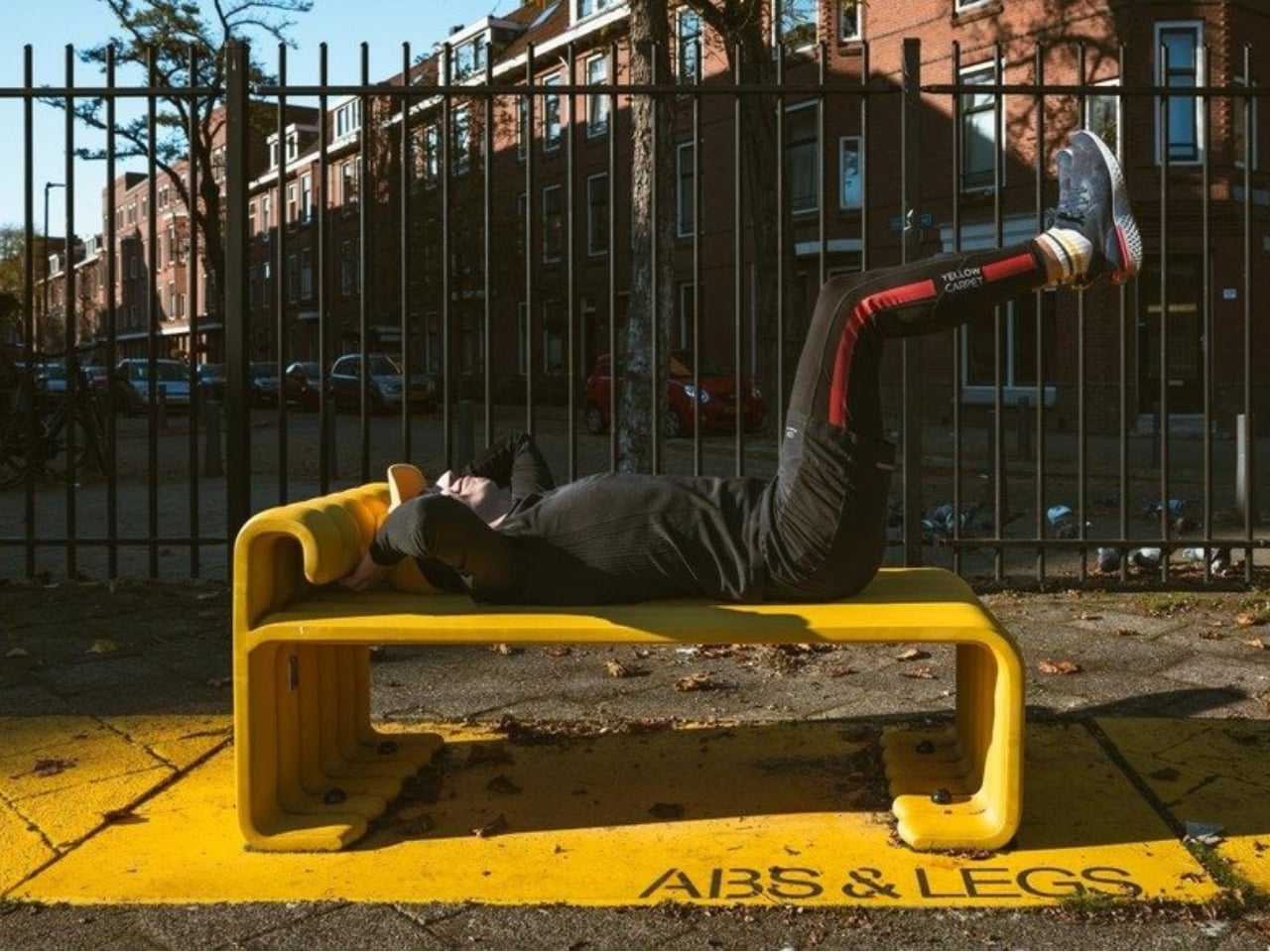
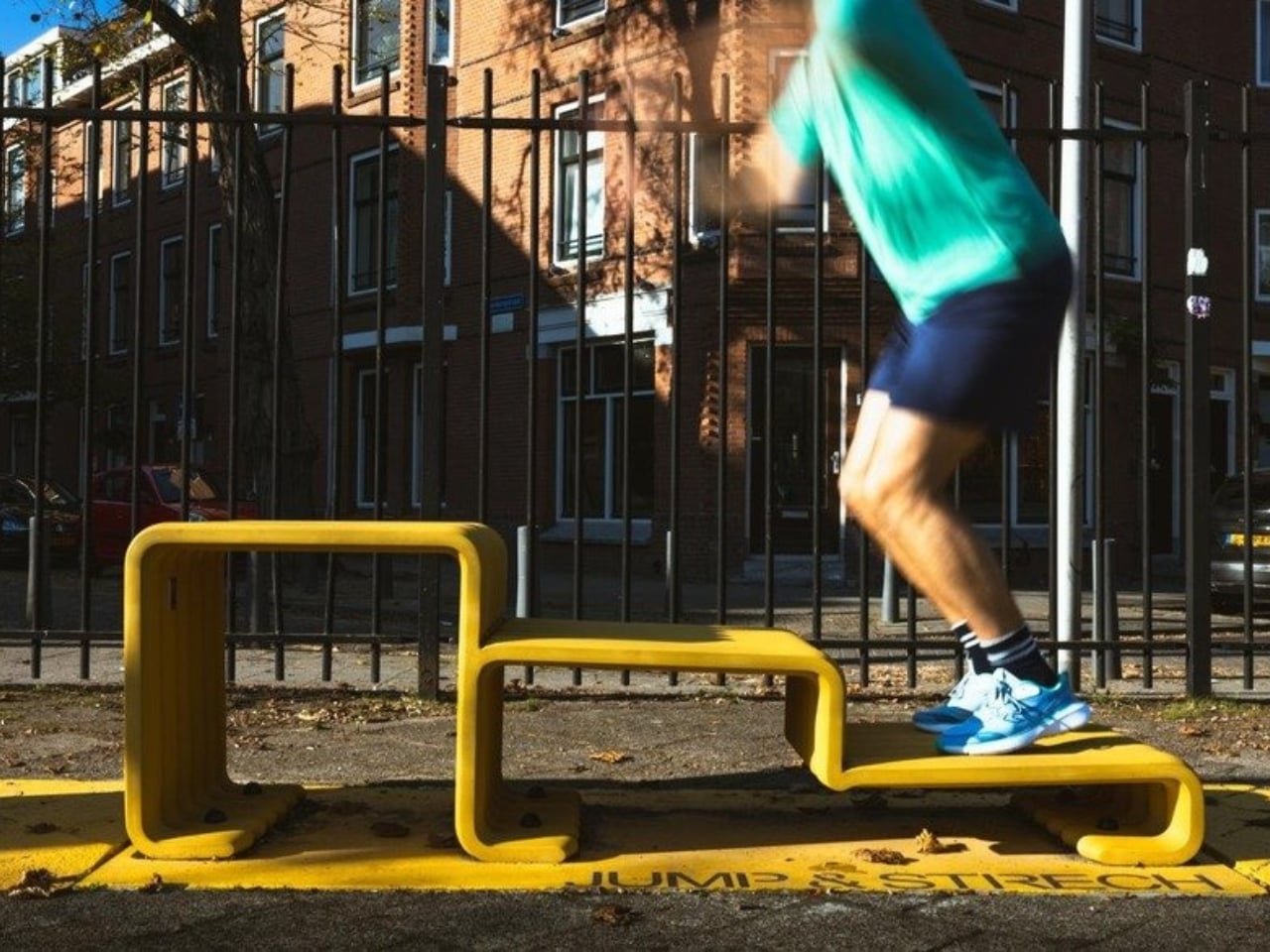
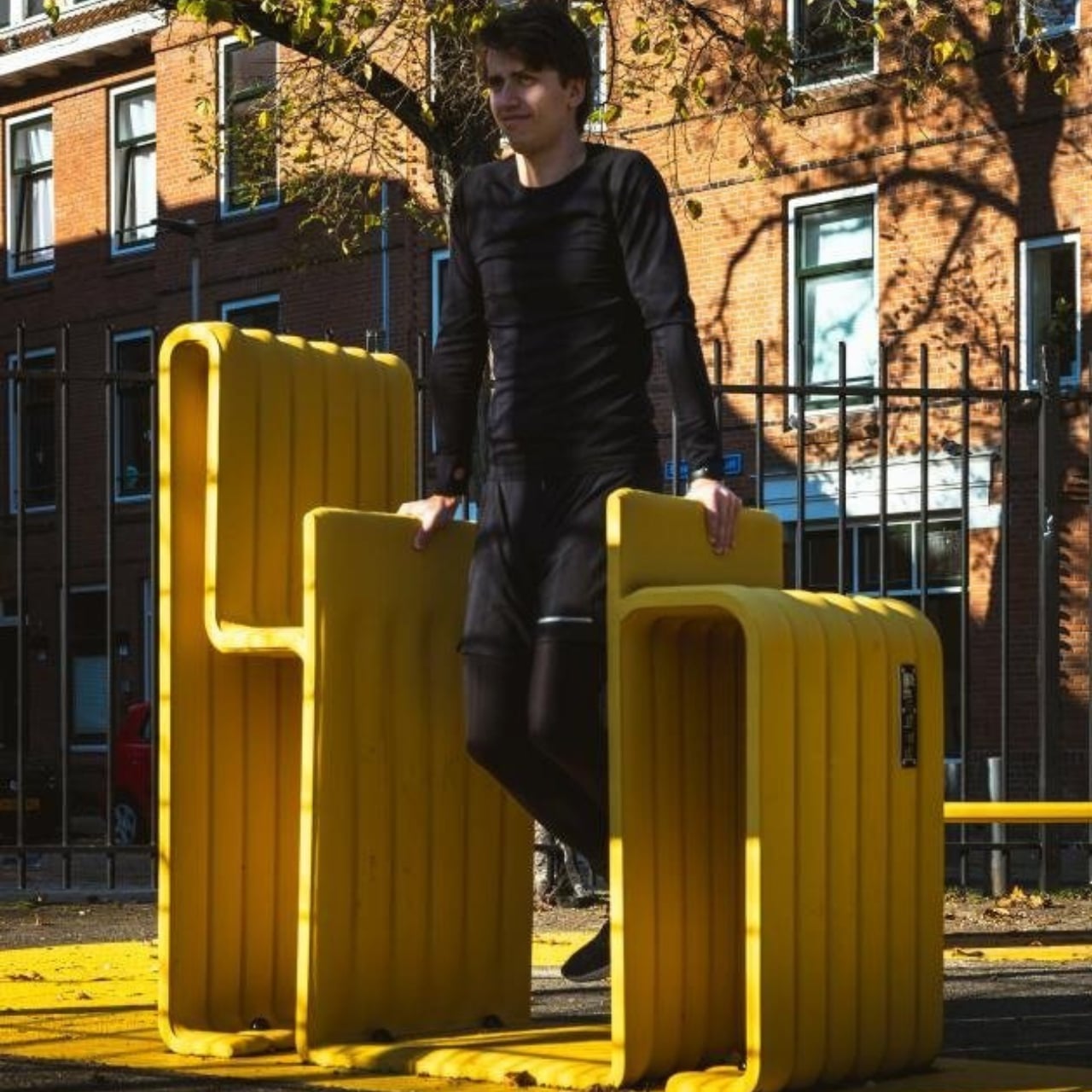
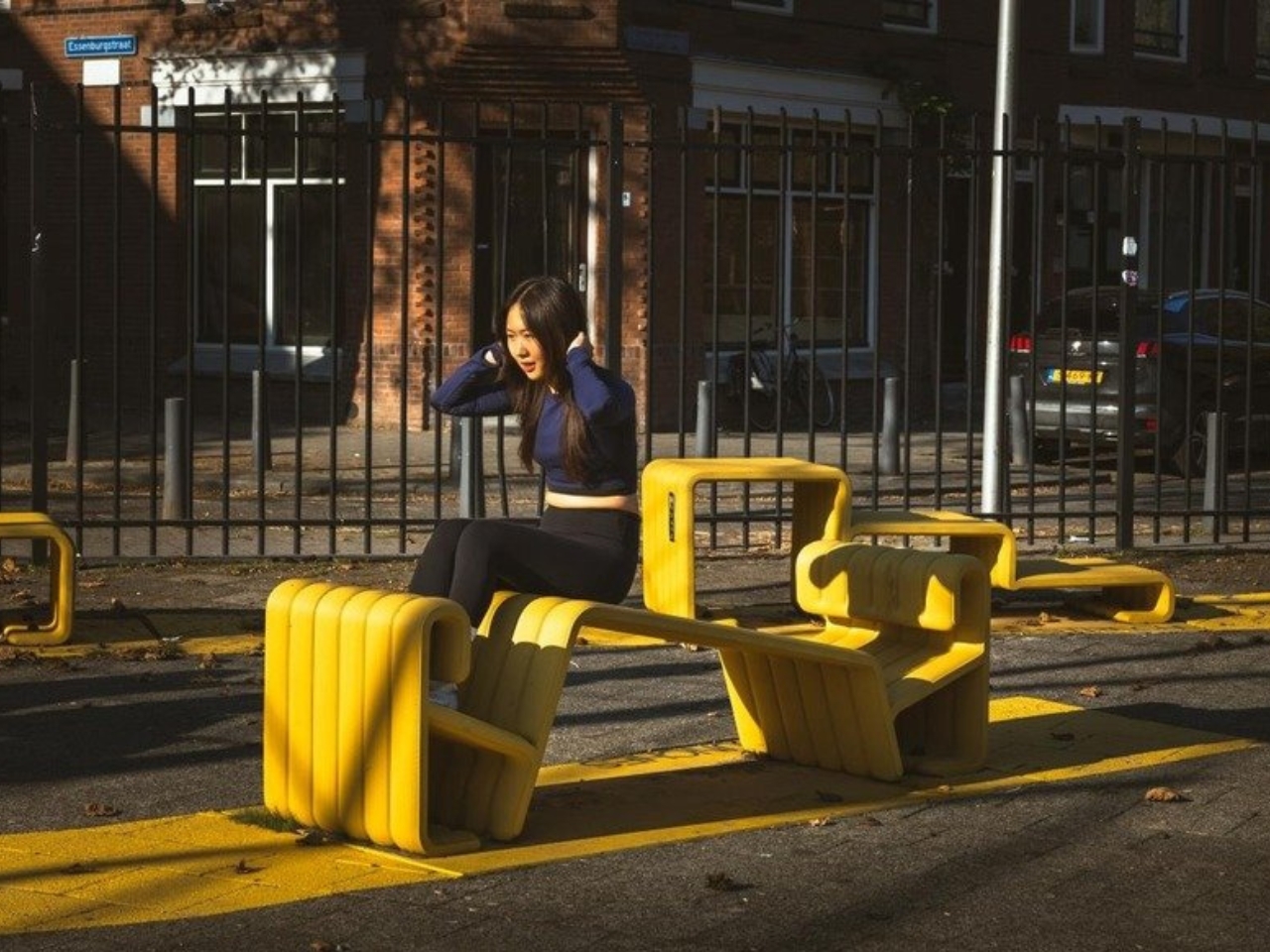
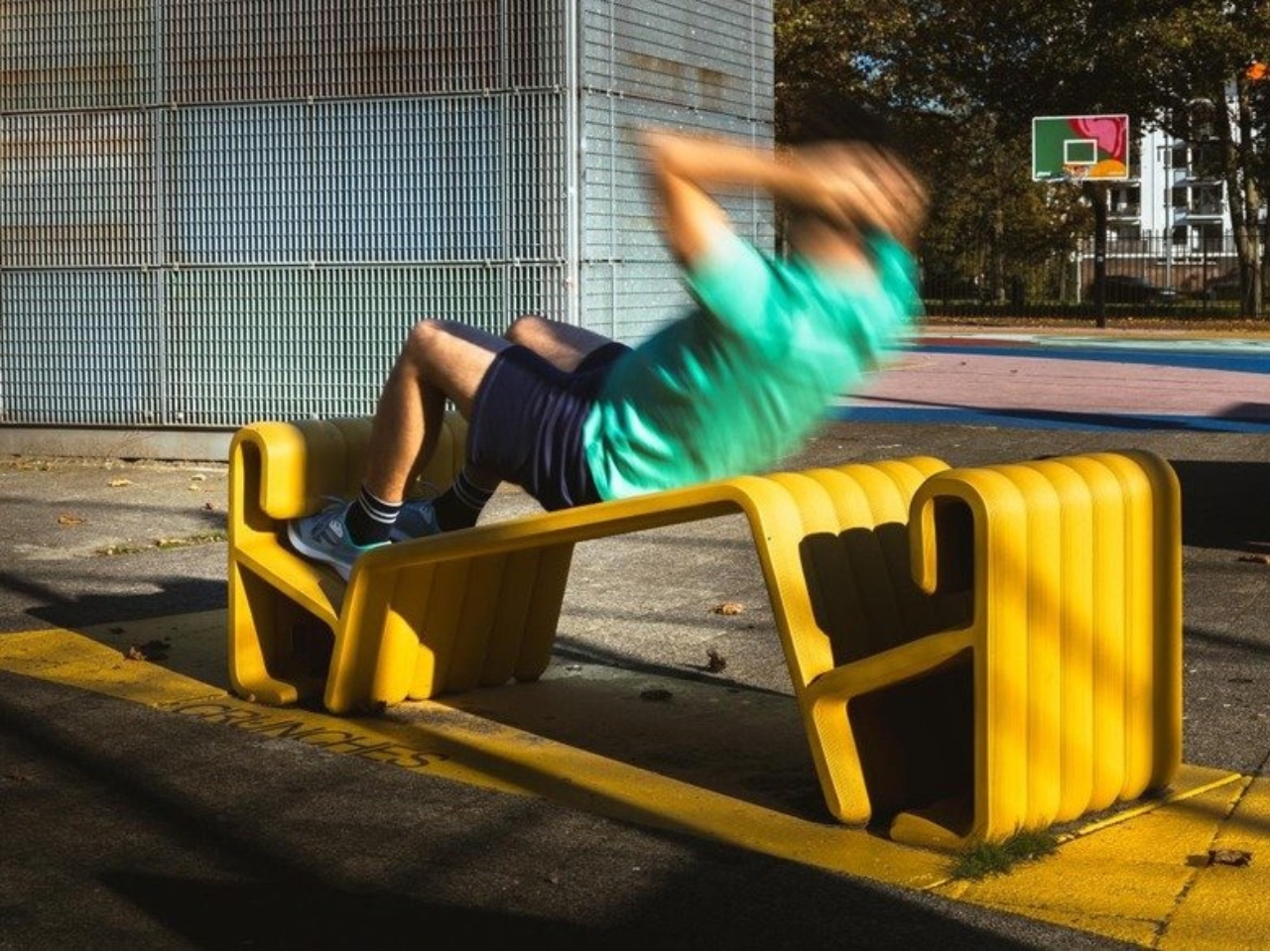
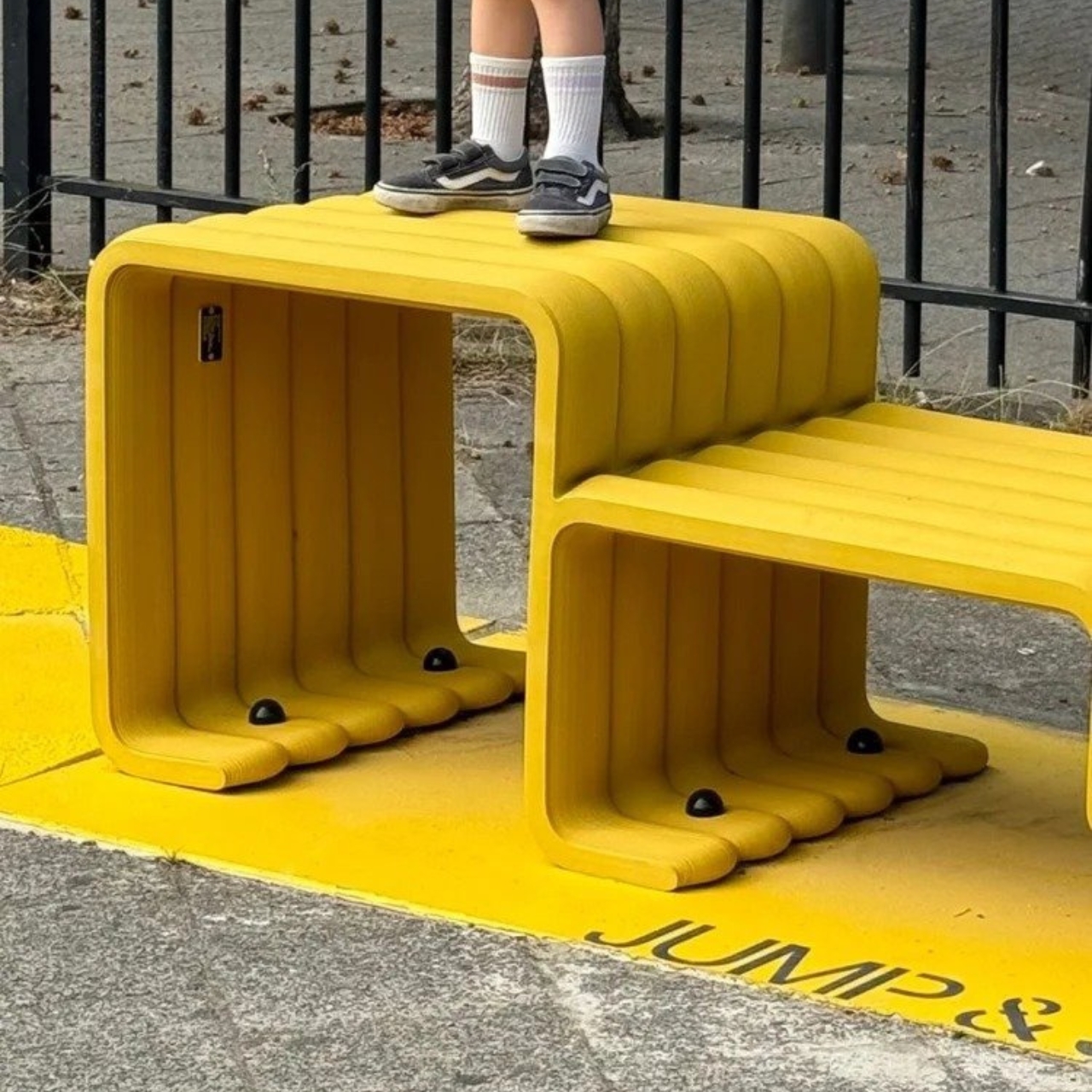
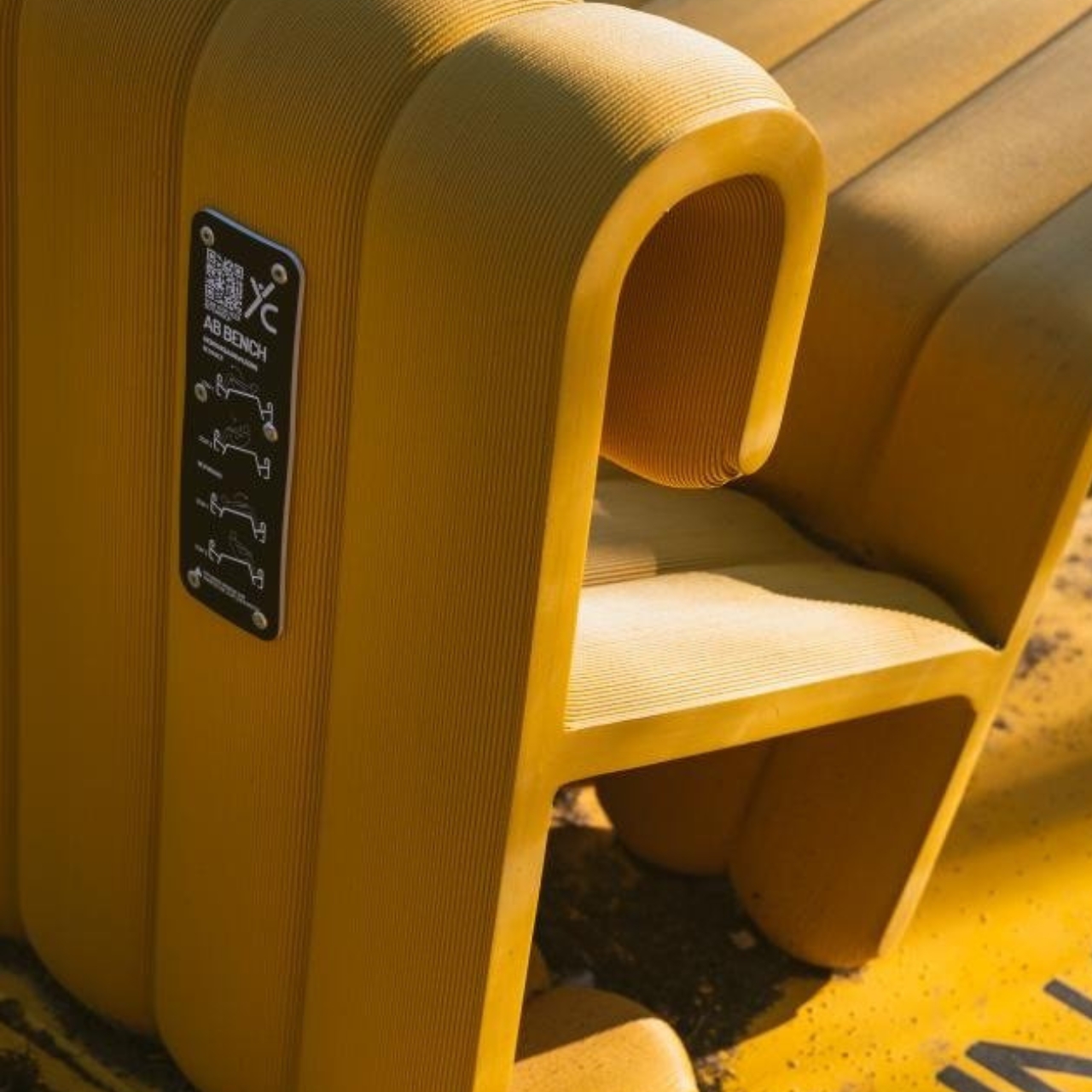
Visually, the collection has a pleasing chunkiness. Broad yellow surfaces fold into upright supports and stepped platforms, with generous curves wrapping around their corners. Fine lines from the printing process remain visible across the surfaces, while larger ribs give the pieces an almost upholstered appearance. I like that the material hasn’t been disguised as wood or polished into anonymity. The texture gives the objects character without requiring decorative flourishes that have nothing to do with their construction.
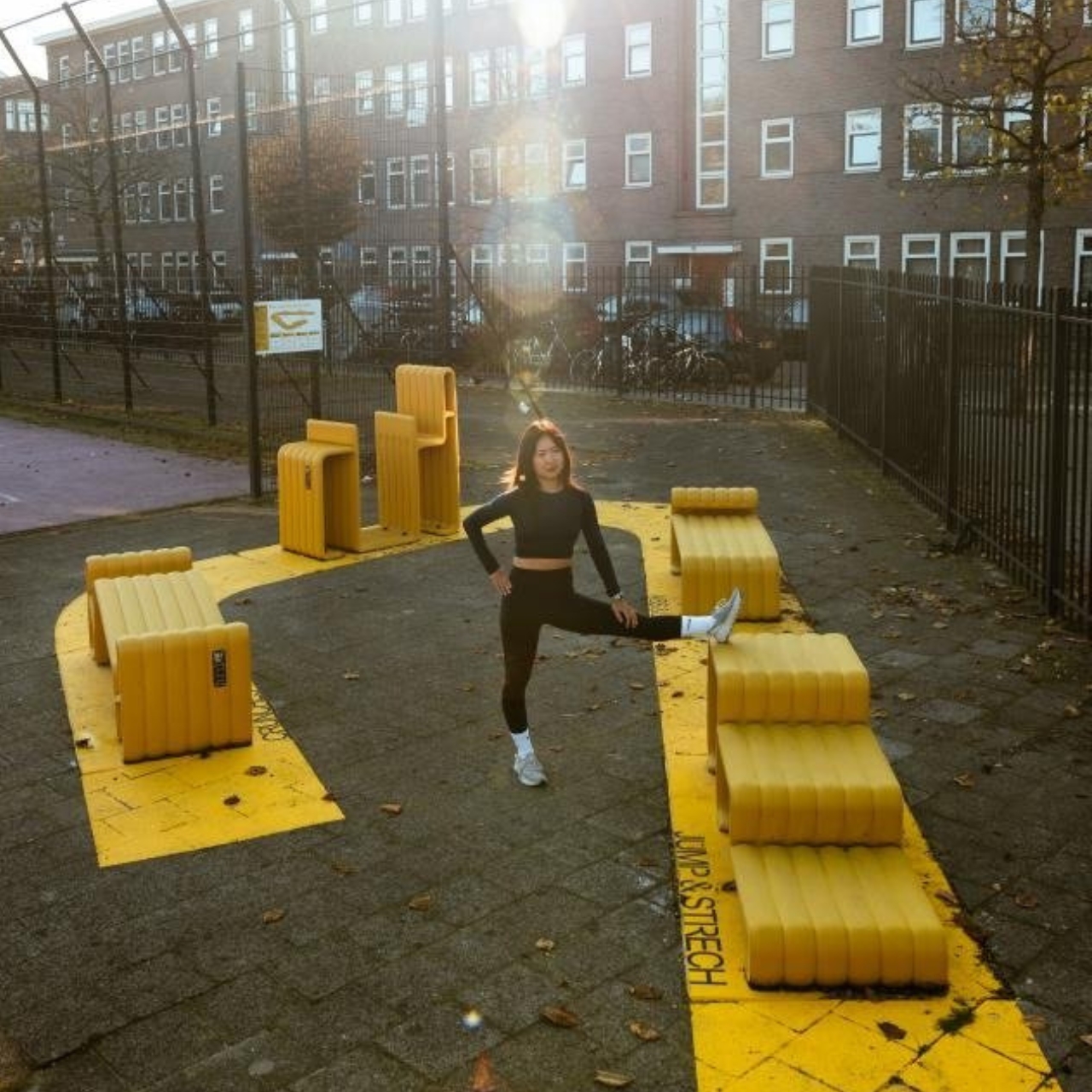
The project photography helps explain the approach. One person stretches with both palms against an upright element; elsewhere, a child stands on a broad raised platform. Those images suggest different relationships with the same design vocabulary, from deliberate exercise to playful exploration. To my eye, that flexibility is more interesting than making an outdoor version of a familiar gym machine. A useful public object should leave a little room for people to discover it on their own terms.
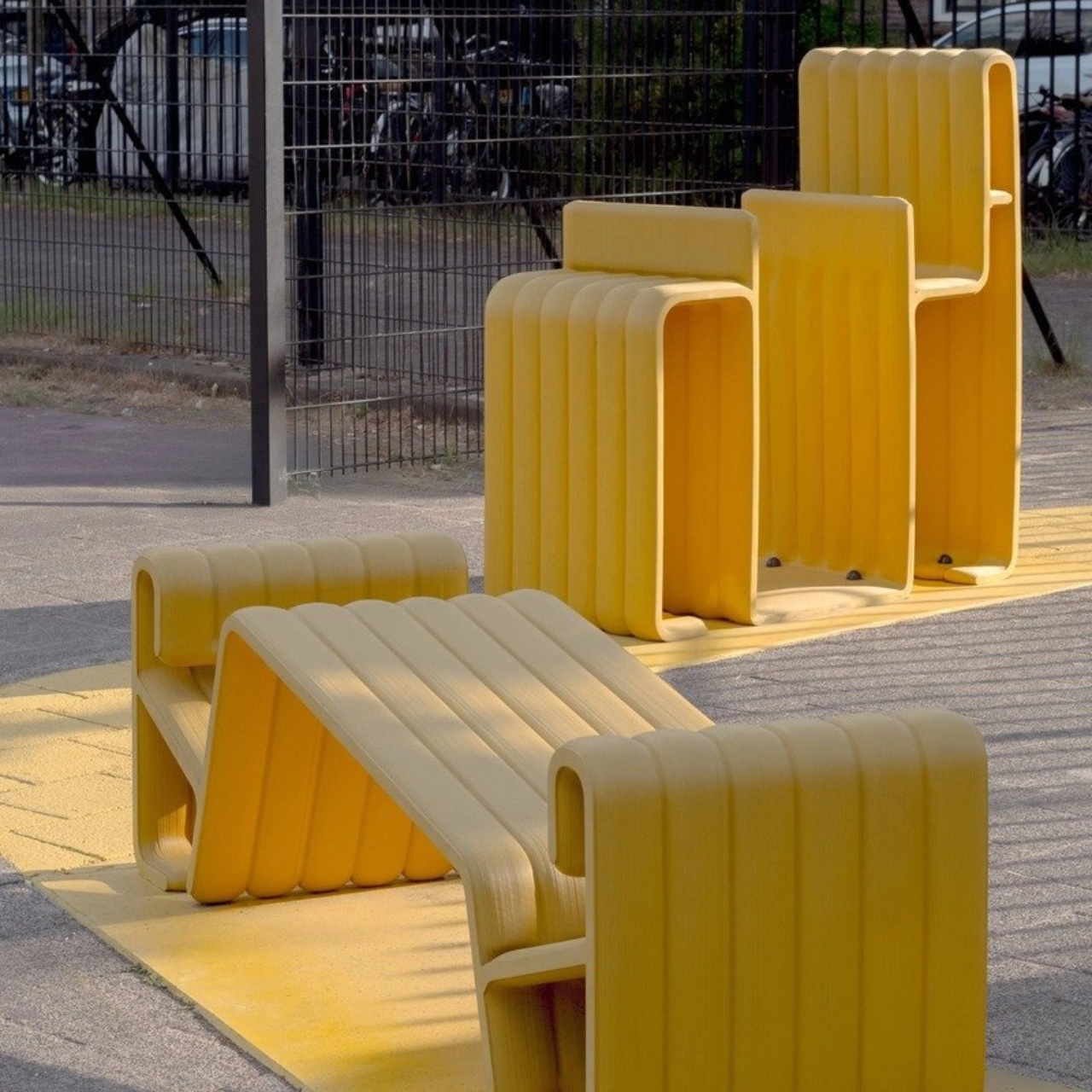
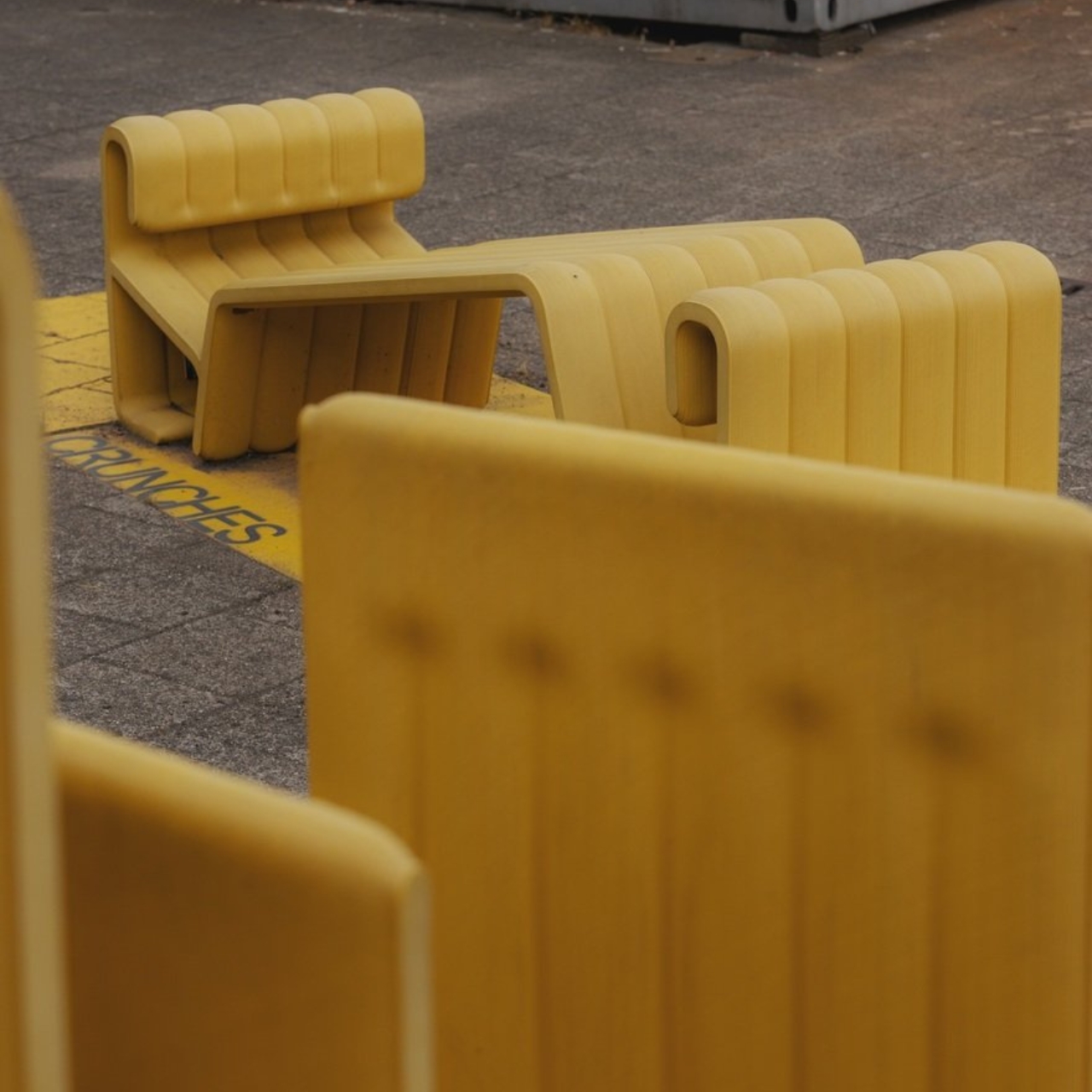
Location gives that idea some substance. Gym Elements was developed for Yellow Carpet, an initiative connecting existing and new outdoor fitness facilities through a five-kilometer walking and running route, roughly 3.1 miles. Putting exercise stations along a neighborhood loop makes a different proposition from gathering everything behind a gym entrance. People can do a few stretches or add some exercises in the middle of their walk or while hanging out at the park without necessarily scheduling an exercise routine every day.
What material is used to create these equipment is also worth paying attention to. The plastic is made from recycled polypropylene and reports using 480 kilograms, about 1,058 pounds, of recycled material for the project. Recycled content earns more of my attention when it becomes something useful enough to keep around. Making discarded plastic part of a neighborhood infrastructure seems pretty useful and interesting.
The New Raw’s broader production approach also matters. The studio says its products use single-material construction and avoid adhesives, coatings, and complicated material combinations so they can be repaired and reprocessed. It also reuses misprints and production leftovers. Those choices give the recycling story more credibility than recycled content alone, at least as a design strategy. Actual circularity still requires someone to collect and process an object when its working life ends. A recyclable object needs a practical route back.
Public use brings less glamorous responsibilities, too. The studio’s maintenance guidance acknowledges that layered printed surfaces can collect dust and particles, and that outdoor colors may gradually fade despite UV stabilizers. Regular cleaning remains part of the deal. I appreciate those details because attractive public infrastructure needs a maintenance plan as much as a compelling photograph. Bright yellow might catch your attention on day one; keeping the surfaces inviting several years later is another design consideration altogether.
For me, the strongest idea here is allowing exercise equipment to contribute something visually even when nobody is exercising. A neighborhood shouldn’t have to choose between useful fitness infrastructure and objects it enjoys looking at. Gym Elements makes a persuasive case for asking both of the same piece. The real payoff would be a passerby feeling comfortable enough to stop, put down a bag, and give it a try.
The post first appeared on .
Related Posts