“When everything we know becomes strange (reactivated outlines) terracotta/candy” (2023). Photo by Øystein Thorvaldsen. All images © John K. Raustein, shared with permission
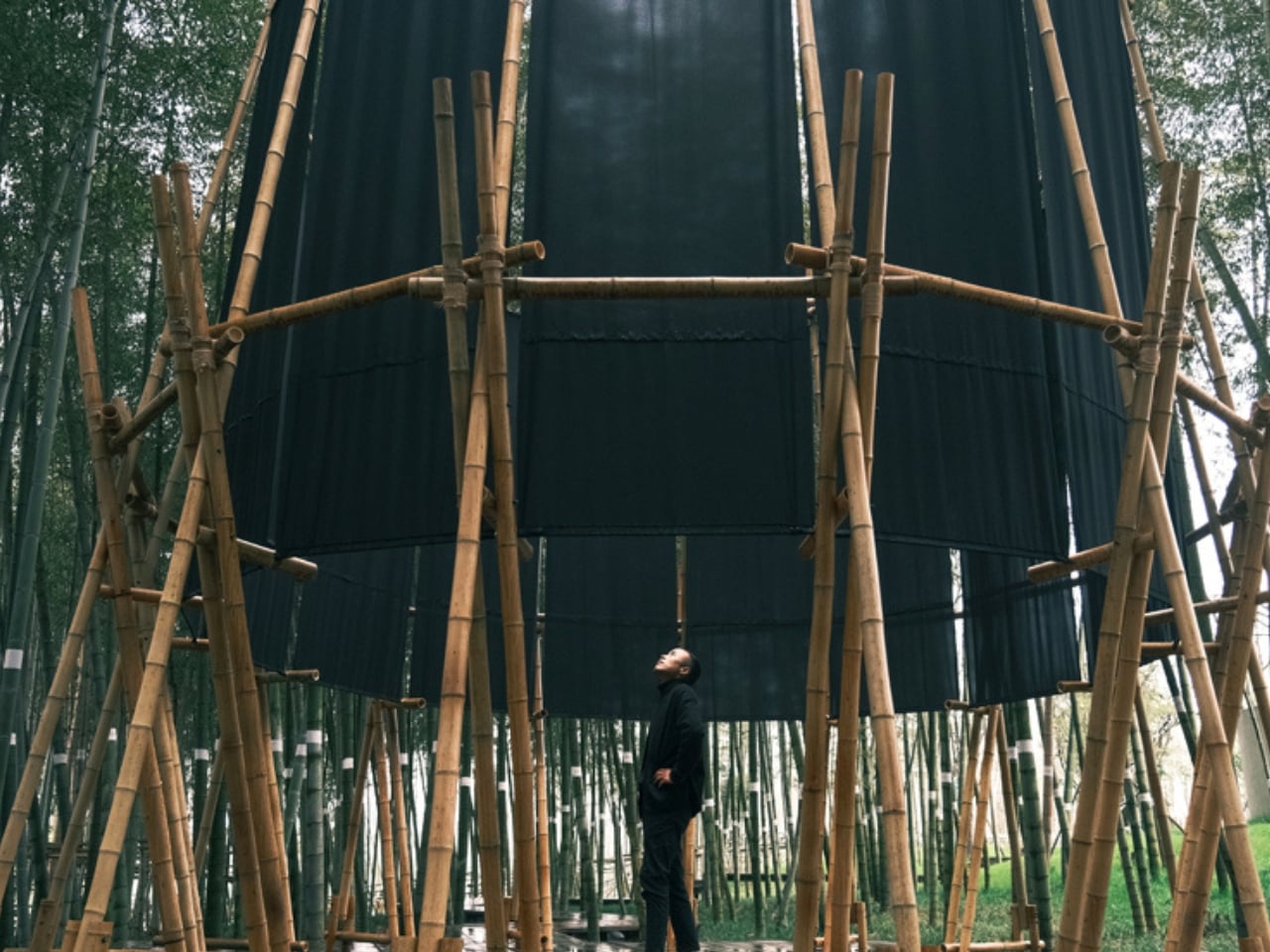
What’s the smell of terracotta? Of mauve? Artist invites these questions about his architectural sculptures and installations covered in monochromatic textiles. Using a singular color emphasizes the diverse textures and physical qualities of his works and asks viewers to consider how such hues would unconventionally engage the senses. “I often draw on memories from my own childhood, seeking to evoke sensations, colors, sounds, smells, and places to visualize a bodily sense of existential uneasiness,” he shares.
From his studio in Oslo, Raustein builds large-scale constructions that create immersive, abstract environments. He blends rigid frames with soft, pliable cotton, the latter of which cloaks the skeletal components and appears as bulging sacks, weavings, and strips dangling from upper poles. The idea is to “challenge traditional notions of space and structure,” he says. “Existential dread remains a significant theme in my work, reflecting contemporary societal issues like climate change and social inequality. My installations create spaces for contemplation and connection.”

“Facilitated truths (the new world)” (2022), Nitja Centre for Contemporary Art. Photo by Kunstdok /Tor S Ulstein/ Nitja Centre for Contemporary Art
Raustein is also interested in longstanding textiles traditions, including ties to invisible labor, gender roles, queer culture, and environmental impact. He sources materials from local and sustainable producers and gravitates toward fabric with a history.
For example, silver cloth appears in a forthcoming exhibition at because of its link to healing and magic, particularly during Medieval times. The exhibition, titled Mitt Stavanger, honors the 900th birthday of the artist’s hometown and looks back at its difficult moments, particularly when the bubonic plague decimated the city. He adds:
I have created a room where the walls are covered with textiles embroidered with symbols from the Primstav, (a wooden Norwegian runic calendar) and represent Syftesok (St. Swithun’s wake, 2 July), a day significant to Stavanger’s patron saint, St. Swithun. The room also features display cases filled with textile sculptures in silver, inspired by lucky charms and talismans. These ‘textile amulets’ carry the sheen and aesthetics of silver, embodying a belief in magic and protection against disease, death, and evil forces.
Mitt Stavanger opens on June 20. Raustein is currently working on a monograph to be released in the fall, and you can follow news about both on .

“When everything we know becomes strange (tomorrow everything repeated itself again) / primrose” (2023). Phot by Øystein Thorvaldsen

“Facilitated truths (the new world)” (2022), installation view at Nitja Centre for Contemporary Art. Photo by Kunstdok/Tor S Ulstein/ Nitja Centre for Contemporary Art

“When everything we know becomes strange (controversial decisions)” (2023), installation view at Sølvberget Gallery, Stavanger. Photo by Øystein Thorvaldsen

“Facilitated truths (the new world)” (2022), Nitja Centre for Contemporary Art. Photo by Kunstdok /Tor S Ulstein/ Nitja Centre for Contemporary Art

“When everything we know becomes strange (reactivated outlines) terracotta/candy” (2023). Photo by Øystein Thorvaldsen

“When everything we know becomes strange (controversial decisions),” (2023), installation view at Sølvberget Gallery, Stavanger
Do stories and artists like this matter to you? Become a today and support independent arts publishing for as little as $5 per month. The article appeared first on .
Related Posts