Architectus collaborated with global law firm Ashurst, to deliver the firm’s new Sydney workplace at 39 Martin Place – a bold reimagining of the legal workplace for a hybrid, agile future.
Ashurst’s new Sydney office is a workplace designed with flexibility, sustainability and collaboration at the forefront. The office embodies Ashurst’s core values: championing innovation to outpace change and creating a dynamic and agile environment. Architectus has crafted an integrated design that supports high performance, enhances well-being, and creates a vibrant, future-ready environment for the firm.
A future-focused vision
At the core of the project is a commitment to redefining the purpose of a legal workplace in a hybrid world. The design responds to lessons from the pandemic, translating reactive remote work solutions into a thoughtful, flexible planning, and a purpose-driven workplace strategy.
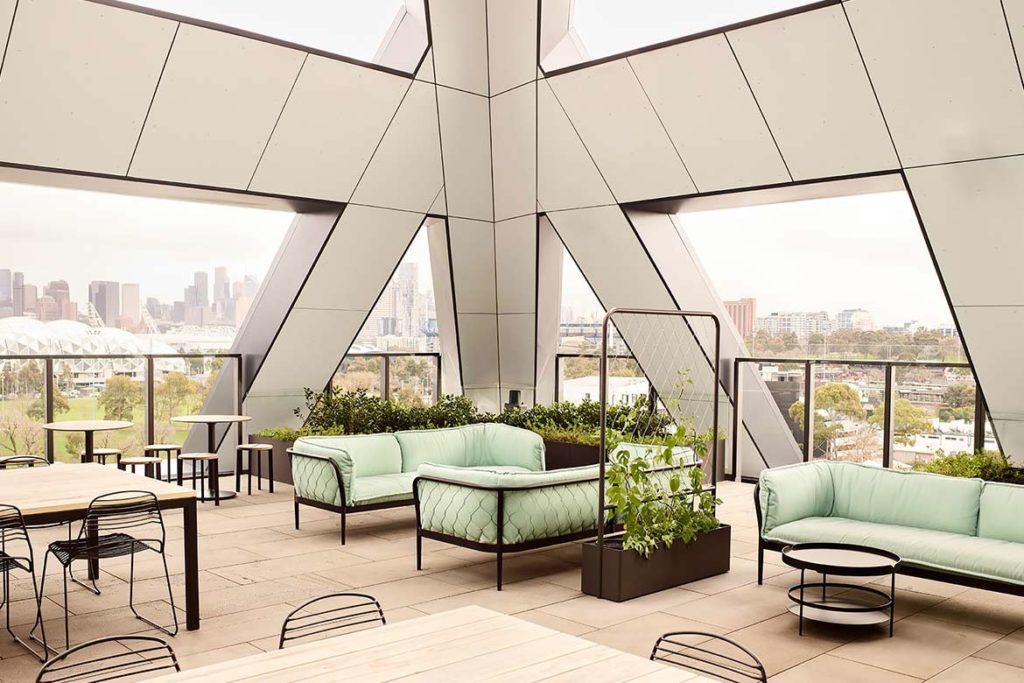
Spanning 10,000 square metres across eight podium levels and crowned by an outdoor terrace overlooking Martin Place, Ashurst’s Sydney office is the firm’s second-largest workplace globally after its London headquarters. The new environment breaks from traditional legal office design, embracing an agile, activity-based model. It features diverse collaborative zones, focused work areas, meeting and mediation suites, adaptable training rooms, and team-specific spaces—catering to the dynamic needs of a modern legal workforce.
Key workplace innovations include:
• Adaptable Workfloors: A modular planning system ensures ultimate flexibility and efficiency, while offering future reconfigurability.
• Optimised Space Sharing: Deep analysis through a rigorous workplace strategy uncovered optimal sharing ratios, allowing Ashurst to flex into a broader suite of spaces and space types, available to all.
• Innovative Collaborative Spaces: Level 04 features a collaborative work floor, designed for agile, seamless teamwork, a novel approach for a law firm embracing collaborative workstyles.
• Wellness through Hospitality: Premium amenities create a vibrant hub with a dedicated café floor and terrace, fostering well-being and professional excellence.
• Storage and joinery reduction: The design responded to a firm-wide mandate to reduce paper-based storage by centralising a single joinery spine on all floors to be shared across all neighbourhoods. Limited local storage zones support agile workstyles, ensuring shared spaces.
Engaging people, place, and purpose
A highly consultative design process engaged Ashurst’s people through workshops, interviews, and planning sessions—ensuring the workplace serves diverse needs across practice groups. This inclusivity has created an environment where teams come together purposefully, supported by intelligent spatial planning and seamless digital infrastructure.
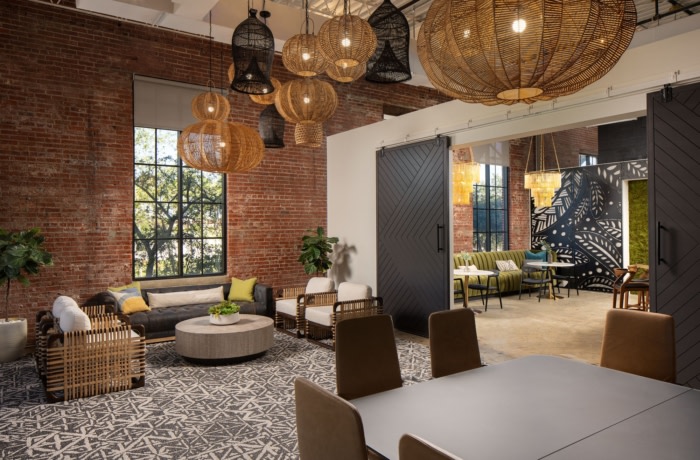
The interior scheme balances professionalism with warmth and vibrancy. Natural materials—including timber and stone in warm terracotta tones—create a sense of welcome and authenticity. Sculptural green stairs connect all work floors through the stack, with each work floor punctuated with a social hub supporting the firm’s dynamic culture and bold brand identity.
Sustainability is embedded throughout the project with limited over cladding and locally sourced materials alongside robust strategies optimising natural light, air quality and reduced water consumption, contributing to both carbon reduction and employee wellbeing. The building is 100% powered by renewable energy sources and has achieved a 6 Star Green Star rating and a 5.5 Star NABERS Energy rating.
This transformative project serves as a prototype for Ashurst’s future workplaces worldwide. It is not just a new office—it’s a strategic and cultural shift. It demonstrates how law firms can evolve to embrace agility, sustainability, and employee wellbeing without compromising on excellence. It’s about a democratising of space.
With direct links to Martin Place Train and Metro Stations, the office is uniquely placed at the intersection of business, culture, and civic life.
Design:
Photography: Nicole England
The post appeared first on .
Related Posts