With their emerging nestled into Balam Balam Place in Brunswick, three-year-old architecture practice CARD believes in being three very important things: authentic, responsive and . Driven by architects Jimi Connor and Tahj Rosmarin, the duo focus on improving the everyday practice of people’s lives through a genuine, down-to-earth approach to .
The pairing of Rosmarin and Connor seems quite organic. Having worked together through , the long-time friends have also played music together for many years. “Tahj is great at conceptualising – coming up with new ideas, new ways of approaching something [and] thinking about things at a broader scale,” explains Connor. “I think I approach things with a more practical lens – how would this be built, how do these come together, how do we make this a reality?”
Like many emerging architects, Connor also shares how, prior to working together on CARD, being employed by different architecture offices often made it “difficult to explore ideas beyond the established processes and design philosophies of [those] offices.” CARD was really born out of “creating the opportunity to experiment, refine our thinking and build a centred on the kind of we both like and believe in,” he says. Together, the duo form the classic pairing of complementary and balanced designers.
With both designers having established roots in , they recognise that they share a common language. “We developed a shared appreciation of simple architecture: robust, interactive and appropriate,” says Connor. Quintessentially Queensland, Kenmore Pavilion was a crystallisation of some of CARD’s emerging core ideas. “It works with the , rather than excluding it,” shares Connor.
Related:
The revitalised post-war bungalow reuses what it can and breathes new life into the existing structure. “Architecture in Queensland is so responsive to its environment and context,” says Rosmarin. “If you look at the Queenslander, there aren’t many superfluous or unnecessary details added, and everything is serving a real purpose.” For Kenmore Pavilion, the designers looked to ’s and outdoor lifestyle, adding a new weather-protected space that extends the home’s footprint, doubling its living area.
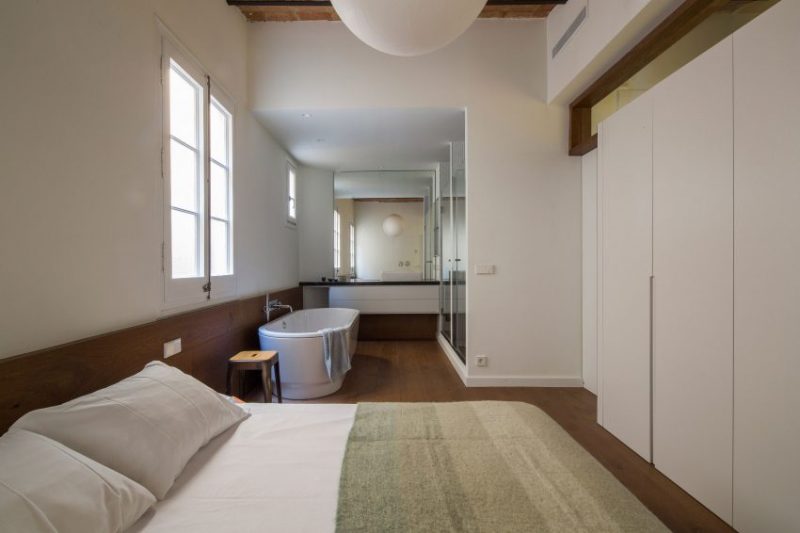
Their earlier project, North Melbourne Apartment, is home to co-director Rosmarin and his partner. The small but smart prioritised small furniture interventions and creative use over extensive demolition, drawing on some of CARD’s key philosophies. “I had a very real budget and some very real constraints,” says Rosmarin.
The apartment used paint as a cost-effective method of creating spatial separation between zones, and integrated built-in furniture as a means to free up remaining floor areas for flexibility. Several existing elements were also upgraded to extend their lifespan through the specification of low-carbon, VOC-friendly products. The project as a whole “offers a replicable model for upgrading Melbourne’s ageing apartment stock,” shares Rosmarin, noting how “its emphasis on adaptability, resourcefulness, and thoughtful design over demolition reflects a progressive and sustainable approach” that can be adopted by various future projects.
Aiming for robust and maintainable projects that can last a lifetime, CARD embeds smart gestures into each of its projects. “We take a lot of care in selecting materials, both for their sustainability credentials and their overall lifespan,” shares Connor, noting this is largely because “we want our projects to still feel nice as they age.” This includes materials that deliberately wear over time, such as timber that is often used in exposed structures including rafters or battens.
Rosmarin adds that much of their material approach “was developed in response to seeing buildings that haven’t considered this; all buildings require maintenance, so we aren’t saying that we can design it out, but it is something that we do consider a lot.”
Achieving authenticity through simplicity, CARD’s approach to materials and form is uniquely direct. “We are not interested in formal gestures or over-the-top expressions,” say the designers. “Our architecture is pragmatic and poetic; robust and maintainable, without the need for superfluous additions.”
As construction costs rise in Australia, CARD is currently looking to explore prefabricated elements in upcoming projects. “We see a lot of value in economising construction where we can, and we are exploring this with a few builders,” says Rosmarin.
CARD
The post appeared first on .
Related Posts