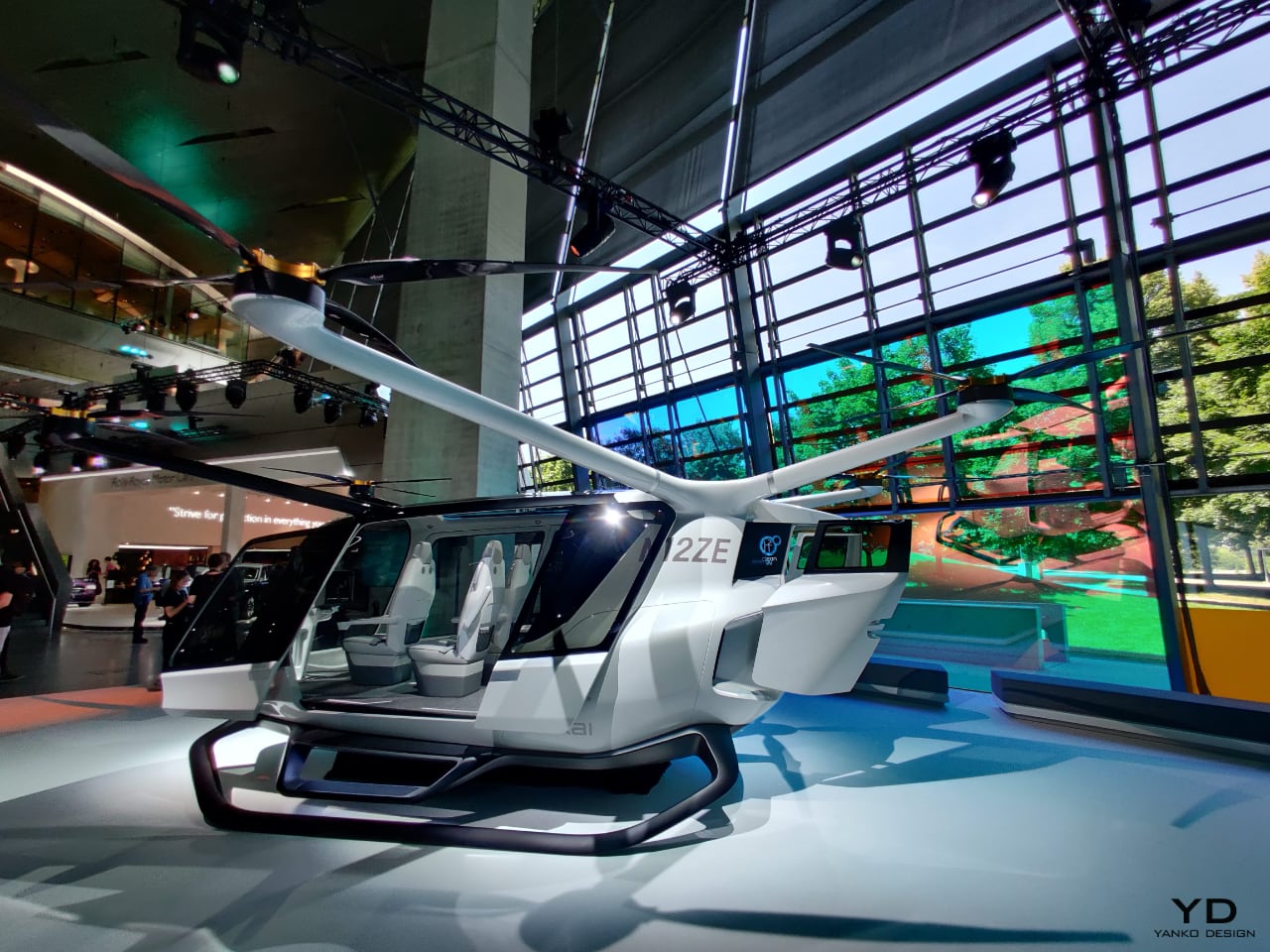
Skai represents a bold reimagination of urban and regional air mobility. Designed as an electric vertical takeoff and landing (eVTOL) vehicle, it integrates advanced hydrogen fuel cell technology with a streamlined, functional design to create an efficient transportation solution. Unlike traditional helicopters that rely on noisy, fuel-guzzling engines or battery-powered drones constrained by limited range and long charging times, Skai provides a cleaner, more efficient alternative. Its hydrogen fuel cells enable flights up to 400 miles per charge with zero emissions, producing only water vapor and heat as byproducts. This makes it an environmentally responsible choice for passenger transport, cargo delivery, medical evacuations, and disaster relief.
Designer: BMW Designworks
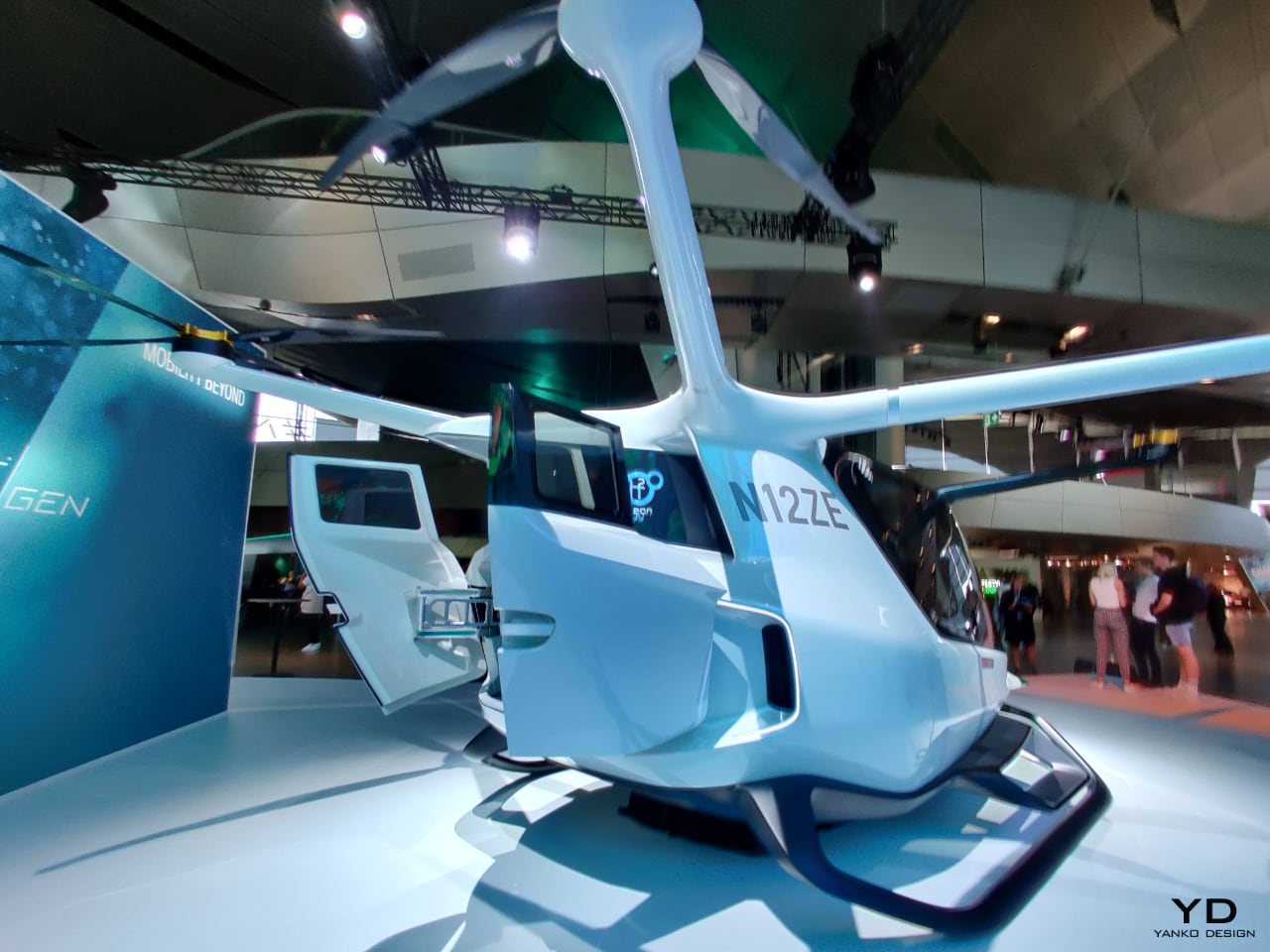
BMW Designworks played a crucial role in shaping Skai’s appearance and passenger experience. The exterior maintains aerodynamic efficiency while emphasizing visual appeal. Inside, the cabin is spacious and adaptable, accommodating up to five passengers or supporting 1,000 pounds of cargo. Its versatility makes it ideal for both personal and commercial applications. Whether bypassing traffic as an air taxi or providing emergency relief in hard-to-reach areas, Skai aligns with modern urban demands while prioritizing sustainability.
Skai
Built for Safety
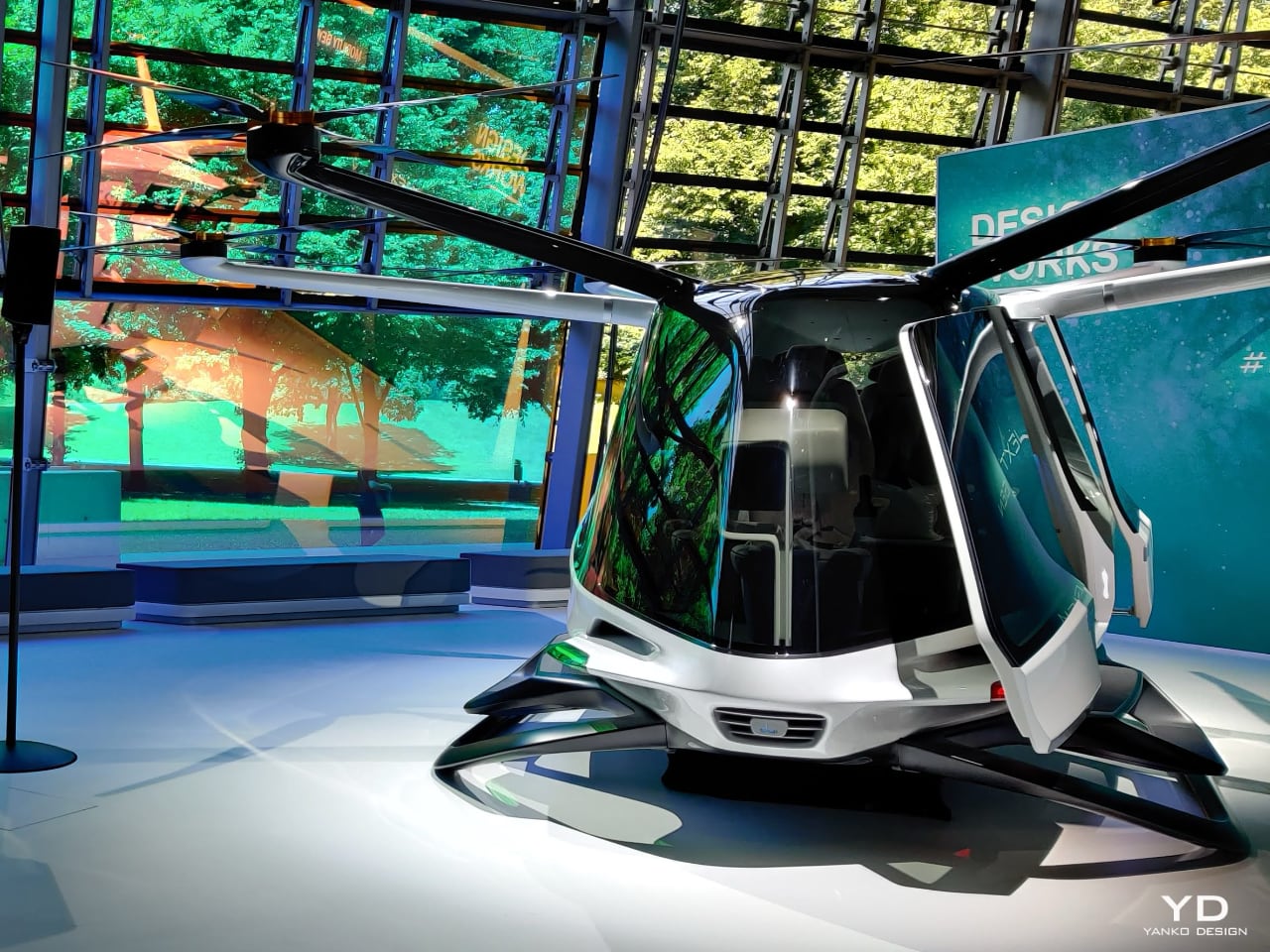
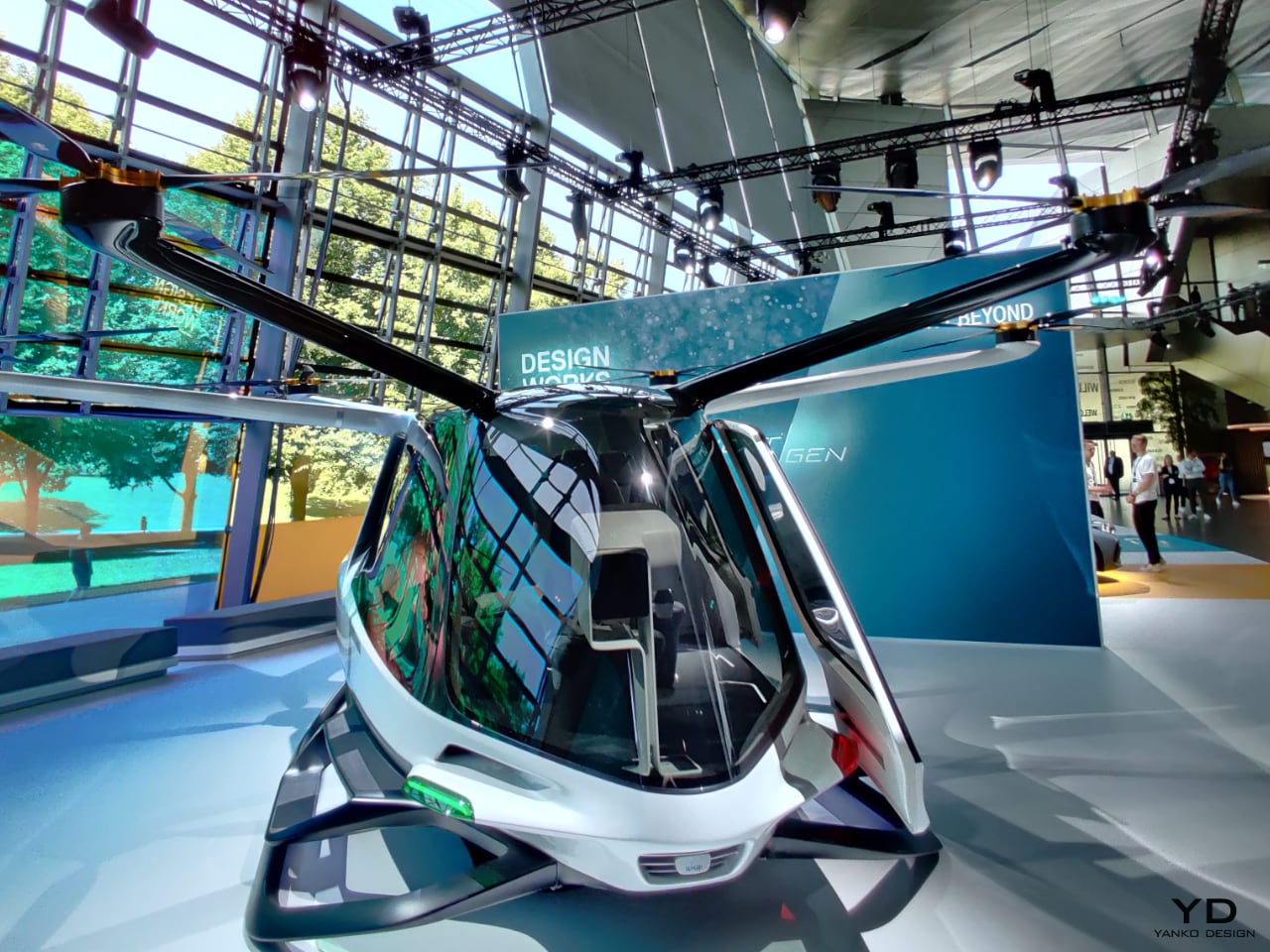
Safety is central to Skai’s design, making it well-suited for urban air travel where reliability is essential. The aircraft incorporates multiple redundant systems to ensure safe operation. Its six independent rotors, powered by brushless electric motors, allow it to maintain stability even in the event of rotor failure. Redundancy extends to its hydrogen fuel cell system—if one fuel cell stack malfunctions, the others continue providing power. A triple-redundant autopilot system enhances flight stability and control, even during system failures.
Skai
Eliminating traditional helicopter components like gearboxes and tail rotors reduces potential failure points. Instead, Skai employs a simplified fly-by-wire control system that’s resistant to electromagnetic interference. Advanced LIDAR and camera sensors enhance real-time obstacle detection and situational awareness, essential for navigating dense urban airspace. In emergencies, an airframe-mounted parachute deploys if all other systems fail. The carbon fiber composite airframe flexes on impact to mitigate hard landings, while FAA-certified impact-absorbing seats with four-point harnesses further enhance safety. These elements collectively position Skai among the safest eVTOLs designed for urban mobility.
Why Hydrogen?
Hydrogen fuel cells power Skai’s propulsion system, offering distinct advantages over traditional battery-powered eVTOLs and fossil-fuel-based helicopters. It provides three times the energy density of lithium-ion batteries, enabling extended flight ranges and greater payload capacity without sacrificing performance. This makes it well-suited for applications requiring long-distance travel or rapid turnaround times between flights. Unlike batteries that require hours to recharge, hydrogen fuel cells can be refueled in under 10 minutes—a critical advantage for air taxi services and emergency response missions.
Beyond operational benefits, hydrogen serves as a sustainable energy source. The fuel cells generate electricity through an electrochemical reaction between hydrogen and oxygen, with only water vapor and heat as byproducts—eliminating carbon emissions entirely. Additionally, 95% of materials used in the fuel cells are reusable, with 99% being recyclable, minimizing long-term environmental impact. Alaka’i Technologies supports renewable hydrogen production through solar, wind, and hydroelectric power sources, ensuring that Skai remains an environmentally conscious solution throughout its lifecycle. By harnessing hydrogen technology, Skai delivers practical advantages while setting a precedent for sustainable aviation.
Quiet, Clean, and Comfortable
Urban air mobility faces challenges related to noise pollution and passenger comfort—Skai addresses both with thoughtful engineering. Traditional helicopters generate significant noise due to high-speed rotors and combustion engines. Skai’s six electric rotors operate at low RPMs, substantially reducing noise levels and making it less disruptive in urban environments.
Skai’s Interior
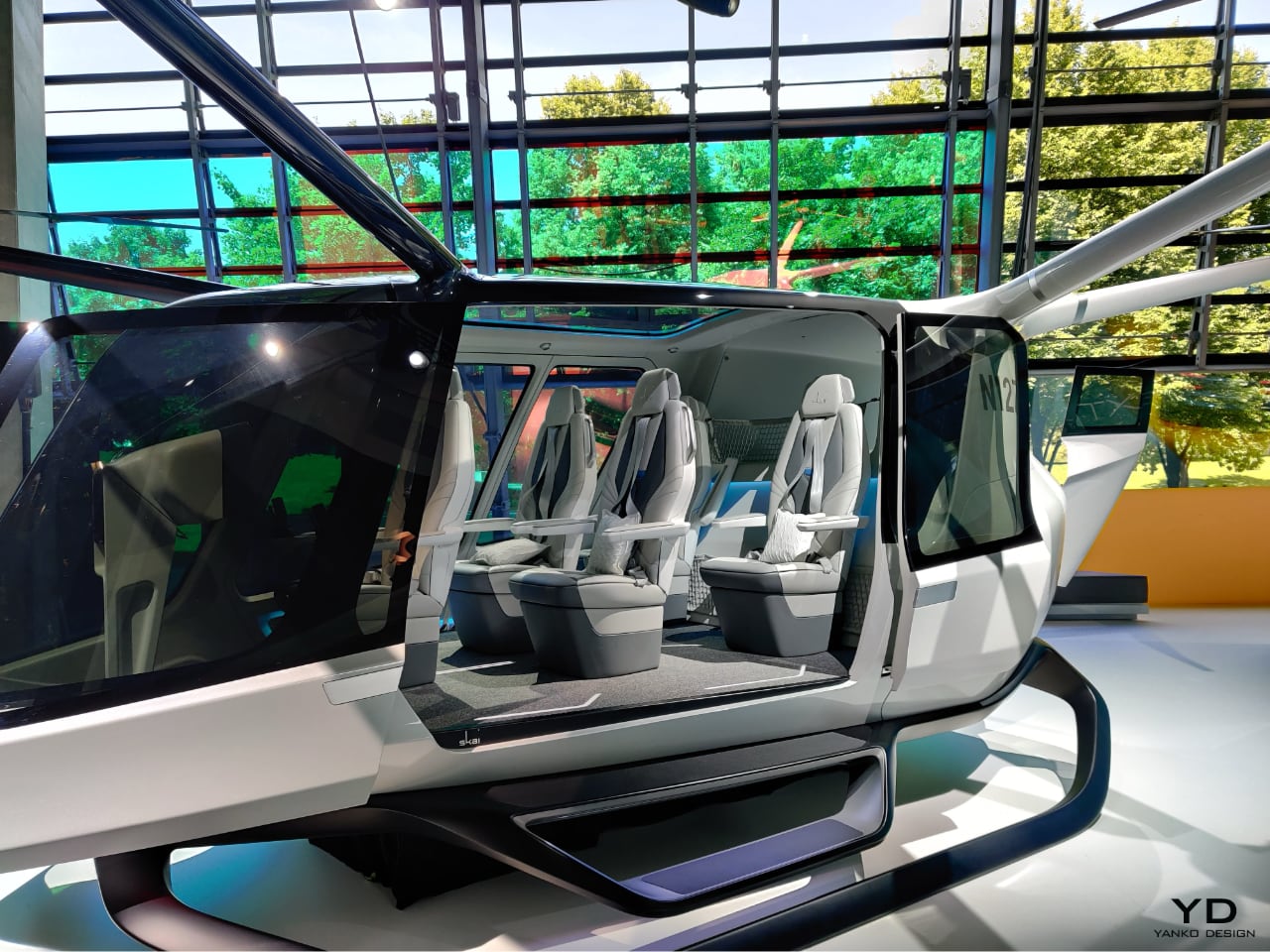
Inside, the cabin provides a spacious, comfortable layout. Large panoramic windows enhance visibility, creating an open and inviting atmosphere. Configurable seating arrangements accommodate up to five passengers or convert into cargo space capable of carrying up to 1,000 pounds. BMW’s influence is evident in the premium materials and ergonomic seating, ensuring a refined travel experience.
Modern technology enhances passenger convenience. Ambient LED lighting and high-speed 5G connectivity allow for a connected and productive journey. Whether used for daily commutes or critical supply transport, Skai combines quiet operation with luxury, redefining air travel in urban settings.
Ready for Takeoff
While Skai remains in the FAA certification process, Alaka’i Technologies is optimistic about its future adoption across multiple industries. Once certified, large-scale production will begin, with plans to manufacture over 10,000 units annually.
Skai
Skai’s potential applications include:
- Air taxis: Enabling fast, congestion-free urban travel
- Emergency response: Delivering medical supplies or conducting rescue missions
- Cargo logistics: Facilitating rapid regional goods transport
- Medical evacuations: Providing life-saving transport solutions
With projected operating costs of around $200 per hour—significantly lower than traditional helicopters—it presents a cost-effective, high-performance alternative. As global hydrogen infrastructure continues to develop through renewable energy investments, Skai stands poised to lead aviation into a cleaner, more efficient future. Skai redefines urban mobility with sustainable aviation, cutting emissions and congestion while advancing cleaner air travel.
The post first appeared on .
Related Posts