
In 2019, I wrote the post . Recently, Hendrik Bessembinder updated his previous research with the paper (SSRN/PDF), which tracked the “investment outcomes for 29,754 common stocks listed on the public U.S. stock markets over the 100-year period from 1926 to 2025”. Some highlights:
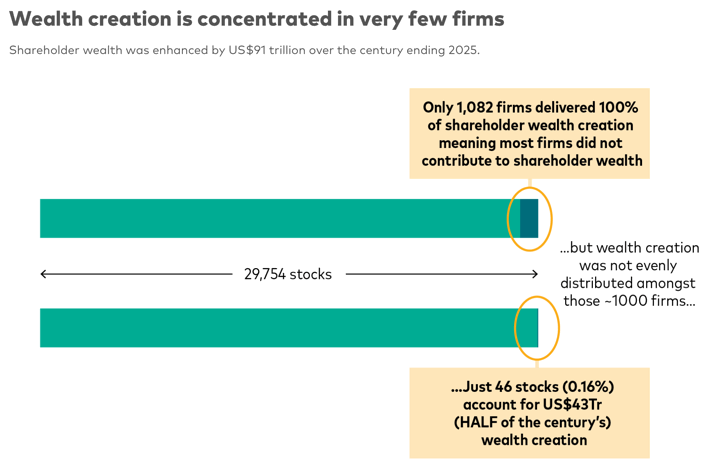
- Total Net Wealth created over that period: ~$91 Trillion.
- The 0.2% Needles: Just 46 stocks (roughly 0.2% of the ~30,000 total stocks) were responsible for generating 50% of that $91 trillion.
- The 4% Needles: Only 4% of all stocks accounted for 100% of the net value creation. The other 96% collectively just matched risk-free US Treasury bills – many were complete or nearly complete losses, the rest had smaller gains that only just offset those losses. This means that the top 4% created all of the net wealth creation.
Here is a chart that summarizes this info from a Vanguard Australia article :
I will simply quote Bogle and myself now, because I am lazy and honestly that’s how investment writing works. You just end up repeating and/or repackaging the same 10-25 rules over and over again.
As the late Jack Bogle told us: “Don’t look for the needle in the haystack. Just buy the haystack.”
I don’t know which will be the most successful US companies in the future, but I know that I will own them via the total US index fund in my portfolio. I will own the next Amazon, Google, Facebook, Apple, or Visa. I’ll also own whoever disrupts them after that. Since I own a big chunk of global stocks inside the Vanguard Total International Stock Index fund, I’ll be covered if they come from the other side of the world.
In 2026, this means I own NVIDIA/Alphabet/Google/Microsoft, but in 10 years, I know that the picture will be at least somewhat different.
Related Posts