Most outdoor gear is designed around a single occasion. A holiday weekend, a camping trip already planned, a backyard cookout that needs a solution by Saturday. The problem with occasion-specific buying is that the occasion ends. These seven were chosen around a different question: would you still want this in ten years? The answer comes down to design, and how the thinking behind each object holds up once the context that sold it is gone.
Each product here solves a real outdoor problem without the aesthetic compromise that tends to come with the territory. A grill that consolidates without cutting corners. An umbrella that actively cools the space beneath it. A hammock tent that finally delivers a flat night’s sleep. A coffee grinder built from aircraft-grade aluminum. These are the outdoor objects worth owning for more than one summer.
1. All-in-One Grill
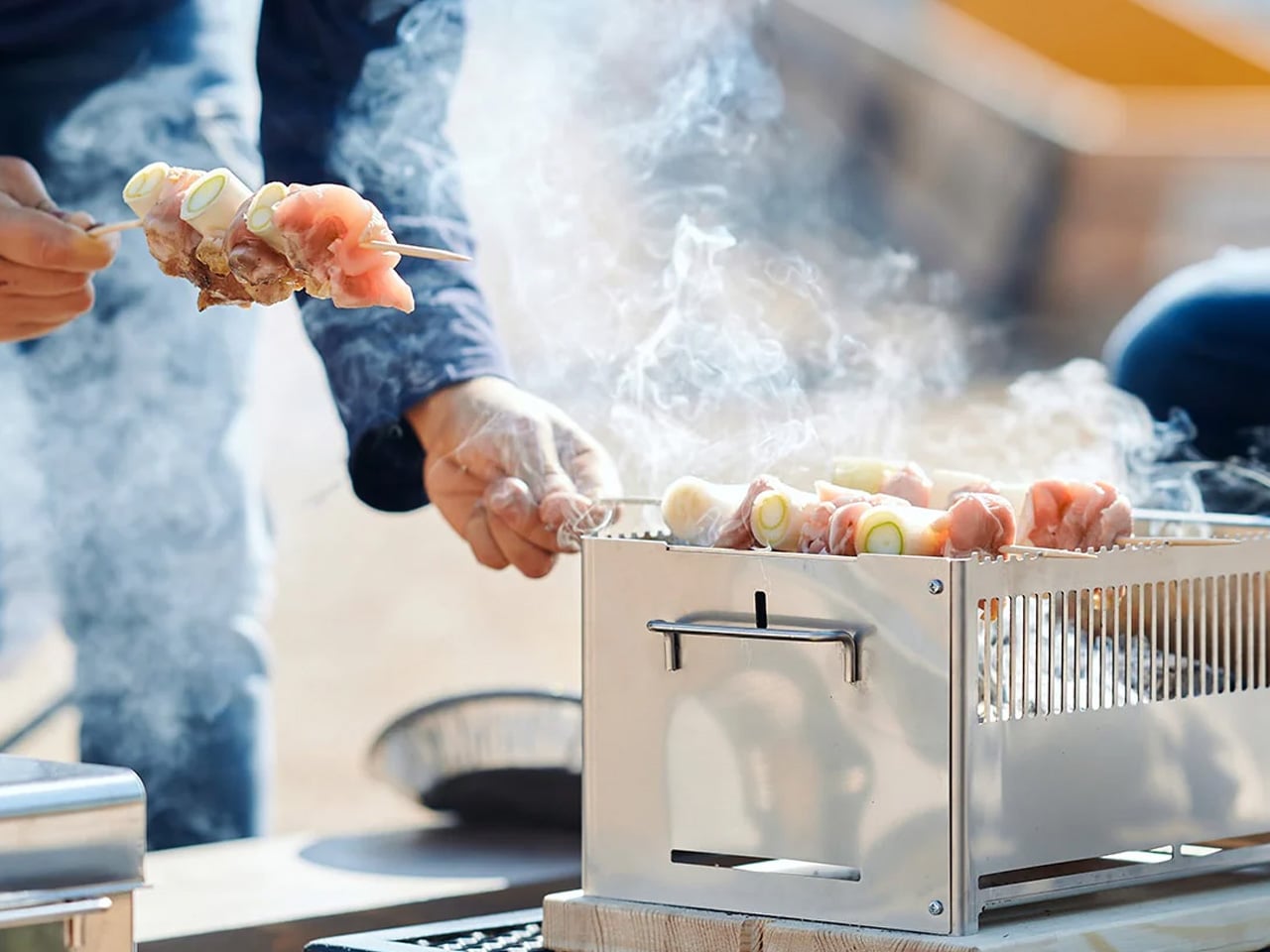
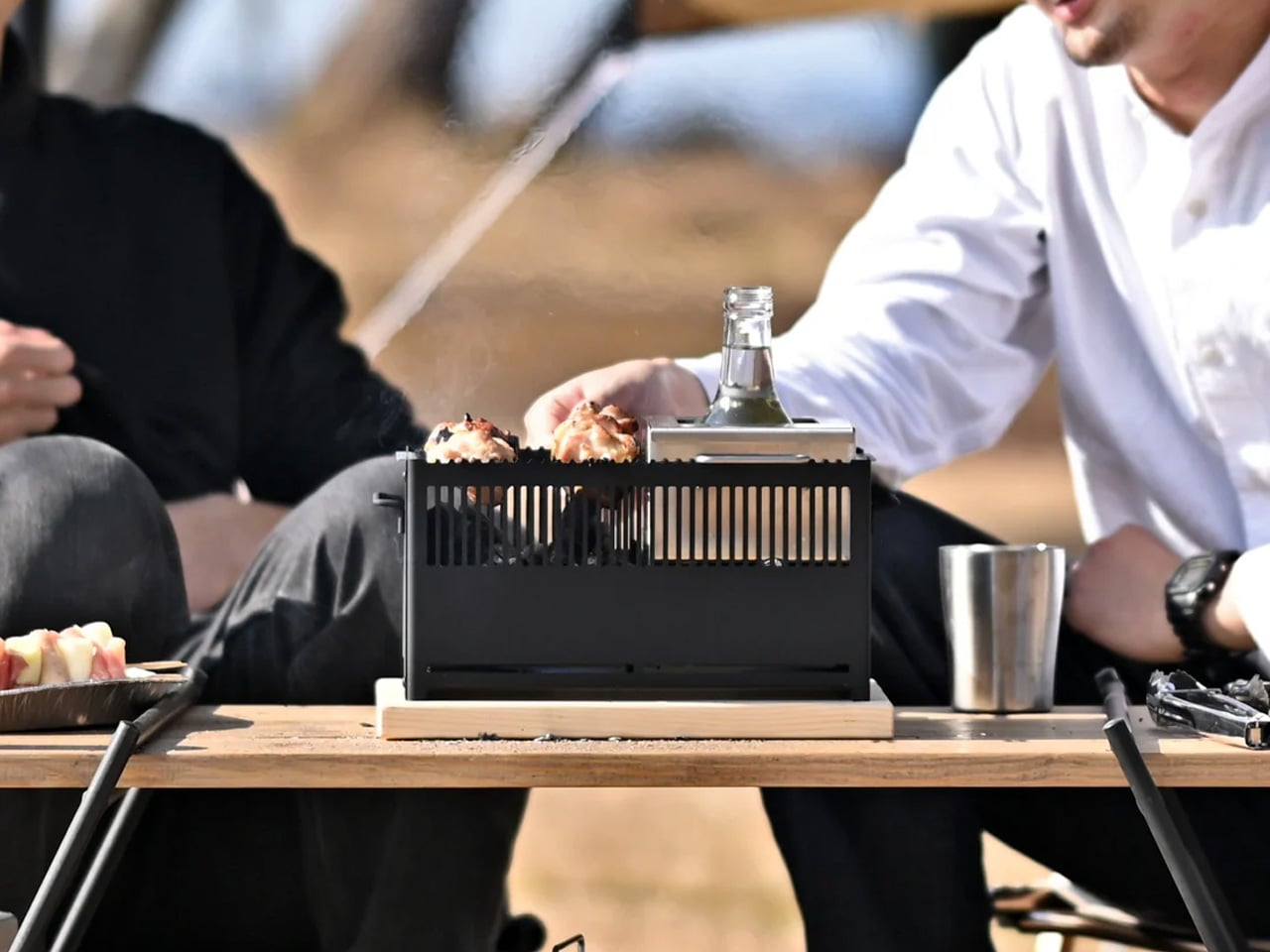
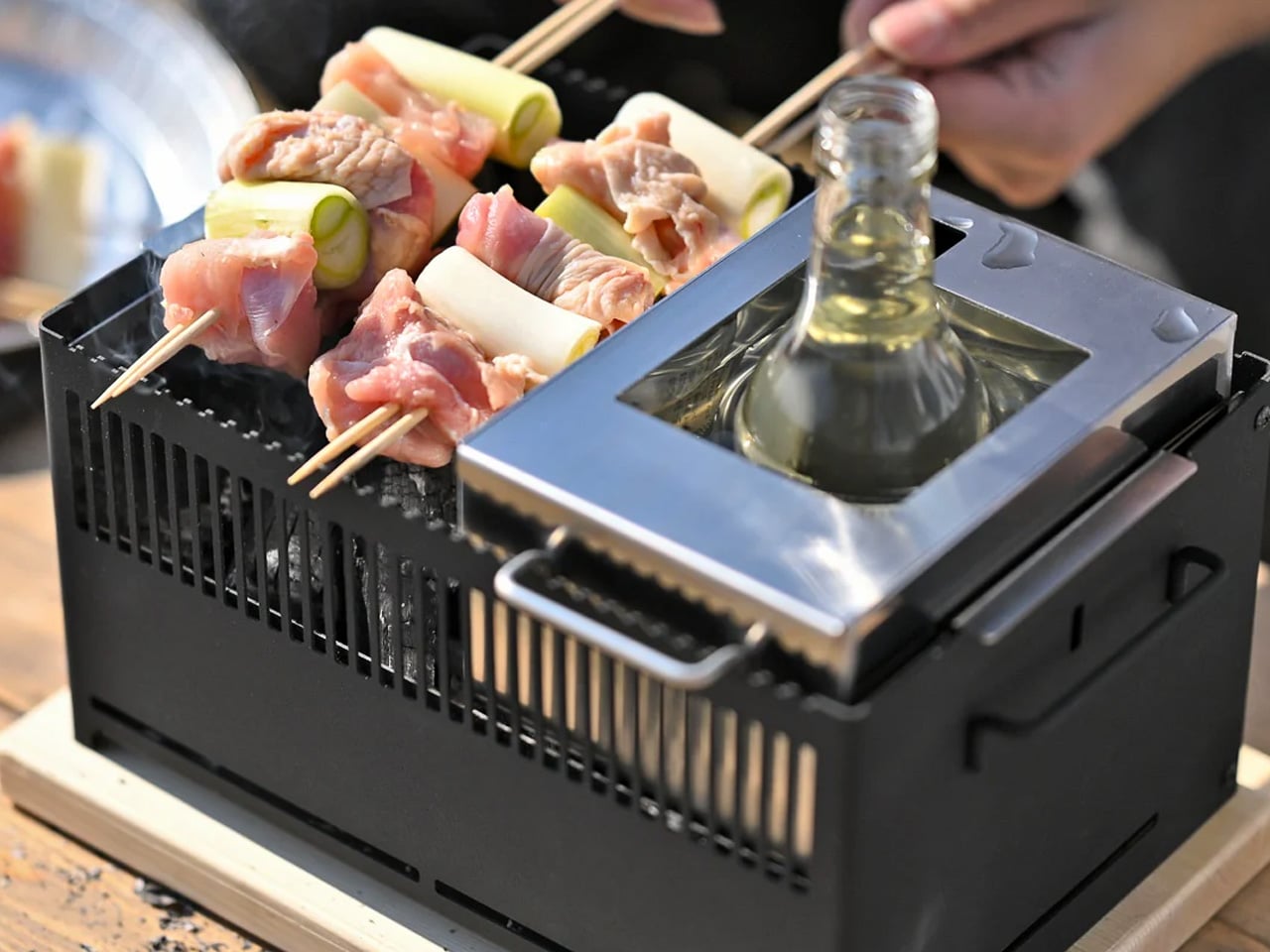
The all-in-one grill starts from a premise that most outdoor cooking equipment ignores: the setup shouldn’t take longer than the meal. Most grills demand a chain of decisions before the first flame is lit. This one consolidates the core functions into a single, considered form that earns its place on a patio, a campsite, or a tailgate without the negotiation. The design makes the case that outdoor cooking gear doesn’t need to be complicated to be capable.
What separates a grill worth keeping from one that lasts two summers before being replaced is whether the design holds up to sustained use. The all-in-one doesn’t compromise build quality for compactness. It treats portability as an engineering problem rather than a marketing claim, arriving at something you’d genuinely reach for on a July afternoon without second-guessing whether you packed the right accessories. That clarity of purpose is what makes it the natural anchor for this list.
What we like
- Consolidates multiple cooking functions without creating the usual trade-offs in durability or output
- Earns its storage space year-round because it works equally well on the patio as it does at the campsite
What we dislike
- An all-in-one format means any single component issue affects the whole unit rather than an isolated replaceable part
- The broad compatibility ambition makes it slightly harder to optimize for one specific cooking method
2. Alizé Umbrella with Built-in Fans
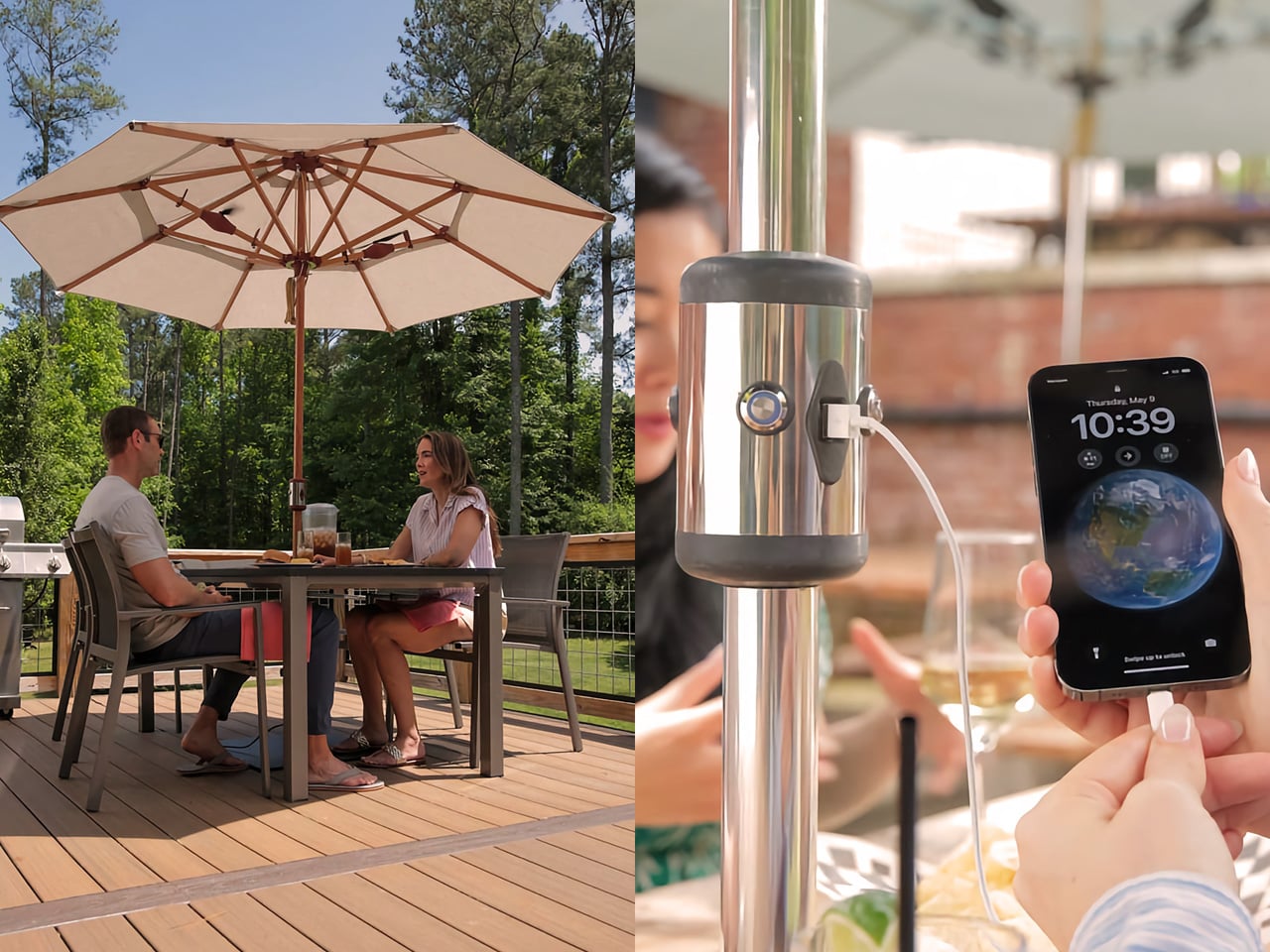

Designed by Tony Lee and Ryan Dickerson, starts as a patio umbrella and immediately goes further. Integrated into its aluminum frame are four brushless DC fans with blades capable of spinning at up to 2,200 RPM. Each fan is individually controlled, meaning the person sitting directly beneath it adjusts their own airflow without negotiating a shared setting with everyone else under the canopy. The control panel on the main stem provides three speed settings and USB-A ports for charging devices mid-afternoon.
The engineering detail that earns its place on this list is the electro-mechanical locking system that aligns the blades with the frame automatically on closing, removing the need to manually position anything before folding. Safety logic prevents the fans from operating when the umbrella is closed and cuts them automatically if the canopy is accidentally folded mid-use. The Sunbrella fabric canopy handles UV protection while the marine-grade aluminum frame takes on wind and rain. It comes in a two-fan and four-fan configuration depending on how many people are sitting beneath it.
What we like
- Individual fan control per seat solves the airflow disagreement that every shared outdoor space eventually produces
- Built-in safety logic removes the mechanical anxiety that usually comes with integrating spinning parts into a shade structure
What we dislike
- Requires a direct power connection, which rules out use in locations without an accessible outlet nearby
- Fixed installation means relocating it between spaces is a deliberate process rather than a spontaneous adjustment
3. Yuuye Portable Air Conditioner
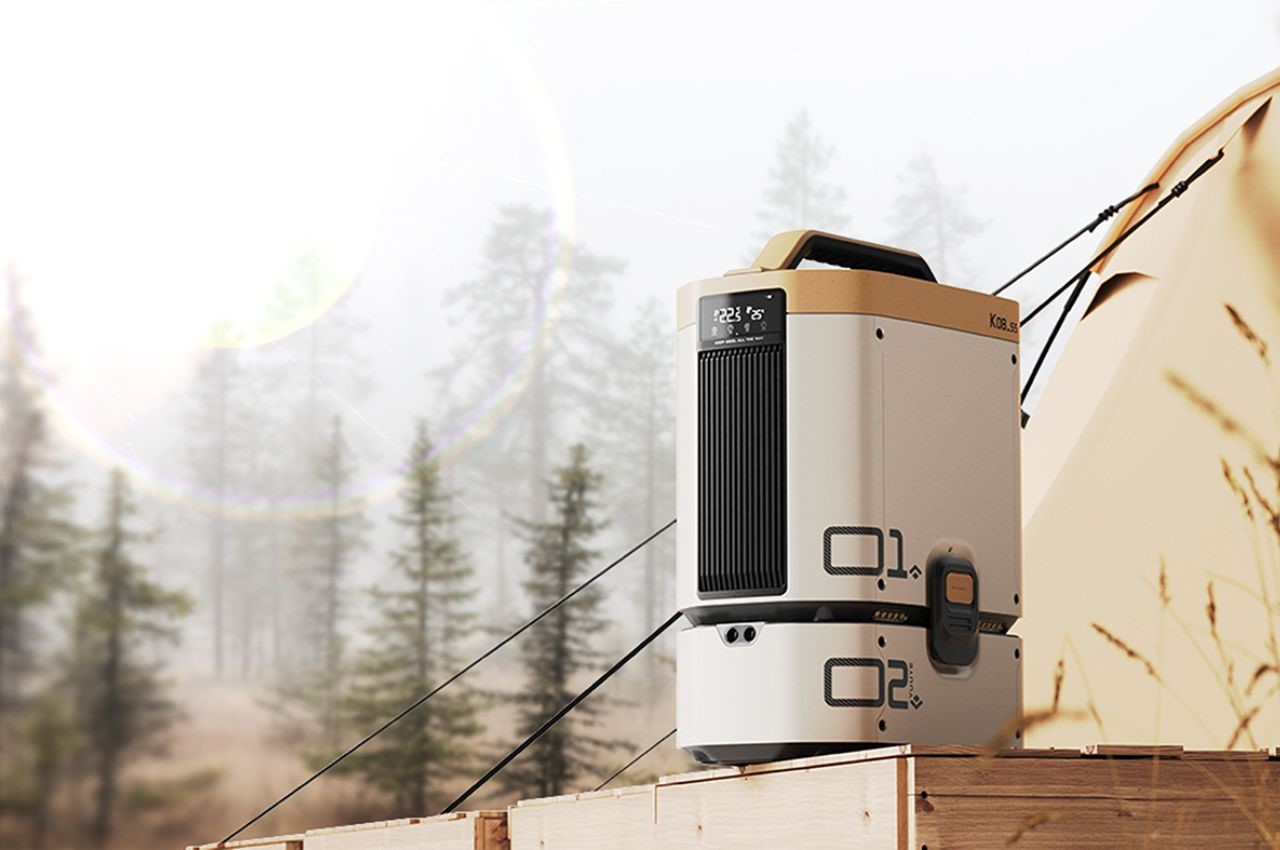
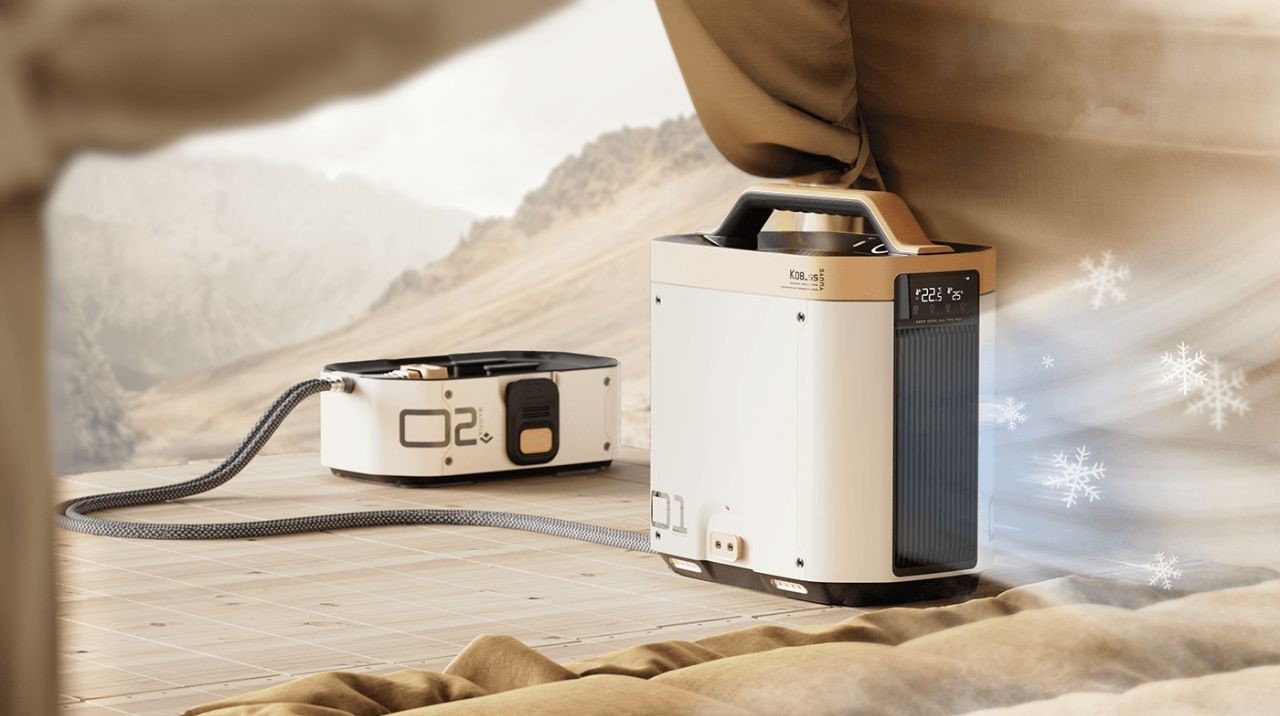
Where the Alizé cools a shared space from above, the works at a different scale. Designed by HAORAN and Yifeeling Design, it separates the refrigeration module from the exhaust module, drawing in ambient heat through one side and pushing cool air through a large outlet on the other. The modular split means you can detach the upper and lower sections with a single release-and-lift motion, repositioning between the tent, the patio, and the car without the effort that traditional units demand.
The design directly addresses the problem that conventional portable air conditioners create outdoors: the thick exhaust pipe that leaves gaps in a tent opening, letting mosquitoes in. The Yuuye solves this with an independent exhaust block that seals properly. An LCD panel keeps cooling settings visible at a glance, and the oversized air outlet distributes airflow across a space rather than forcing it through a single narrow stream. For anyone who has spent a July night in a tent wishing they had brought something other than acceptance, this is the product that changes the calculation.
What we like
- Modular design makes relocating between outdoor settings genuinely fast, without the production most portable units require
- The independent exhaust block solves the mosquito gap problem that undermines conventional outdoor air conditioning setups entirely
What we dislike
- Battery life is unspecified in the current design documentation, which makes multi-day trip planning around it difficult
- Best suited to contained spaces like tents and small patios, rather than open areas where the cooled air dissipates quickly
4. Compact Modular Grill Plate
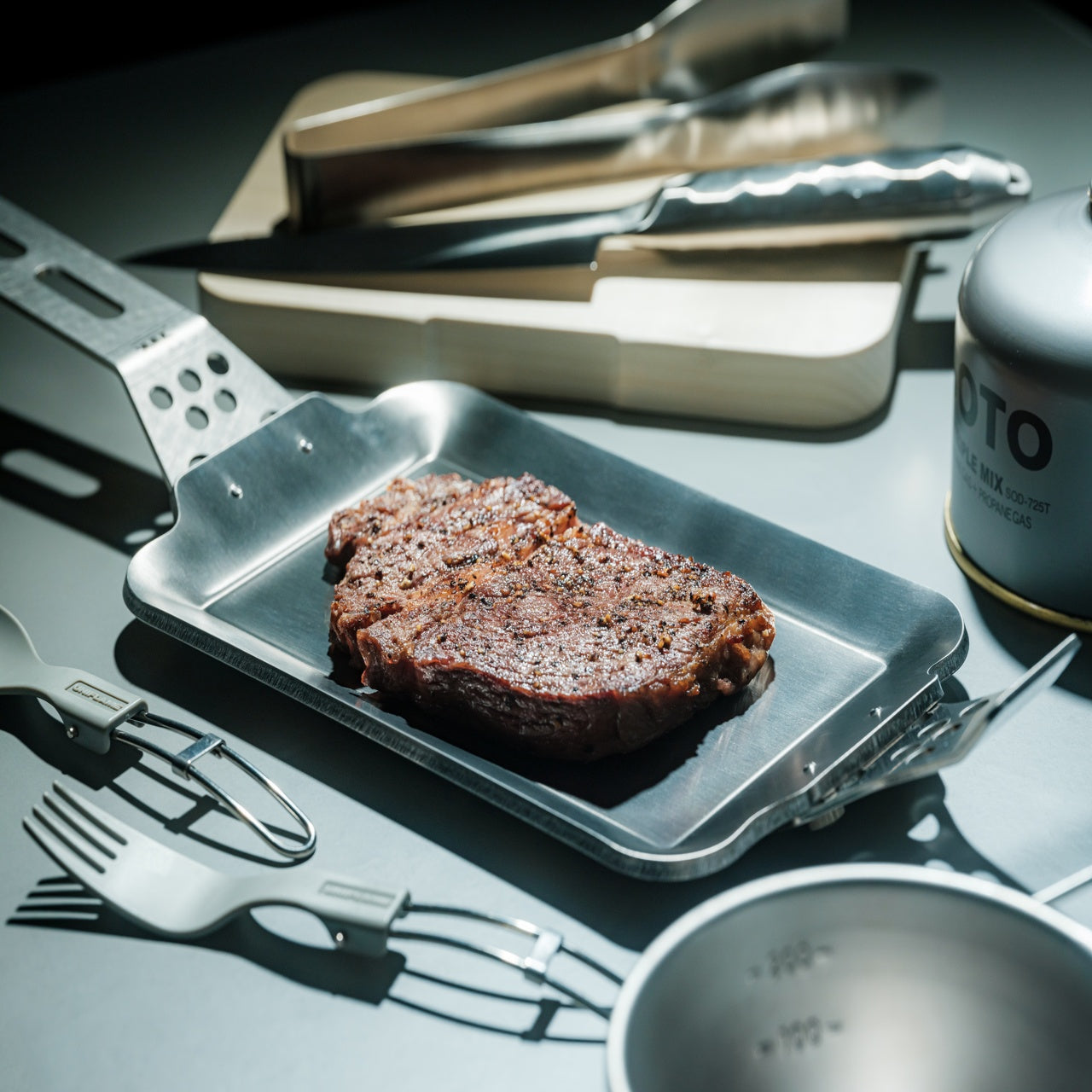
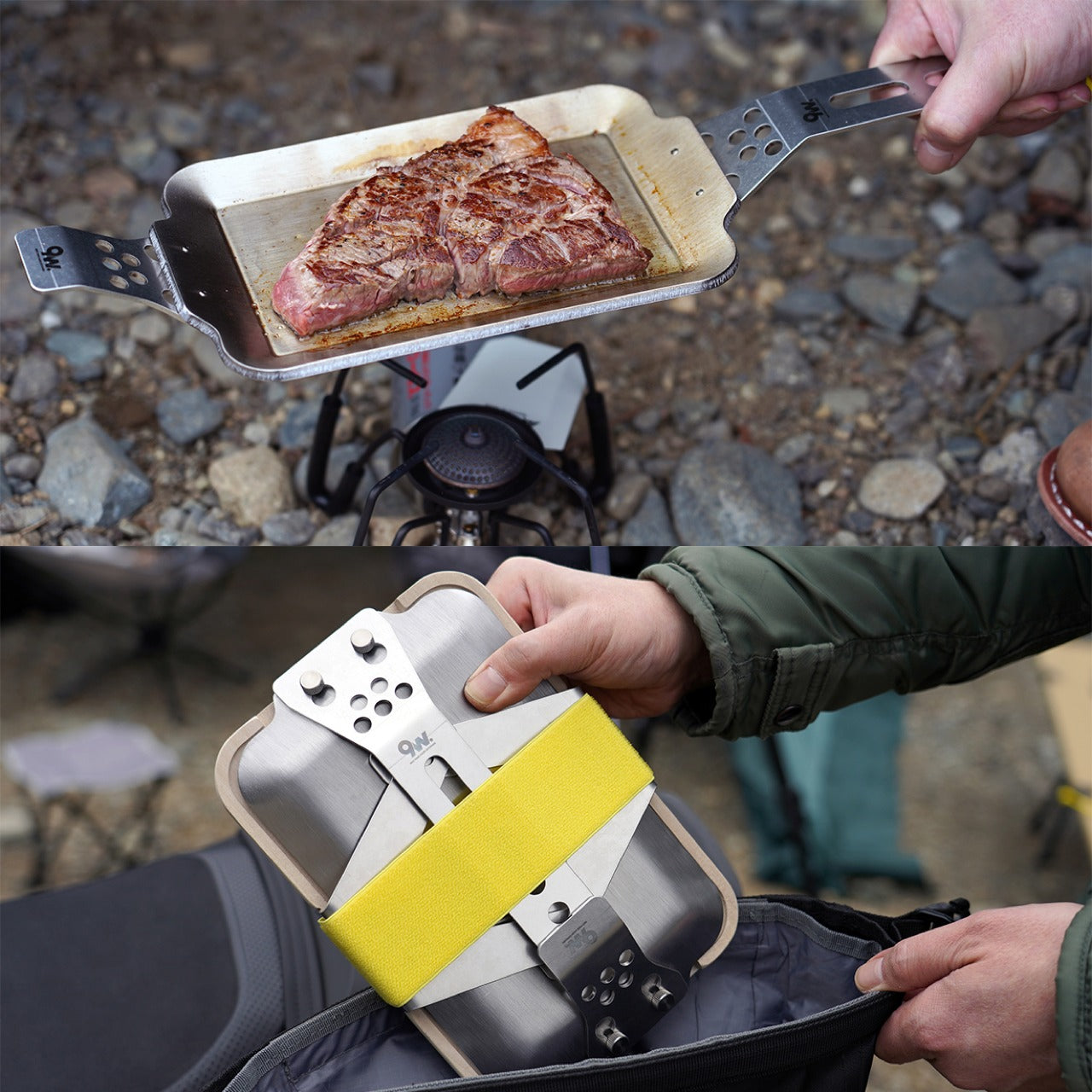
The compact modular grill plate approaches outdoor cooking from a different direction than the first entry. Where the all-in-one consolidates, this one gives you a focused flat cooking surface that adapts to different heat sources and setups without requiring a committed configuration before leaving the house. It’s a cooking tool that respects the fact that outdoor conditions change, and a well-designed cooking surface should be able to change alongside them without forcing a workaround.
The portability argument here is about density rather than footprint. A compact grill plate doesn’t occupy meaningful space in a pack or a boot, which means it comes on trips that a full grill never would. It earns its place precisely because it doesn’t demand to be the centerpiece of the cooking setup. It works alongside other tools, slots into the corner of a cooler bag, and appears when the flat surface it provides is exactly what the moment needs. That quieter kind of utility tends to last.
What we like
- Compact form means it travels on trips where a full grill setup wouldn’t be practical or worth the weight
- Modular construction lets it adapt to different heat sources without locking the user into a fixed approach
What we dislike
- A dedicated flat surface has a narrower cooking range than an all-in-one grill, which limits preparation variety when used alone
- Compact dimensions mean surface area is the inevitable trade-off, which matters when cooking for more than two people
5. Haven Spectre Ultralight Hammock Tent
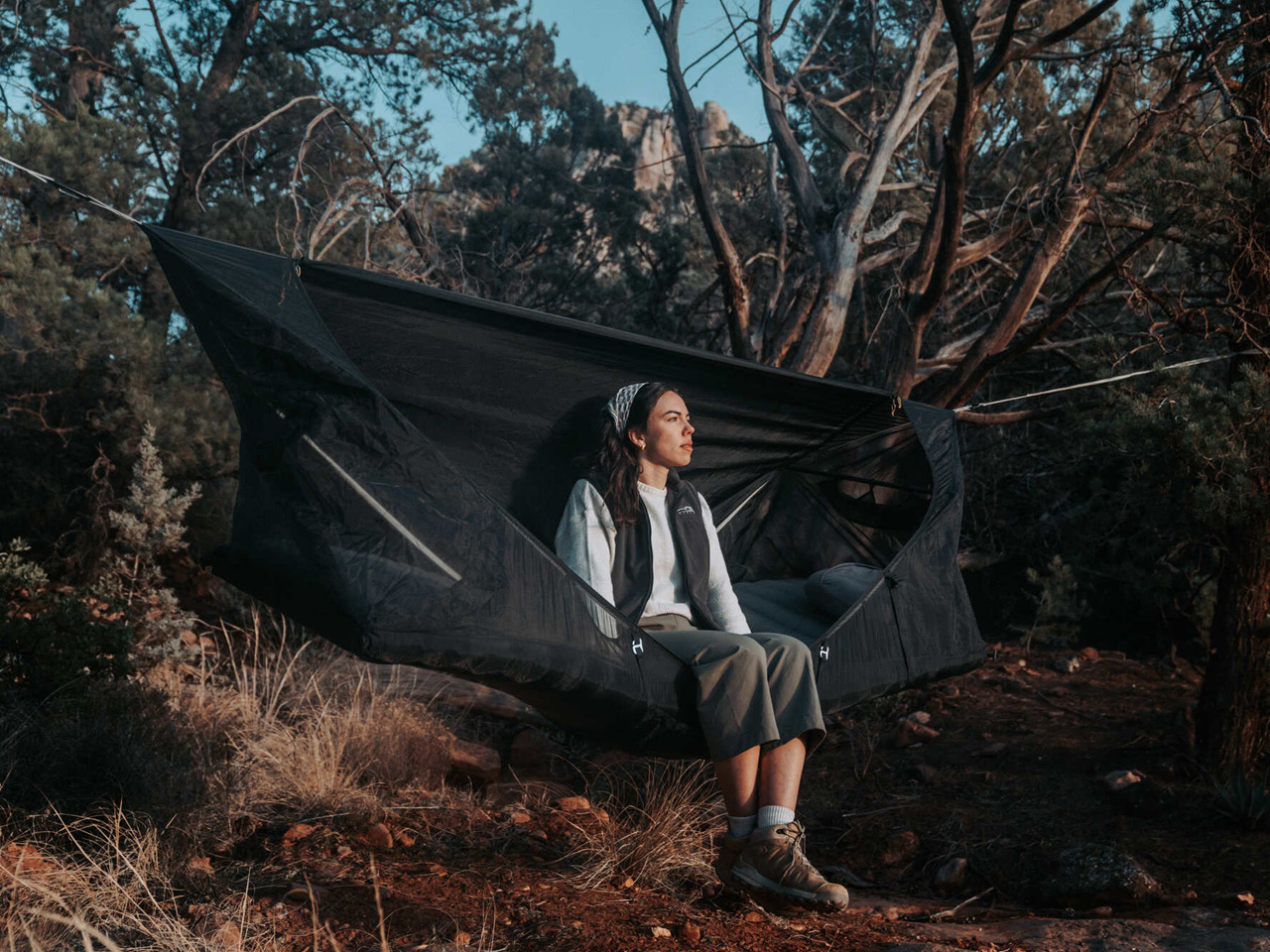
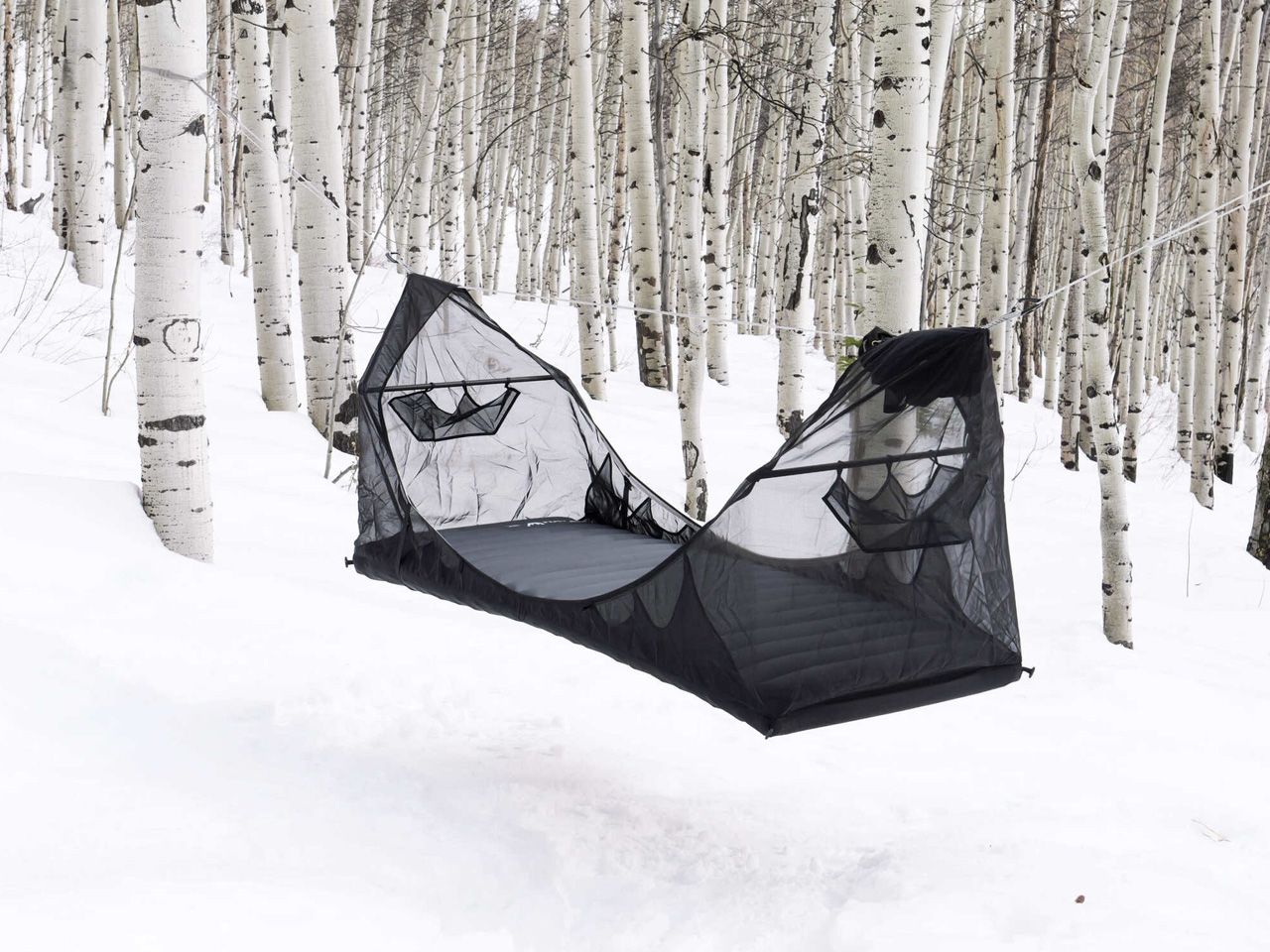
Haven Tents spent five years solving the banana effect before arriving at . The patented lay-flat system creates a genuinely horizontal sleeping surface, allowing back, side, or stomach sleeping rather than folding into the curved position that traditional hammocks enforce. Construction uses Dyneema fabric and MONOLITE mesh, materials chosen for their strength-to-weight ratio rather than their price point. The result weighs under two kilograms and packs to 15 by 6 by 6 inches, compact enough to ride on the outside of a pack.
For backpackers who abandoned hammock camping after a single uncomfortable night, the Spectre is the iteration worth revisiting. When suitable trees aren’t available, a bivy mode uses trekking poles as the anchor system, opening up alpine and desert terrain. Translucent mesh netting keeps insects out while maintaining a full view of the surroundings. A detachable rainfly handles weather and doubles as a privacy mode. Internal mesh pockets, a gear sling, and a ridgeline handle storage, so nothing has to leave the shelter after dark to be found.
What we like
- The patented lay-flat design solves the comfort problem that has made hammock camping a one-trip experiment for many backpackers
- Under two kilograms for a complete shelter system with weather protection, bug netting, and storage is a genuinely difficult weight to achieve
What we dislike
- Setup depends on finding trees at the right spacing and height, which limits viable campsites in open terrain without the trekking pole bivy mode
- The premium price reflects the materials quality honestly, but makes it a harder case for occasional campers who won’t put it to regular use
6. VSSL Java G25 EDC Grinder
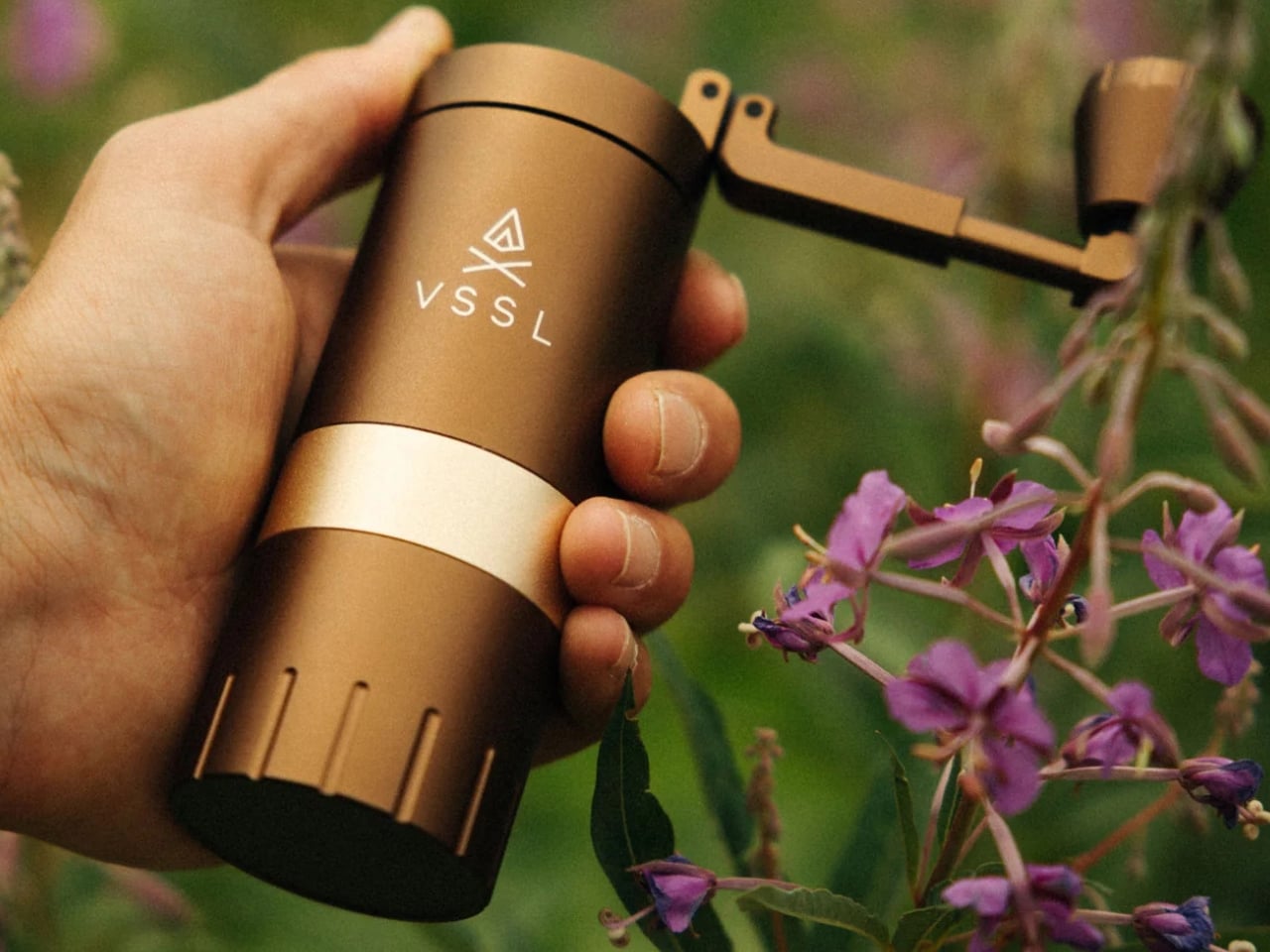
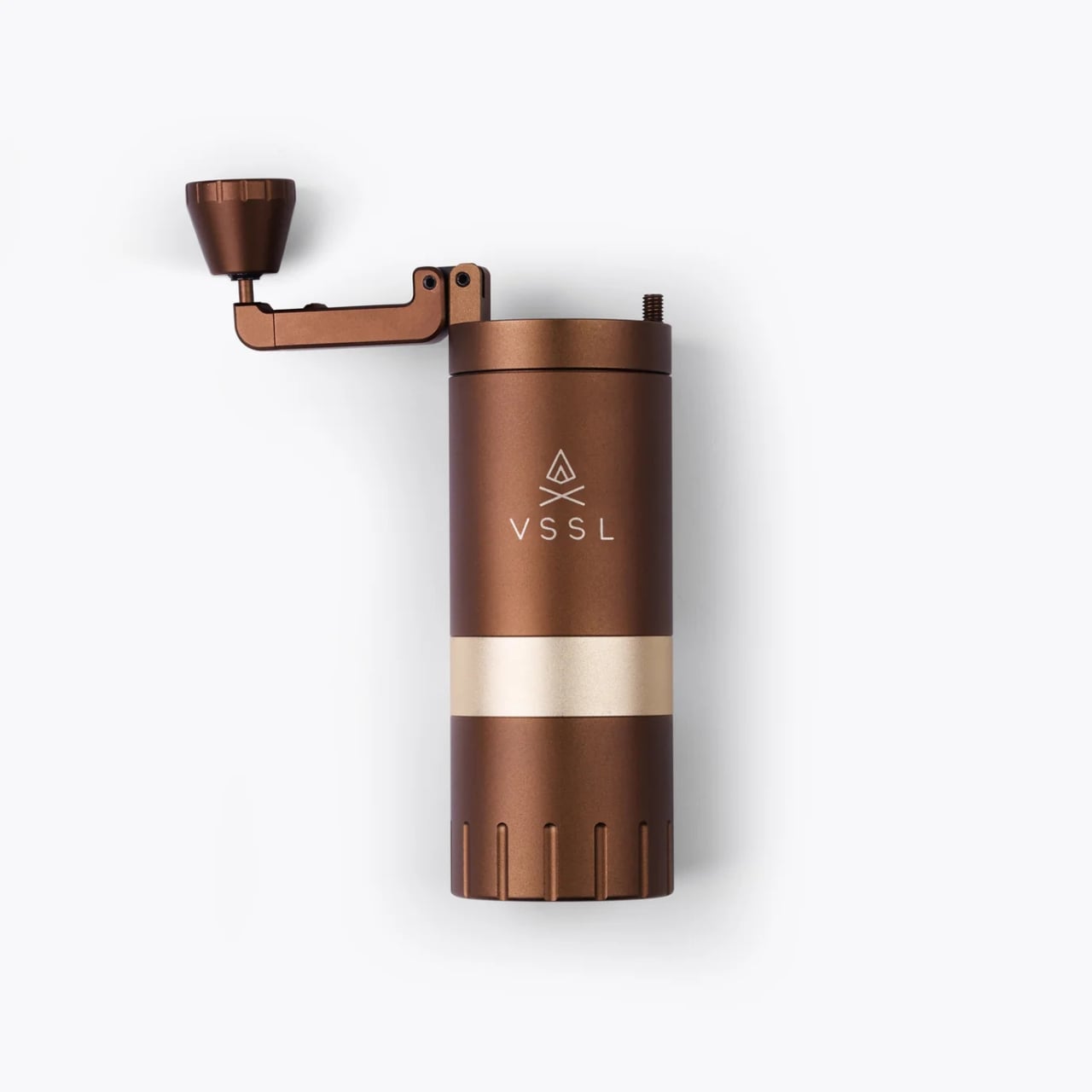
VSSL built its reputation on engineering essential gear into objects that don’t announce their utility until you reach for them. applies that logic to coffee. Machined from 6061 aircraft-grade aluminum with 304 food-grade stainless steel internals, it reads as precision equipment rather than a kitchen accessory. High-carbon 420 stainless steel conical burrs, stabilized by dual bearings, deliver consistent particle size across 50 distinct grind settings, covering French press through espresso without the inconsistency that makes most manual grinders a frustration.
The design choices that make this an EDC object rather than a countertop appliance are specific and deliberate. The handle expands during grinding for leverage, then retracts and locks into a carabiner for clipping directly to a pack. A magnetic integration secures the knob inside the catch during transit. The 30-gram hopper opens through a push-release top cap. At 6.3 inches long and two inches in diameter, it nests with an AeroPress Go, making a full specialty coffee brewing kit genuinely pocket-sized and ready for a trail, a campsite, or a hotel room equally.
What we like
- 50 grind settings on a manual grinder is a professional-grade range, covering every brewing method without needing a separate device for each
- The retractable carabiner handle clips to a pack and disappears into a kit without requiring a dedicated case or any extra packing decision
What we dislike
- 50 settings reward patience and experimentation, which extends the learning curve for those who want a reliable result from the very first use
- The 30-gram hopper capacity suits single-serve brewing well but requires refilling for anyone making more than one cup at a time
7. Anywhere Use Lamp
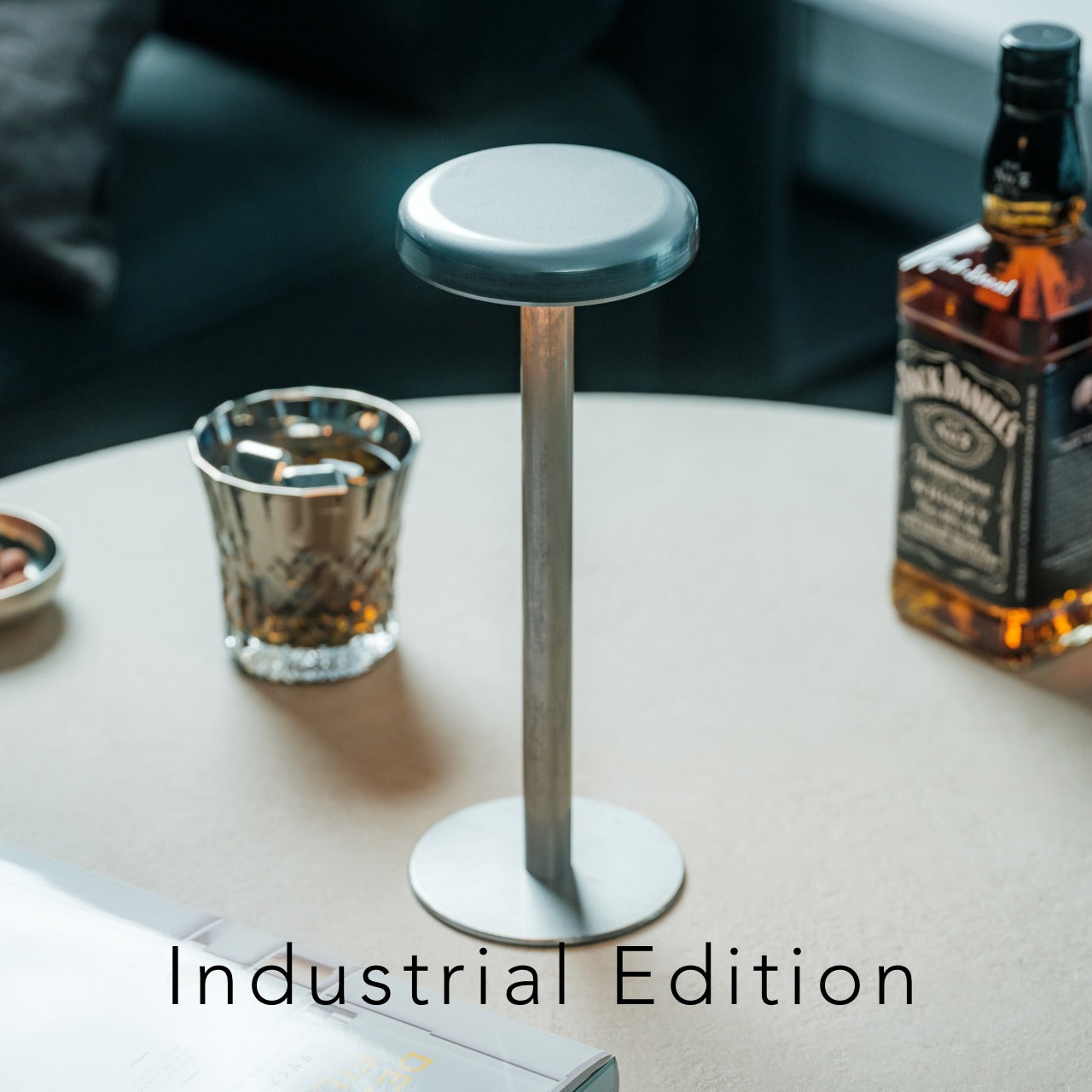
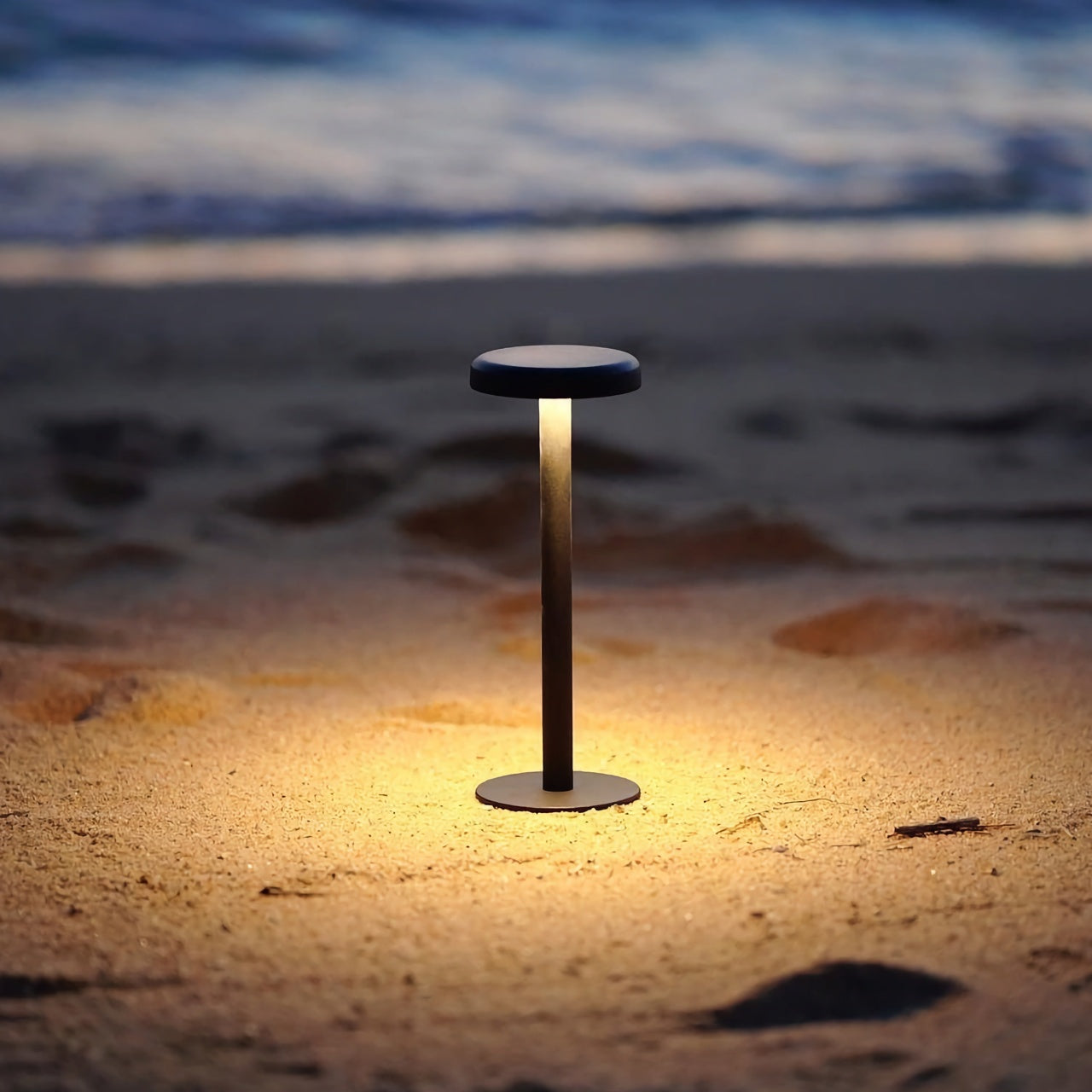
A lamp that earns its name by working across every outdoor context is a more demanding brief than it sounds. Most portable lighting is optimized for one setting and awkwardly repurposed for others. The Anywhere Use Lamp approaches the problem from the other direction, designing for placement flexibility from the outset rather than treating multi-use as a secondary feature. The result is a light source that belongs on a campsite table, a tent interior, a backyard evening, and a terrace without adjustment, adapters, or compromise.
The design logic that makes it worth owning permanently is the same one that makes it hard to leave behind. A lamp that solves lighting across multiple contexts doesn’t get retired when any single context ends. It moves between the camping kit, the garden setup, and the power outage drawer without losing its relevance. That year-round utility is precisely what separates it from the gear that gets unpacked once in June and rediscovered in the back of a cupboard come October. The Anywhere Use Lamp earns its place in the kit across every season.
What we like
- Context-agnostic design means it moves between camping, patio, and indoor use without needing to justify the switch each time
- Placement flexibility is built into the design from the start rather than achieved through attachments that add weight and complication
What we dislike
- A lamp built to work everywhere makes fewer specific concessions to the most demanding outdoor conditions than a purpose-built field light would
- The broad use case makes communicating its value harder against more narrowly specialized competitors at a similar price point
Gear That Earns Its Place Every Summer After This One
The gear that earns a permanent place in the kit isn’t usually the most impressive on paper at the moment of purchase. It’s the gear designed with enough clarity of purpose that it continues solving problems after the occasion that justified buying it has long passed. These seven hold up because each started from a genuine outdoor problem and arrived at an object with a point of view rather than a feature list assembled to compete on a spec sheet.
July is when most outdoor gear gets its annual trial. It’s also when you find out which pieces will still be in rotation next July. The all-in-one grill, the Alizé, the Yuuye, the compact grill plate, the Haven Spectre, the VSSL G25, and the anywhere lamp all share one characteristic: none of them are trying to do everything. They’re each trying to do one thing exceptionally well, which remains the only design brief worth taking seriously.
The post first appeared on .
Related Posts