
We have come across so much fog and mist in our lives but have you ever thought of reversing the method of evaporation and using all these abundant water particles for potable use? In a groundbreaking achievement, researchers at ETH Zurich and the Max Planck Institute for Polymer Research in Mainz have unlocked a transformative way to address water scarcity and pollution. By harnessing the power of fog, they have developed a cutting-edge technology that converts fog into clean, drinkable water while simultaneously purifying it from pollutants. This innovation not only offers a sustainable solution to water shortages but also contributes to environmental preservation.
Team: ,
Researhers: Ritwick Ghosh, Adrien Baut, Giorgio Belleri, Michael Kappl, Hans-Jürgen Butt, and Thomas M. Schutzius
The core of this revolutionary technology lies in a closely meshed lattice of metal wire, ingeniously coated with a specialized mixture of polymers and titanium dioxide. This unique combination serves a dual purpose: efficiently capturing water droplets from fog and rapidly channeling them into a collection container before the wind can scatter them. Meanwhile, titanium dioxide plays a pivotal role in a chemical process that breaks down organic pollutants found in the droplets, resulting in a purer water source.
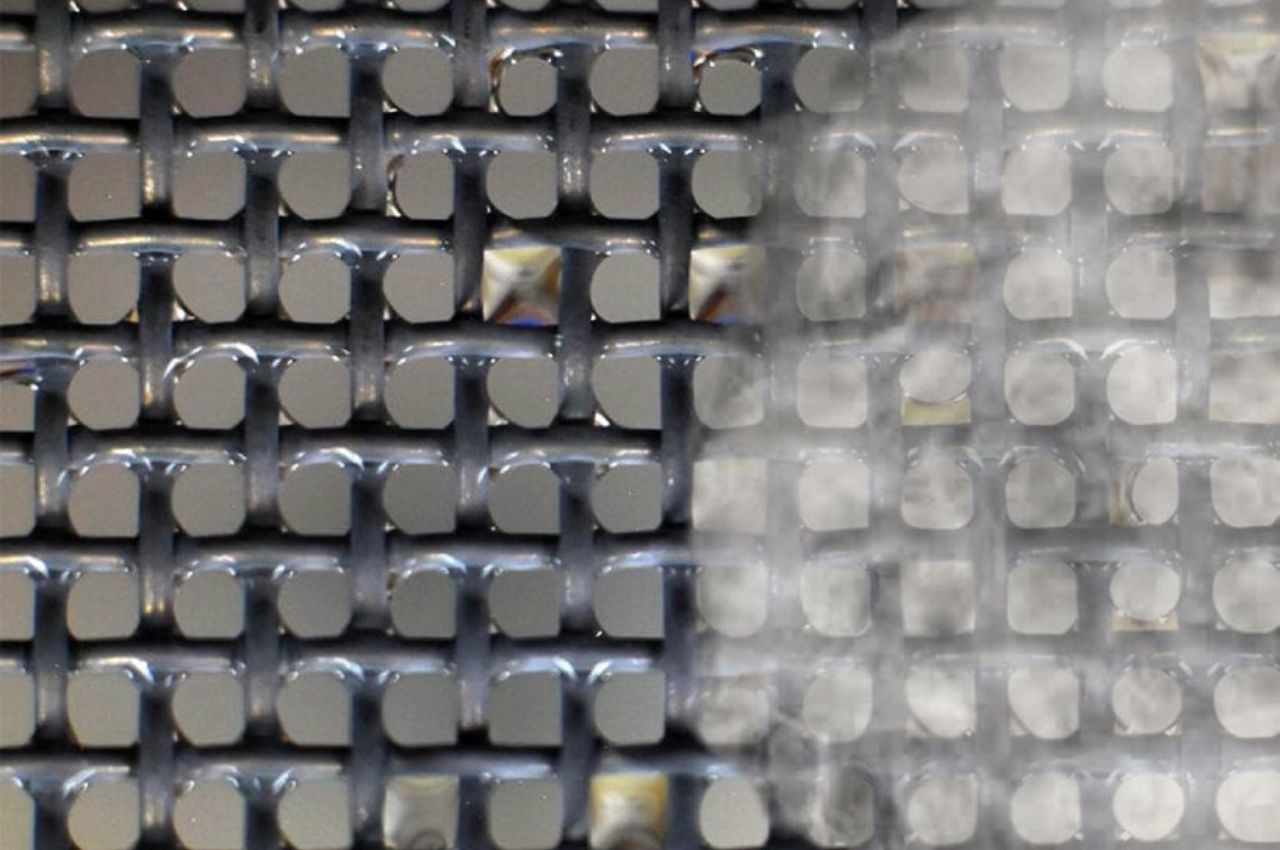
The process starts with the closely woven mesh attracting and retaining water droplets, a feat accomplished by the polymers. This clever design minimizes the risk of droplets being blown away by the wind, ensuring maximum water capture efficiency. Simultaneously, titanium dioxide initiates a chemical reaction that disintegrates the molecules of various organic pollutants present in the water droplets. This dual mechanism leads to the production of clean, drinkable water that’s safe for human consumption.
A remarkable aspect of this innovation is its sustainability quotient. The materials employed and the technology’s reliance on solar panels for power consumption contribute to its eco-friendly nature. Harnessing the power of the sun, a mere thirty minutes of sunlight can recharge the titanium dioxide, granting an additional twenty-four hours of purification through photocatalytic memory. This efficient utilization of resources potentially translates into minimal maintenance and energy requirements. The collaborative efforts of researchers have yielded astonishing results. Rigorous testing in both laboratory and small-scale pilot plant settings in Zurich has demonstrated the system’s capabilities. Notably, the nets were able to harvest eight percent of the water content from fog and eliminate a staggering ninety-four percent of harmful compounds that could render the water undrinkable or unsuitable for various applications. This included the efficient breakdown of fine diesel droplets and the elimination of the hormonally active agent bisphenol A.
The technology’s potential extends beyond fog conversion. In industrial cooling towers, where steam typically dissipates into the atmosphere, this innovation can be employed to recover and purify water before its release. This opens possibilities for more responsible water management in industries.
The breakthrough potential of this fog-to-water technology is not confined to laboratories. With its capability to function efficiently in fog-prone regions such as Peru, Bolivia, Chile, Morocco, and Oman, the innovation promises to bring clean, drinkable water to areas plagued by water scarcity. It stands as a beacon of hope for a sustainable future where access to clean water is a reality for all.
The collaborative efforts of ETH Zurich and the Max Planck Institute for Polymer Research have led to a groundbreaking innovation that transforms polluted fog into a valuable resource—clean, drinkable water. This technology holds immense promise in addressing water scarcity challenges while championing environmental responsibility. With its remarkable ability to harness fog and purify water, it ushers in a future where access to clean water is within reach, safeguarding the health and well-being of communities worldwide.

The post first appeared on .
Related Posts