The future of computing increasingly demands input devices that work seamlessly in mobile, public, and wearable contexts where traditional mice become impractical or socially awkward. As we move toward augmented reality, smart glasses, and always-connected devices, the need for subtle, continuous interaction grows more pressing. Current solutions often require bulky hardware, frequent charging, or obvious gestures that draw unwanted attention.
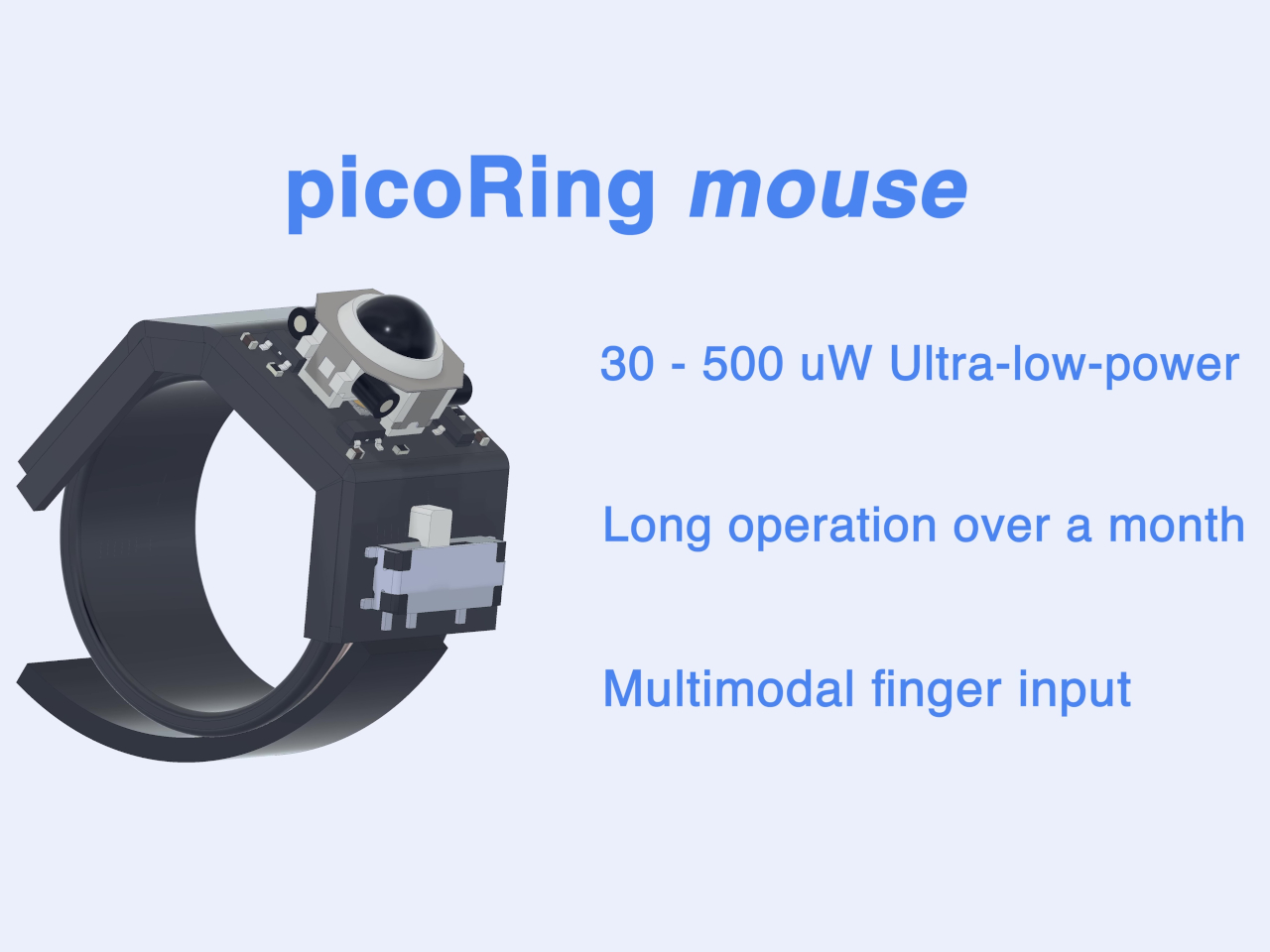
The picoRing mouse research project tackles these challenges by reimagining the computer mouse as a ring-based, ultra-low-power wearable device. This experimental system consists of a tiny ring housing a trackball and a companion wristband that receives input data, creating a setup that enables discreet computer control in situations where conventional input methods would be impossible or inappropriate.
Designers: Yifan Li, Masaaki Fukumoto, Mohamed Kari, Shigemi Ishida, Akihito Noda, Tomoyuki Yokota, Takao Someya, Yoshihiro Kawahara, Ryo Takahashi ()
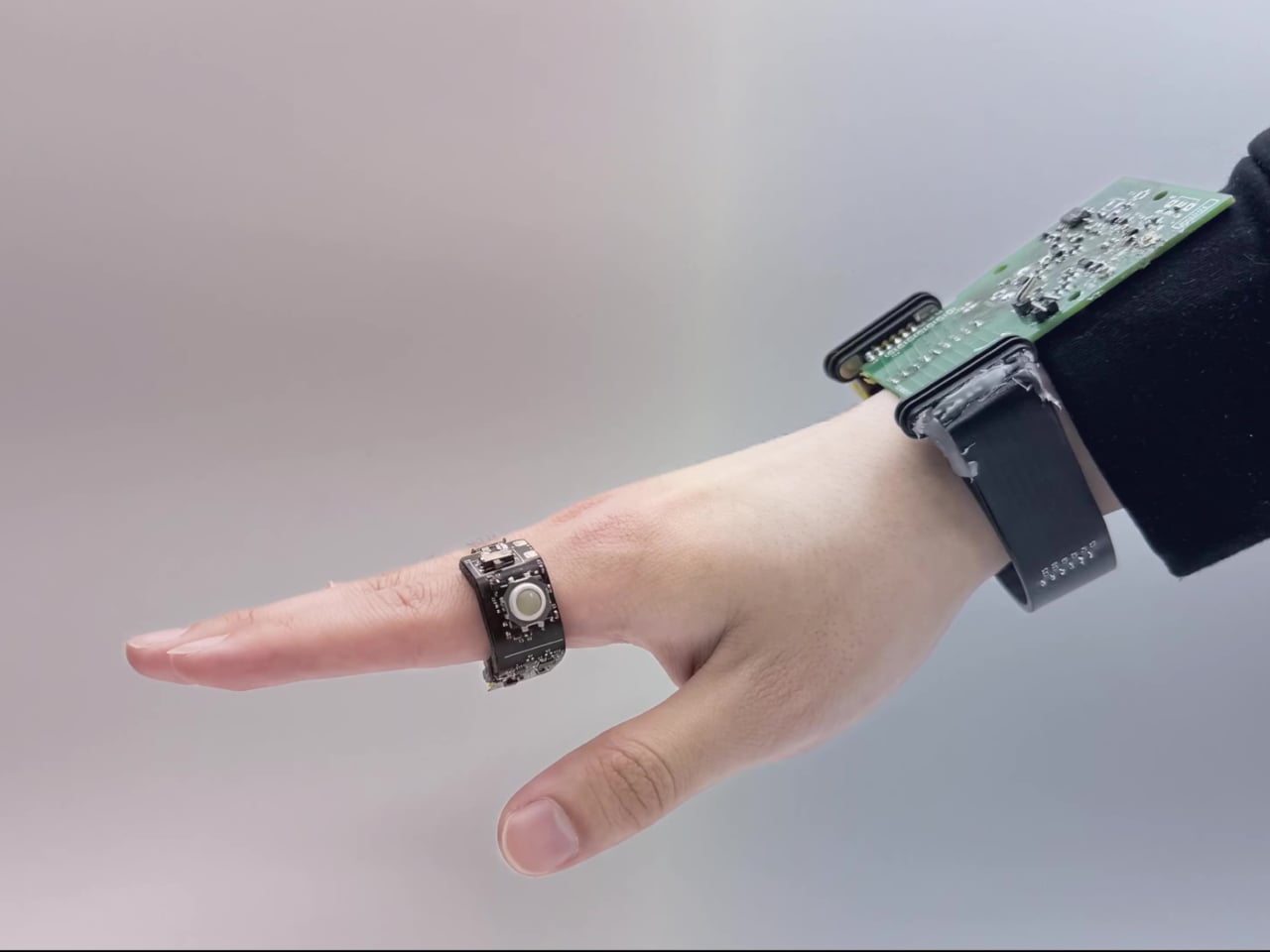
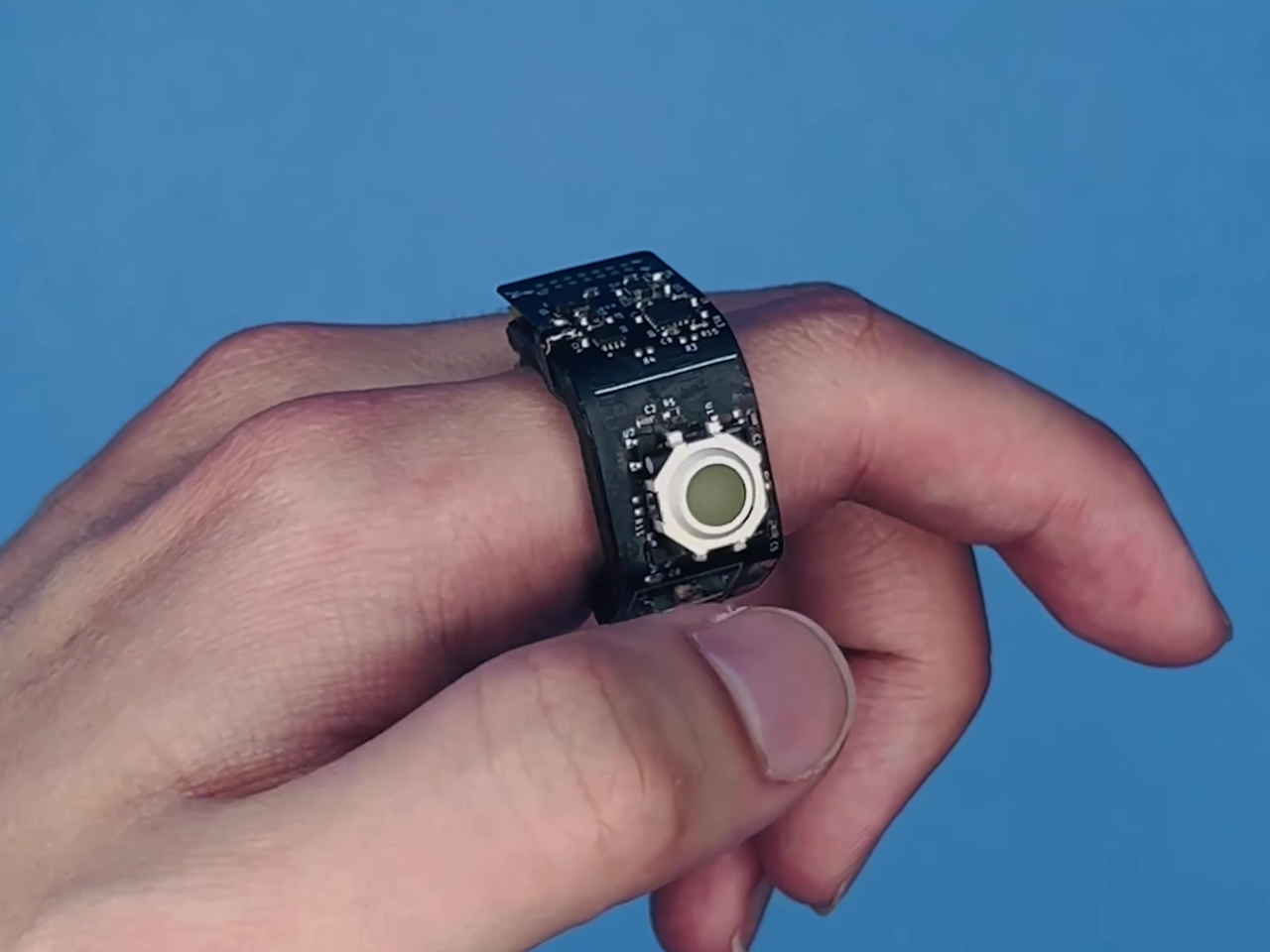
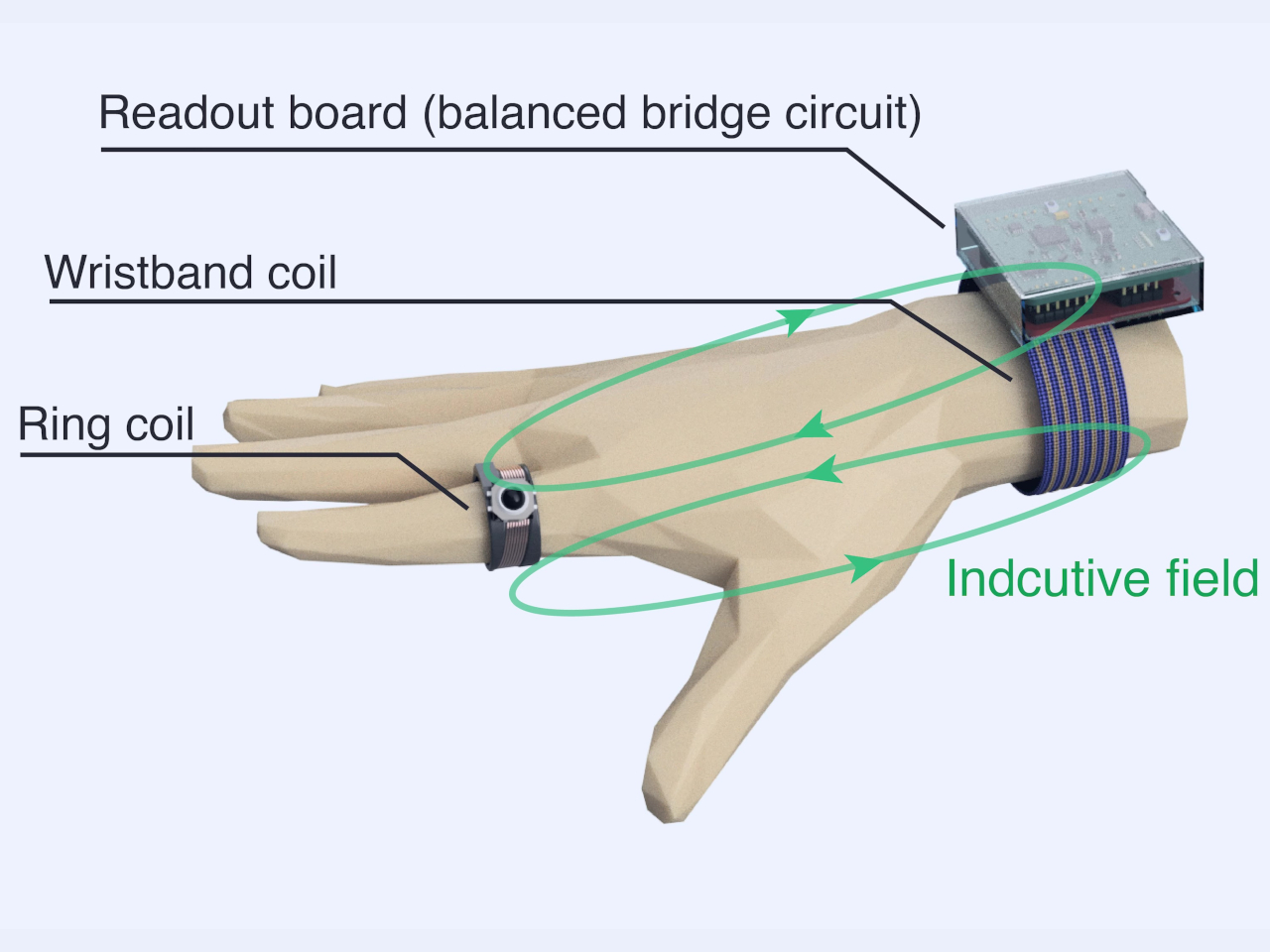
The core technology relies on inductive coupling between coils embedded in both the ring and wristband. When you move the trackball with your finger, the input gets encoded as frequency-modulated signals and transmitted wirelessly to the wristband with minimal power consumption. The wristband then decodes these frequency peaks back into mouse movements and sends them to your connected device.
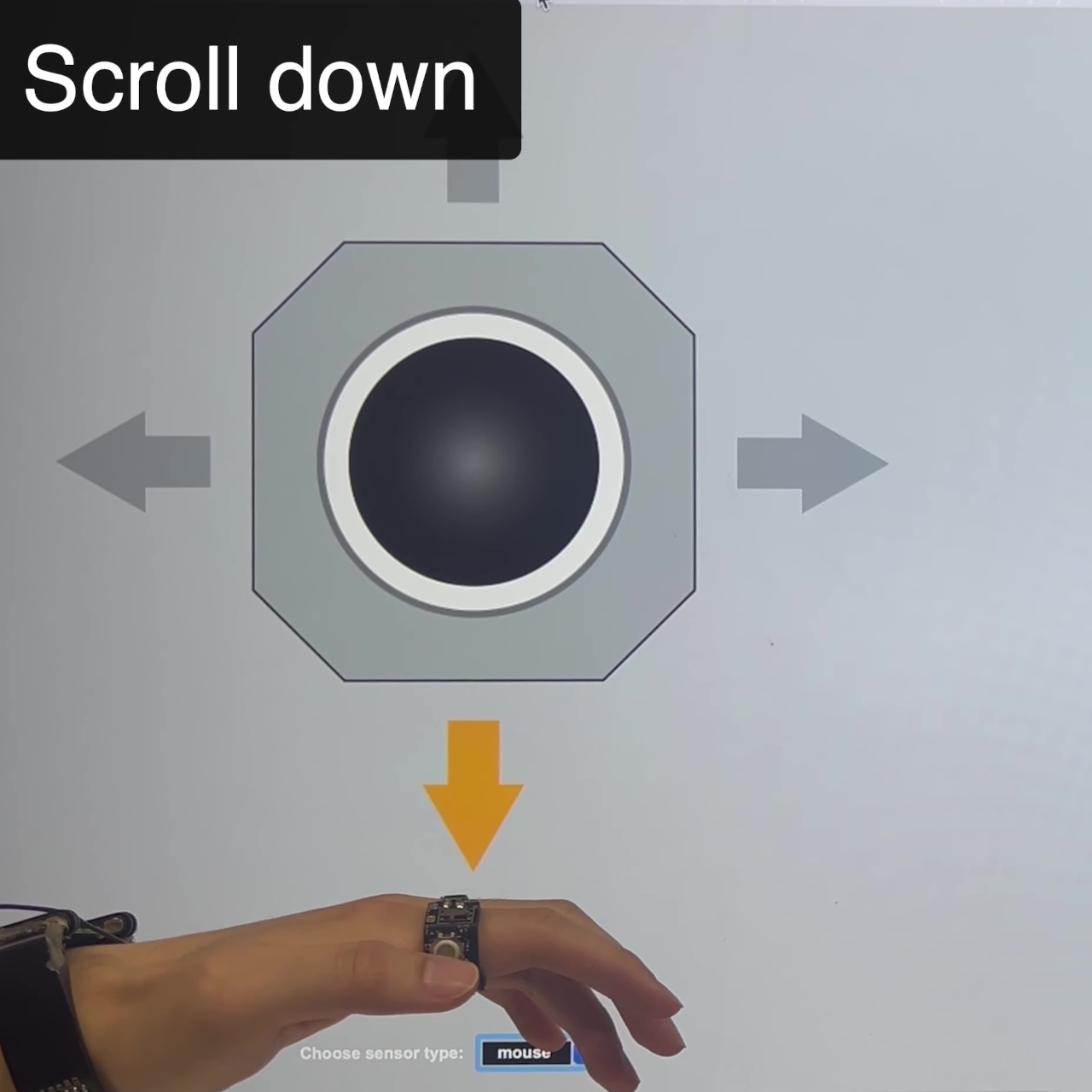
The user experience prioritizes subtlety and continuous availability. You can control a cursor, navigate interfaces, or interact with applications using tiny finger movements that are virtually invisible to others around you. The system is designed for environments like airplanes, trains, meetings, or crowded public spaces where pulling out a laptop mouse would be awkward or impossible.

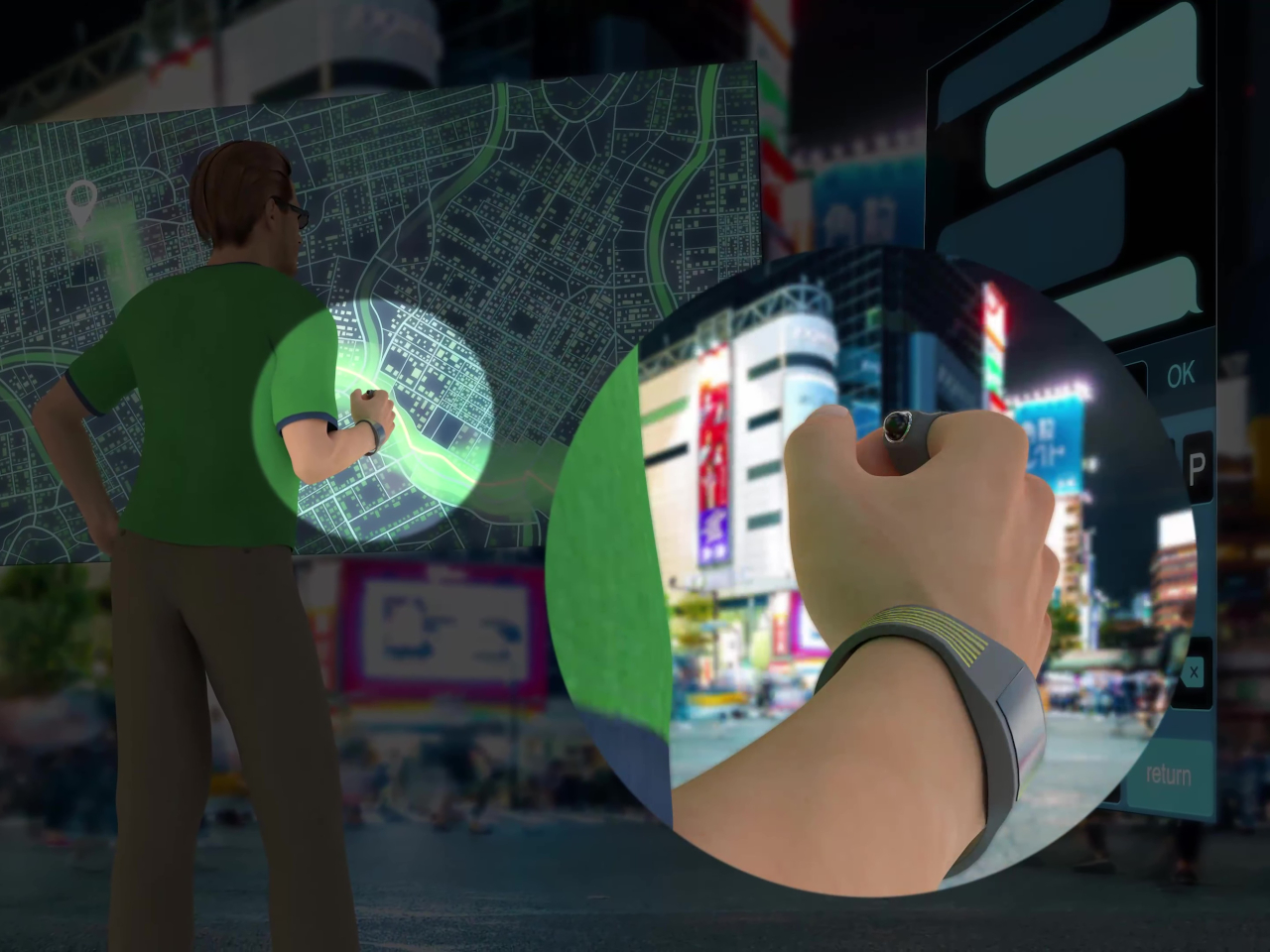
Of course, the practical applications extend beyond just solving social awkwardness. The picoRing mouse could serve as an input device for presentations, allowing speakers to control slides while moving freely. It might also benefit users with mobility challenges who find traditional mice difficult to operate, or serve as a companion for future AR glasses and wearable computing devices.
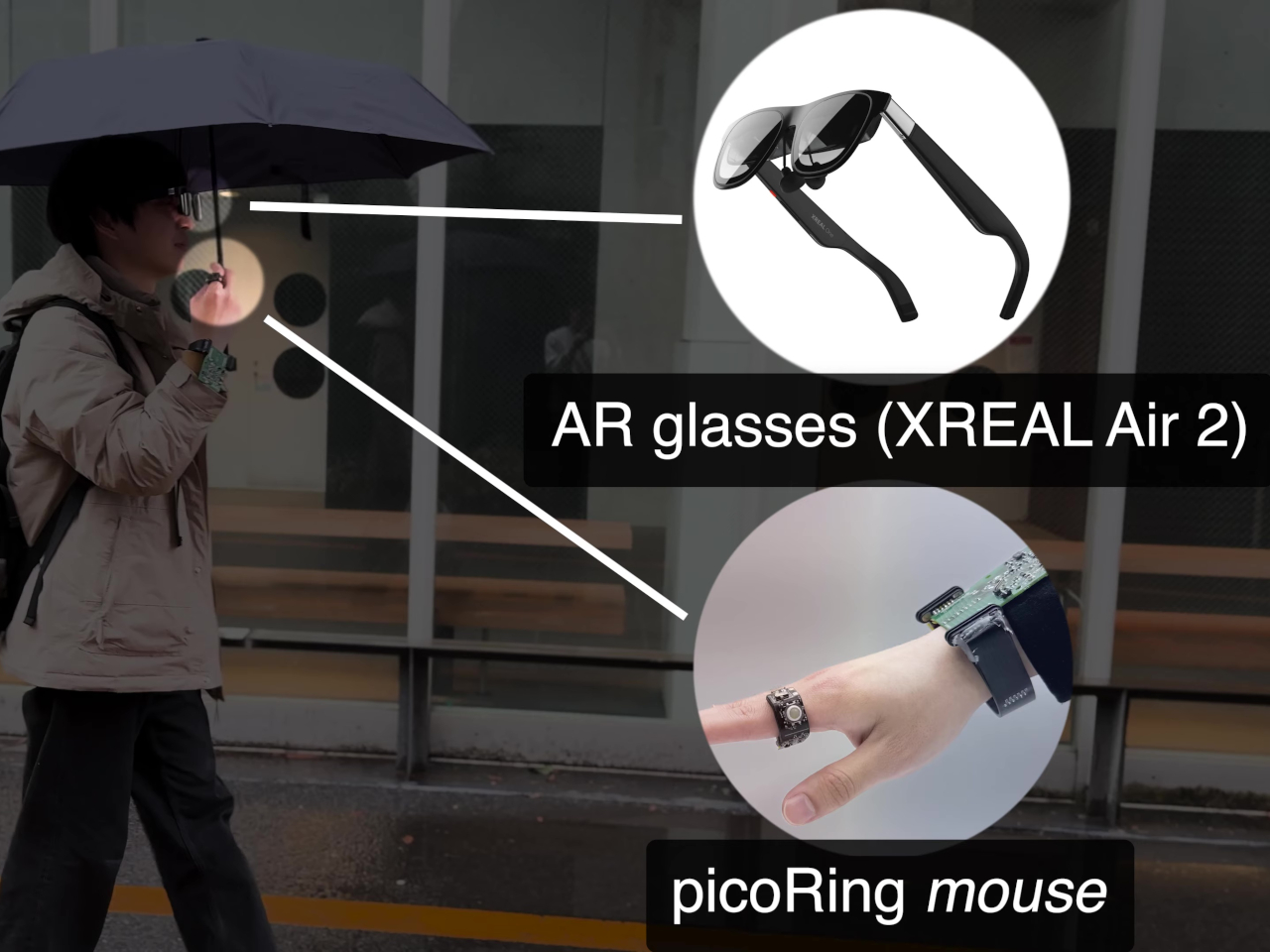
The ultra-low power design enables all-day wearability without the charging anxiety that plagues most wearable devices. The research demonstrates that meaningful interaction doesn’t require high-power processors or large batteries when the communication method is optimized for efficiency rather than complexity.

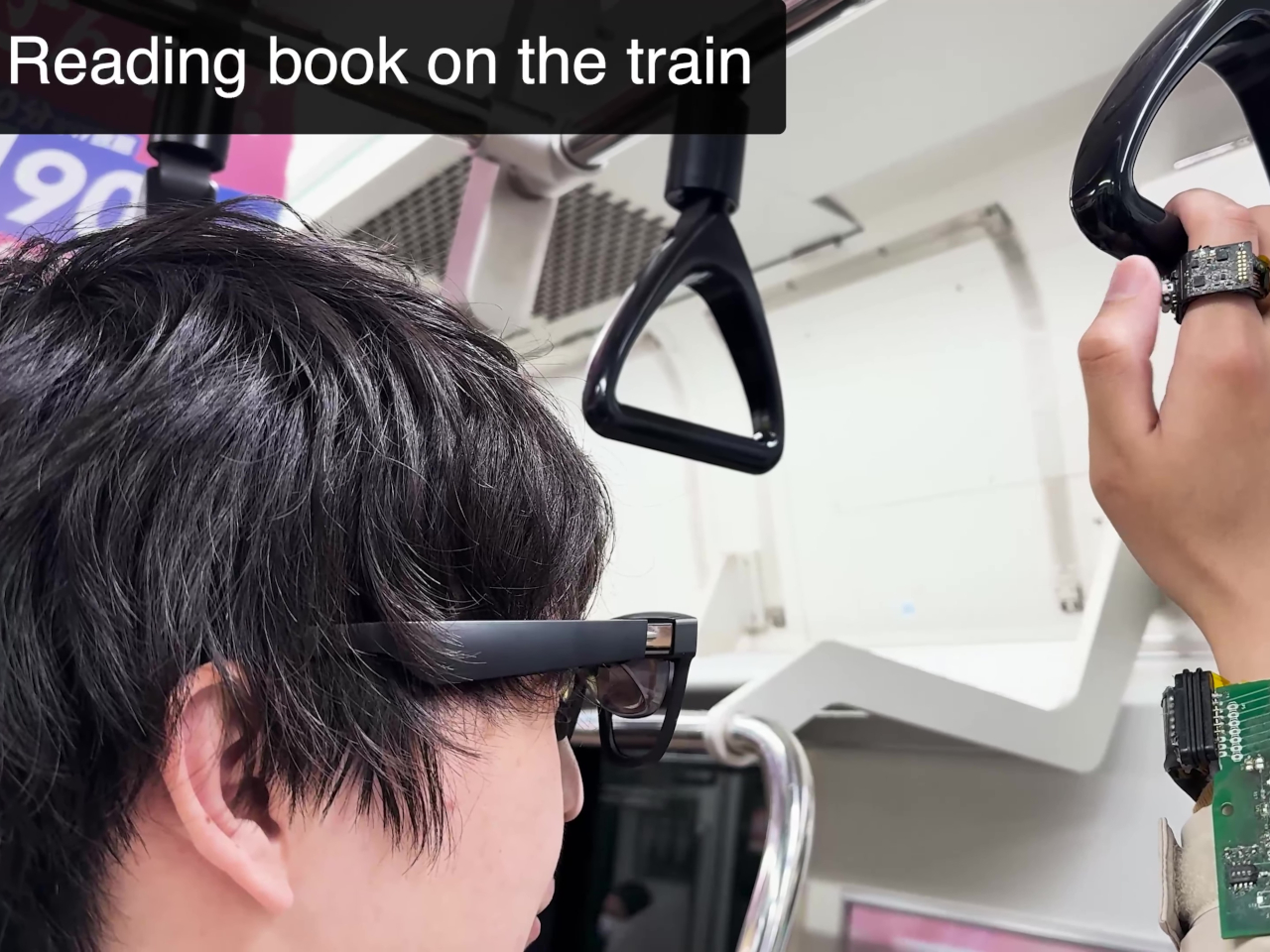
That said, this remains a research prototype with significant limitations. The input precision and speed likely can’t match traditional mice for complex tasks, gaming, or detailed work. The learning curve for adapting to ring-based input could be substantial, and compatibility with existing devices and operating systems would require additional development before any commercial viability.
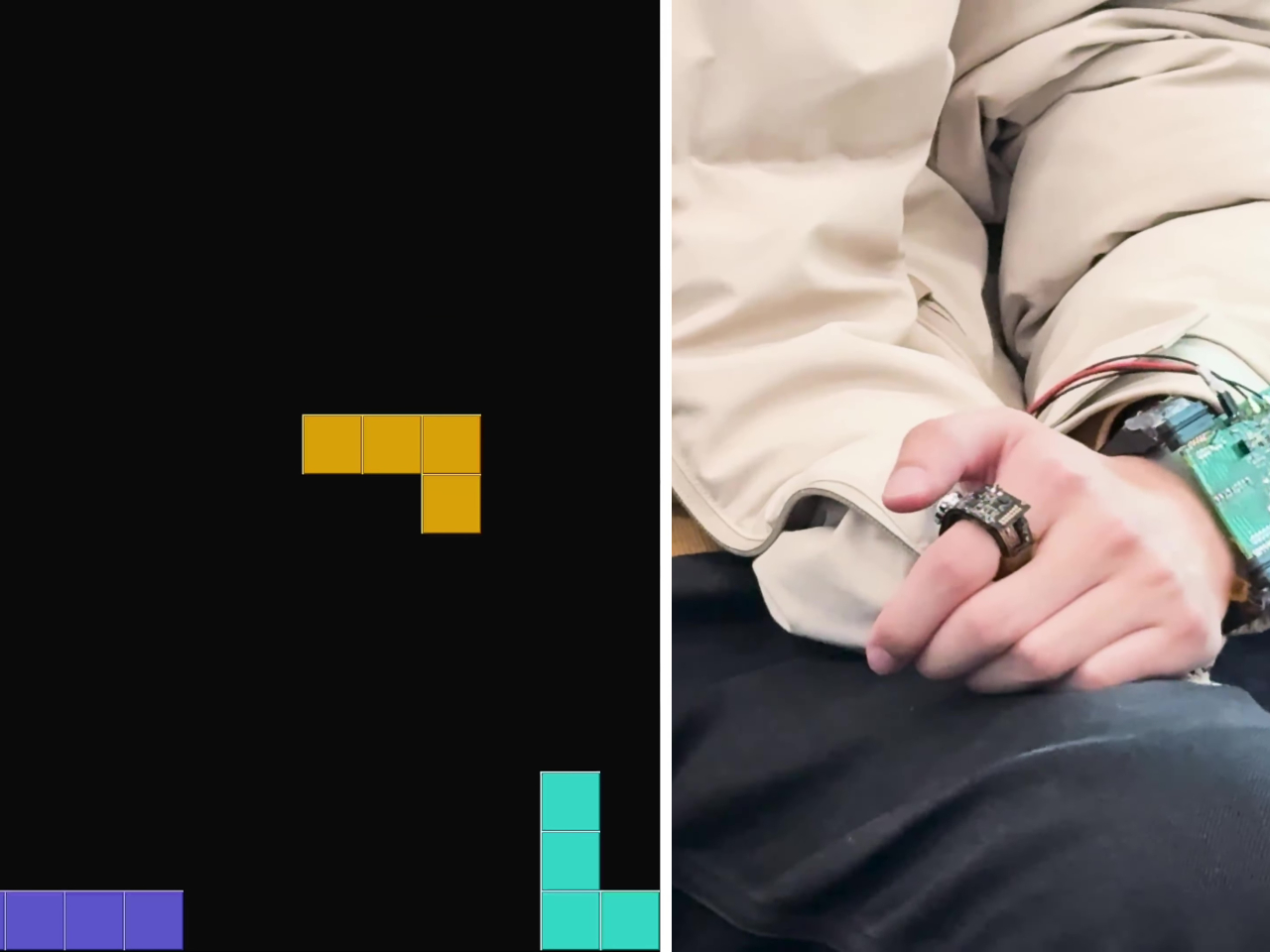
The research status means we’re looking at early-stage exploration rather than a polished product ready for everyday use. The focus is on proving concepts and testing boundaries rather than delivering a consumer-ready experience. Current limitations around input complexity, device integration, and user adaptation would need substantial refinement before practical deployment.
You’ll notice how research like this pushes the boundaries of what input devices can be, exploring possibilities that commercial products might never attempt. The picoRing mouse invites us to reconsider our assumptions about how we interact with technology, suggesting that the future of human-computer interfaces might be far more subtle and integrated than we currently imagine.
The post first appeared on .
Related Posts