In this , it is revealed that the average self-directed Vanguard investor (7 million accounts!) held an asset allocation of 65% stocks, 24% cash, and 10% bonds. That’s a lot more cash than I expected as well.
Then this WSJ article comes up, (gift article). A self-directed investor and former pilot is profiled that keeps 85% in stocks and 15% in a “a money-market fund yielding 3.62%”, which suggests a or another very-low cost money market.
He is keeping 85% of his portfolio in stocks and the rest in a money-market fund yielding 3.62%. Ross looked at historical bear markets and determined they typically don’t last longer than three years. He keeps enough of his portfolio in cash to comfortably get himself through that period, and he sells stocks when he needs to replenish his cash pile.
The rest of the article is about financial advisors thinking this is wrong and suggesting all sorts of alternatives, from muni bonds to private credit to buffer ETFs.
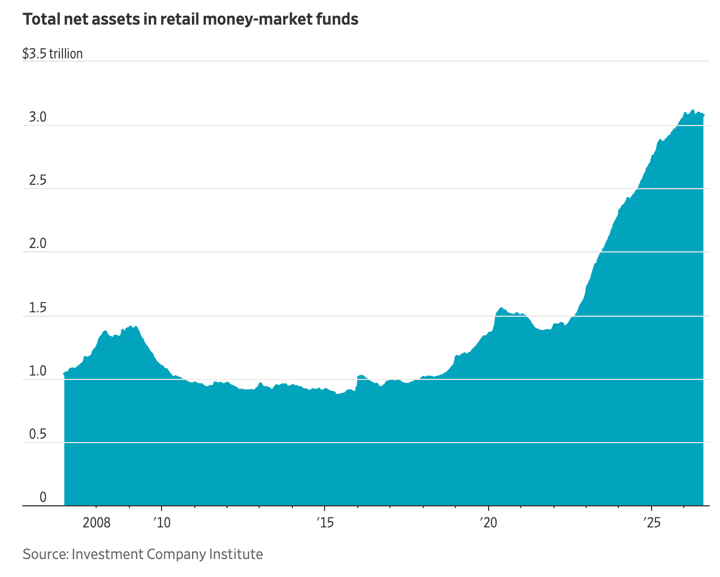
Now wealth and asset managers, eager to prove their worth and in many cases earn more fees, are trying to persuade investors to put it to work. Search for the phrase “too much cash” and you will find numerous articles penned by the likes of JPMorgan Chase and Charles Schwab, warning about the risk of being underinvested.
I found myself siding with the pilot. Maybe an alternative bond fund would give you a slightly higher yield, but the yield curve right now is still not very steep. As long as you are smart with your cash holdings () and avoid crappy default sweep options with low yield from brokerages (like *cough*, JPMorgan Chase at and Charles Schwab at 0.01%!) and instead buying SGOV, VBIL, or a Vanguard money market fund, you won’t be losing that much to a riskier bond alternative. Perhaps that is also partially why the cash allocation of Vanguard investors is so high. Their money market funds are quite good.
Switching to other bonds types can be fine, but be aware of the additional risk you are accepting for that higher yield. You may be taking on principal risk (buffer ETFs can lose money), duration risk (longer-term bonds can lose money), credit risk, or liquidity risk (private credit may limit withdrawals).
Finally, cash is simply a very safe, very short-term bond. Bonds are broken down by maturity, and Treasury bills with under 30 days of maturity are considered cash (“cash equivalents”). I see nothing wrong with taking your risk with stocks and keeping your “bonds” the safest flavor of bonds possible.
Related Posts