Learning Braille is hard. Anyone who has ever pressed their fingertips against a page of raised dots knows that even identifying one character takes real practice and patience. Now imagine being a young child, just starting out, expected to master an entire tactile alphabet without any of the visual shortcuts that sighted learners rely on. The learning curve is steep, the tools are often clinical, and the experience can feel deeply isolating.
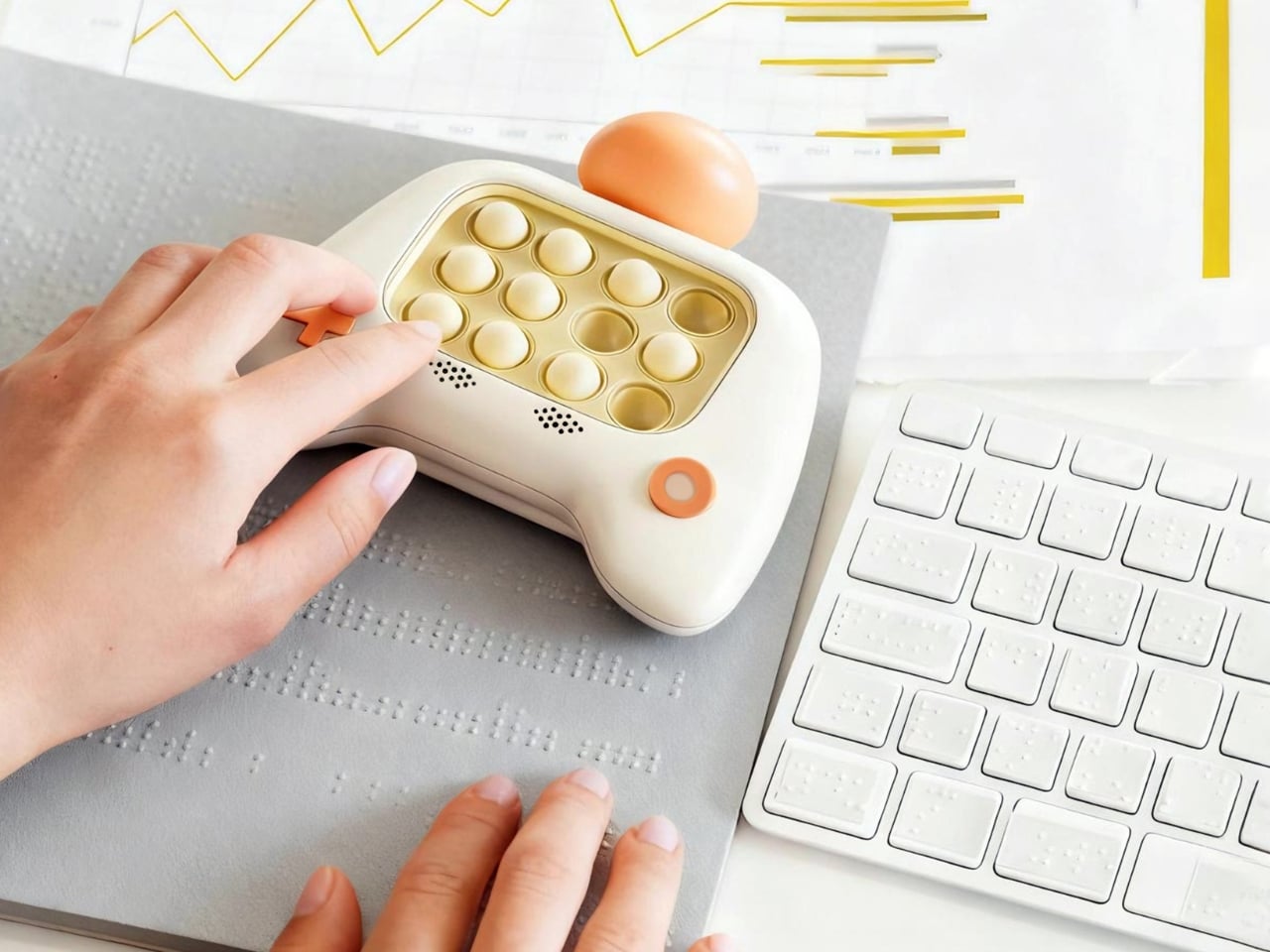
That’s exactly the gap the Bubble Braille Gaming Machine is trying to fill. Designed by Shenzhen IU+Design Co., Ltd. and featured on the iF Design Award platform, the Bubble Braille is a handheld gaming device built specifically for visually impaired children. It looks less like an educational tool and more like something you’d see a kid trying to smuggle under a classroom desk, and that, I think, is entirely the point.
Designer: Shenzhen IU+Design Co., Ltd.
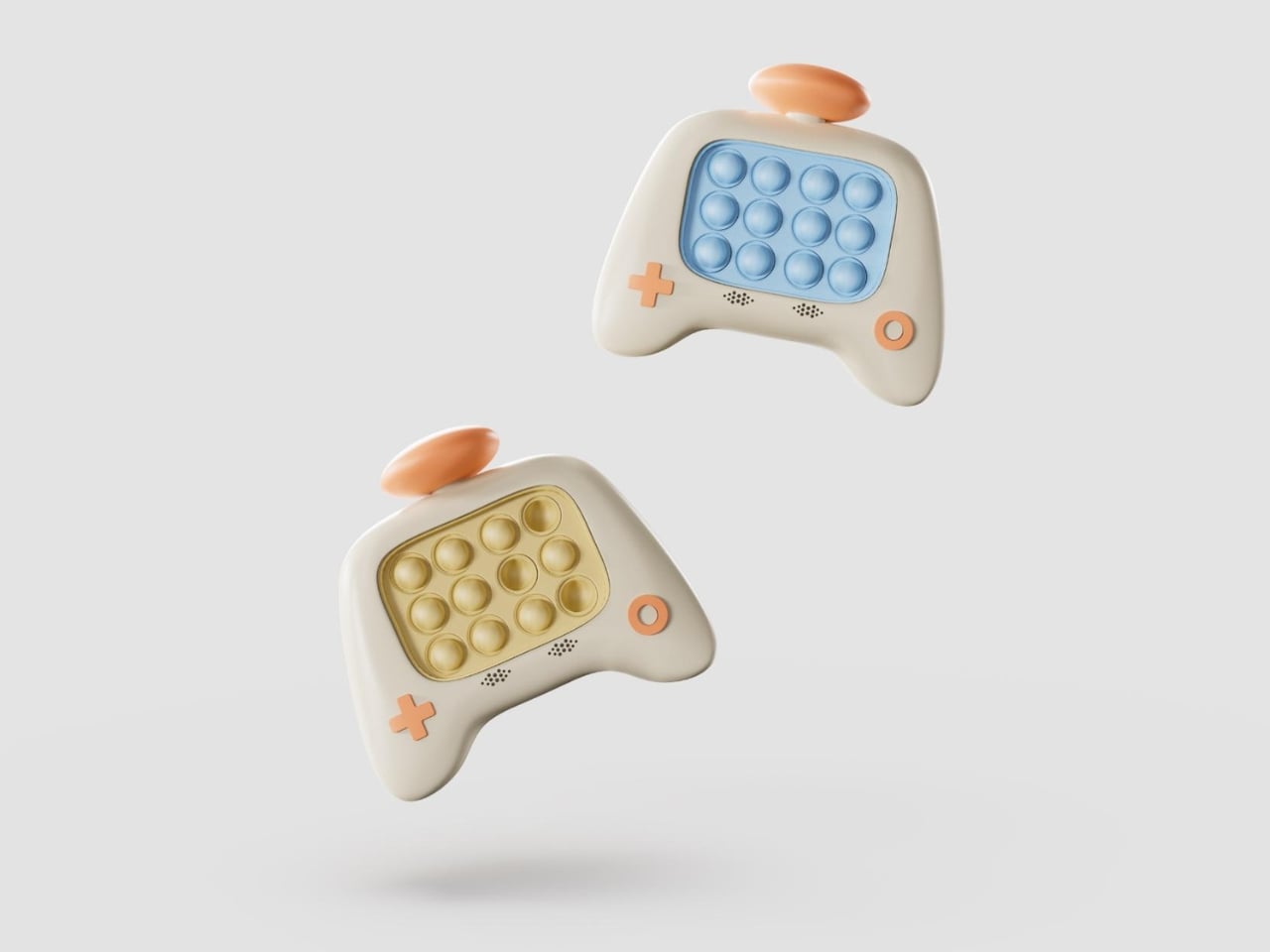
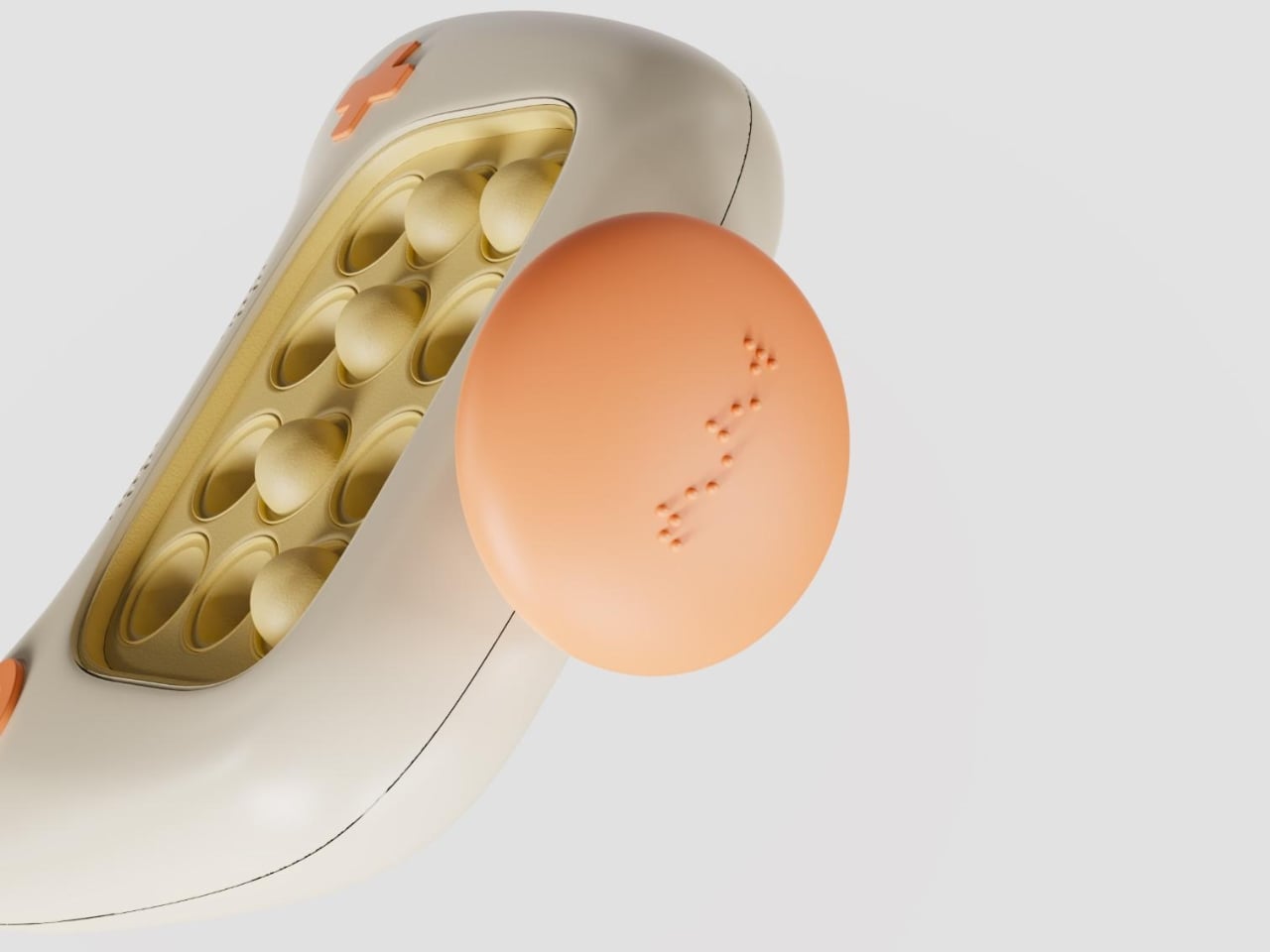
The device is shaped like a compact game controller, with a grid of raised silicone buttons at its center and a soft, egg-shaped button at the top. Those bubble-like buttons aren’t just for squishing, though the satisfying tactility certainly doesn’t hurt. Each one is designed to accurately simulate the raised and recessed dot patterns of Braille, so children are building finger memory and character recognition through play rather than through rote drilling. The silicone material feels like an intentional and smart choice: soft enough to be non-threatening for little hands, yet precise enough to replicate the tactile nuances of actual Braille text.
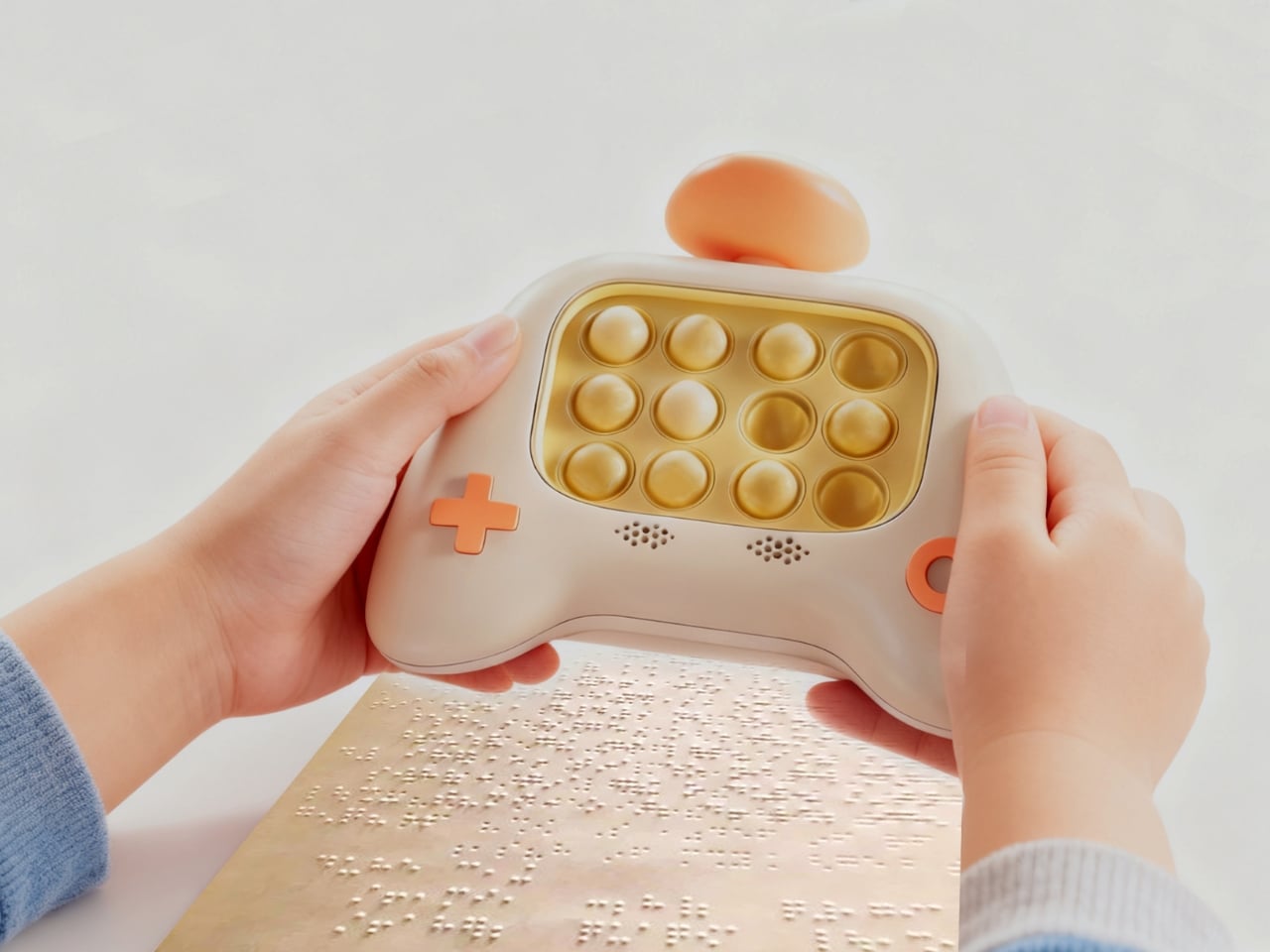
The warm cream-and-peach colorway, also available in a soft blue variant, lands somewhere between a retro Game Boy and a modern sensory toy. It’s disarming in the best way. Inclusive design doesn’t always need to announce itself with clinical aesthetics, and the Bubble Braille fully embraces that idea. It looks like something a kid would want to own, not something they were assigned.
The social angle of this device is the part that tends to get overlooked in conversations about assistive design, and it might actually be the most compelling thing about it. Braille literacy rates among children with visual impairments have been in decline for decades. In 1960, over 50% of blind school-age children in the US could read Braille. Today, that number is a fraction of what it once was, partly because of audio tools and evolving technology, but also because of something less discussed: the quietly isolating nature of learning with tools that constantly set a visually impaired child apart from their sighted peers.
The Bubble Braille sidesteps that problem by making the device interactive for both visually impaired and sighted children. Two kids can sit down and play together, which means a visually impaired child isn’t practicing in isolation. They’re playing. With a friend. On equal footing. That shift feels small on the surface, but it carries real weight. Research consistently links early Braille literacy to better employment outcomes, higher educational attainment, and stronger self-esteem. A toy that makes that process joyful and shared isn’t just thoughtful design. It’s genuinely meaningful.
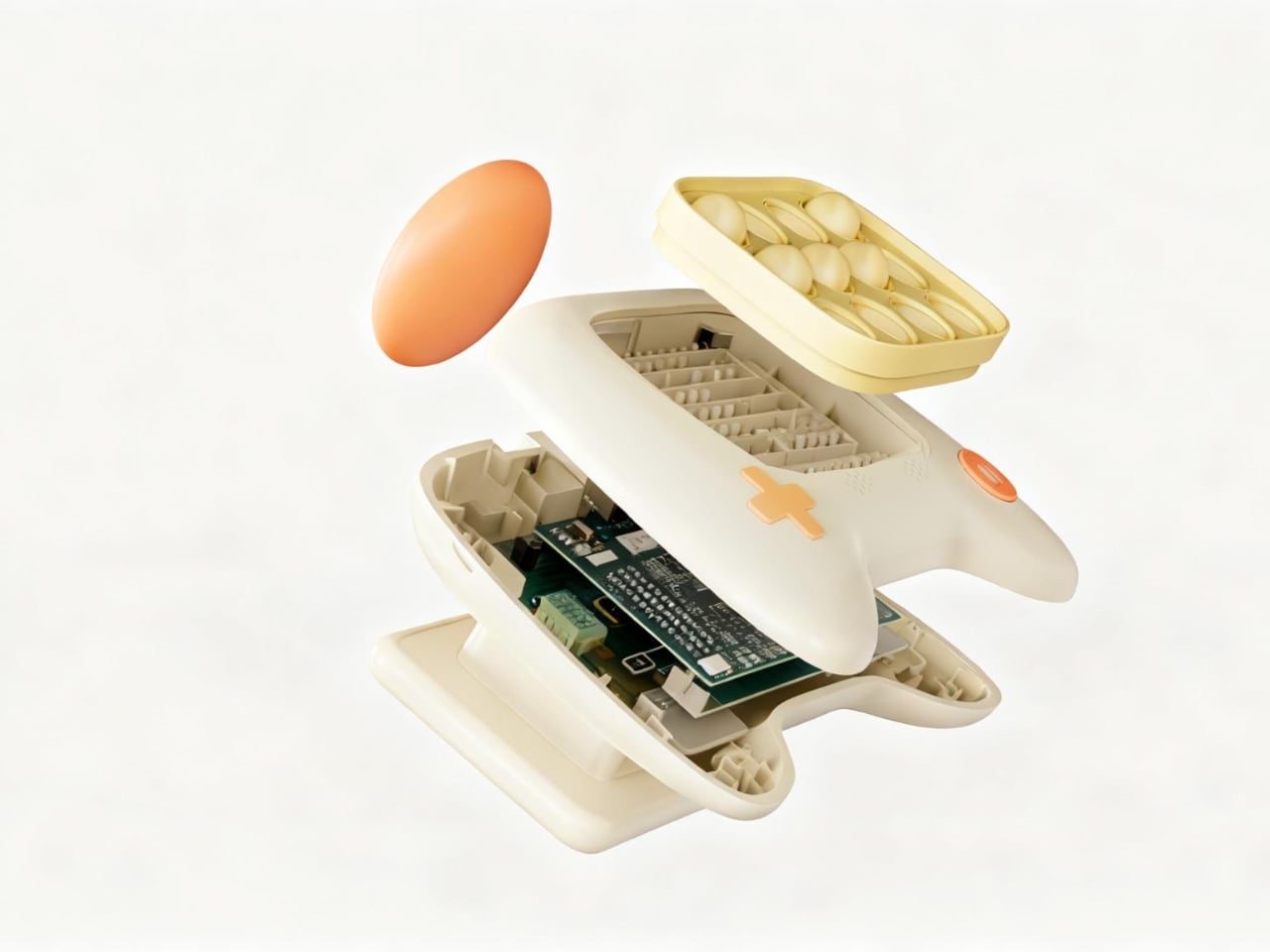
The exploded view images of the device reveal a real circuit board and internal hardware, so this isn’t a concept render built on wishful thinking. The components suggest audio feedback capabilities, which makes sense for a multi-sensory learning experience. Tactile input paired with sound cues is exactly how young children absorb and retain new skills, and it’s encouraging to see that level of functional consideration built directly into the design.
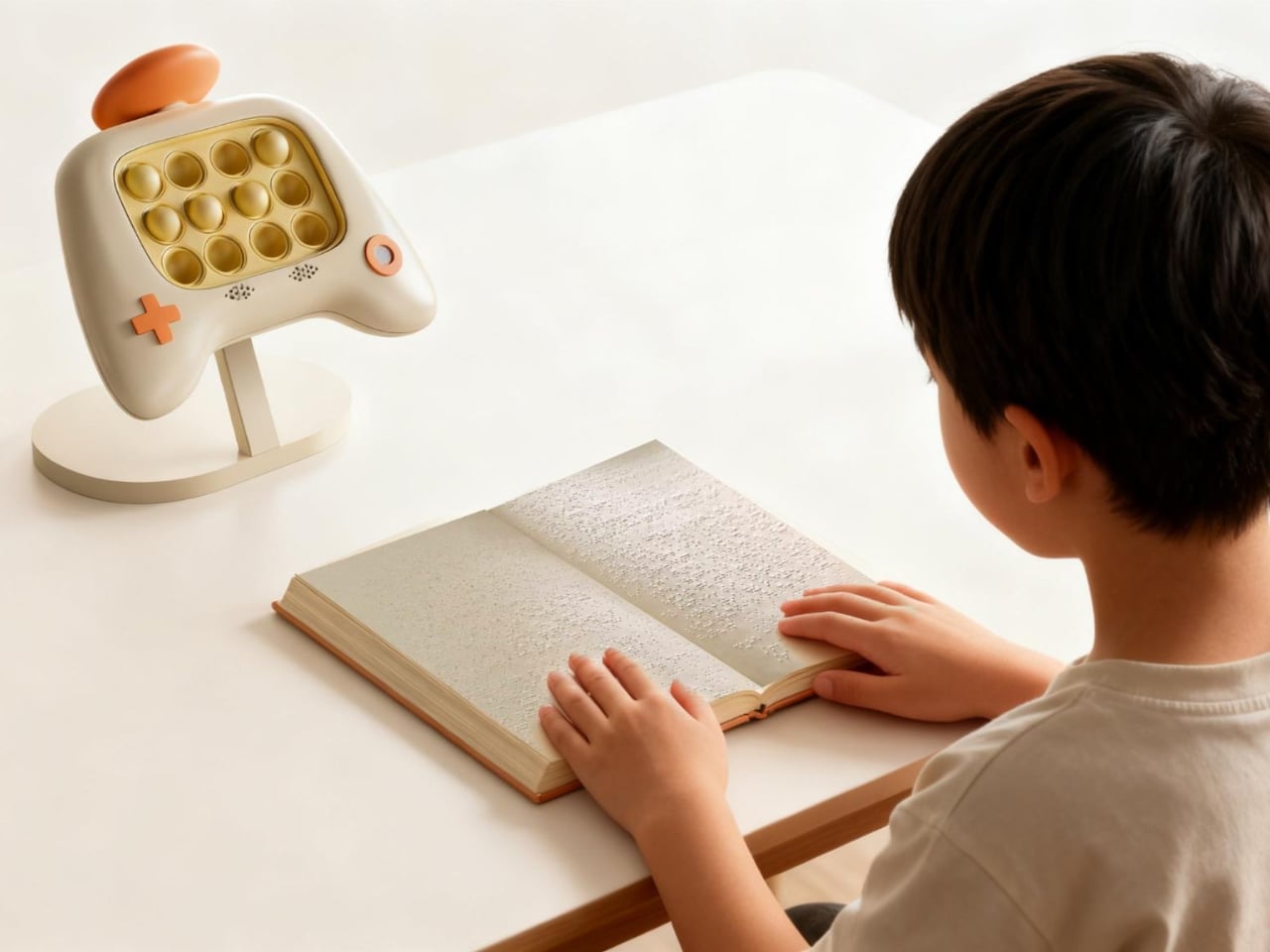
I’ll be honest: most so-called educational toys are neither. They tend to be watered-down skill drills dressed up in primary colors. The Bubble Braille feels different because the game mechanics and the learning mechanism are the same thing. The fun isn’t layered on top of the function. They’re inseparable. This is exactly the kind of design that makes me genuinely optimistic about where inclusive product thinking is heading. It doesn’t treat accessibility as an afterthought or a compliance checkbox. It treats the end user, a child who deserves to learn, to play, and to connect, as the entire starting point. More of this, please.

The post first appeared on .
Related Posts