The Largest Roman Mosaic Ever Excavated Opens to the Public

At 33 feet wide and 52.5 feet high, an ancient mosaic recently unveiled to the public may be the largest in the entire Roman world. It sits within the recently opened Museum of the Baths of Trajan in central Rome, which preserves a monumental, early 2nd-century bath complex built by Emperor Trajan covering about 15 acres.

To construct the baths on the Oppian Hill, builders repurposed elements of a previous structure, Emperor Nero’s Domus Aurea, or “Golden House,” originally erected between 64 and 68 C.E. It’s unclear if the mosaic originated in that building; archaeologists think it could have also been part of a lavish dwelling that was later incorporated into the compound. But many of the monumental composition’s tesserae are missing and may have been used in the construction of the baths.
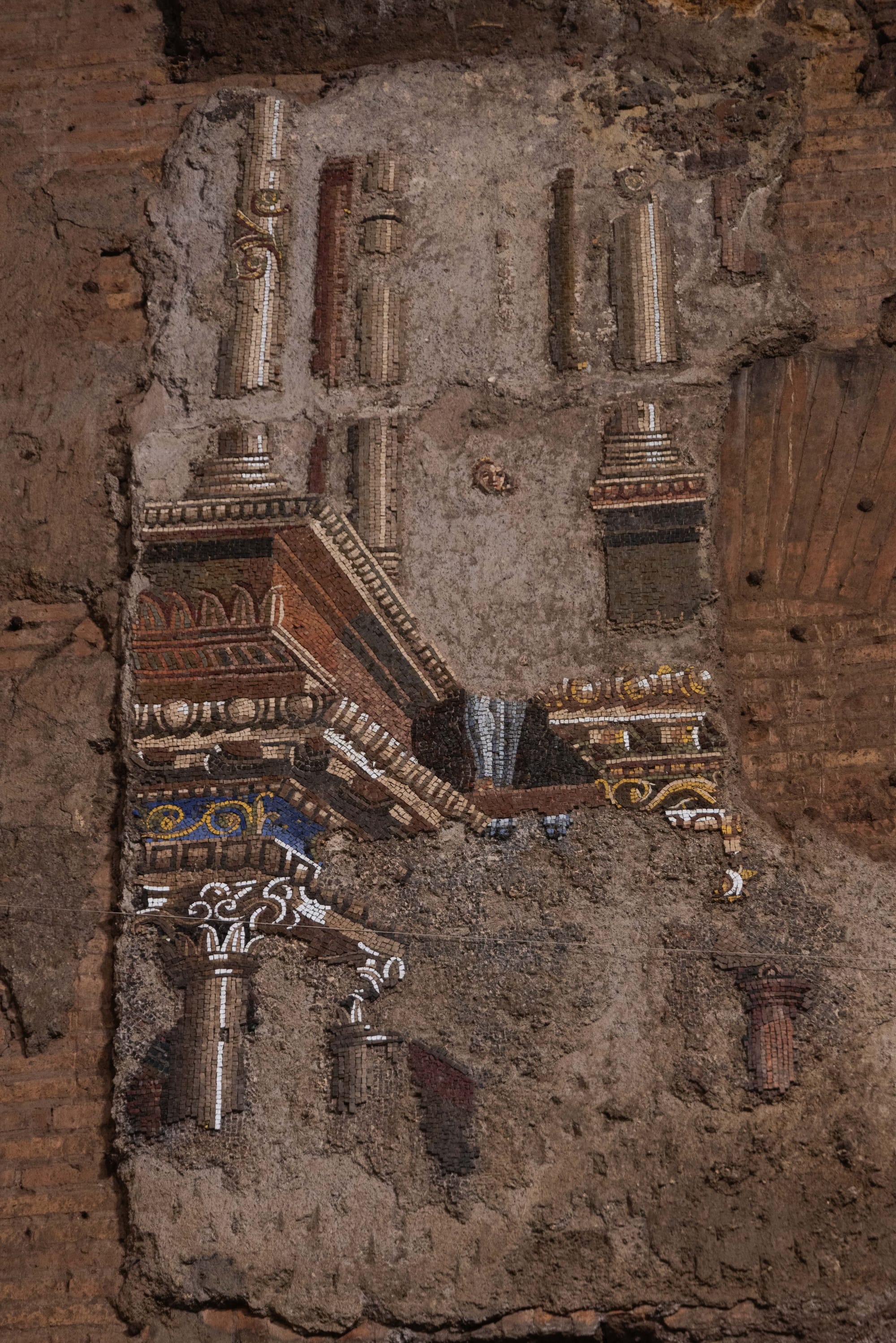
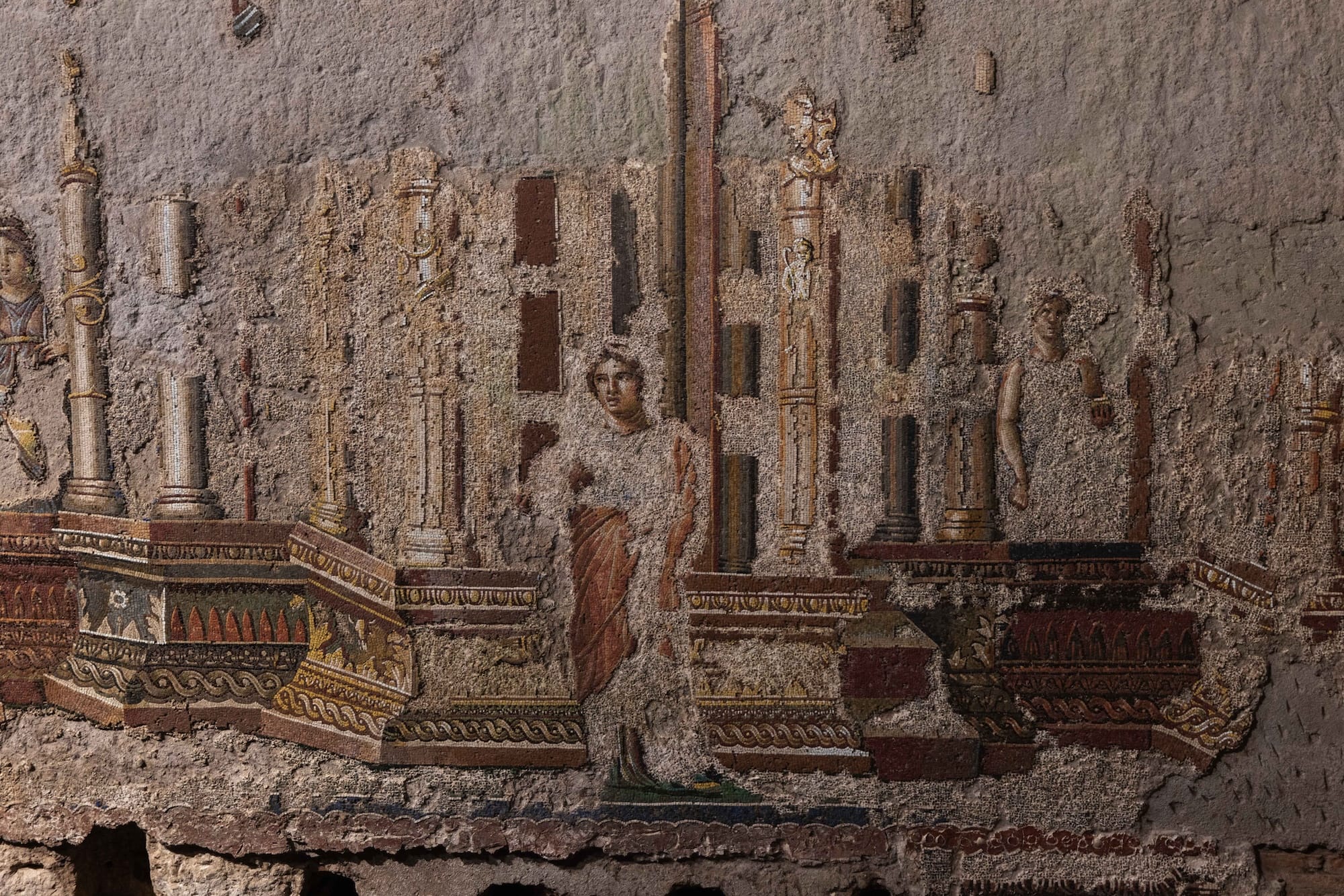
fragments of a conserved ancient Roman mosaic, in situ underground where it was discovered in Rome

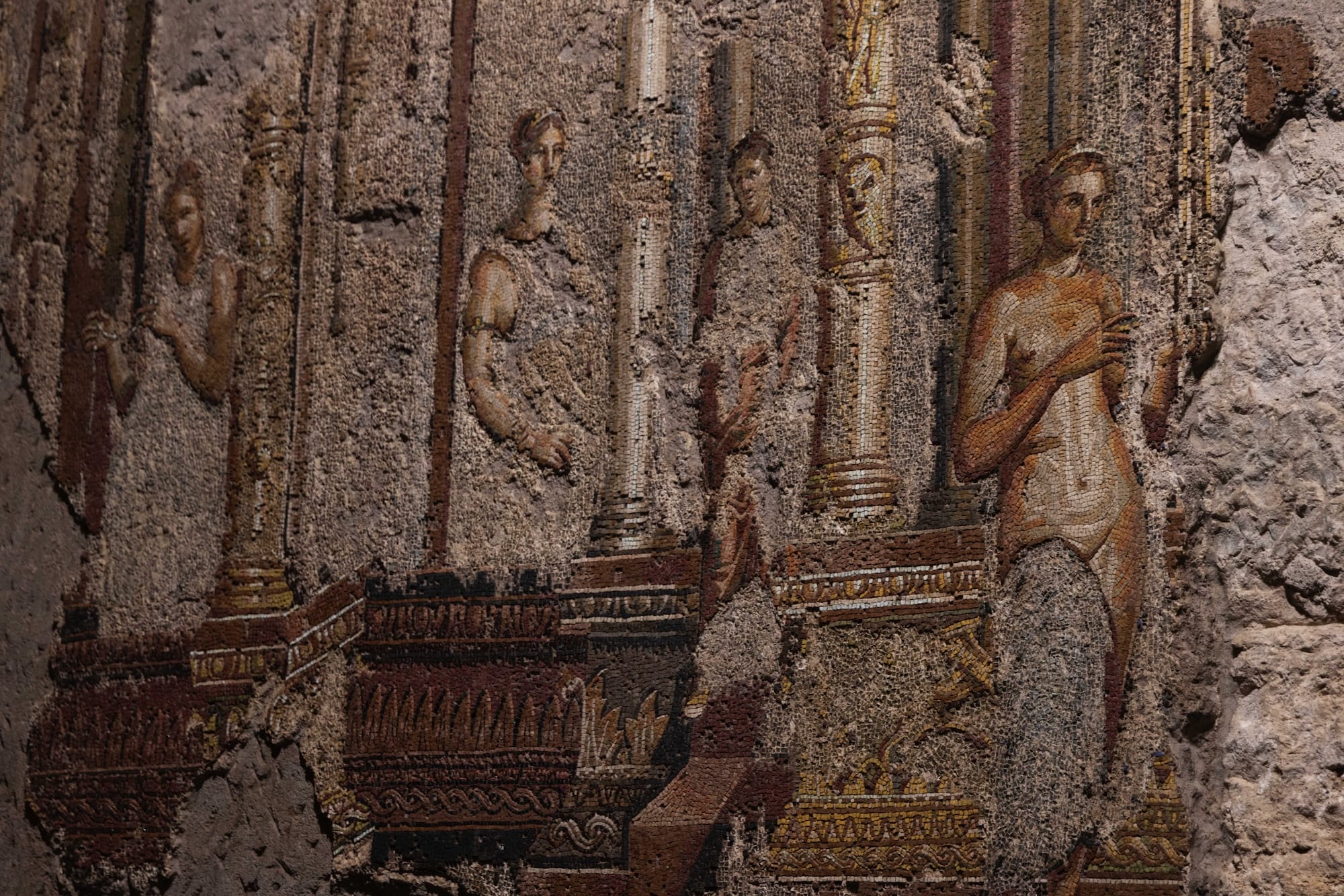
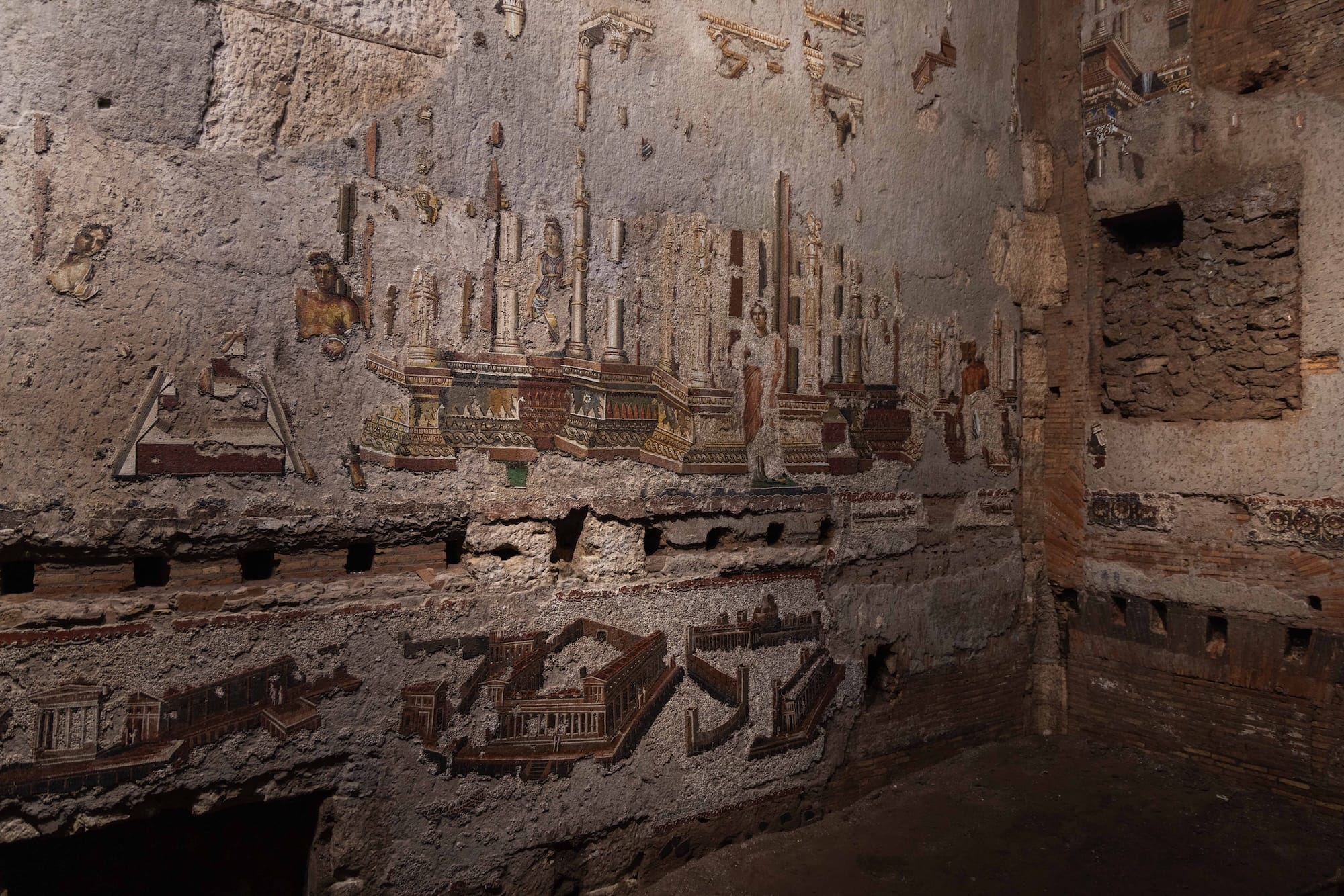
Dubbed the “Great Mosaic,” the work was discovered in 2011, and archaeologists have been meticulously revealing and conserving it since. The in situ artwork depicts architectural features that may represent a dual-level theatrical set, known as a scaenae frons, plus statues of the Muses and other figures and patterns that mimic the appearance of marble.

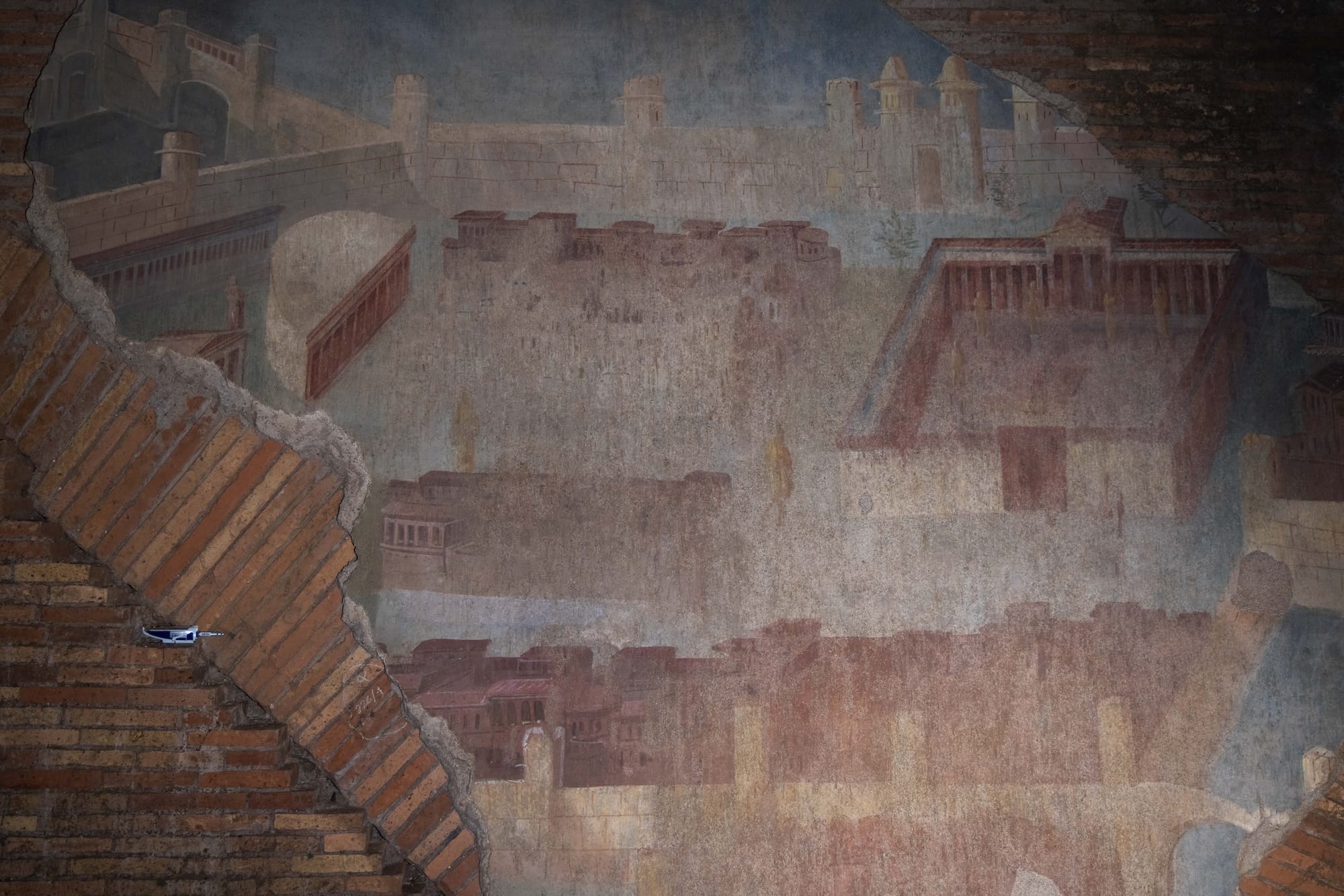
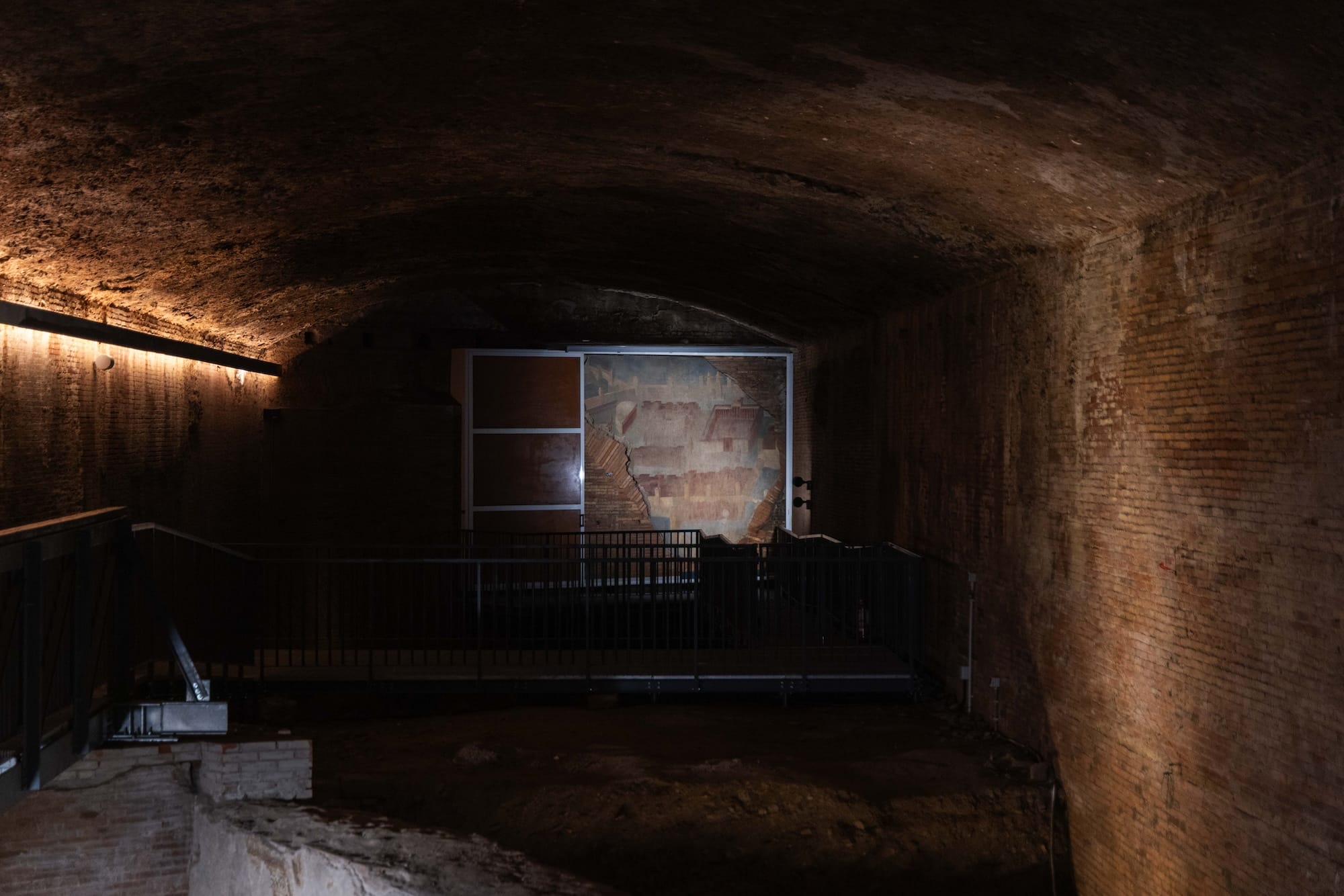
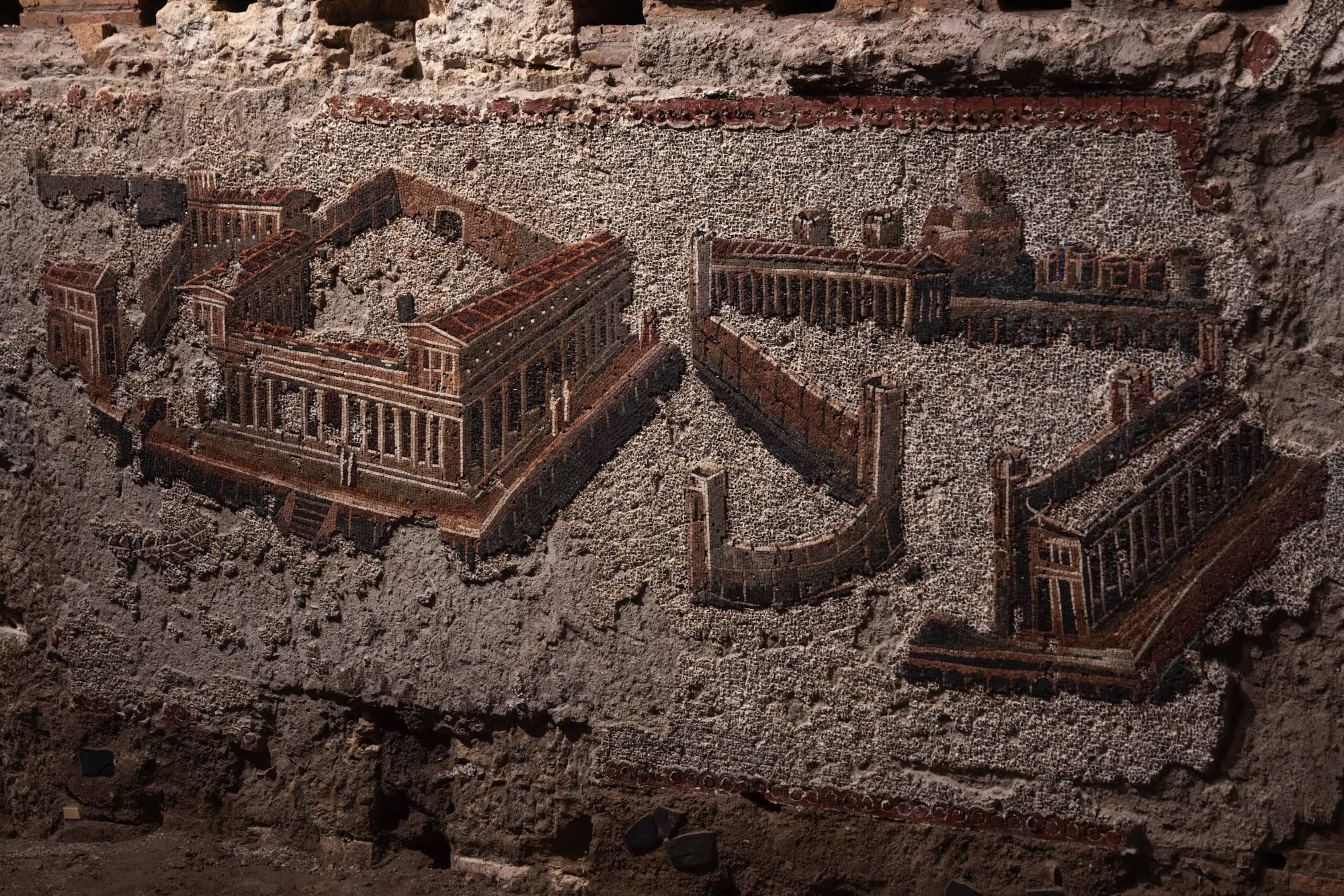
Within the same complex, a remarkable architectural fresco uncovered in the 1990s also goes on view for the first time. Known as the “Painted City,” it’s unclear whether the scenic backdrop for bathers depicts an actual port city or an imaginary place. According to CNN, the aerial perspective portrays some unusual details such as public squares and towers that weren’t a common feature of municipal design in the 1st century.

Archaeologists continue to excavate the “Great Mosaic,” particularly an area focusing on wine-making and grapes. Much of it can now be seen by visitors from an elevated walkway.
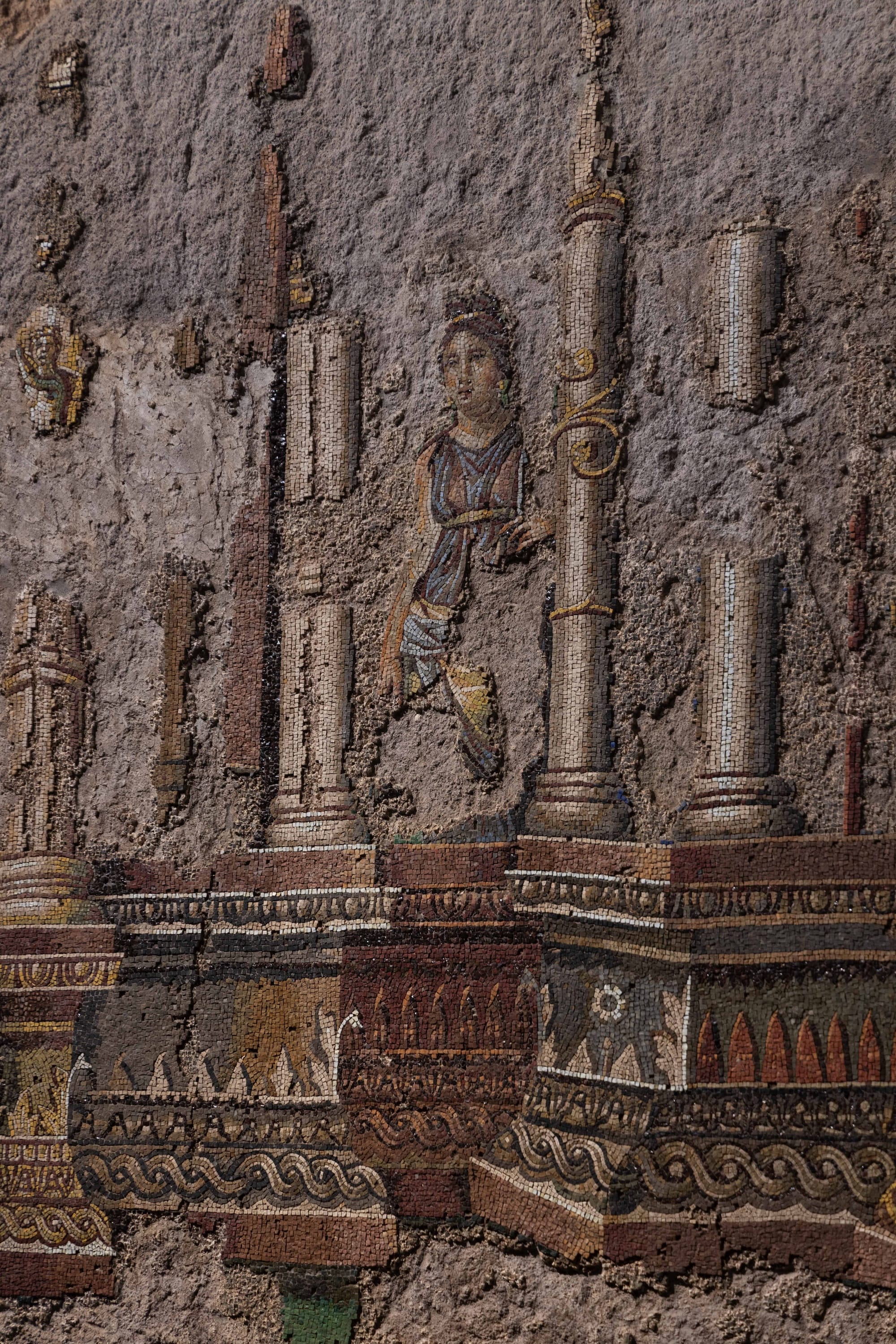
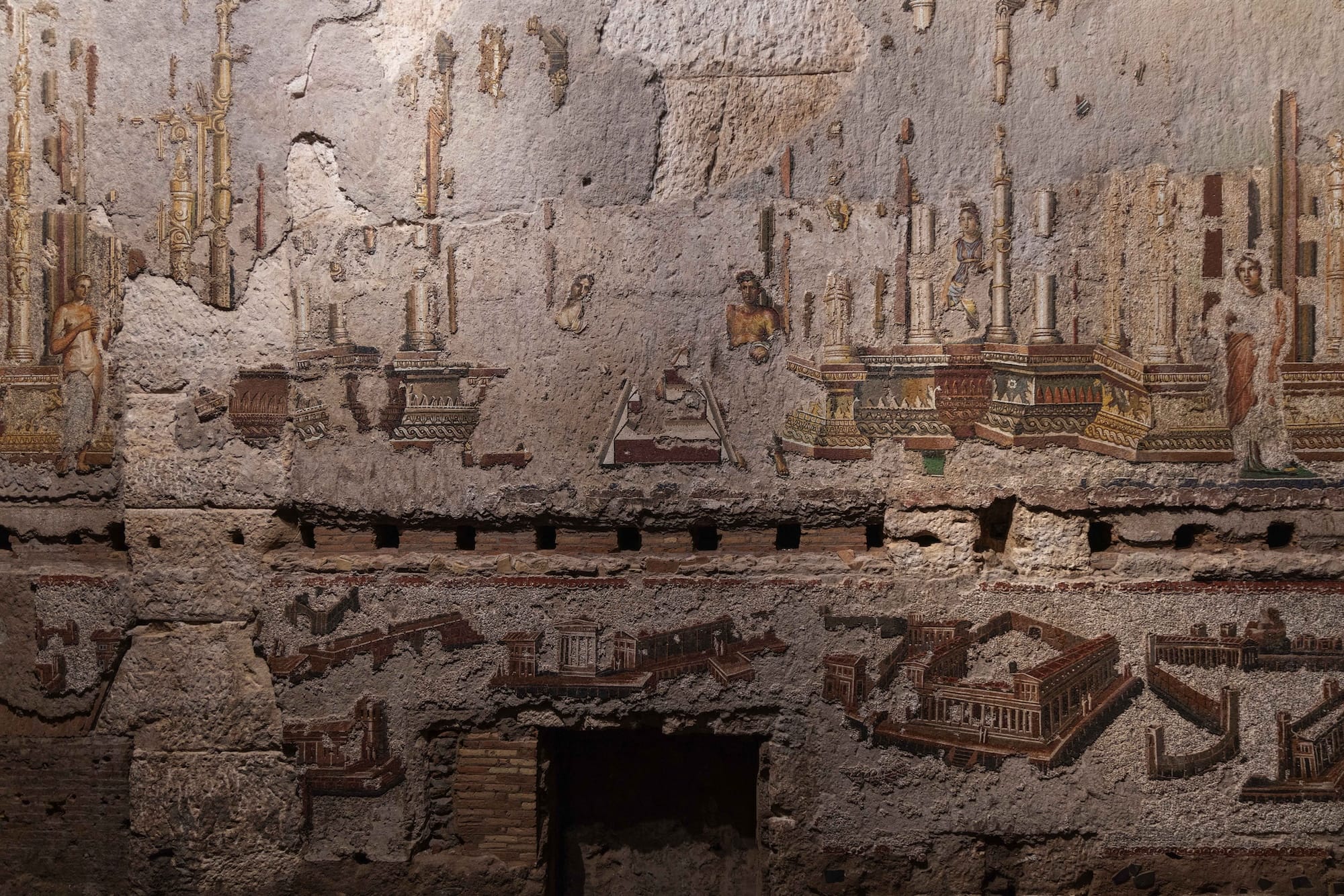
fragments of a conserved ancient Roman mosaic, in situ underground where it was discovered in Rome
an ancient Roman fresco featuring buildings
an interior of an ancient Roman domus with an architectural fresco preserved and illuminated in on a distant wall

Do stories and artists like this matter to you? Become a Colossal Member today and support independent arts publishing for as little as $7 per month. The article The Largest Roman Mosaic Ever Excavated Opens to the Public appeared first on Colossal.

©

Related Posts

Bundanon - A retrospective, part oneBundanon - A retrospective, part one
One year in Bundanon: A retrospective on...
None of us needs much of an excuse to revisit...
Read more
The Largest Roman Mosaic Ever Excavated Opens to the PublicThe Largest Roman Mosaic Ever Excavated Opens to the Public
A Mexican Home by Pedro&Juana Revels in...
Near the edge of a lake in Valle de Bravo,...
Read more
The Largest Roman Mosaic Ever Excavated Opens to the PublicThe Largest Roman Mosaic Ever Excavated Opens to the Public
What Are the Best Watches Under $1000?...
Father’s Day is around the corner, and finding the perfect...
Read more
The Largest Roman Mosaic Ever Excavated Opens to the PublicThe Largest Roman Mosaic Ever Excavated Opens to the Public
House Coworking Offices – Mexico City
Romero de la Mora architecture was asked to design the...
Read more
The Largest Roman Mosaic Ever Excavated Opens to the PublicThe Largest Roman Mosaic Ever Excavated Opens to the Public
RITFIT M2 Smith Machine: A Complete Home...
Home gyms usually mean choosing between what you want and...
Read more
Space & Time in Melbourne by Russell & George | YellowtraceSpace & Time in Melbourne by Russell & George | Yellowtrace
Space & Time in Melbourne by Russell...
  It appears to be somewhat of an existential architectural concept....
Read more