Most benches exist to give you somewhere to sit and catch your breath. They are humble, taken-for-granted objects, placed at intervals on a trail to mark the rhythm of a hike, to offer a moment of stillness in an otherwise demanding landscape. Nobody really thinks about them. And that’s exactly the kind of object Italian designer Francesco Faccin loves to rethink.
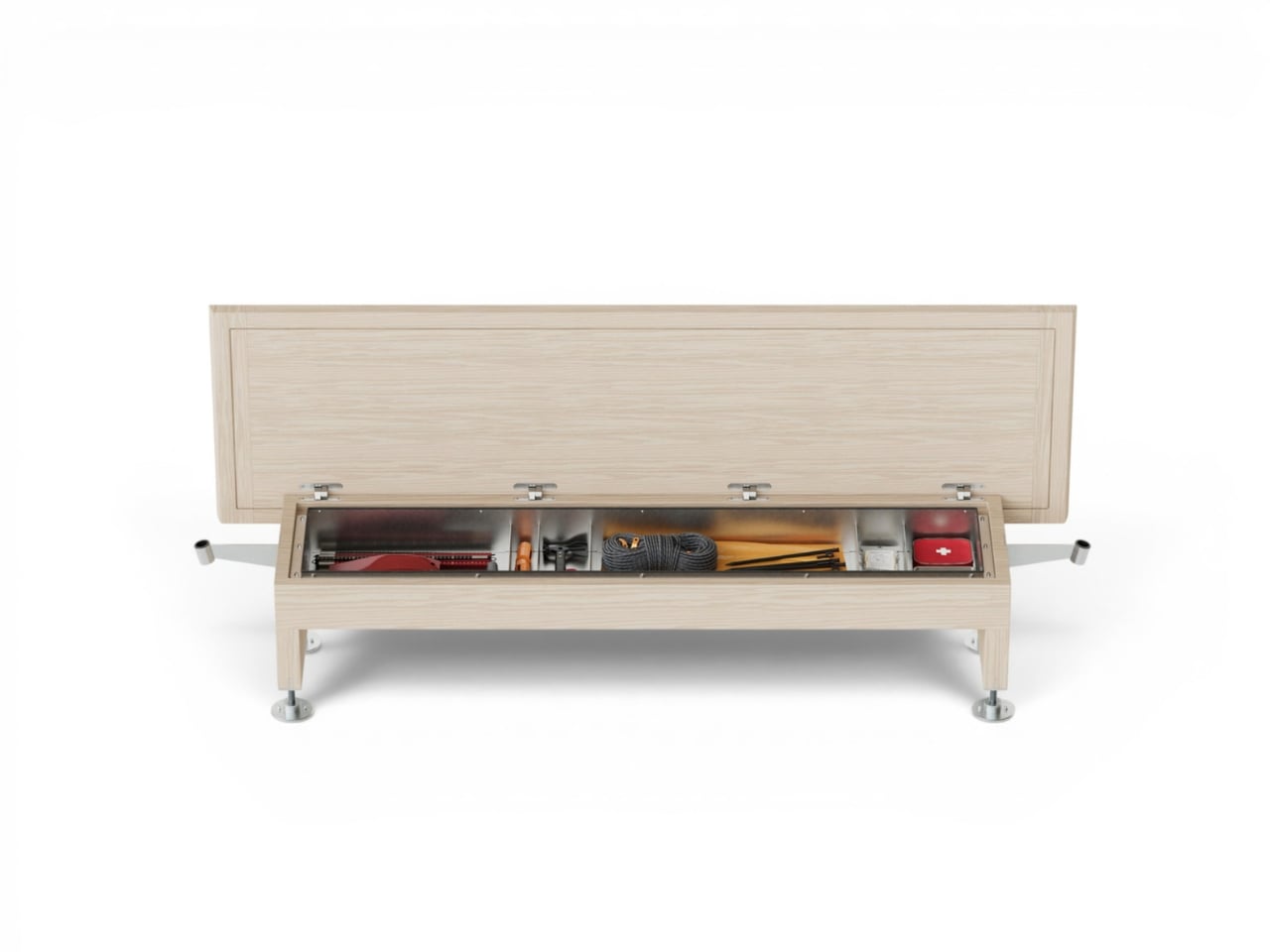
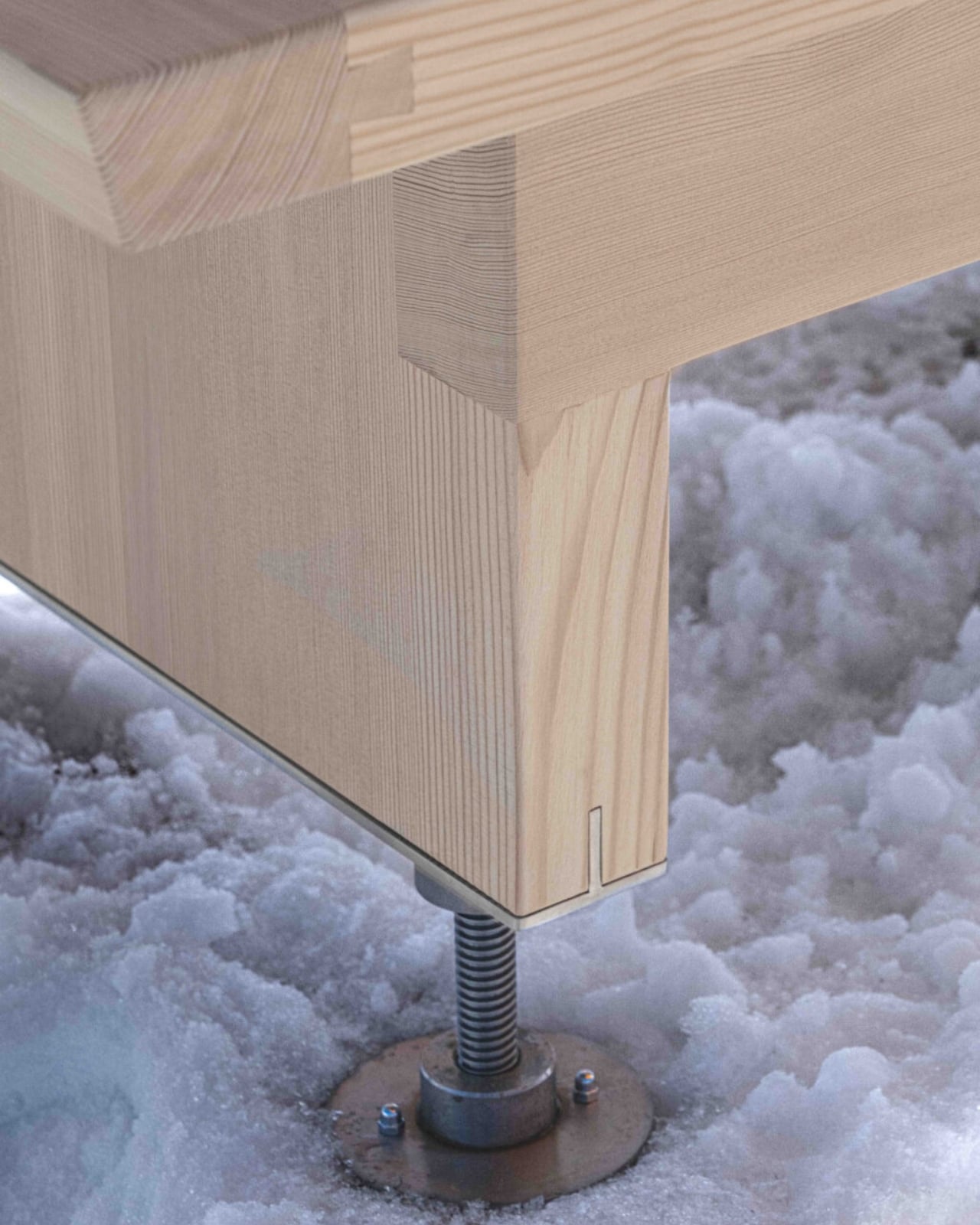
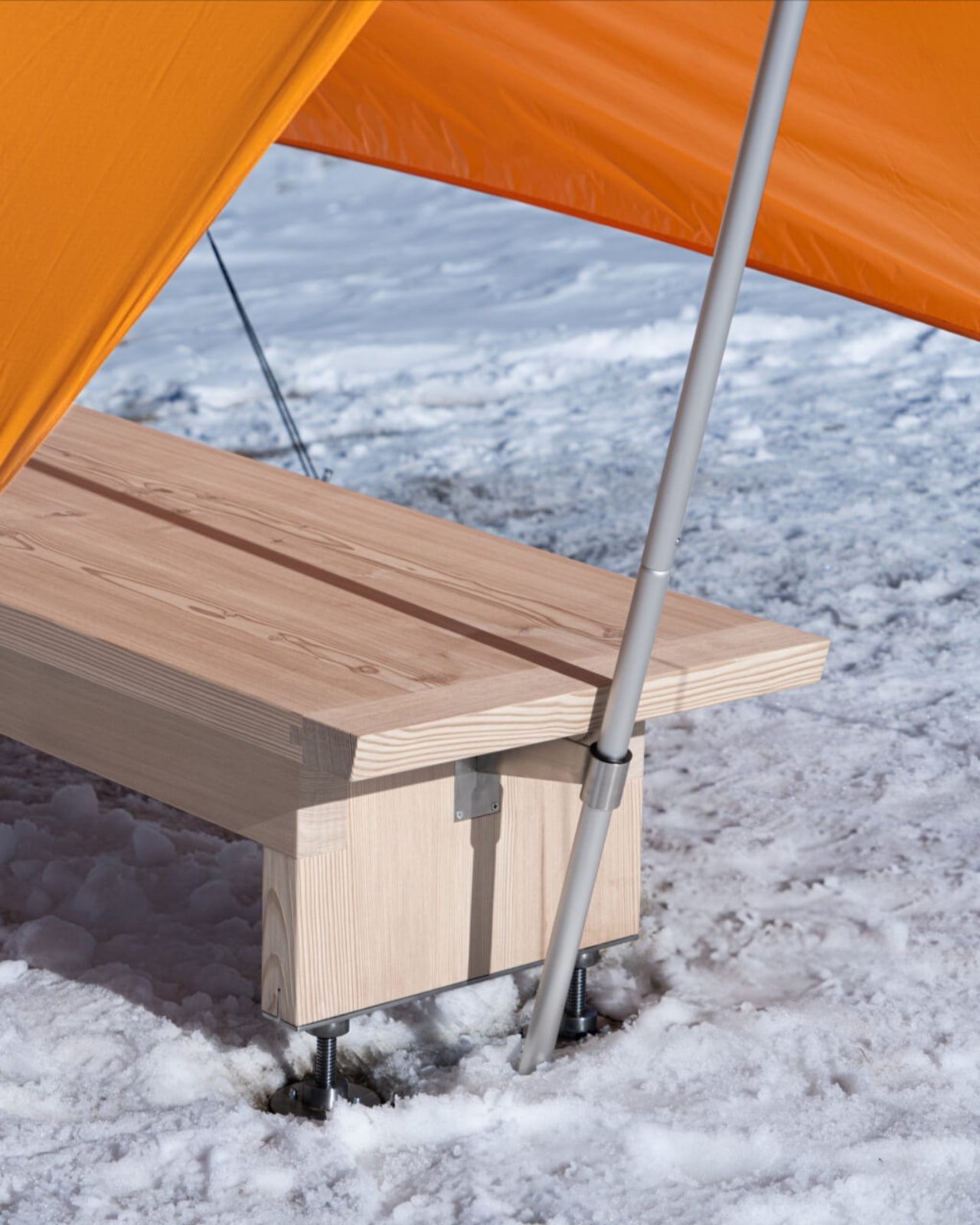
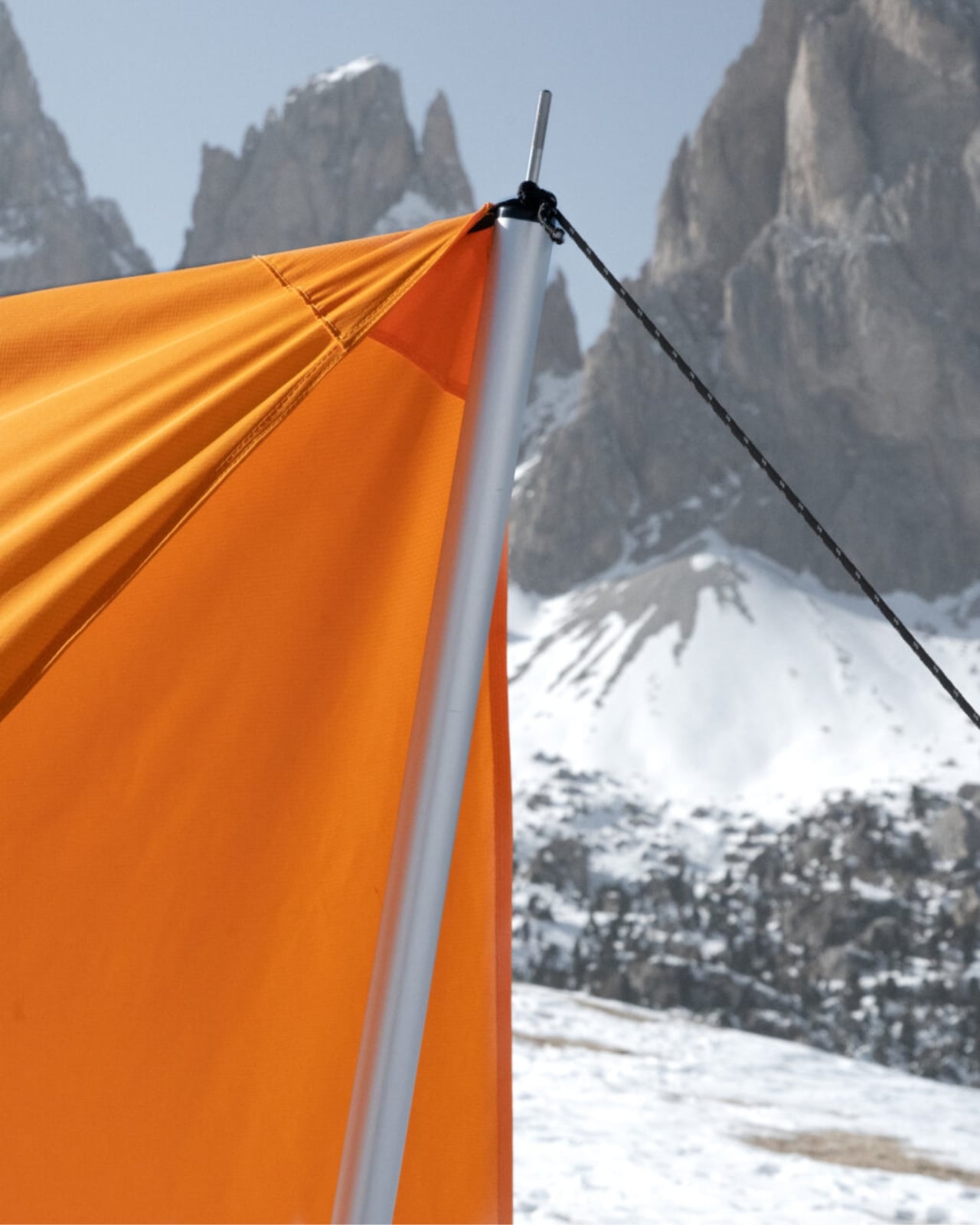
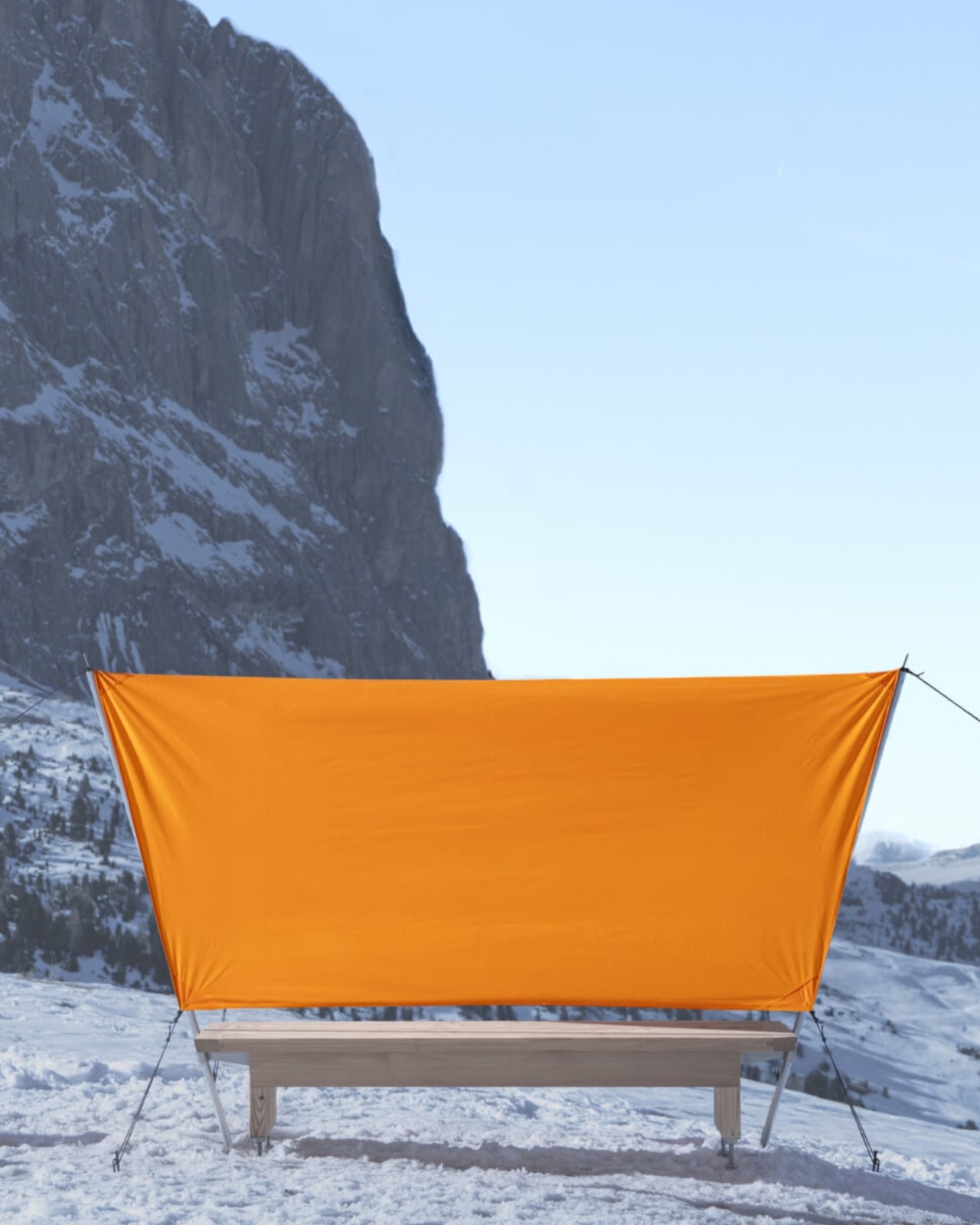
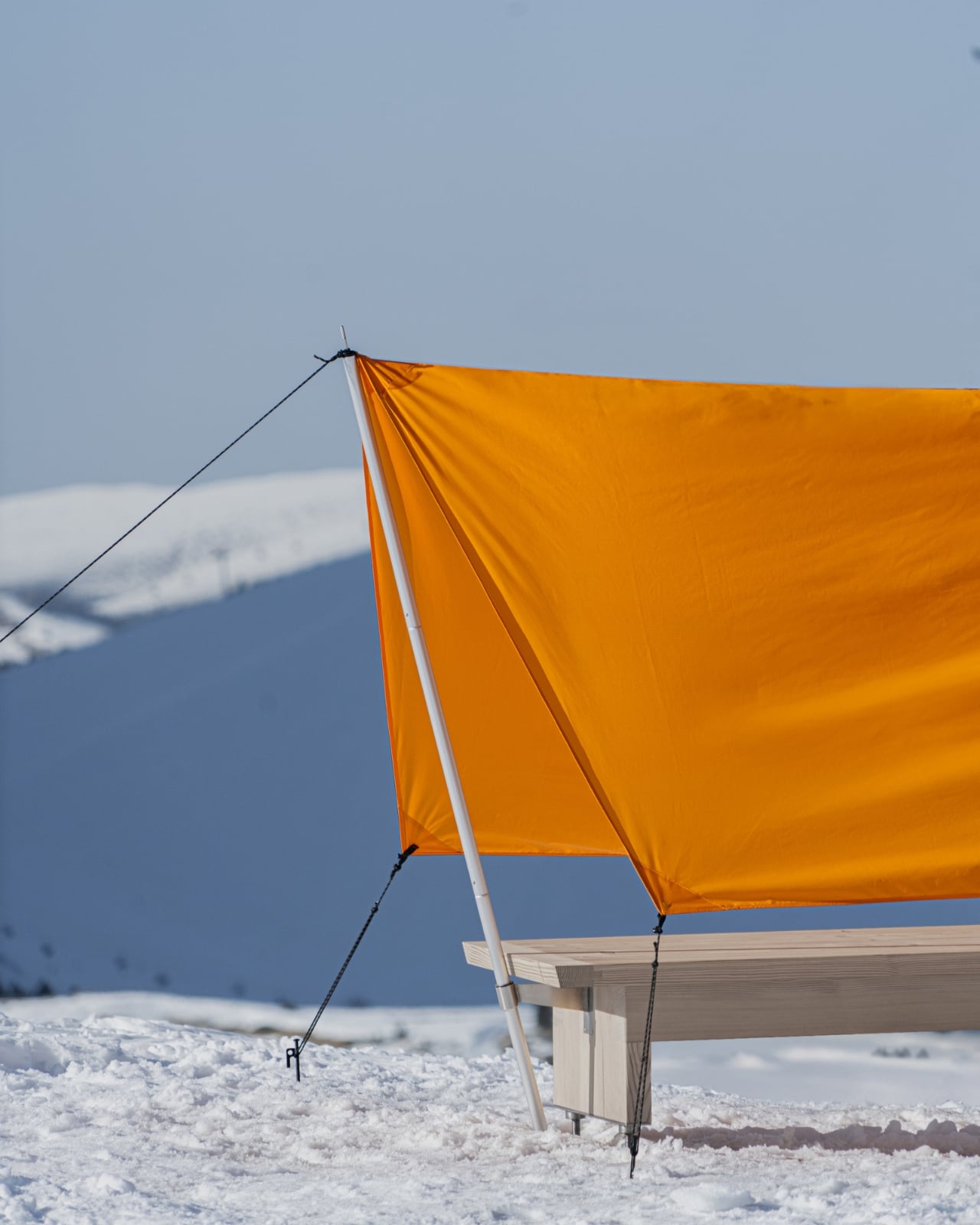
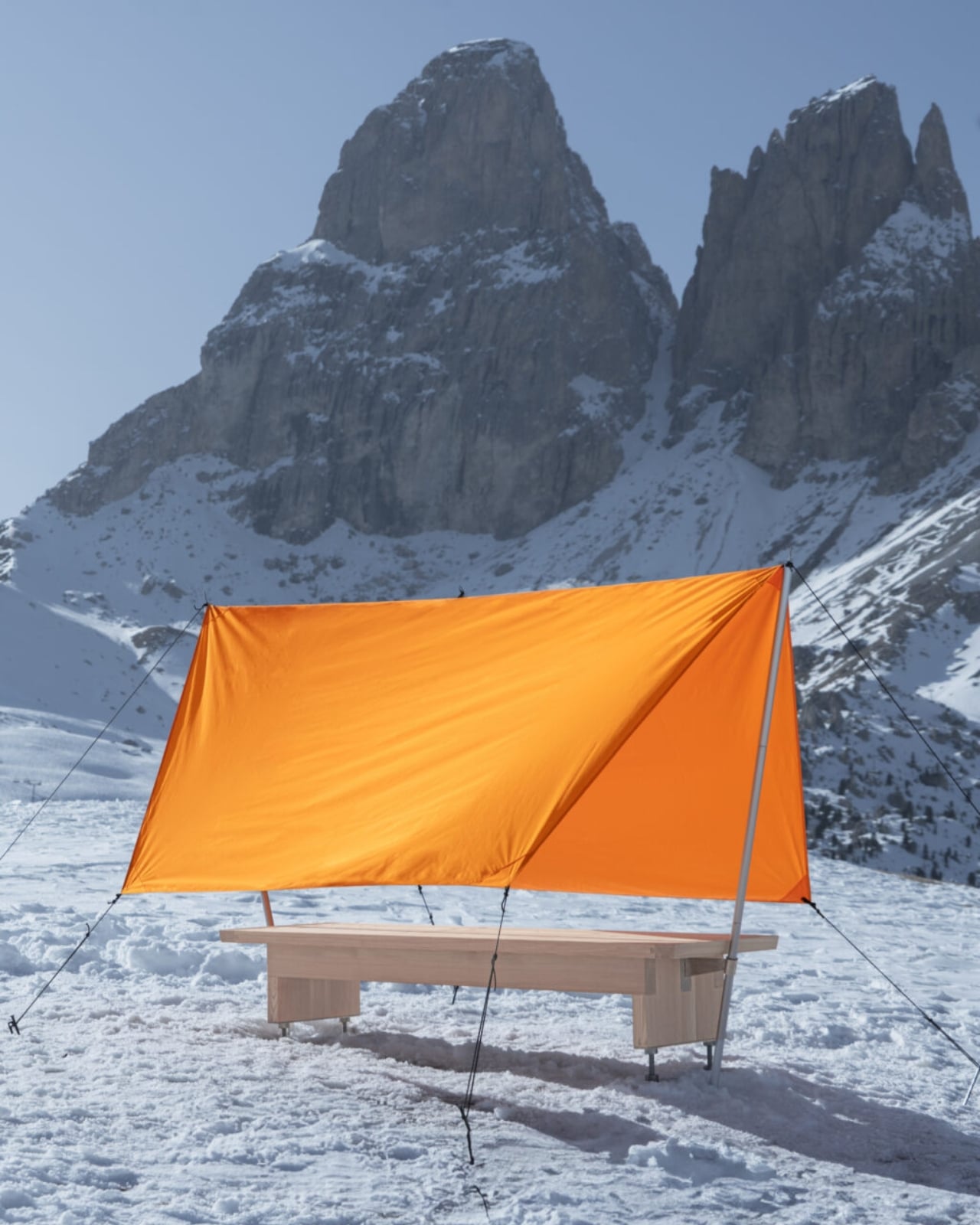
Pancalpina is Faccin’s latest project, commissioned by Trentino Sviluppo for the alpine landscape of Trentino in northeastern Italy. From the outside, it reads as a traditional wooden bench, crafted from solid larch with stainless steel components that can handle whatever the mountains throw at it. Sit on it, take in the view, rest your legs. Nothing unusual. But hidden inside the bench’s belly is a complete survival kit: thermal blankets, a shovel, a torch, and a tent that deploys using the bench’s own structure as its frame.
Designer:
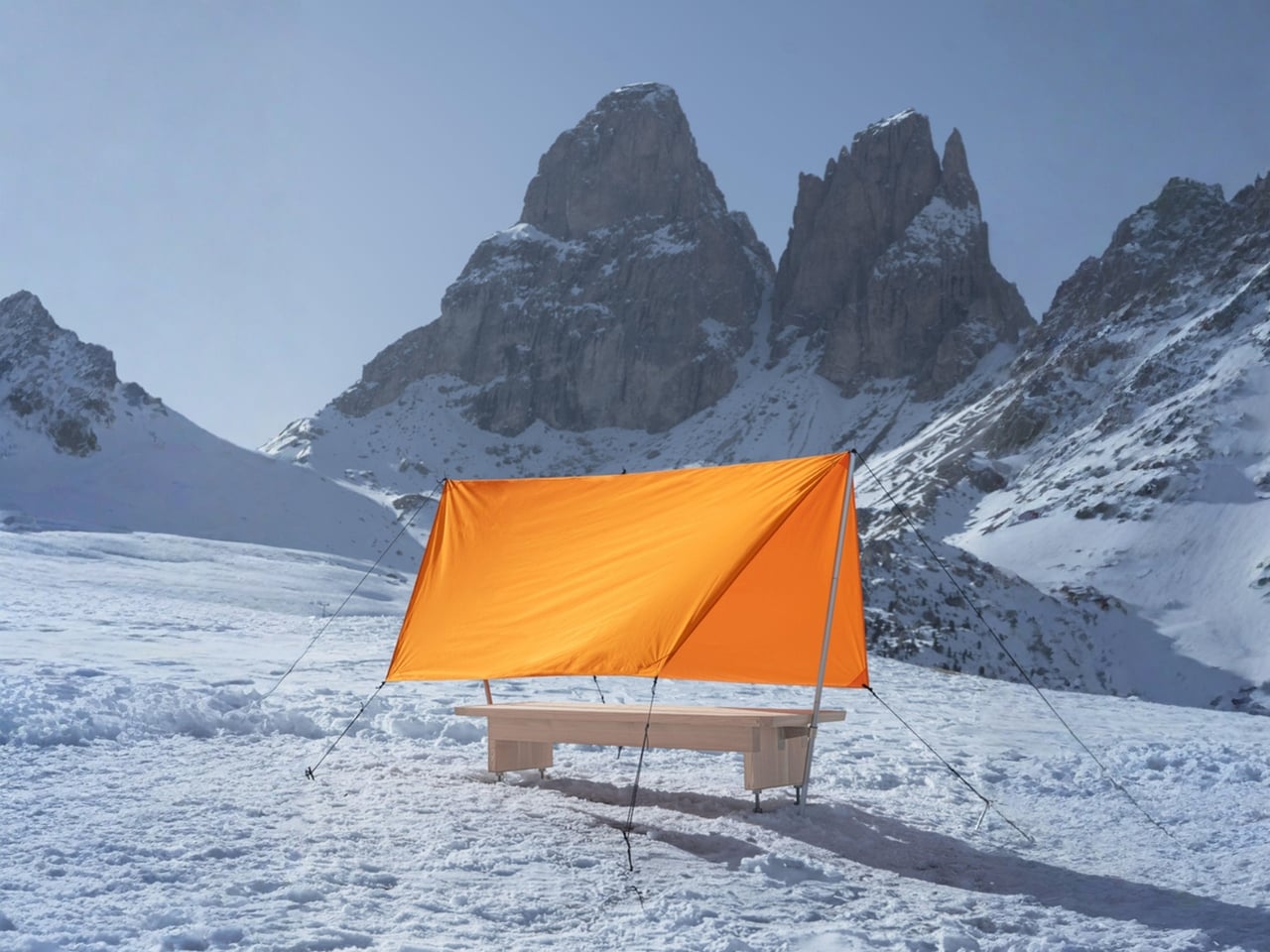
This is not a product born from a design brief looking for novelty. It’s a response to a real and recurring problem in alpine environments: people caught off guard by sudden weather changes, injuries, or simple miscalculation of distance and daylight. Faccin’s answer isn’t to build more formal infrastructure, which would disrupt the wild, sparsely touched nature of the terrain. Instead, he embedded emergency capacity into an object that already belongs there.
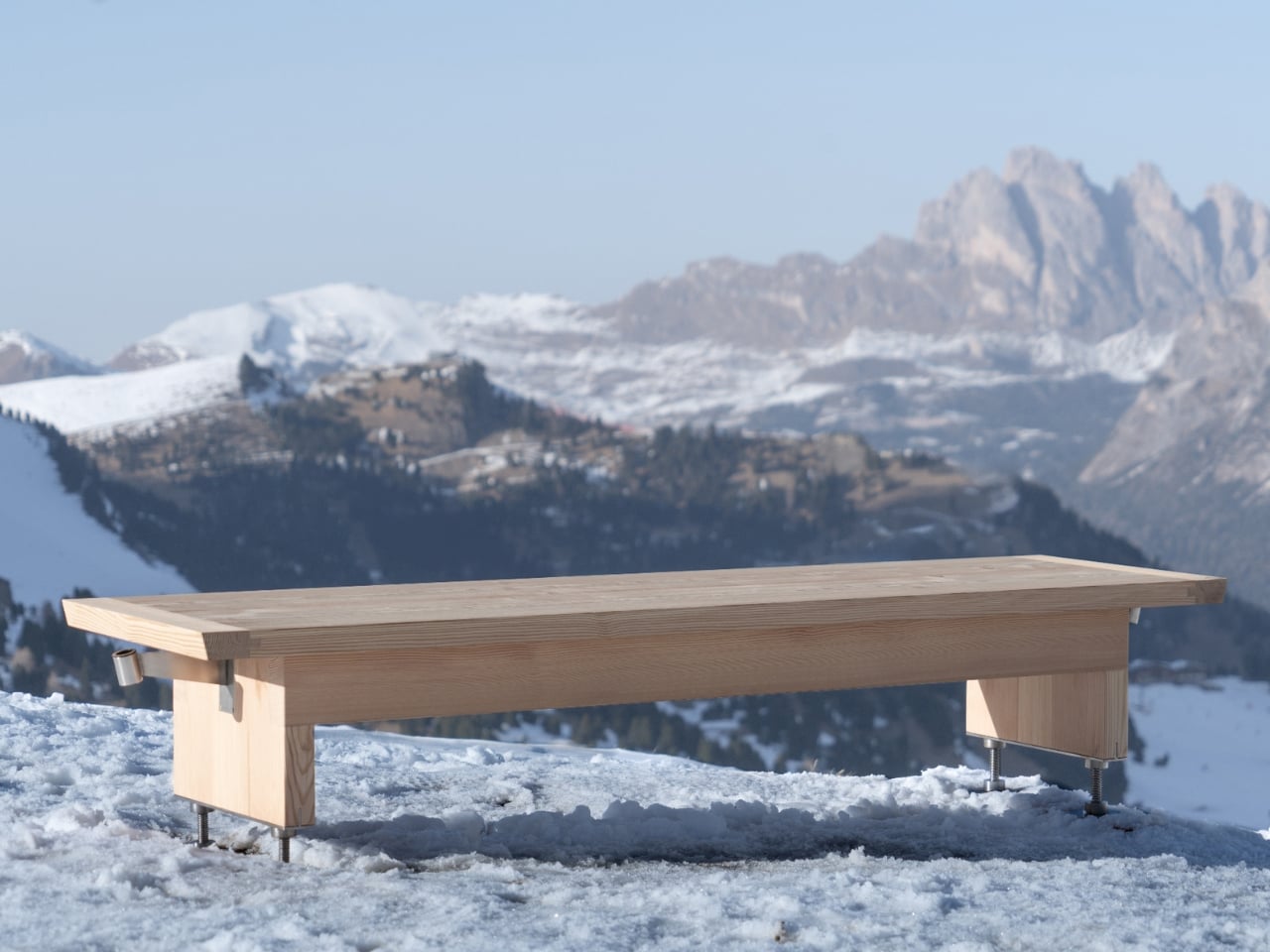
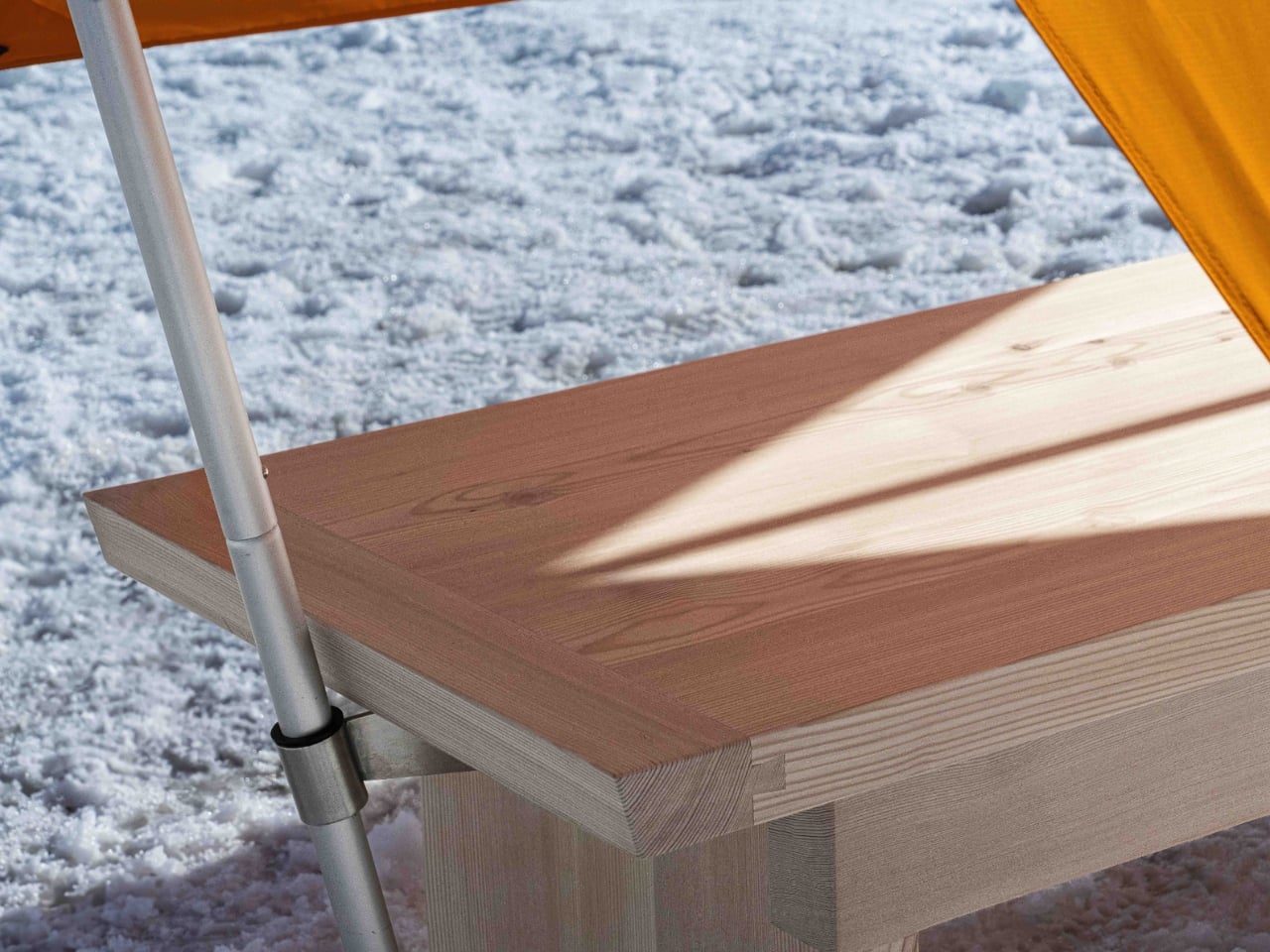
The philosophy behind Pancalpina is important to understand because it’s what separates it from a clever gadget. The alpine environment, as Faccin has noted, is one of the few remaining areas of genuinely wild nature in Europe. Refuges, bivouacs, and trail markers already exist as artificial landmarks in these spaces, helping hikers orient themselves and find safety. Pancalpina slips into that existing language. It doesn’t announce itself as a technological intervention. It just looks like a bench.
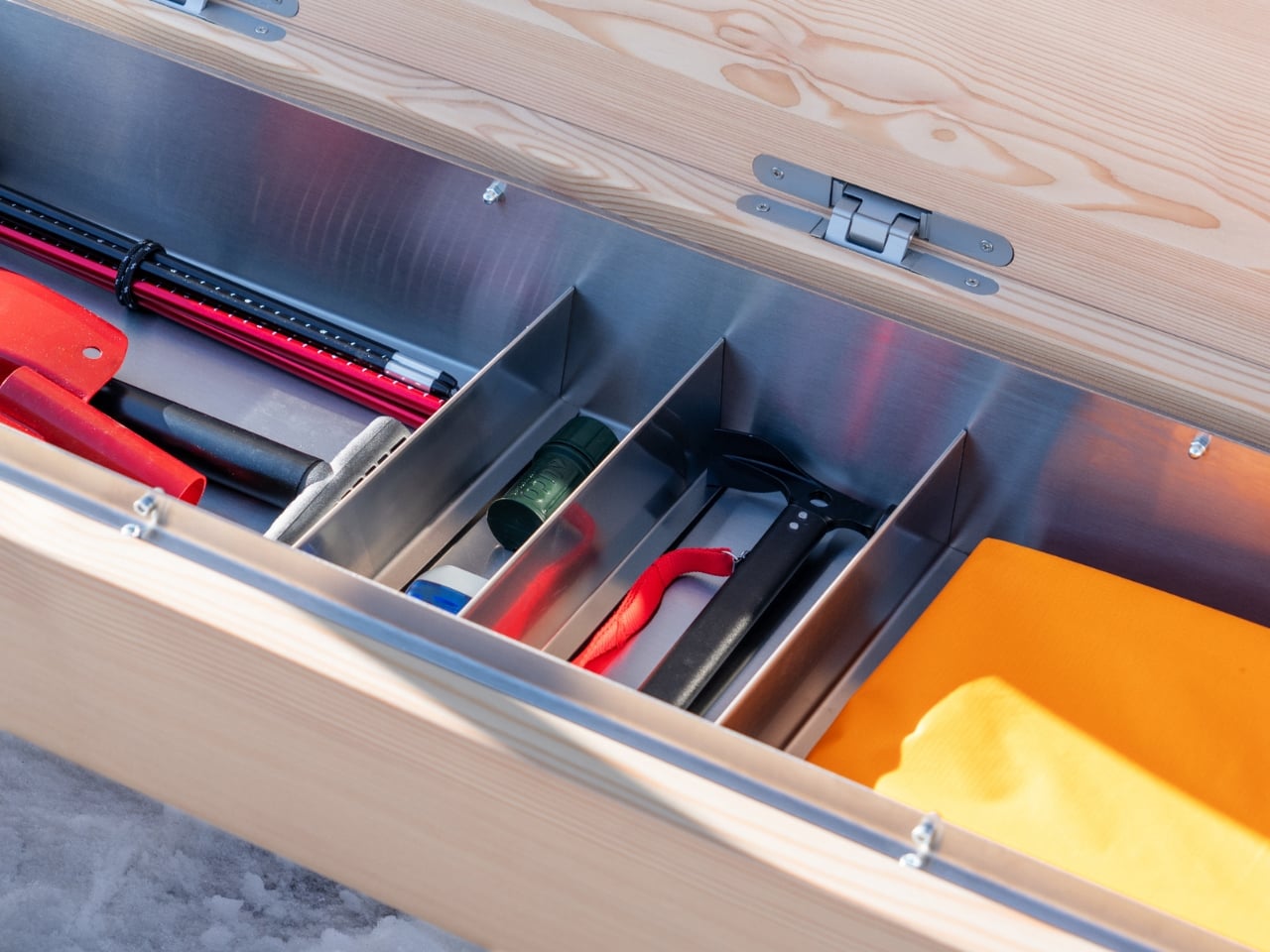
And yet the moment you need it, the object transforms. The tent isn’t designed for a comfortable night out. It’s designed for the specific, unglamorous situation of waiting for rescue or riding out a night of rain or sudden snowfall when you have no other option. Faccin is precise about this distinction: Pancalpina is not a bivouac for extended stays. It’s a minimal shelter, built for survival in the time between crisis and help arriving.
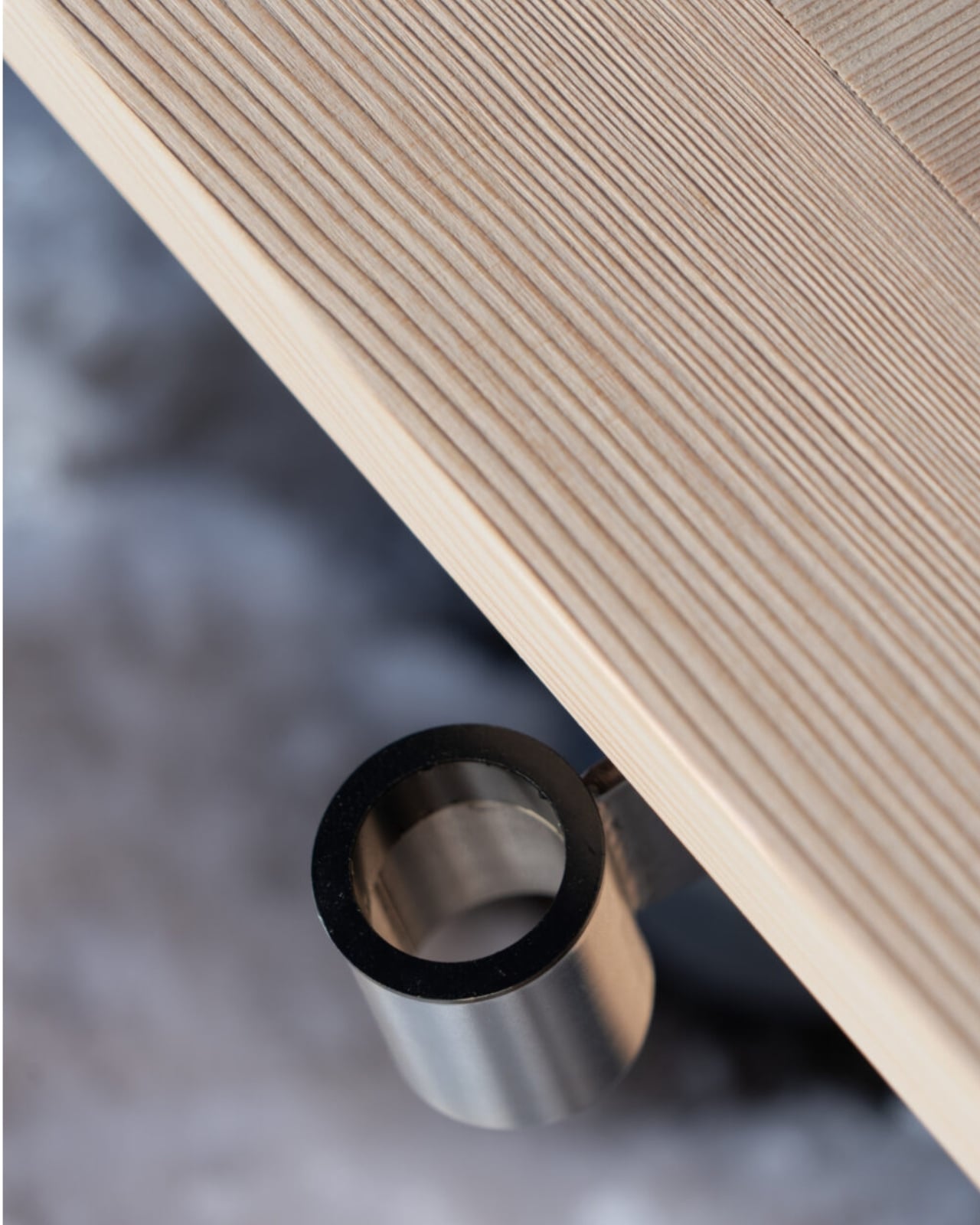
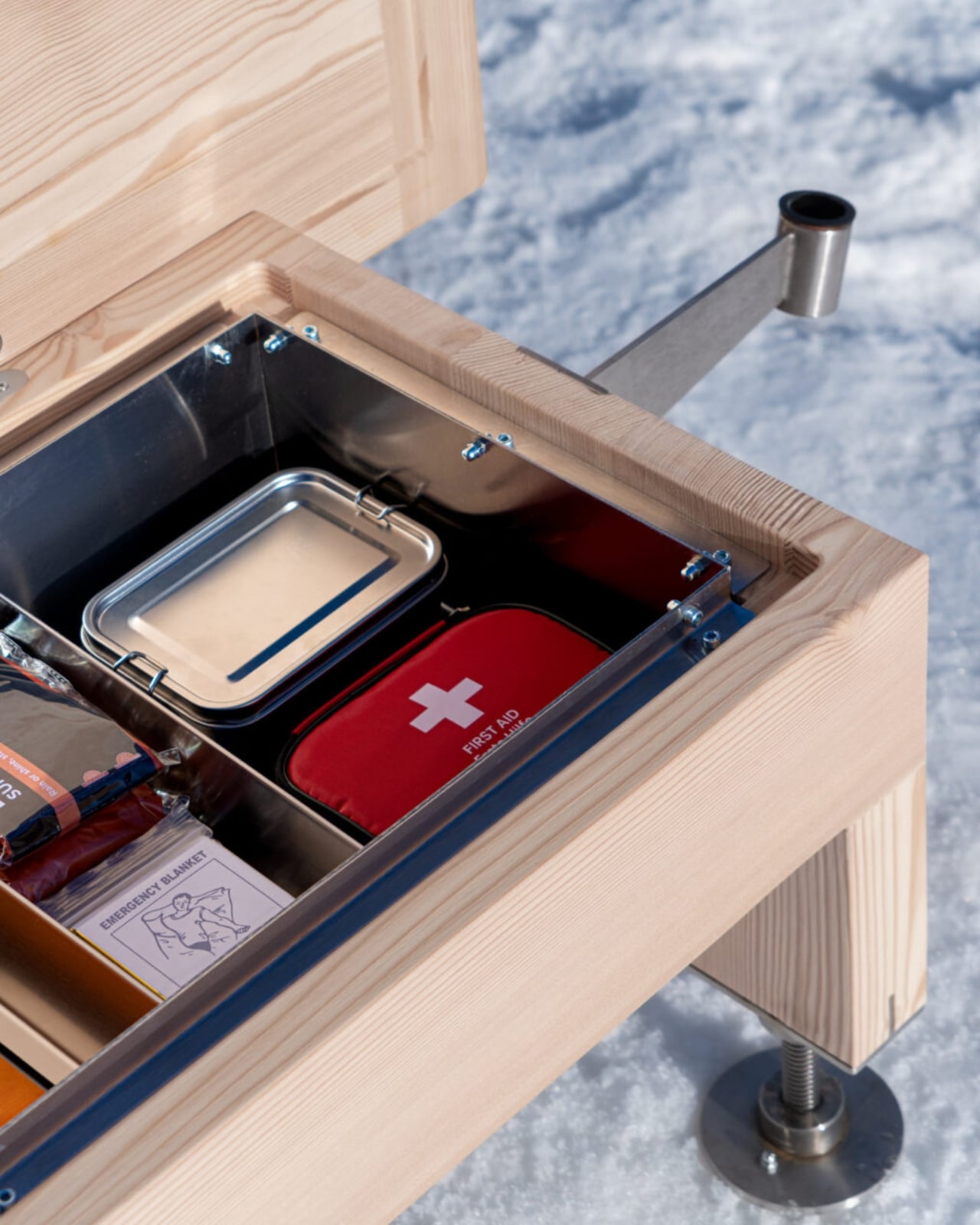
That restraint is actually the most interesting design decision here. A lesser designer might have overcomplicated the solution, packed the bench with sensors and GPS alerts and solar charging panels. Faccin kept it elemental. Wood, steel, blankets, a shovel, a tent. Materials and tools that don’t require a signal to function, because when you actually need them, there might not be one.
Faccin himself trained under Enzo Mari, one of Italy’s most rigorous design thinkers, and that influence shows in how he approaches objects with genuine seriousness of purpose. His work has been recognised with a Compasso d’Oro honourable mention, and he teaches product design at the Free University of Bolzano, which puts him, fittingly, right at the edge of alpine territory. He’s not designing Pancalpina from a studio purely for aesthetic effect. He’s designing it because he understands that environment.
What strikes me about this project is how it reframes the idea of public infrastructure. We tend to think of safety in the mountains as a function of signage, emergency apps, or rescue services. Pancalpina asks: what if the bench itself carried some of that responsibility? Not in a dramatic or high-tech way, but quietly, modestly, in the way that good design tends to do its best work.
The name, too, is worth noting. Panca is Italian for bench, and alpina for alpine. It’s compound, direct, and a little poetic. The kind of name that feels inevitable once you hear it. If Pancalpina ever moves beyond prototype to wider installation across Italian alpine trails, it would represent one of the more genuinely thoughtful examples of public design in recent memory. Not because it’s revolutionary, but because it understood exactly what it needed to be, and nothing more.
The post first appeared on .
Related Posts