The business card holder is one of those objects the design world quietly decided was finished. A flat rectangle of leather or metal, room enough for thirty cards, something to close it. The category works. Nobody expected it to raise a new question about what it is actually for.
The , handmade in Kyoto by Sudaku – a workshop with experience in the kind of precision pattern construction most leathermakers route around – starts from a different premise.
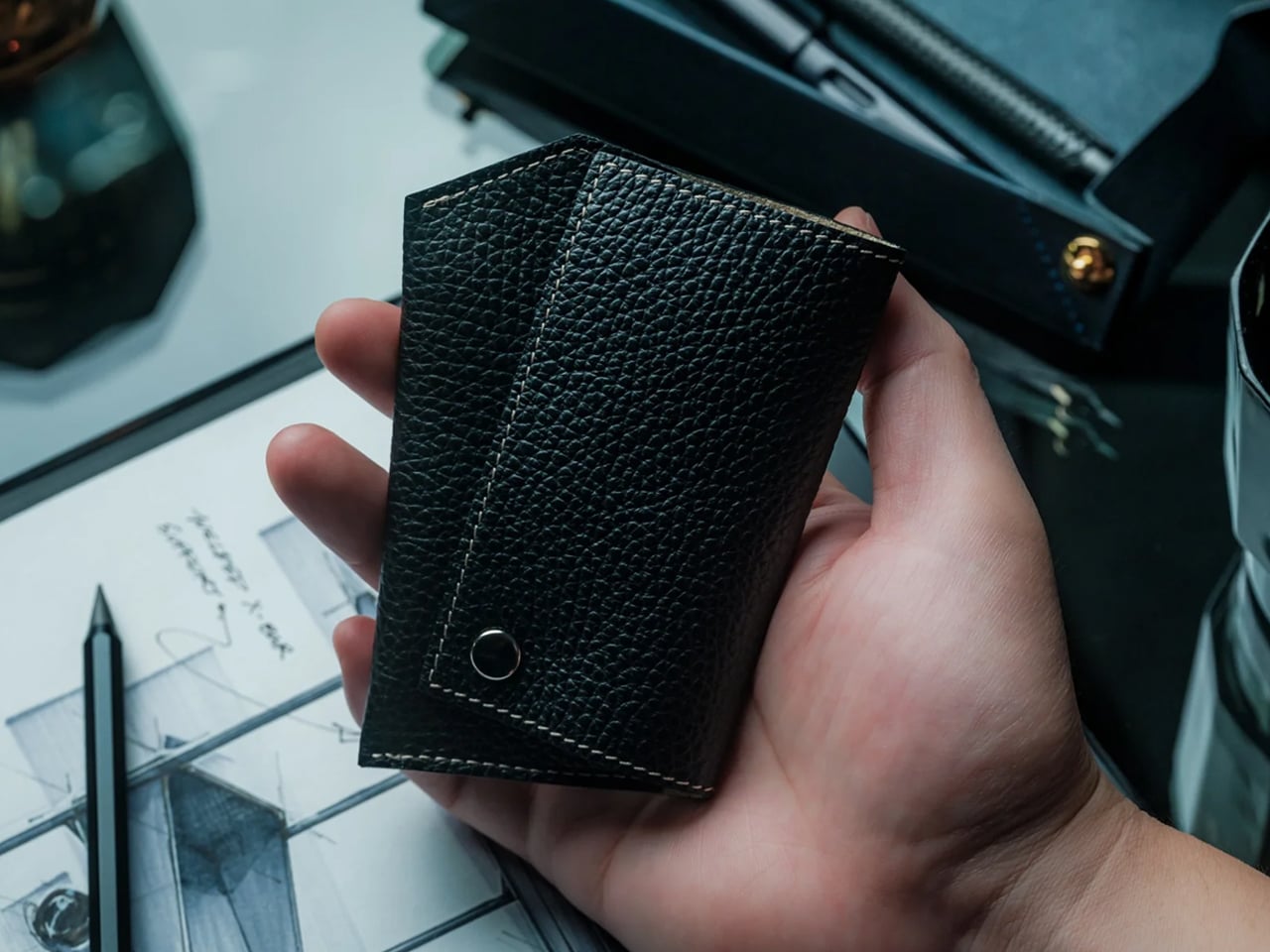
At rest in the breast pocket of a blazer, it shows nothing but a single diagonal edge of Italian leather above the pocket line. No hardware visible. No snap exposed. The silhouette reads, convincingly, as a folded pocket square. That is not an incidental resemblance. It is what the object was built to be.
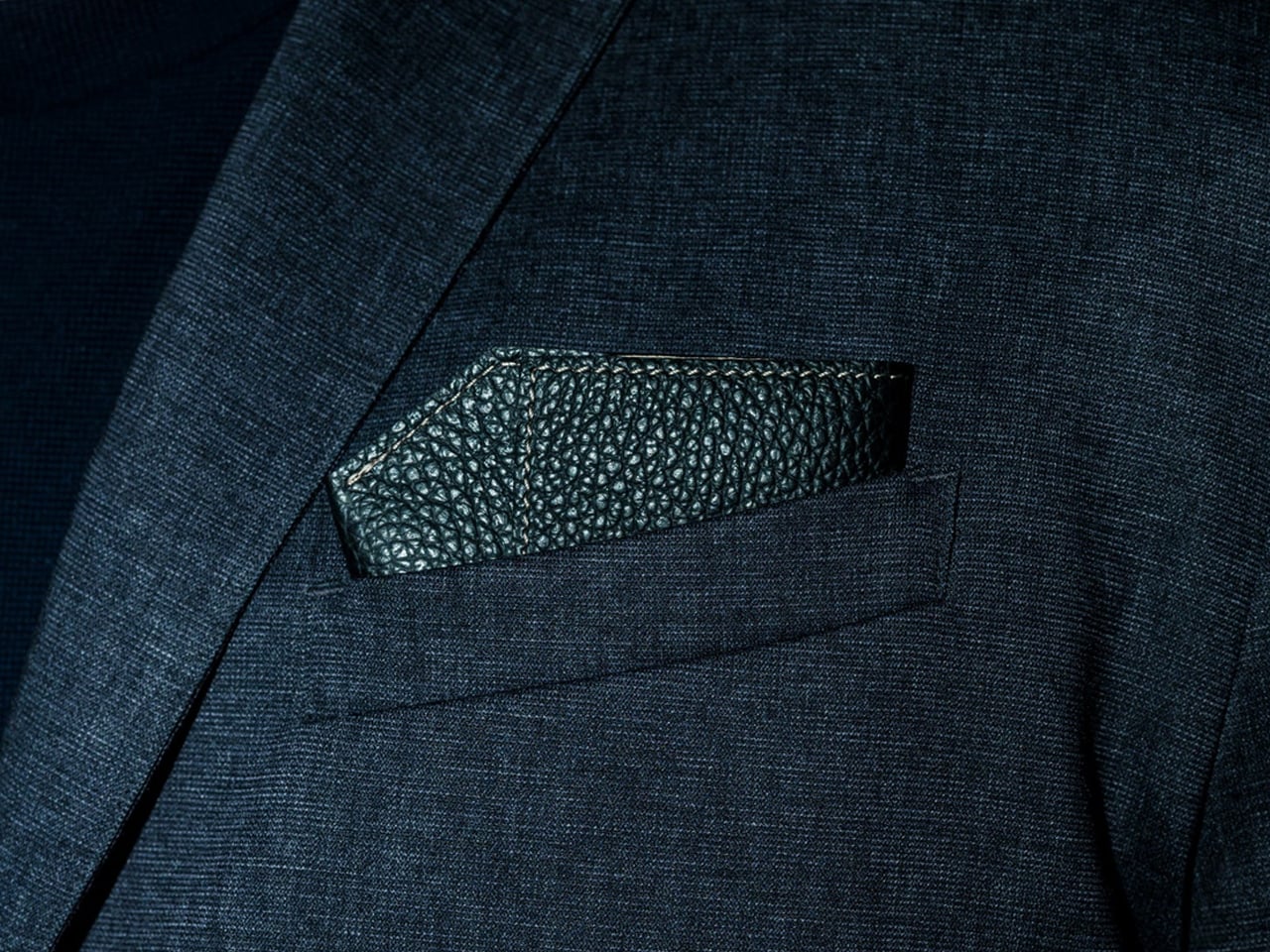
Getting there required solving a problem that most card holders don’t have. Rectangle-based designs absorb variation without consequence – a few millimeters off in any direction and the object still functions. The Oblica’s diagonal cannot absorb variation. The same millimeter that determines whether the form reads correctly as a pocket square profile also determines whether the internal tiers present cards legibly, whether the snap closes where it should, and whether the finished object measures exactly 5mm thick. Every part of that system affects every other part. Getting them to solve each other, rather than compete, required adjusting the pattern, the proportions, the card tier geometry, and the snap placement in concert – which is precisely the kind of construction complexity Sudaku was built to handle.
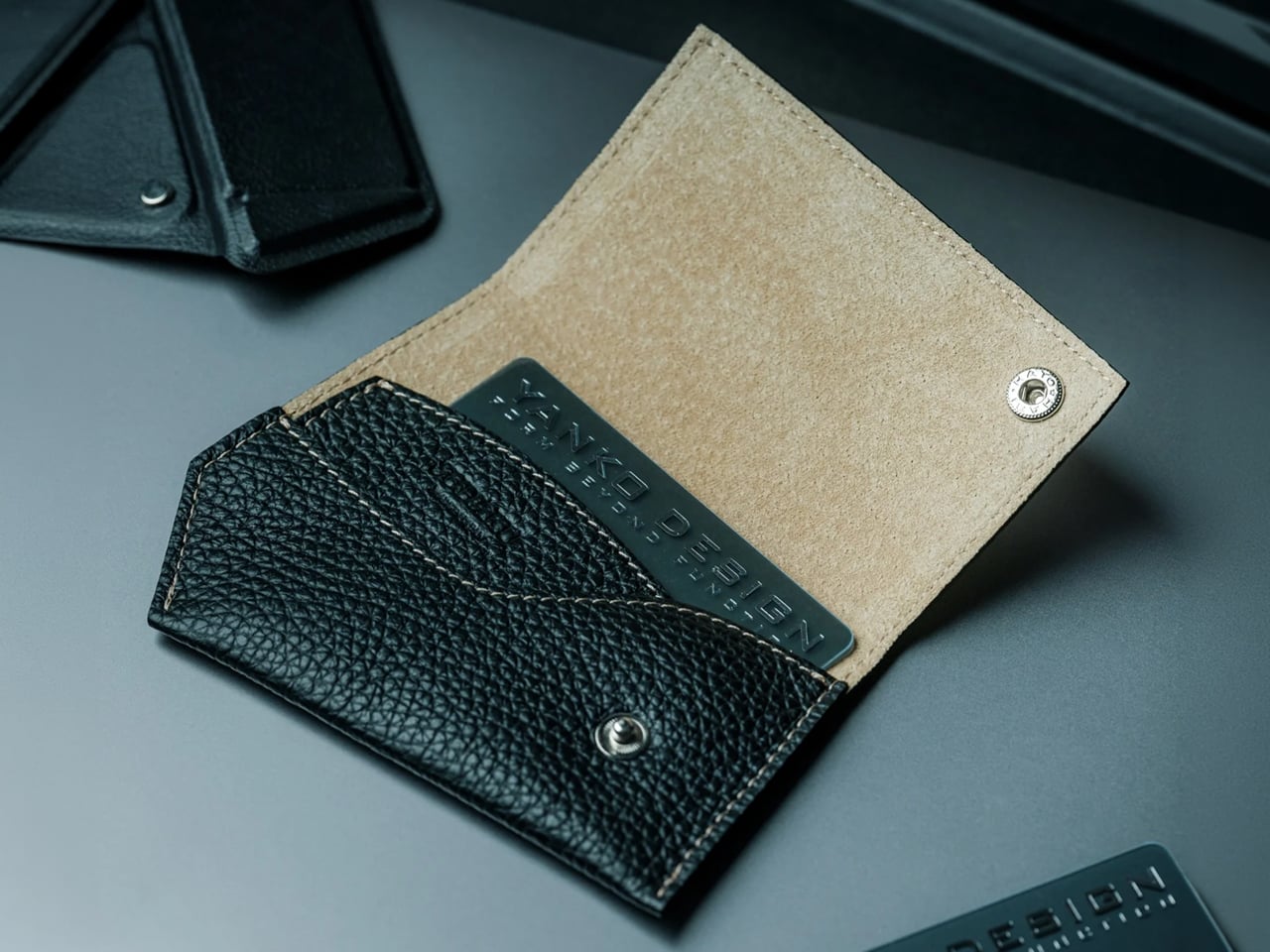
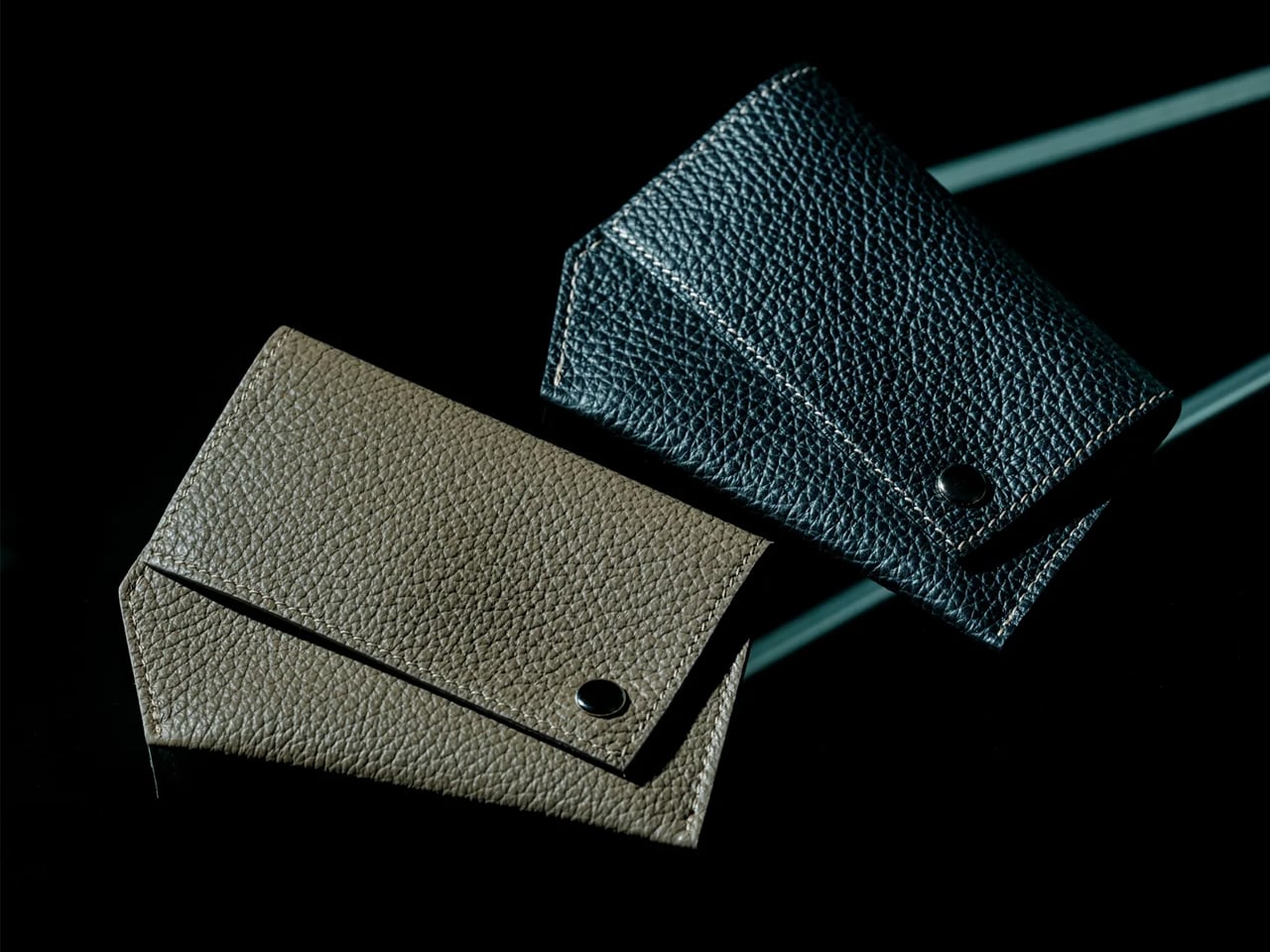
The exterior is Italian leather. The interior is Japanese pig suede, chosen for its texture rather than its appearance – it protects card edges from the friction of daily use without adding anything to the 5mm profile. Both materials are doing specific work.
Sudaku describes the intent plainly: “The craftsmanship isn’t there to make Oblica feel handmade. It’s there to make an unconventional idea feel completely natural.”
The distinction matters. Most objects in this category use craft as a quality signal – stitching you can see, grain you can name. The Oblica uses it differently. The Kyoto construction is what allows a diagonal silhouette to function correctly, which is a different kind of argument for handwork than visible stitching, and a more demanding one.
Open it, and the internal logic makes immediate sense. Two staggered diagonal tiers expose the top edge of every card at once. With more than thirty cards in the holder, every one is visible and selectable before you reach for it. The moment of presenting a card is the moment the whole object exists to support. What had quietly completed the jacket a moment before opens to reveal the card inside, already organized, already ready.
The Italian leather develops a patina over years of regular use. Not surface damage – genuine character. The edges deepen, the surface softens in the places it’s handled most, and the specific wear pattern of how you reach for it becomes part of the object. The cards inside will change considerably more often than the leather that holds them.
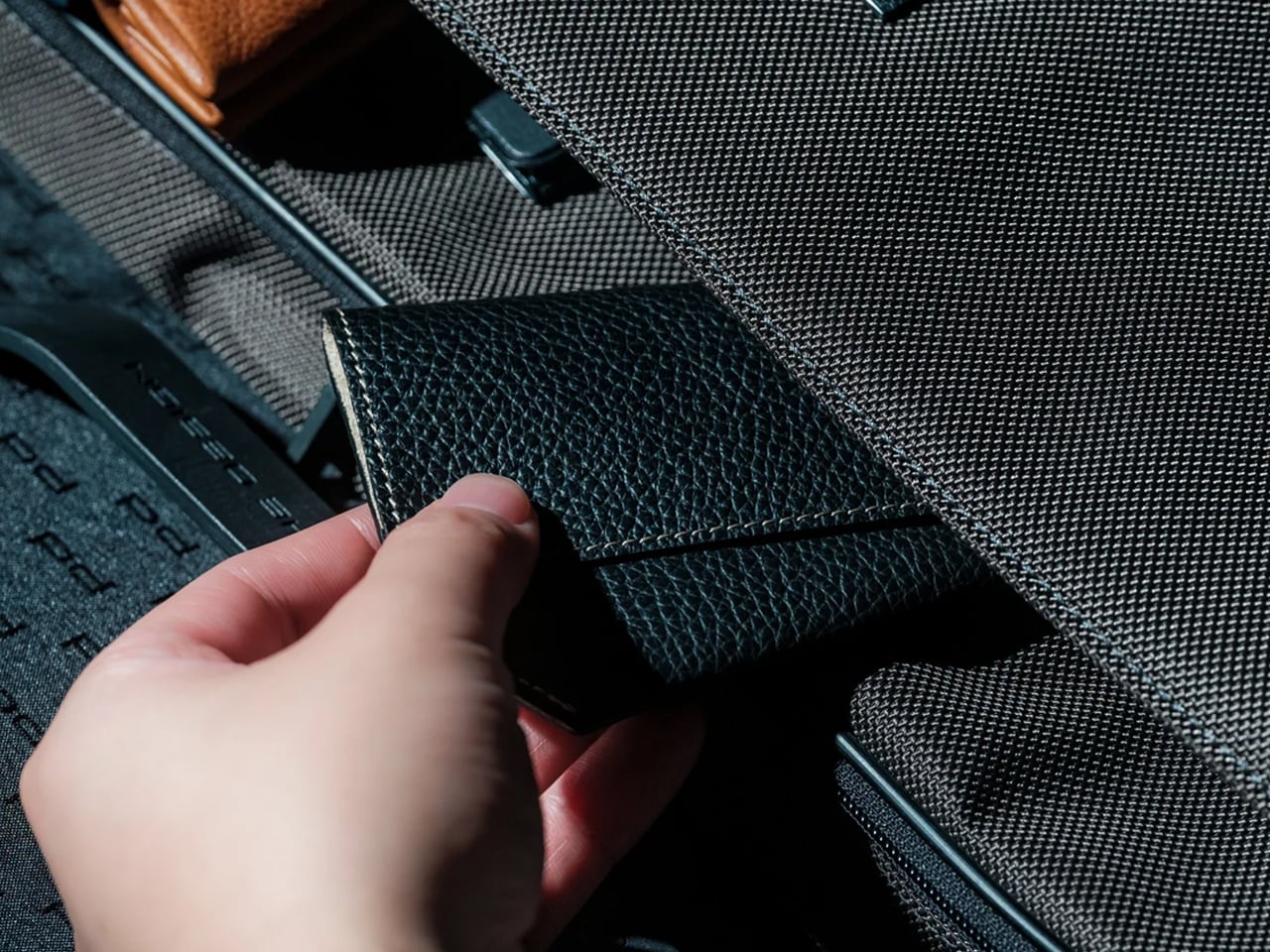
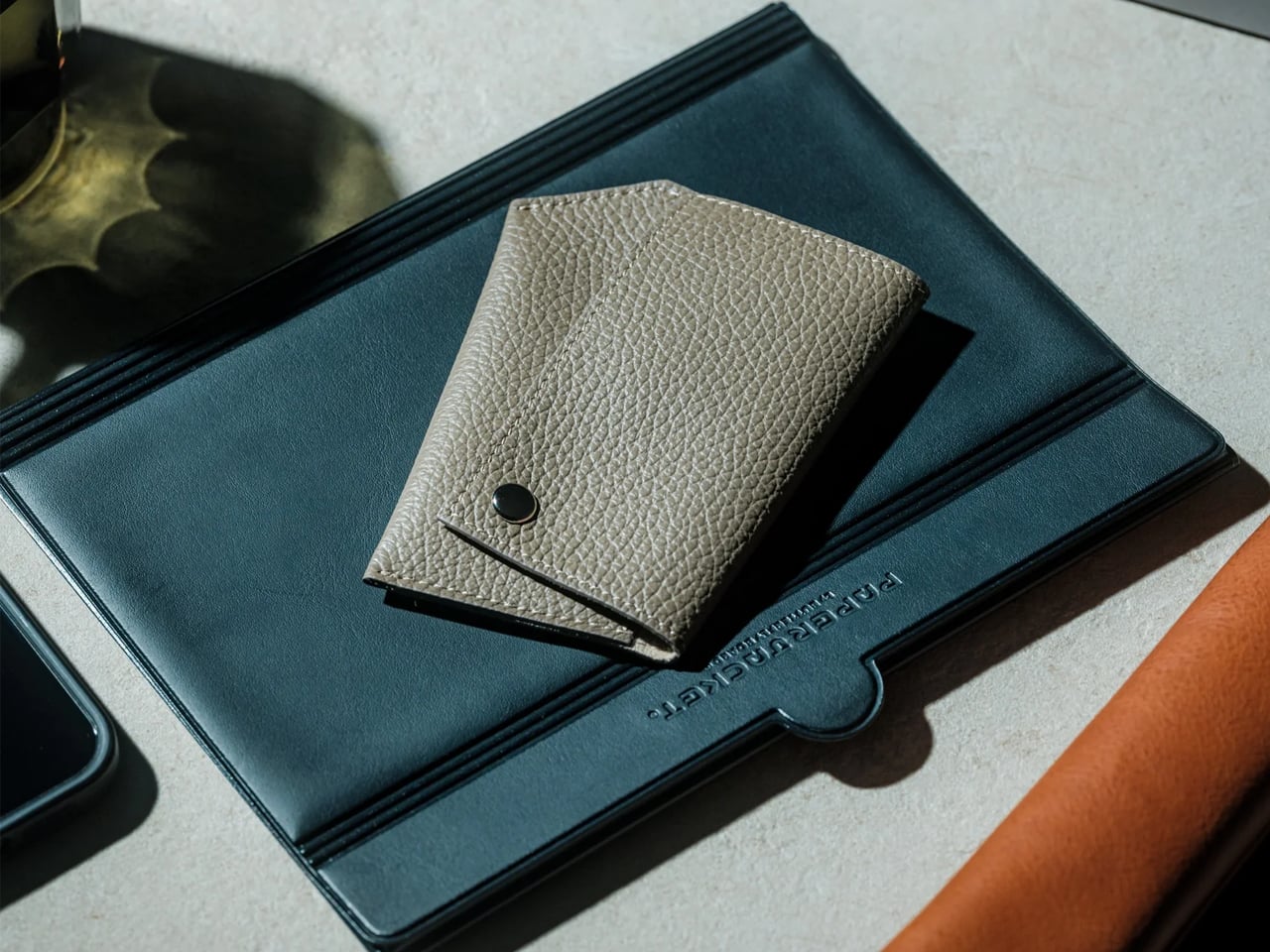
At $160, the Oblica sits well above the practical end of the category — what the Oblica offers that neither end of the market does is a design argument: a specific reason the object is the shape it is, made in this city, from these two materials, in this workshop. That argument is legible in the finished object in a way that most card holders at any price cannot manage. Five units are currently available through YD Select.

The Case for the Breast Pocket
The trouser pocket was always the obvious place for a business card holder, which is probably why every card holder ended up there. The makes the case that the breast pocket was always the more considered answer – and that a diagonal edge above the pocket line, reading as a pocket square until it needs to be something else, was always the more resolved solution. That it took three months of iterative construction work in Kyoto to arrive at something that looks this inevitable is not a surprise. It is the kind of result that follows from treating a finished problem as an unfinished one.
The post first appeared on .
Related Posts